

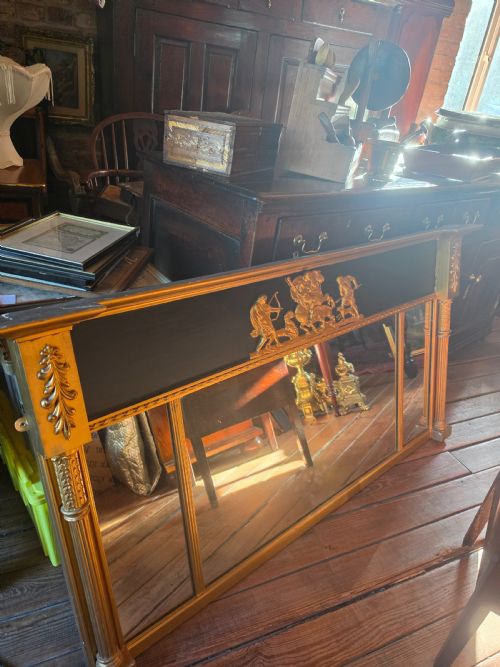
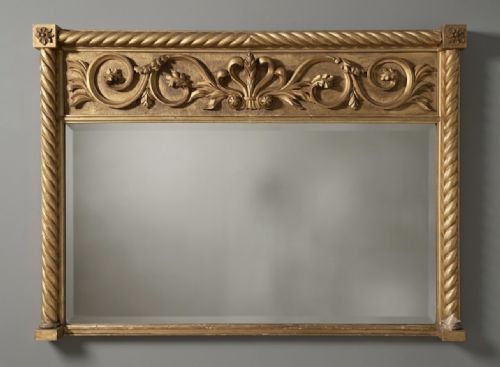
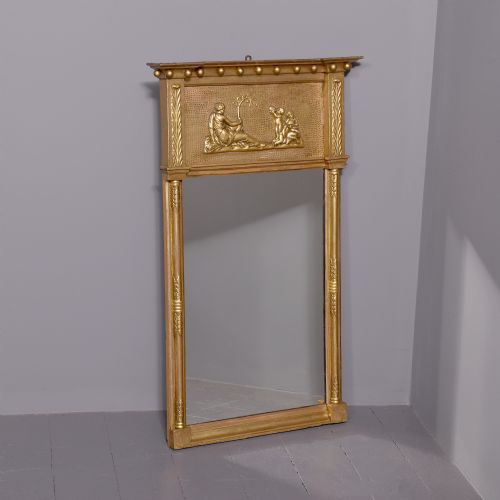
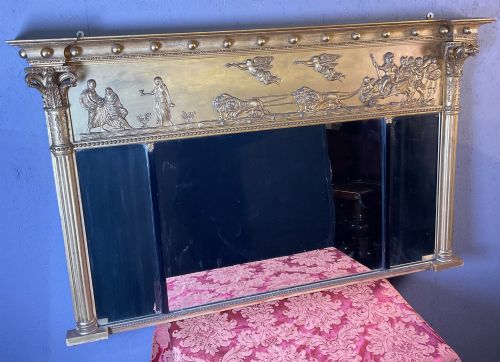

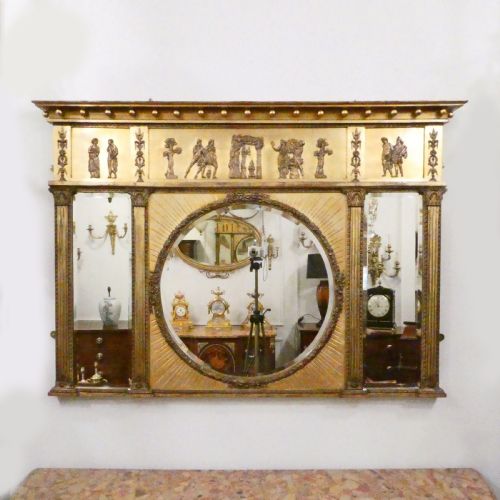


Classical Frieze Mirror
A classical frieze mirror brings architectural presence and reflected light to a room, drawing the eye with its sculptural top panel.
Classical Frieze Mirror
A classical frieze mirror is a substantial furnishing designed to hang on a wall or sit above a mantelpiece, bringing proportion and light to an interior. When searching for a classical frieze mirror, buyers encounter grand overmantel mirrors and pier mirrors spanning the Regency and Victorian periods.
The overmantel mirror format dominates the selections, often appearing as triple plate or triptych variants that stretch wide across a chimney breast. These pieces frequently incorporate distinct architectural motifs in the upper register, ranging from mythological scenes to carved acanthus leaves.
How they were made
Maker's workshops built these frames using wood and composition ornament, applying gold leaf or paint to the finished surface. Water gilding appears on select early pieces, creating a brilliant reflective shine on the intricate gesso mouldings.
Mirrors were constructed with glass plates set into timber frames, sometimes utilising multiple side-by-side plates for wider overmantel formats. Carved wooden elements and moulded composition details combine to form the classical friezes that define the style.
Classical Frieze Mirror Retail Price Guide 2026
Typical asking prices for classical frieze mirror among the pieces listed under this phrase on Sellingantiques today, from the lower quarter to the upper quarter. They describe what is for sale here now, not the wider market.
The listings here span the Regency and Victorian eras, alongside later revival styles from the nineteenth and early twentieth centuries.
What varies in quality
The crispness of the carved or moulded decoration sets the finest examples apart, particularly in the depth and detail of the frieze panel. Sharp acanthus leaves and well-defined figural depictions indicate skilled handwork rather than repetitive casting.
Gilding technique and the preservation of the original gold leaf surface dictate the visual richness of the frame. The quality of the glass plates and the integrity of the joinery also distinguish superior pieces from standard workshop output.
The Classical Frieze Mirror Glossary
- Pier mirror
- A tall, narrow mirror designed to hang on the wall between windows, reflecting light into the centre of a room. These pieces often feature gilded wooden frames.
- Overmantel mirror
- A wide mirror specifically proportioned to sit above a fireplace mantelpiece. They frequently incorporate landscape friezes or multiple glass plates.
- Gesso
- A plaster-like material applied to wood frames and carved or moulded into decorative details before gilding. It provides a smooth base for gold leaf.
- Triptych
- A mirror divided into three distinct vertical sections, often seen in wide Regency overmantel designs. The side panels are typically narrower than the central glass plate.
- Acanthus
- A Mediterranean plant leaf motif carved in classical architecture and furniture ornament. It appears frequently on the decorative friezes of these frames.
Classical Frieze Mirror: Frequently Asked Questions
Where should I hang an overmantel mirror?
These large mirrors are traditionally positioned directly above a fireplace mantelpiece to anchor the room and reflect natural light. They also function effectively on principal walls in reception rooms where their architectural scale can be fully appreciated.
Ensure the wall construction and fixings can support the substantial weight of a gilded wood and glass frame. Positioning the mirror opposite a window maximises the dispersion of daylight throughout the space.
How do I spot a Regency piece?
Regency mirrors often display classical architectural elements such as reeded columns, ball-studded cornices, and friezes with mythological or floral motifs. The gilding tends to be bright and the proportions emphasise classical symmetry.
Examining the construction methods and the backing boards helps confirm the nineteenth-century origin. Revival pieces made later in the Victorian era often mimic these exact stylistic traits.
What is water gilding?
Water gilding is a traditional technique where thin sheets of gold leaf are applied to a prepared gesso surface using water and size. This method allows the gold to be burnished to a high, reflective shine.
It is typically found on finer early pieces from the Regency period. The technique creates a warm, deep lustre that ages with a distinct patina.