
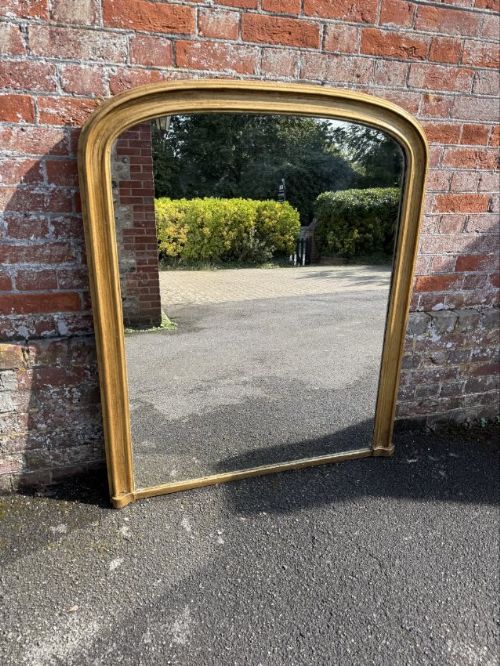
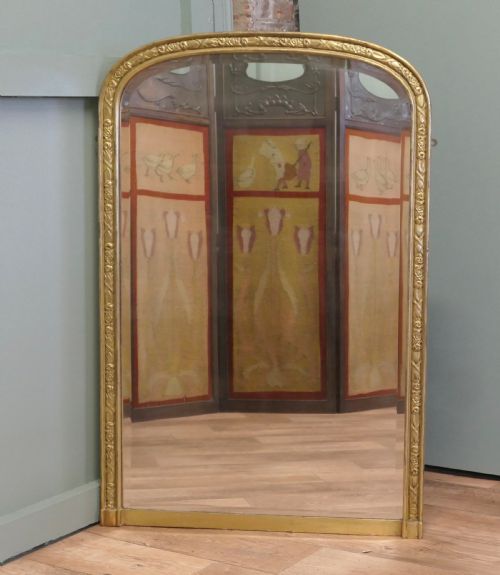
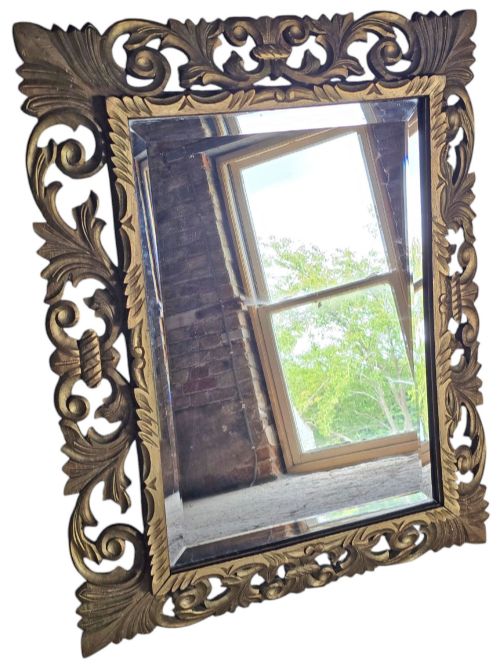
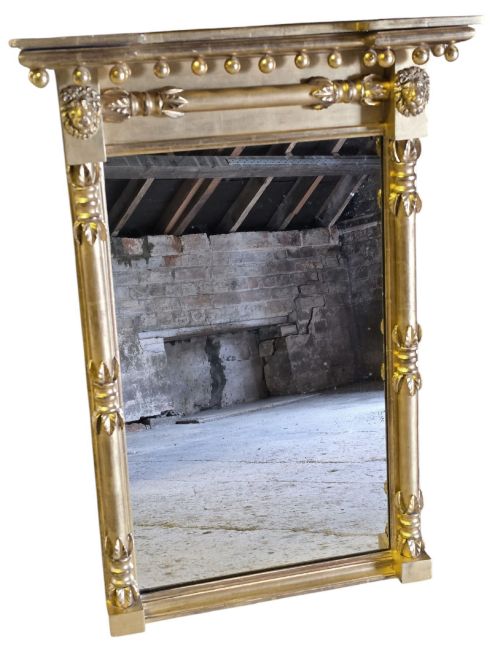


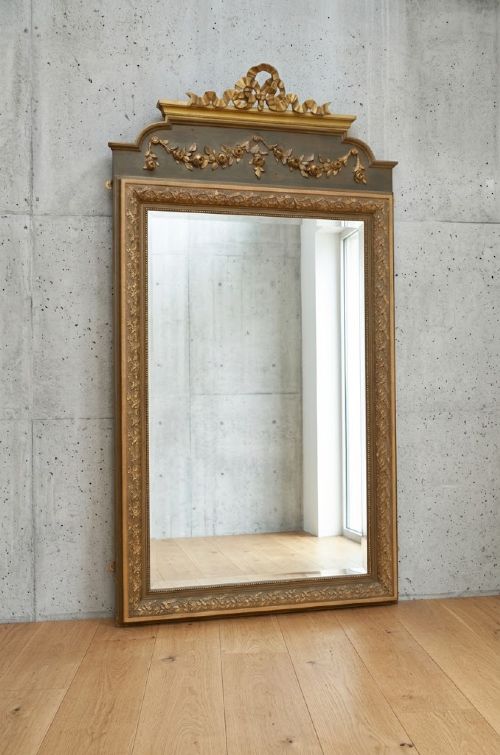
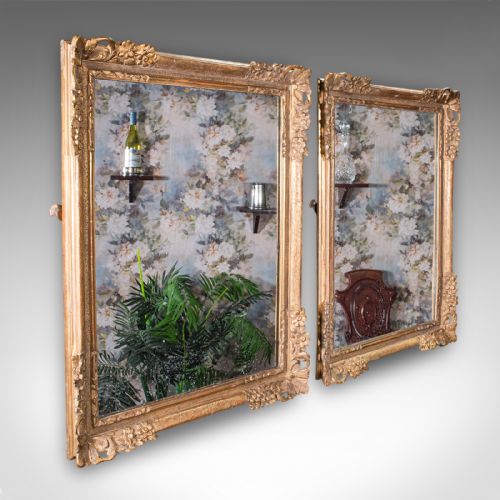
Large Gilt Overmantel
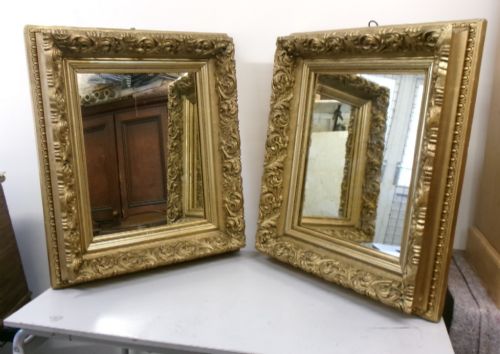
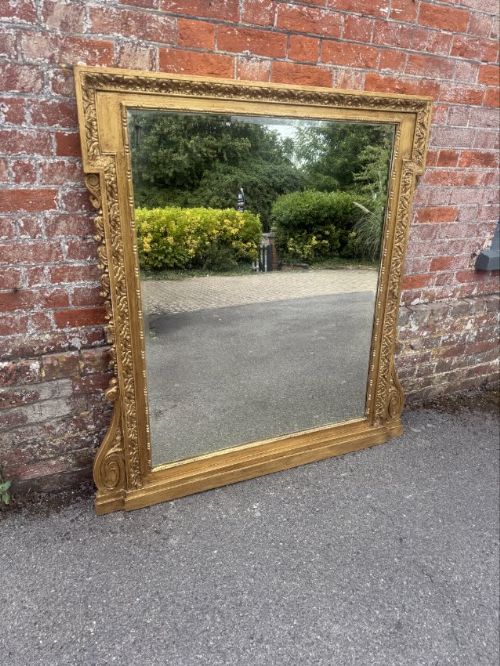
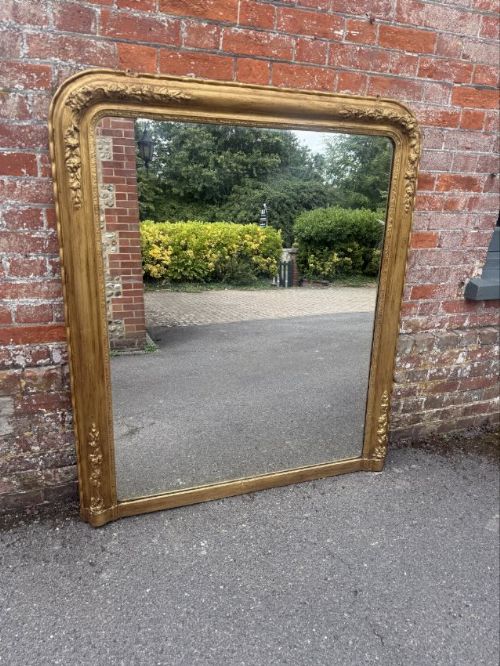
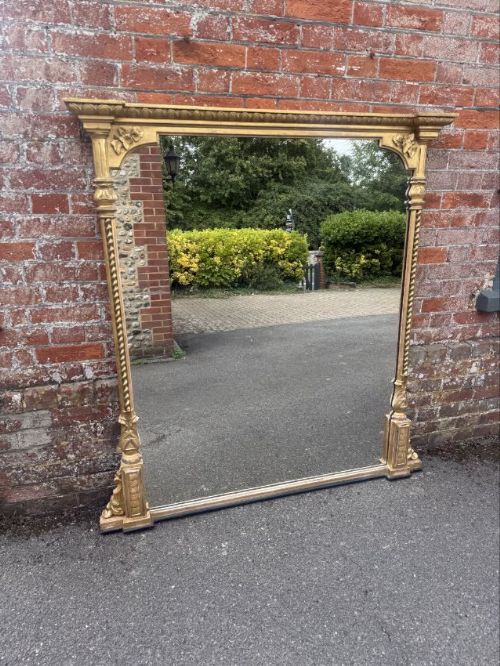
A large gilt overmantel brings presence to a room, offering grand proportions and bright reflection designed to sit above a fireplace.
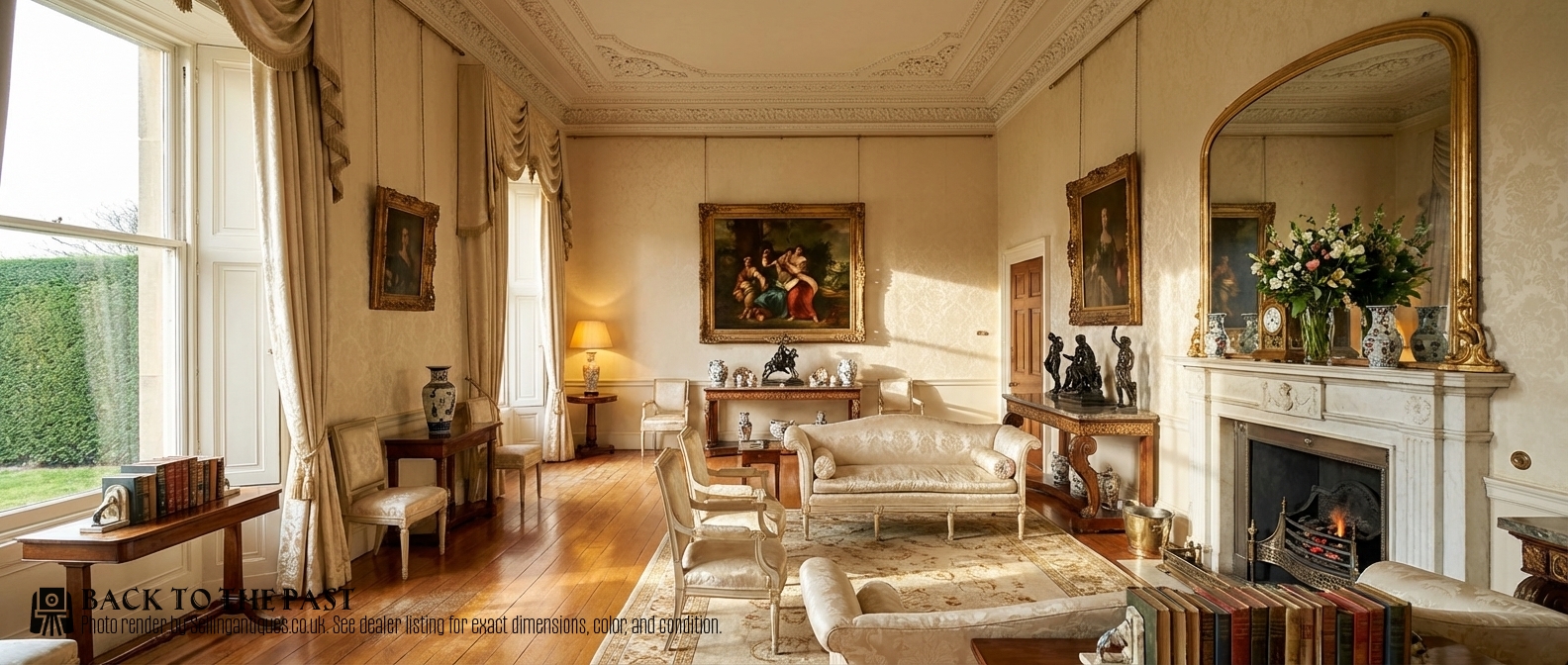
Large Gilt Overmantel
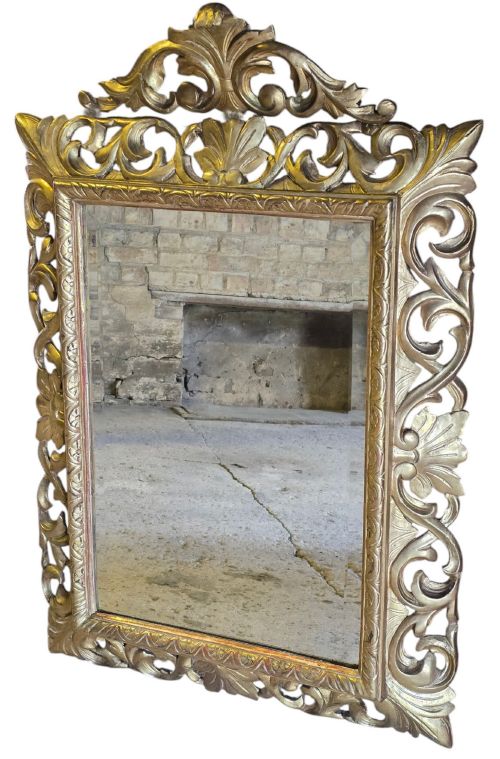
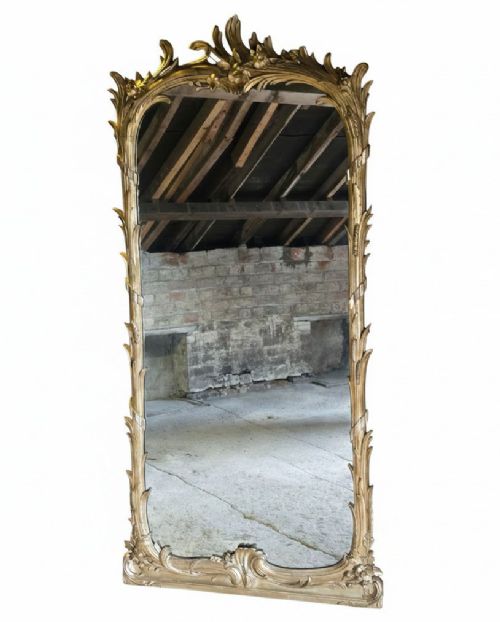
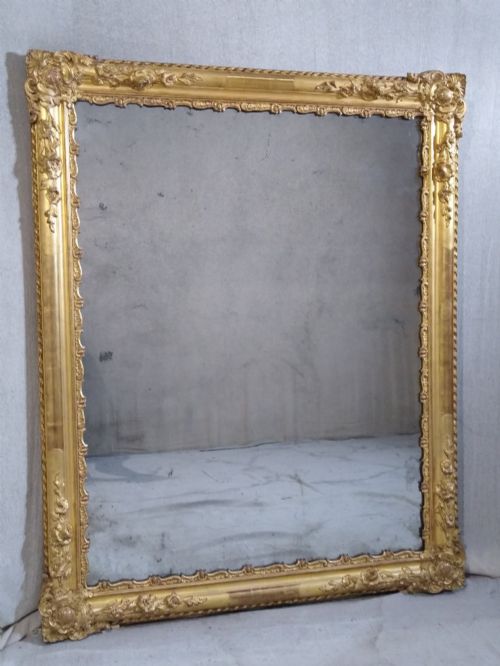
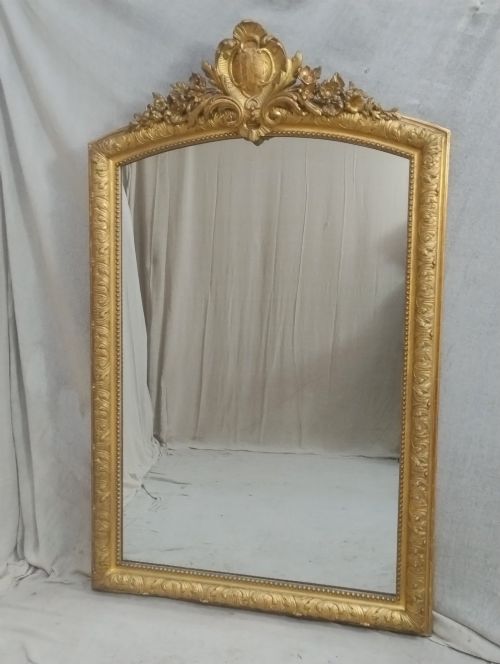
A large gilt overmantel is a substantial wall glass originally designed to sit on the chimney breast above a fireplace mantel. These pieces span the 18th century, Victorian era, and early 20th century, emerging in English and French workshops. The most common examples found here date from the 19th century and display architectural arched tops, shaped frames, or rectangular formats.
Makers produced these mirrors to anchor domestic interiors, reflecting light and visually expanding the room. Styles range from English Regency and Victorian designs to French Louis Philippe and Rococo Revival forms. Whether plain-framed or heavily ornamented, each piece serves as a prominent focal point for interior display.
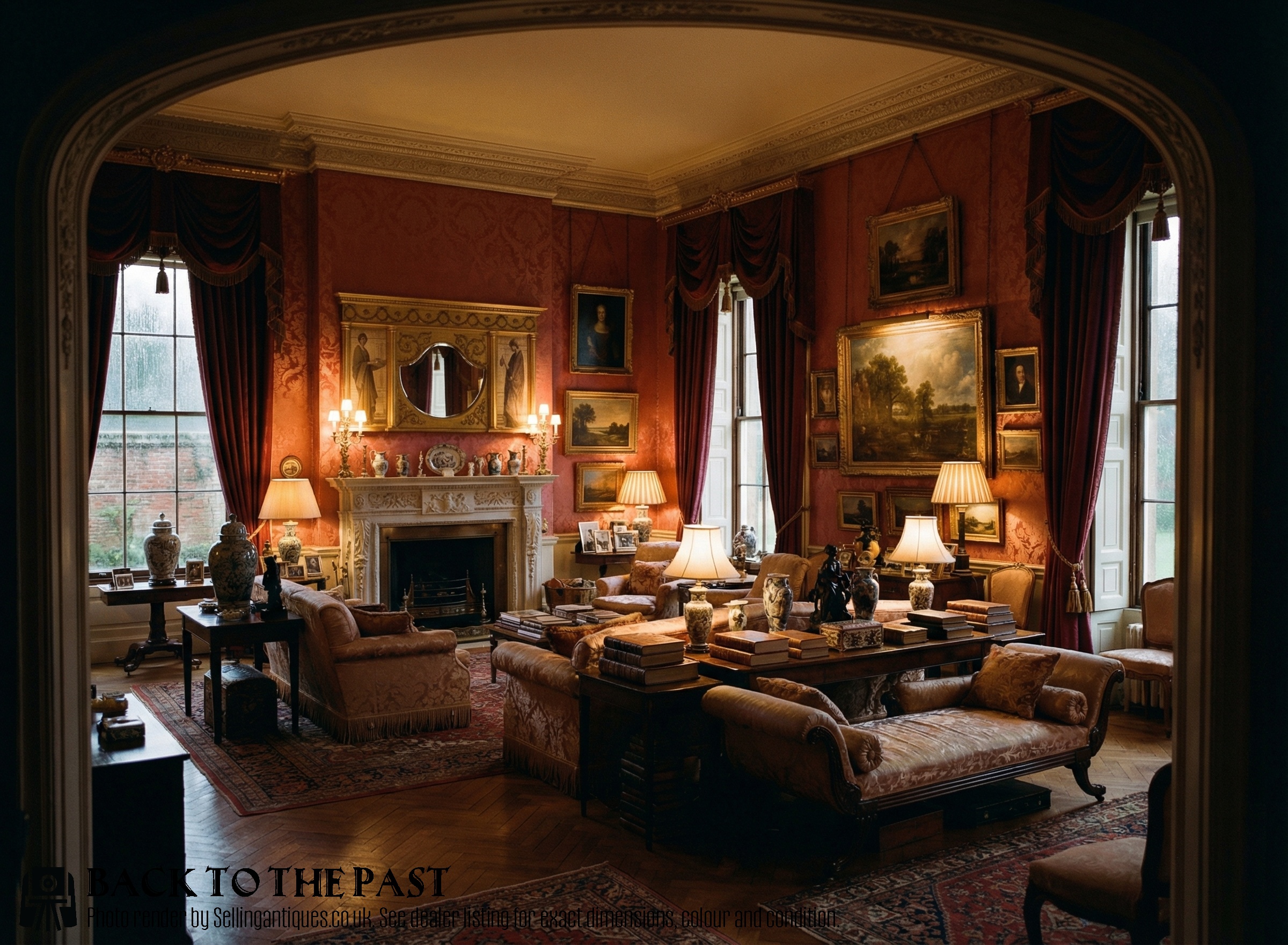
Materials and Construction
Makers constructed the primary frames of these mirrors using carved wood, often applying layers of gesso to build up intricate surface decoration. Artisans then gilded these surfaces using gold leaf or applied composition ornaments to achieve elaborate relief detailing. Many period examples feature heavy mirror glass, sometimes retaining original mercury backing.
The combination of carved wooden substrates, moulded gesso, and gold leaf gives these frames their characteristic metallic sheen and weight. English and French workshops utilised rope twist, ribbed moulding, and floral motifs to enrich the wooden armature before finishing the surface with gilding.
Large Gilt Overmantel Retail Price Guide 2026
Typical asking prices for large gilt overmantel among the pieces listed under this phrase on Sellingantiques today, from the lower quarter to the upper quarter. They describe what is for sale here now, not the wider market.
Listings feature periods spanning from the 18th century through the Victorian era to the 1920s, constructed in giltwood, gesso, and carved wood.
Evaluating Quality and Detail
The distinction between standard production and the finest work lies in the crispness of the carved detail and the depth of the gesso mouldings. Superior pieces exhibit hand-carved wooden elements rather than mass-produced composition ornament applied uniformly across the frame. The weight of the timber frame and the thickness of the original mirror plate also indicate higher standards of manufacture.
Finishing techniques further separate exceptional mirrors from ordinary ones, particularly the application and burnishing of the gold leaf. Well-preserved gilding retains its warmth and texture, while the glass plate itself may show desirable signs of age such as light foxing. The structural integrity of the arched or shaped top frame remains central to the overall standard of the piece.
The Large Gilt Overmantel Glossary
- Overmantel mirror
- A large mirror specifically designed to be hung or placed upon a mantelpiece above a fireplace. These pieces often feature horizontal or vertical proportions suited to chimney breasts.
- Gesso
- A plaster-like mixture applied to wood frames to create a smooth surface for carving or moulding details. It forms the raised decorative relief beneath the layer of gold leaf.
- Giltwood
- Timber that has been coated with gold leaf or gold paint. This finish provides the bright, reflective metallic surface characteristic of these frames.
- Mercury glass
- An early type of mirror glass backed with a mercury and tin amalgam before modern silvering processes were introduced. It frequently develops dark spots known as foxing over time.
- Composition
- A moulded mixture of whiting, resin, glue, and linseed oil pressed into ornamental shapes. Makers used this material to create repetitive decorative motifs on picture and mirror frames.
Large Gilt Overmantel: Frequently Asked Questions
How do I hang a heavy overmantel mirror safely?
These frames carry considerable weight due to their timber construction and thick glass plates. Secure wall fixing requires direct attachment to structural studs or masonry using appropriate heavy-duty brackets.
Professional installation is strongly recommended to support the load safely. Ensure the weight is distributed evenly across multiple fixing points.
Can an overmantel mirror be placed on a sideboard instead of a fireplace?
While originally built for chimney breasts, these pieces function effectively above sideboards, console tables, or low cabinets. Their generous proportions help anchor large wall spaces in dining rooms or hallways.
Ensure the supporting furniture is sturdy enough to bear the presence of the mirror if it rests directly upon the surface. Wall anchoring remains essential for stability.
What is foxing on antique mirror glass?
Foxing refers to small dark spots and discolouration that develop within the reflective backing over decades. This natural ageing process occurs as atmospheric moisture interacts with the original silvering or mercury.
Many collectors value foxing as evidence of authenticity and age. It does not impair the decorative utility of the glass.
How do I tell an 19th-century French mirror from an English one?
French mirrors from periods like Louis Philippe often feature softer, more rounded corners and subtle crest motifs. English 19th-century examples frequently display more robust architectural framing with distinct gesso ornamentation.
Examining the construction methods on the reverse of the frame usually reveals distinct regional carpentry techniques. Both traditions produced exceptionally decorative gilt surfaces.