
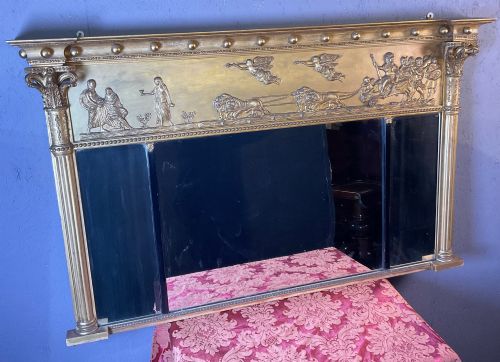


Tripartite Overmantel Mirror
A tripartite overmantel mirror divides its glass into three sections, bringing architectural breadth and brilliant reflected light to a period room.
Understanding Tripartite Overmantel Mirrors
When you search for a tripartite overmantel mirror, you are looking for a long, compartmentalised looking glass designed to sit directly above a fireplace mantelpiece. The listings here showcase examples spanning the eighteenth and nineteenth centuries, including Georgian and Regency pieces.
Most items you encounter adopt the horizontal format typical of chimney pieces, whilst specific interpretations range from classical Regency rectangular frames to elaborate George II carved giltwood designs. These mirrors anchor a room by echoing the proportions of the hearth below.
Materials and Construction
The makers of these pieces constructed the primary framework from pine and other woods, applying layers of gesso to build up intricate surface ornamentation. Gilding was then applied to the prepared surfaces to achieve a rich metallic finish.
Mirrors incorporated individual plates of silvered glass, often divided by vertical bars or framing elements to create the characteristic tripartite layout. Ebonised wood details also appear in select designs to provide sharp contrast against the gilt elements.
Retail Price Guide 2026
Typical UK retail prices for tripartite overmantel mirror, calculated from the Sellingantiques database of over a million retail prices indexed since 2003. This retail price guide relies exclusively on Sellingantiques data; no external sources or auction records are used, so the figures do not describe the wider market.
Current listings feature materials including giltwood, gesso, ebonised wood, and mirror glass across eighteenth and nineteenth-century periods.
Judging Quality
Quality in these mirrors rests upon the depth and crispness of the carved gesso and woodwork, where sharper detail indicates a more skilled hand. The integrity of the original gilding and the preservation of the mirror glass further distinguish finer examples.
Proportion and architectural balance set superior pieces apart from later reproductions, as genuine period items integrate their tripartite divisions with harmonious scale. The sophistication of the frame ornamentation directly reflects the ambitions of the original maker.
Ciceri And Co Of Edinburgh
The Tripartite Overmantel Mirror Glossary
- Overmantel mirror
- A large looking glass specifically designed to hang upon the wall directly above a fireplace mantel. These pieces were traditionally scaled to match the width of the chimney breast.
- Tripartite
- Divided into three distinct sections, usually describing a mirror plate separated by mullions or frame partitions. This layout provides a wide, expansive reflection.
- Giltwood
- Timber that has been coated with fine leaf gold or metal leaf over a prepared base. It captures and reflects ambient daylight within a room.
- Gesso
- A plaster mixture applied to wood frames to create a smooth surface for carving and gilding. It allows for intricate relief decoration.
- Regency
- A British design period dating from the early nineteenth century defined by classical restraint and neoclassical motifs. Pieces from this era often feature clean architectural lines.
Frequently Asked Questions
Where should I hang an overmantel mirror?
These mirrors traditionally sit directly above a fireplace mantelpiece, where their horizontal proportions balance the hearth below. They also function effectively on any principal wall needing a strong architectural anchor.
Ensure the wall construction safely supports the weight of a heavy wood and gesso frame before installation.
How do I identify a Regency mirror?
Regency pieces often display classical motifs, restrained ornamentation, and rectangular formats that reflect early nineteenth-century taste. Look for architectural framing details characteristic of the period.
Materials typically include giltwood and ebonised wood accents built upon a pine carcase.
How do I care for antique giltwood?
Dust giltwood frames gently with a soft, dry brush to protect the delicate gold leaf surface from abrasion. Avoid using liquid cleaners or chemical polishes, which can strip the historic finish.
Keep the mirror away from direct heat sources and high humidity to preserve the underlying gesso and wood.