



William IV Mirror
A william iv mirror brings heavy architectural presence to a room, shifting from classic mahogany frames to bold gilded overmantels.
Identifying a william iv mirror
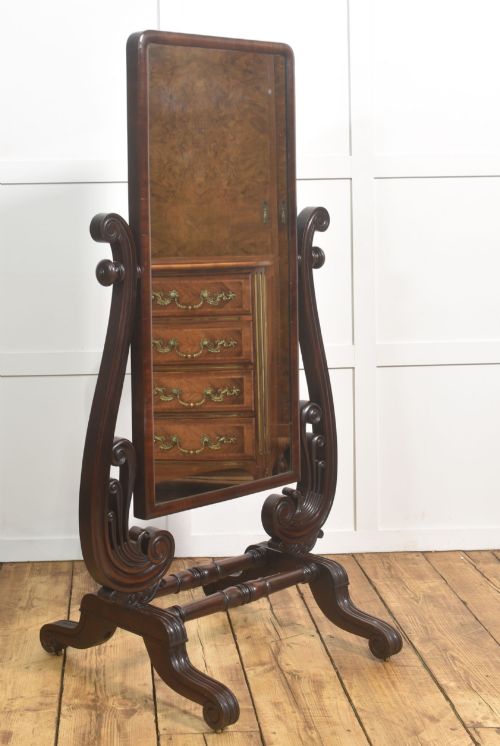
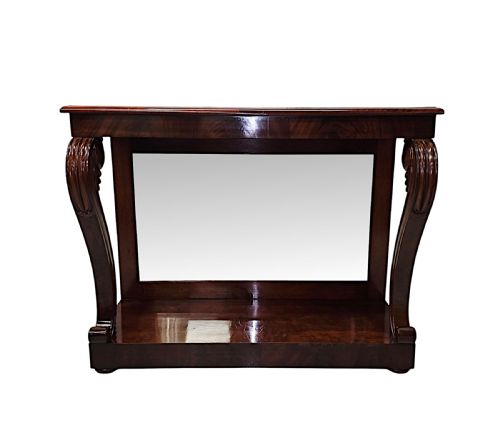
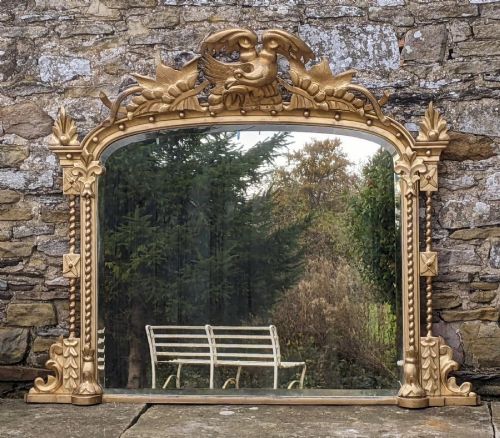
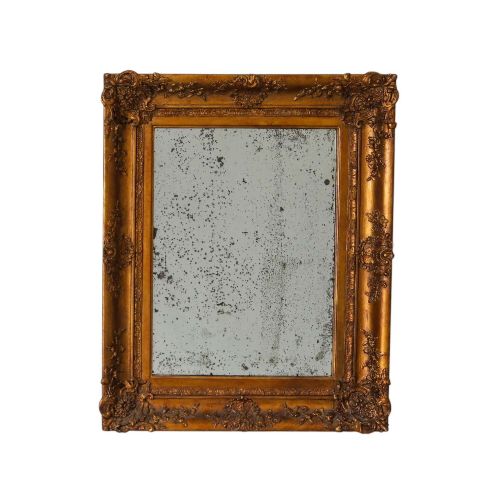
When you search for a william iv mirror, you encounter pieces that span the 19th Century alongside later interpretations from the 20th Century. These objects appear as wall mirrors, dressing table mirrors, cheval mirrors, and large overmantel mirrors designed to sit above a fireplace.
The aesthetic bridges late Regency severity and early Victorian fullness, often employing architectural forms such as half columns, scrolling details, and robust frames. Mahogany and rosewood form the timber core of these pieces, while gesso and giltwood dominate the gilded examples.
Overmantel mirrors and cheval mirrors represent the larger scale of this group, while pier mirrors and toilet mirrors offer compact alternatives for smaller spaces or specific functional placements.
Materials and construction
Makers constructed frames using solid or veneered mahogany, rosewood, walnut, and birdseye maple, occasionally incorporating brass details or ceramic elements. Gilded surfaces relied on gesso applied over a wooden base, sometimes finished with water gilding or oil gilding to achieve different sheens.
Reflective surfaces included original mercury plates and foxed glass, which show natural ageing patterns over time. Frames utilised traditional joinery suitable for heavy plates, supporting substantial overmantel and cheval formats.
Retail Price Guide 2026
Typical UK retail prices for william iv mirror, calculated from the Sellingantiques database of over a million retail prices indexed since 2003. This retail price guide relies exclusively on Sellingantiques data; no external sources or auction records are used, so the figures do not describe the wider market.
Listings feature periods spanning the 19th Century, 1850, and 1930, demonstrating both primary era production and later William IV style revivals.
The spectrum of quality
Quality in these mirrors rests upon the depth of the carving, the crispness of the gilded gesso, and the choice of cabinet timber. Dense mahogany and figured rosewood or birdseye maple veneer elevate a piece above standard domestic examples.
The condition and age of the mirror plate itself contribute heavily to the character of the object, with original mercury plates and undisturbed foxing indicating an untouched history. Elaborate frames featuring architectural elements or specialised forms like girandoles command greater attention than plain rectangular wall variants.
Ciceri and Co of Edinburgh
The William IV Mirror Glossary
- Giltwood
- Wood carved and then coated with gold leaf or metal leaf. This finish defines the ornate wall and overmantel examples.
- Gesso
- A plaster mix applied to wood frames as a base for gilding. It allows for deep, crisp moulding of ornamental motifs.
- Cheval mirror
- A full-length mirror hung in a freestanding frame that tilts on pivots. These large pieces allowed complete viewing of attire.
- Overmantel mirror
- A wide mirror specifically proportioned to hang above a fireplace mantelpiece. They often reflect the maximum light in a reception room.
- Pier mirror
- A tall, narrow mirror designed to hang on the wall space between windows. These pieces maximise light in traditionally dark architectural spots.
- Foxed plate
- Mirror glass displaying dark spots and blemishes caused by the degradation of the silver backing over time. Collectors prize this authentic sign of age.
Frequently Asked Questions
What rooms suit a william iv mirror?
Large overmantel mirrors anchor a living room or dining room when placed above a fireplace, reflecting natural light across the space. Dressing mirrors and cheval mirrors suit bedrooms and dressing areas where full-length or tabletop reflection is required.
Smaller wall and pier mirrors fit narrower wall spaces, hallways, or smaller sitting rooms without overwhelming the architecture.
How do I identify a mercury plate?
Original mercury plates often display a distinctive depth of reflection and characteristic foxing, which appears as cloudy or dark patches within the glass. This older manufacturing method uses a tin and mercury amalgam rather than modern silvering.
Examining the back of the glass and the edge bevels can help confirm whether the plate is period-correct to the frame.
Are these mirrors heavy to hang?
Many examples, particularly overmantel mirrors and large mahogany cheval mirrors, possess considerable weight due to the dense timbers and thick glass plates used in their construction. Secure wall fixing into structural brickwork or studs is essential for wall-hung pieces.
Freestanding cheval mirrors distribute their weight through a stable wooden frame with pivoting side supports.
How do I care for giltwood frames?
Giltwood surfaces require gentle dusting with a soft, dry brush to prevent damage to the delicate gold leaf and gesso moulding. Moisture and harsh cleaning products must be avoided entirely to preserve the original finish.
Keeping the mirror away from direct sunlight and damp environments protects both the wooden structure and the glass plate.