


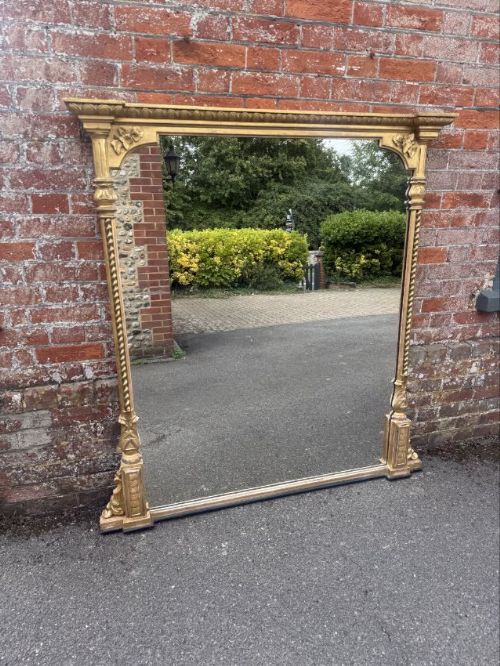
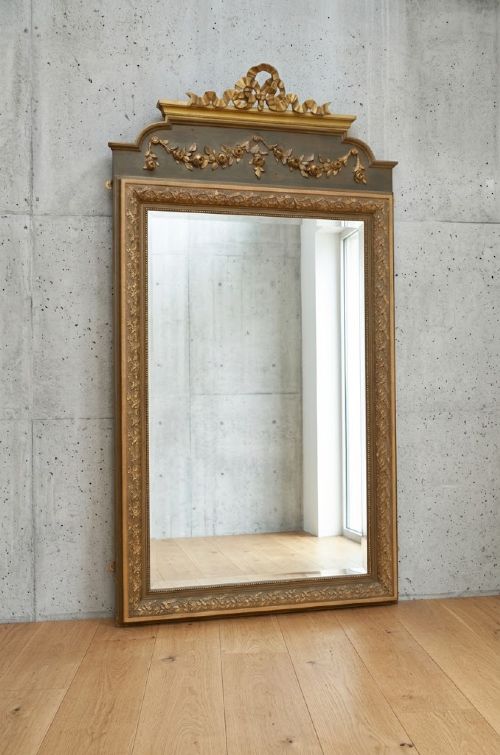
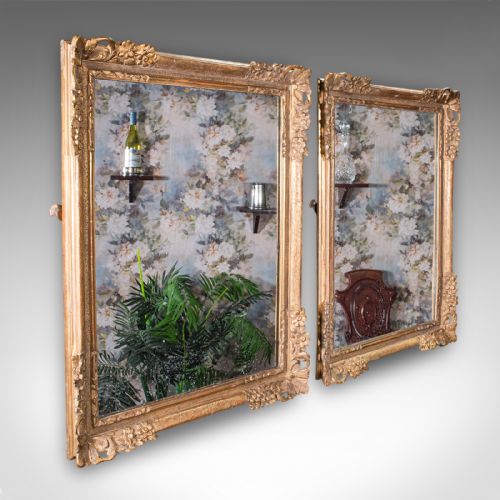
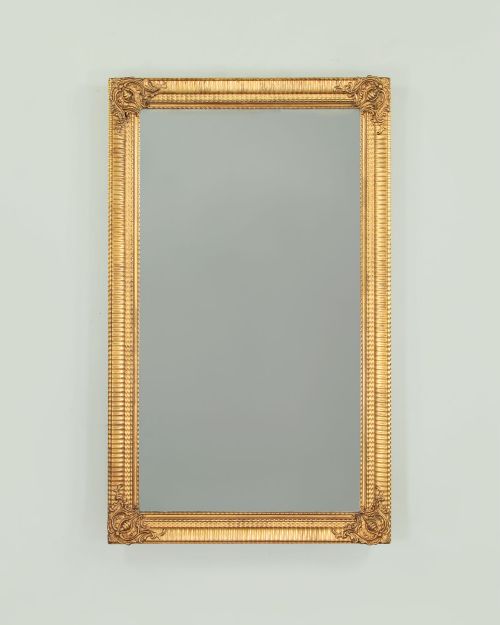
Gold Leaf Overmantel
A gold leaf overmantel brings grand scale and reflective light to a room, historically positioned above the fireplace to brighten darker interiors.
Gold Leaf Overmantel
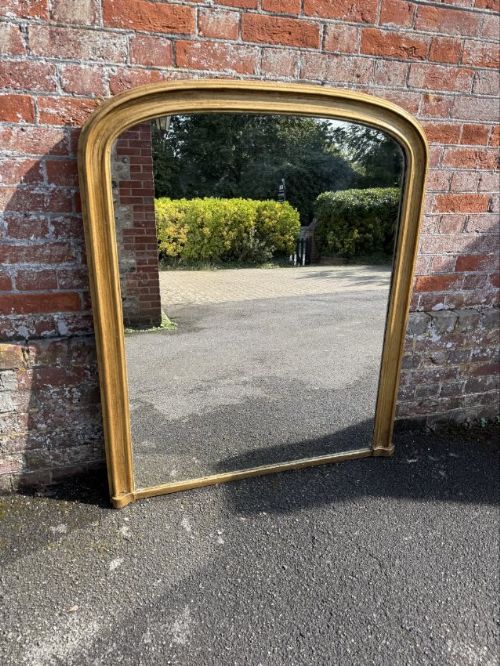
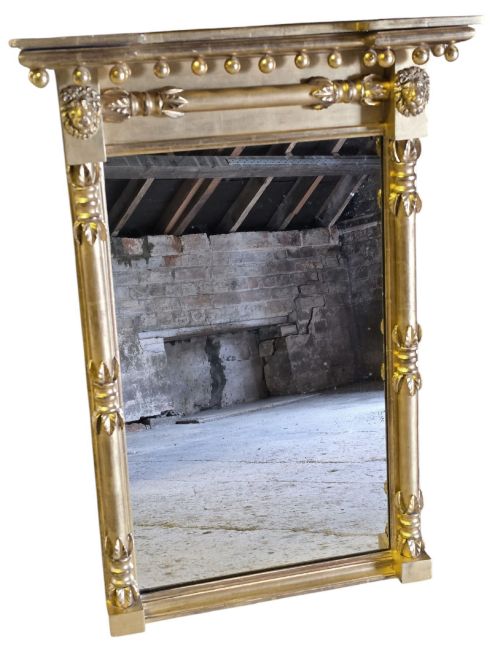
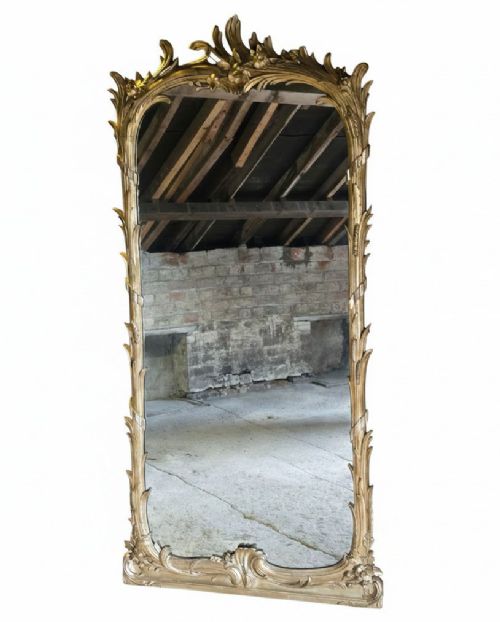
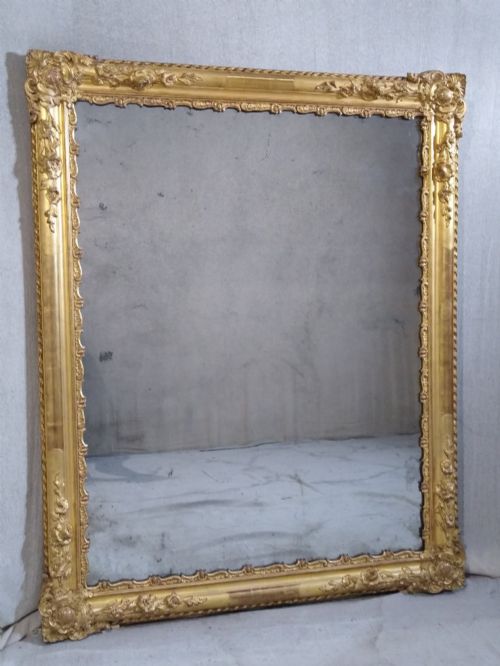
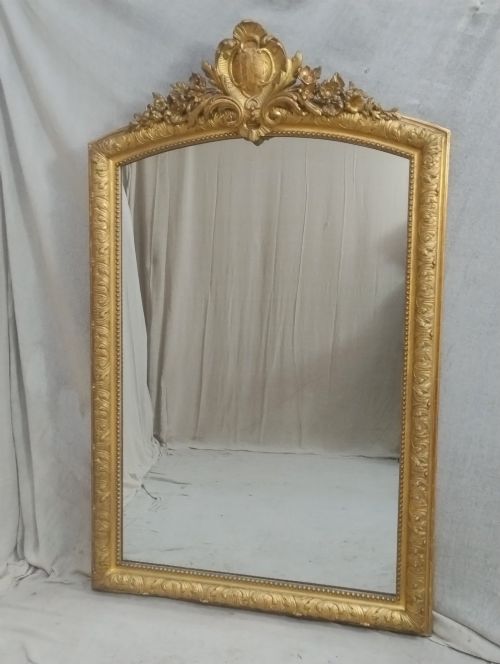
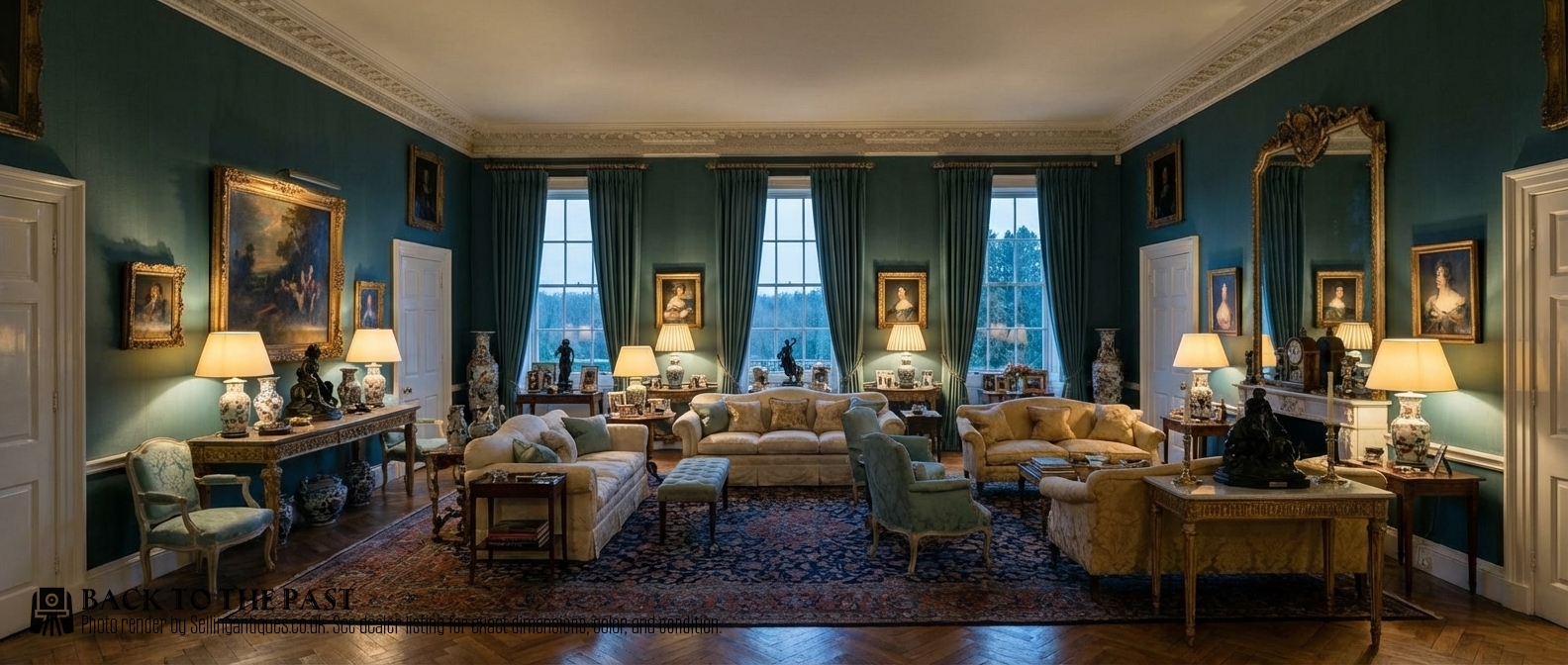
A gold leaf overmantel is a large decorative mirror designed to sit directly above a mantelpiece, drawing the eye upwards with imposing architectural presence. The selection spans the nineteenth century, taking in both English and French regional variations from the Regency, Victorian, and Louis Philippe periods.
Most examples found here are substantial wall mirrors featuring arched, shaped, or rectangular tops built to command a chimney breast. Makers fashioned these pieces to reflect interior candlelight and daylight, often pairing them with matching pier mirrors or placing them as standalone statement furniture.
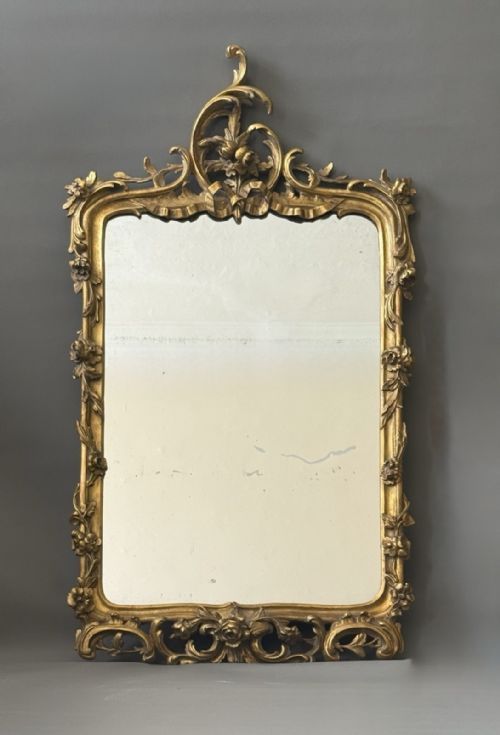
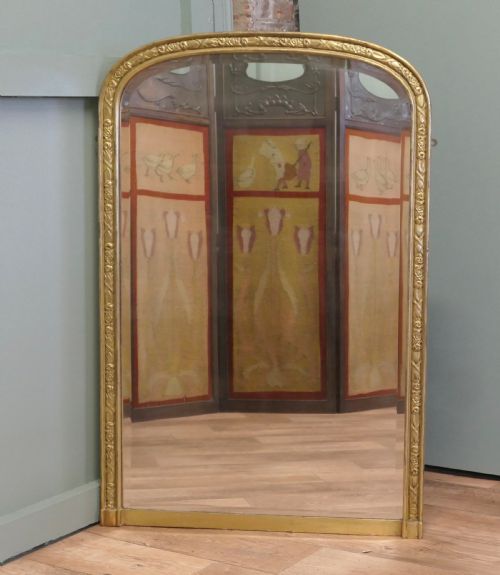
The dominant forms rely heavily on classical revival vocabulary, incorporating Rococo curves, acanthus leaf decoration, and rope twist frames. Whether English gesso overmantels or French chateau mirrors, these large items serve as the focal point of a reception room.
Materials and construction
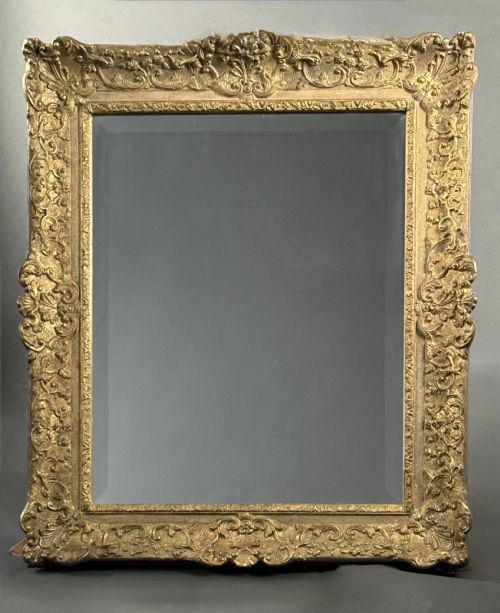
Makers constructed the foundational frames using carved wood, frequently applying a layer of gesso to build up intricate surface details and relief carvings. Gold leaf was then carefully laid over the prepared surfaces to achieve a brilliant, metallic finish that catches the light.
The glazing typically involves heavy mirror glass, occasionally retaining antique plates with foxed mercury backing or bevelled edges. Secondary materials such as composition ornamentation were pressed into service alongside hand-carved elements to execute complex scrollwork and floral crests.
Gold Leaf Overmantel Retail Price Guide 2026
Typical asking prices for gold leaf overmantel among the pieces listed under this phrase on Sellingantiques today, from the lower quarter to the upper quarter. They describe what is for sale here now, not the wider market.
Some nineteenth-century mirrors hide small wooden pegs behind their frames, once used by servants to hang festive garlands.
Assessing craftsmanship
Quality in a gold leaf overmantel rests on the crispness of the hand-carved woodwork and the depth of the underlying gesso moulding. Superior examples display sharply defined acanthus leaves, balanced proportions, and clean gilding application that retains its warmth.
The integrity of the frame joints and the originality of the mirror plate distinguish finer survivals from later adaptations. Better pieces maintain their original gilding without heavy overpainting, showing natural wear that honours the age of the object.
The Gold Leaf Overmantel Glossary
- Giltwood
- Wood that has been coated with a thin layer of gold leaf. This technique provides a durable metallic finish while protecting the carved wooden substrate beneath.
- Gesso
- A plaster-like mixture applied to wood frames to create a smooth surface for carving and gilding. It allows for intricate relief ornamentation.
- Overmantel
- A large mirror or painting specifically designed to be hung on the wall above a fireplace mantel. They often feature horizontal proportions or arched crests suited to chimney breasts.
- Pier glass
- A tall, narrow mirror designed to be hung on the pier of wall between two windows. They share many decorative motifs with overmantel mirrors.
- Mercury glass
- An early form of mirror glass created by pouring a mercury and tin amalgam between two panes of glass. It produces a distinctive speckled, foxed appearance over time.
Gold Leaf Overmantel: Frequently Asked Questions
What is a gold leaf overmantel?
A gold leaf overmantel is a large decorative mirror created to hang above a fireplace mantelpiece. These pieces combine wooden frames, gesso, and thin gold leaf to provide both reflection and decoration.
Originating primarily in the nineteenth century, they were built in various regional styles including Regency and French Rococo Revival to dominate the main wall of a room.
How do I hang a heavy overmantel mirror?
Hanging a heavy overmantel requires securing the piece directly into the structural masonry or wall studs above the fireplace. Because these frames incorporate dense wood, gesso, and thick glass, proper weight distribution is essential.
Professional mirror installers typically utilise heavy-duty wall brackets or French cleats to support the substantial mass safely against the wall.
Can I place an overmantel on the floor?
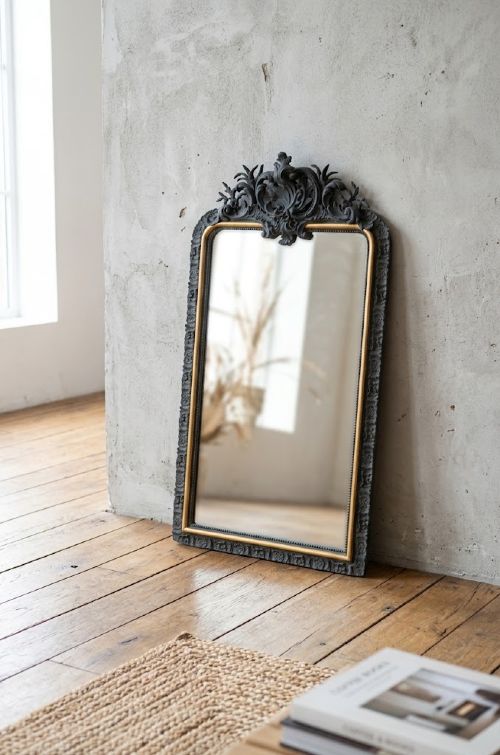
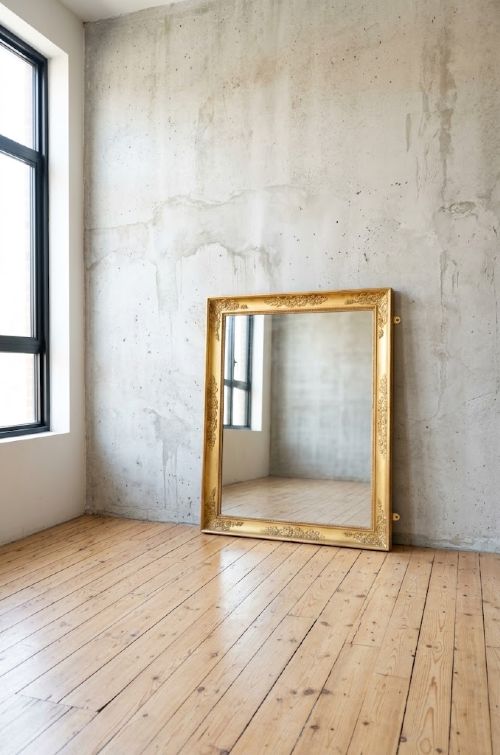
Many large nineteenth-century examples function equally well as leaner mirrors resting directly on the floor against a wall. This positioning creates a relaxed yet monumental decorative statement in living spaces or bedrooms.
When resting a heavy mirror on the floor, securing the top of the frame to the wall prevents accidental tipping.
How do I identify a Victorian overmantel?
Victorian overmantels often feature robust carved wood frames with prominent acanthus leaf decoration, architectural columns, or rope twist details. They frequently incorporate arched tops designed to fit standard nineteenth-century chimney breasts.
Comparing the construction techniques, such as the use of gesso over carved wood and the condition of the glass plate, helps confirm the period.