
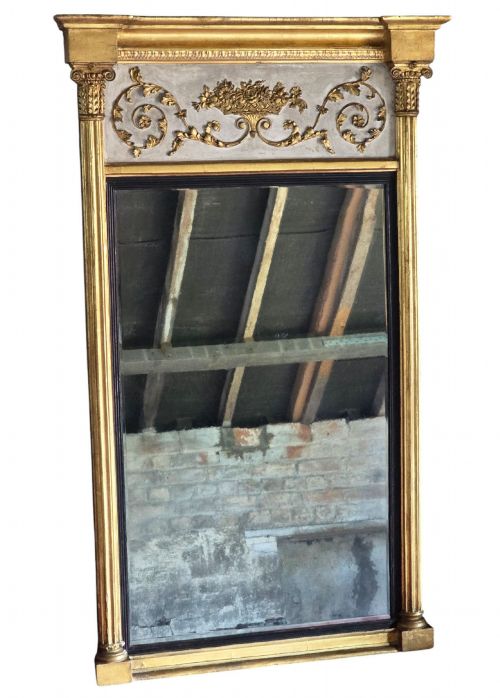
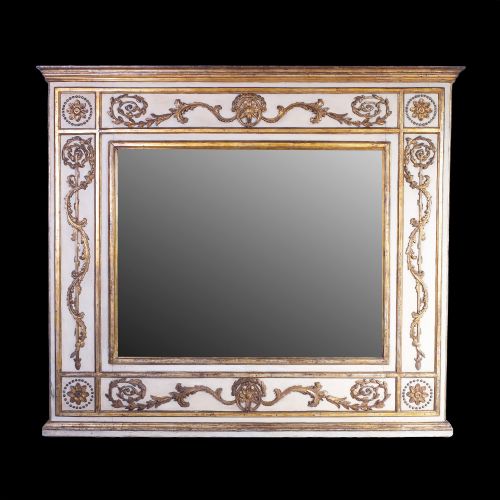
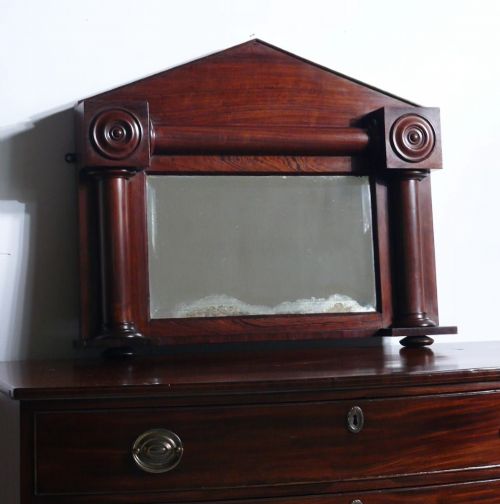
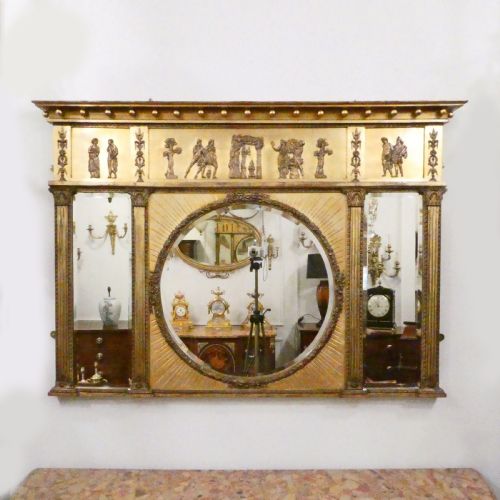


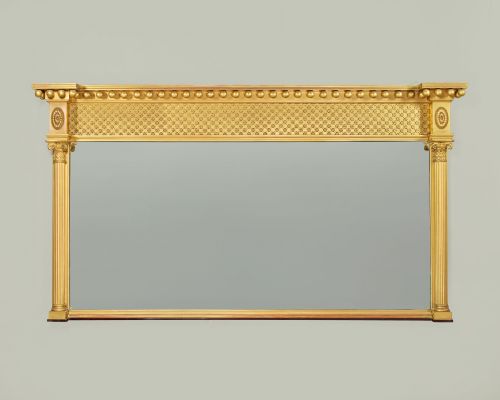
Regency Style Overmantel
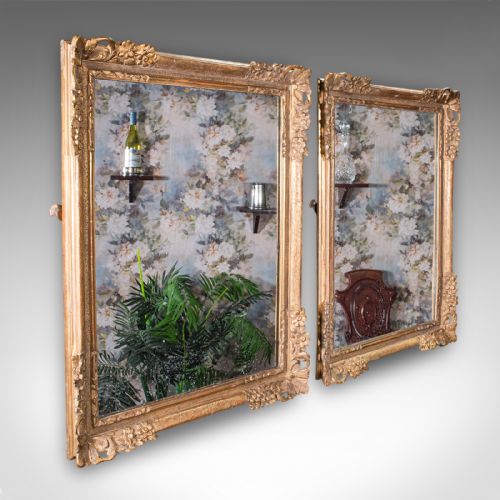
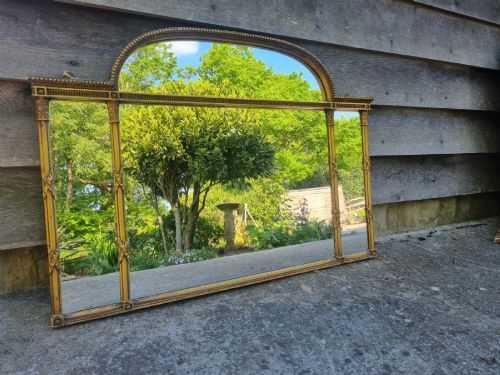
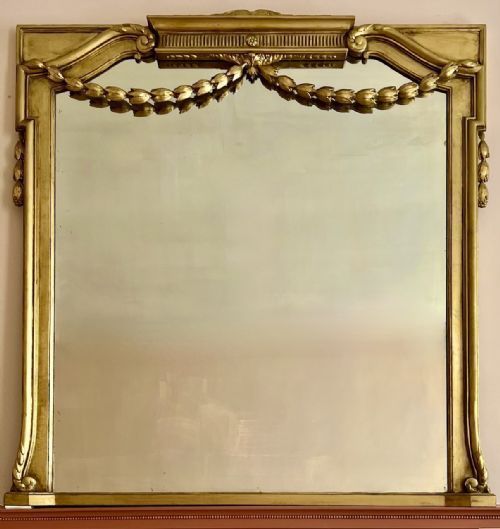
These regency style overmantel mirrors bring grand classical proportions and bright gilded surfaces to a chimney breast.
What a regency style overmantel is
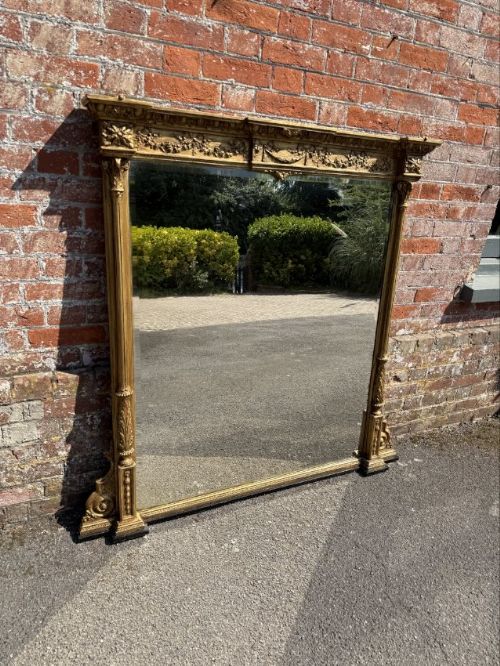
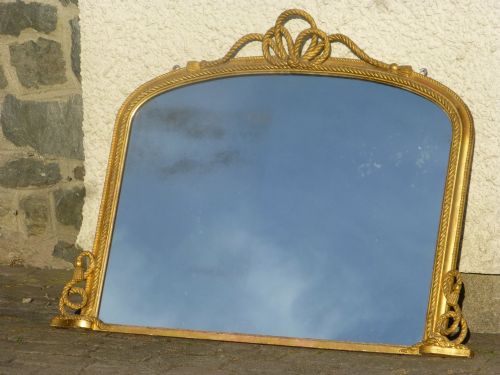
A regency style overmantel is a large horizontal mirror designed specifically to hang above a fireplace mantelpiece. The pieces gathered here belong primarily to the nineteenth century, including Victorian interpretations and revival periods from eighteen seventy to eighteen eighty.
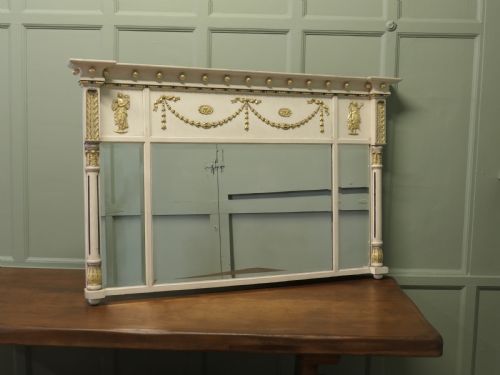
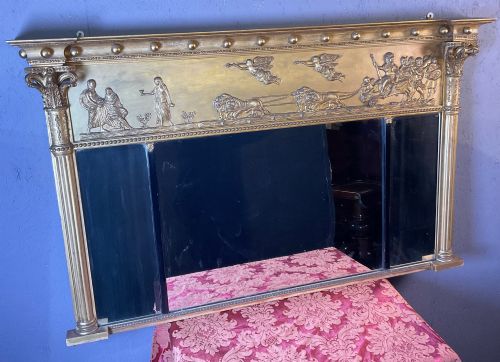
The forms span simple single plates and impressive triple plate arrangements, often called triptychs. These mirrors dominate a chimney breast, reflecting light and creating an illusion of space within a room.
Materials and construction
Frames are constructed from wood and pine, serving as the core structure for elaborate decorative schemes. Gesso and composition moulding are applied over the timber base to build up crisp architectural details and classical ornament.
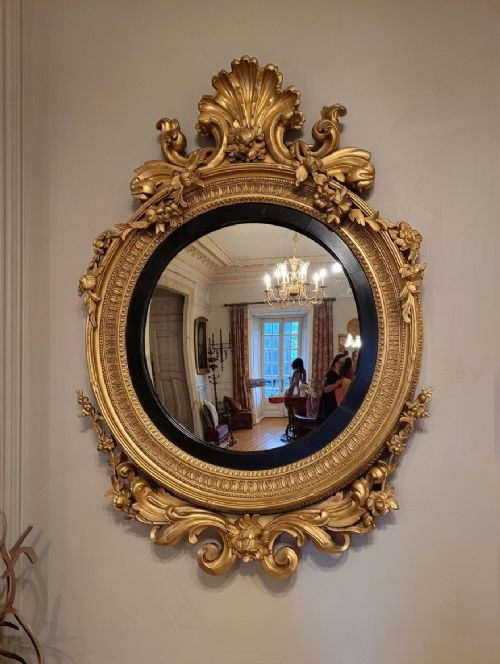
The decorative surfaces rely on gold leaf and giltwood finishes to achieve their characteristic metallic brilliance. Mirrored glass plates are set within these heavy frames, sometimes divided into multiple sections by structural mullions or columns.
Retail Price Guide 2026
Typical UK retail prices for regency style overmantel, calculated from the Sellingantiques database of over a million retail prices indexed since 2003. This retail price guide relies exclusively on Sellingantiques data; no external sources or auction records are used, so the figures do not describe the wider market.
Frame construction relies primarily on wood, pine, gesso, and composition finished in gold leaf and giltwood.
Distinctions in quality
Quality rests in the depth and sharpness of the carved wood and moulded composition work. Finer examples display crisply defined architectural elements such as ribbed columns, whereas simpler pieces rely on flatter surface decoration.
The treatment of the gilt finish and the integrity of the original glass plates also separate standard examples from exceptional ones. Heavier framing timbers and substantial proportions distinguish the grander nineteenth century productions from later revivals.
The Regency Style Overmantel Glossary
- Overmantel mirror
- A large mirror designed to be mounted on the wall directly above a fireplace mantel. These pieces reflect room light and complement the architectural scale of a chimney breast.
- Giltwood
- Timber that has been coated with gold leaf or a gold coloured finish. This technique creates a luminous surface that defines classical and revival mirror frames.
- Gesso
- A plaster based mixture applied to wooden frames and carved or moulded into relief ornament. It provides a smooth white ground for subsequent gilding.
- Triptych
- A mirror plate divided into three distinct vertical sections within a single frame. This configuration is common in wider overmantel designs from the period.
- Composition
- A moulded mixture of whiting, resin, glue and oil pressed into ornament. It allowed makers to produce intricate classical decorations efficiently.
Frequently Asked Questions
Where should I hang an overmantel mirror?
These mirrors belong directly above a fireplace mantelpiece, where their horizontal proportions anchor the chimney breast.
Ensure the wall fixings are substantial enough to support the heavy weight of gilded wood and glass.
How do I identify nineteenth century pieces?
Nineteenth century examples show traditional construction methods using pine frames finished with gesso and gold leaf.
Stylistic cues include classical motifs, ribbed columns and heavy proportions typical of Victorian revival work.
How do I clean a gilded frame?
Gilded surfaces require gentle dusting with a soft dry brush to protect the delicate gold leaf and composition ornament.
Avoid liquid cleaners or moisture, which can damage the fragile historic finishes on older frames.