
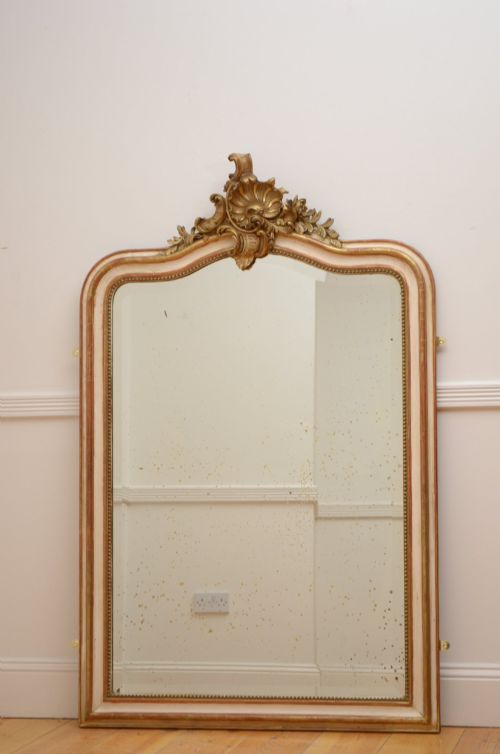


Empire Style Overmantel
An empire style overmantel brings architectural symmetry and classical grandeur to a room, framing light with substantial presence.
Empire Style Overmantel
When you search for an empire style overmantel, you are looking at large architectural mirrors designed to sit above a fireplace mantelpiece. The pieces gathered here draw on classical motifs, presenting commanding frames that anchor a room.
You will most frequently meet 19th-century examples, including French Empire, Napoleon III, and Regency variations. These mirrors often incorporate distinct classical detailing such as decorative relief panels, ebonised touches, and rich timber frames.
The selection ranges from early 19th-century giltwood and gesso designs to later revival pieces in mahogany and walnut. Each object serves as both a functional looking glass and a striking focal point for domestic interiors.
How they were made
The construction of these mirrors relies on sturdy timber carcases formed from mahogany, walnut, or rosewood, frequently enhanced with applied gesso and composition ornaments. Artisans then applied gold leaf to the moulded elements, creating the characteristic gilded finish seen across the period.
Many examples feature decorative relief panels, sometimes executed in oil paint or carved directly into the plaster and wood composition. Plate glass of the era is set securely within the frame, occasionally divided into multiple plates as seen in triple plate configurations.
Listings span the 19th century through to the mid 20th century, encompassing French Empire, Regency, and Empire Revival styles.
What varies in quality
The distinction between ordinary and exceptional examples lies in the crispness of the gesso moulding and the depth of the carved or applied decorative relief. Finer pieces display sharply defined classical motifs, such as figures of Bacchus and cherubs, rather than soft or blurred ornamentation.
The choice and treatment of the underlying materials also dictate the standard of the piece, from richly figured mahogany and walnut to deeply polished ebonised wood paired with genuine gold leaf. Furthermore, the integrity of the original mercury or antique glass plate contributes significantly to the character and standing of the mirror.
The Empire Style Overmantel Glossary
- Giltwood
- Timber that has been coated with a thin layer of gold leaf. This technique provides a luminous finish that catches and reflects ambient room light.
- Gesso
- A plaster-like mixture applied to wooden frames as a base for gilding or to create raised mouldings. It allows artisans to model intricate classical relief details.
- Overmantel
- A mirror or painting specifically proportioned to hang on the wall directly above a fireplace mantel. These pieces were central to 19th-century domestic interior decoration.
- Trumeau
- A decorative wall mirror featuring an integrated painted or carved panel above the glass plate. These originate largely from French classical design traditions.
- Ebonised
- Wood treated with a chemical stain or finish to imitate ebony. This dark treatment provides high contrast against gilt details in classical furniture.
Empire Style Overmantel: Frequently Asked Questions
What is an empire style overmantel?
An empire style overmantel is a large decorative mirror designed to sit above a fireplace, drawing on classical architectural motifs and proportions.
These pieces typically date from the 19th century and feature substantial frames in giltwood, mahogany, or ebonised wood.
How do I hang a heavy overmantel mirror?
Due to the substantial weight of timber frames and glass plates, these mirrors require secure wall fixings anchored directly into structural studs or masonry.
Professional installation is strongly advised to support the considerable load safely and protect both the wall and the antique frame.
How do I clean antique giltwood?
Antique giltwood requires gentle maintenance using a soft, dry brush to remove dust without disturbing the delicate gold leaf surface.
Moisture and modern chemical cleaners must be avoided entirely, as they can strip the historic gesso and gilding from the carved timber.
Are these mirrors original 19th-century pieces?
The selection includes authentic 19th-century pieces from periods such as the French Empire and Napoleon III, alongside later revival works.
Each listing records the specific period and materials, allowing buyers to identify original Regency and Victorian manufacturing eras.