



Classical Relief Mirror
A classical relief mirror brings architectural dignity to a room, offering finely moulded classical detail paired with functional glass.
Classical Relief Mirror
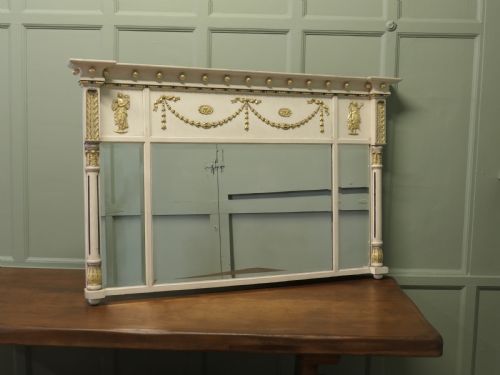
A classical relief mirror combines reflective glass with sculptural moulded decoration drawn from neoclassical design. When searching for a classical relief mirror, buyers encounter grand overmantel formats alongside more compact wall and pier mirrors.
The pieces listed on this page originate predominantly from the nineteenth century, spanning Regency, Victorian, and French Empire styles. These domestic furnishings were designed to draw light across a room while displaying narrative or decorative relief panels.
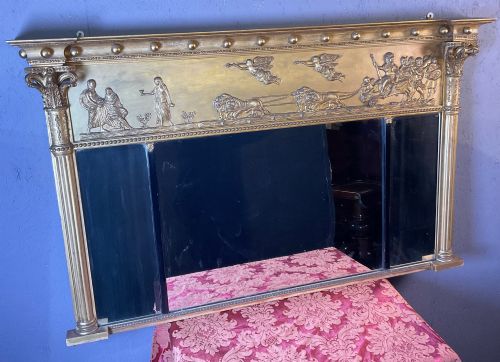
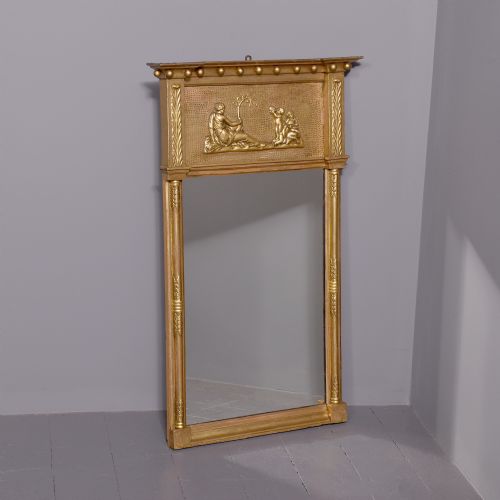
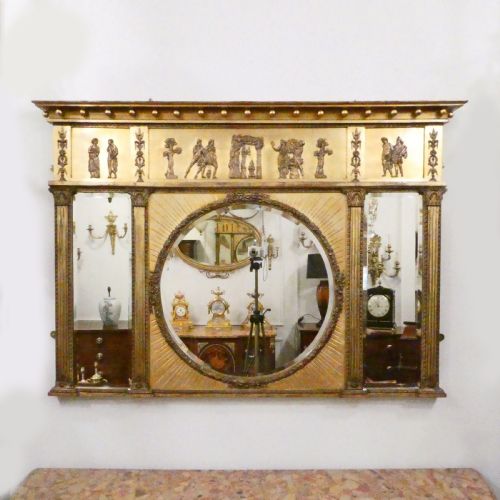
Overmantel mirrors dominate the available forms, typically featuring long rectangular plates flanked or surmounted by classical motifs. Wall and pier variants appear frequently, often scaled for placement between windows or above smaller fireplace surrounds.
Materials and construction
Makers constructed the structural carcasses of these pieces from timber, applying layers of gesso and composition ornament to build up crisp relief detail. Gold leaf or paint finishes were then applied over the prepared surfaces to achieve a bright gilded appearance.
Giltwood frames utilise solid timber carved directly before gilding, while composition ornaments are moulded separately and fixed to the wooden base. Mirror glass is set within these frames, sometimes taking multiple plate configurations such as triptychs or triple plate layouts.
Classical Relief Mirror Retail Price Guide 2026
Typical asking prices for classical relief mirror among the pieces listed under this phrase on Sellingantiques today, from the lower quarter to the upper quarter. They describe what is for sale here now, not the wider market.
Materials recorded across the inventory include giltwood, gesso, gold leaf, composition, ebonised wood, and traditional mirror glass.
Judging quality and execution
Quality in these mirrors rests on the crispness of the moulded relief work and the depth of the gilding. Sharply defined classical motifs and well-preserved gold leaf separate finer examples from simpler production pieces.
The structural integrity of the frame and the retention of original glass plates also distinguish superior items. Subtle ebonised details or narrative relief panels, such as chariot scenes, indicate higher artistic ambition in the workshop.
The Classical Relief Mirror Glossary
- Giltwood
- Timber carved and coated with gold leaf. This material provides a warm and enduring metallic lustre.
- Gesso
- A plaster-like mixture applied to wood frames to create a smooth surface for gilding. It holds fine detail during the moulding process.
- Composition
- A moulded mixture of whiting, glue, and resin used to form decorative reliefs quickly. It hardens to resemble carved wood.
- Pier mirror
- A tall narrow glass designed to hang on the wall between two windows. It reflects additional light into darker architectural spaces.
- Overmantel mirror
- A wide horizontal glass intended for placement directly above a fireplace mantelpiece. It anchors the decorative scheme of a reception room.
Classical Relief Mirror: Frequently Asked Questions
Where should I hang an overmantel mirror?
These large horizontal mirrors belong above a fireplace mantelpiece, where they naturally anchor the proportions of the chimney breast. Positioning them here reflects light from opposing windows across the entire reception room.
Ensure the wall fixings are secured firmly into solid masonry or studwork to support the considerable weight of the wooden and gesso frame.
What is a pier mirror used for?
Pier mirrors are traditionally fitted to the narrow expanse of wall space situated between two windows. Their vertical format maximises natural daylight while filling an awkward architectural gap.
They work equally well in hallways or narrower rooms where a wide horizontal mirror would overwhelm the available wall space.
How do I identify a Regency style mirror?
Regency pieces typically incorporate classical architectural elements such as reeded pilasters, ball-bearing friezes, and bold cornice mouldings. The ornamentation draws heavily on ancient Greek and Roman design motifs.
French Empire variants often feature distinct mythological figures, such as Bacchus and cherubs, rendered in high relief panels above the glass.
Are these mirrors suitable for everyday living?
These sturdy nineteenth-century furnishings are built to function as practical household objects as well as decorative centrepieces. Their heavy timber frames and thick glass plates withstand normal domestic environments comfortably.
Routine maintenance involves gentle dusting of the gilt surfaces and careful cleaning of the glass without introducing moisture to the frame joints.