
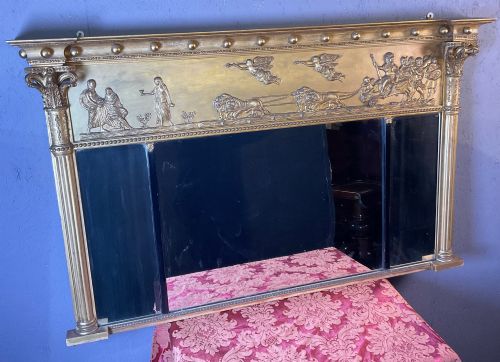


Corinthian Column Mirror
These corinthian column mirror pieces are classical architectural looking-glasses that bring monumental depth and proportion to a room.
What corinthian column mirror pieces are
When you search for corinthian column mirror, you are looking at substantial architectural looking-glasses designed to anchor a room with classical dignity. The pieces found here span the nineteenth century, including specific dates such as 1870, 1880, and the Edwardian era, alongside styles described as Regency, Regency Neoclassical, Victorian Neoclassical, Grand Regency, French Chateau, and Victorian.
The dominant forms on this page are overmantel mirrors, wall mirrors, and large triptych formats. These range from substantial carved wood and gesso gilt column framed examples to large ebonised and gilt overmantle pieces and freestanding decorative mirrors.
Originating primarily from English workshops, these items adapt classical temple architecture into domestic furnishings. They function both as practical reflective surfaces and as grand decorative focal points above fireplaces or along principal walls.
How they were made
Makers constructed these frames using wood, gesso, composition, and ebonised wood, applying gold leaf and paint to achieve their metallic and dark finishes. Carved wood provides the structural integrity necessary for supporting heavy glass and elaborate architectural mouldings.
Decorative relief details, including the intricate acanthus leaves and fluting characteristic of the classical orders, relied on applied composition and moulded gesso over wooden carcases. Gilding was subsequently applied to these prepared surfaces to create the luminous finishes seen across the nineteenth-century examples.
Retail Price Guide 2026
Typical UK retail prices for corinthian column mirror, calculated from the Sellingantiques database of over a million retail prices indexed since 2003. This retail price guide relies exclusively on Sellingantiques data; no external sources or auction records are used, so the figures do not describe the wider market.
Listings span the nineteenth century, including specific dates in 1870 and 1880, alongside Edwardian examples.
What varies in quality
Quality in these looking-glasses rests upon the crispness of the architectural carving and the depth of the gilding. Hand-carved wooden columns exhibit sharper fluting and more defined capitals than those reliant on heavier composition pressings.
The architectural proportions and the integration of the column supports into the overall frame structure dictate the visual success of the piece. Larger formats, such as those measuring several feet in height, require superior framing joinery to maintain stability across the timber and glass assembly.
The Corinthian Column Mirror Glossary
- Corinthian column
- An architectural support featuring a slender shaft and an ornate capital decorated with rows of acanthus leaves. This classical order provides the defining visual motif for the frames on this page.
- Giltwood
- Timber that has been coated with a thin layer of gold leaf over a prepared gesso ground. It offers a warm, reflective surface that catches natural light in a room.
- Gesso
- A plaster-like mixture applied to wooden frames as a smooth base for gilding or painting. It allows craftsmen to model fine relief details before finishing.
- Overmantel mirror
- A large horizontal looking-glass specifically proportioned to hang on the wall directly above a fireplace mantelpiece. These forms dominate the nineteenth-century selection.
- Triptych mirror
- A looking-glass divided into three distinct vertical sections within a single frame. This configuration widens the reflected field of view in a room.
Frequently Asked Questions
Where should I hang an overmantel mirror?
These large looking-glasses traditionally sit directly above a fireplace mantelpiece, serving as the central architectural focus of a reception room.
Their substantial proportions also allow them to function effectively on prominent freestanding walls where they can reflect light and open up the interior space.
How do I date a nineteenth-century mirror?
Dating relies on examining the construction methods of the wooden frame, the composition of the gesso, and the style of the classical ornamentation.
Specific period markers include the heavy ebonisation seen in items from 1880 and the carved ribbed columns recorded on pieces dated to 1870.
What is ebonised wood?
Ebonised wood is timber treated with a stain, dye, or paint finish to imitate the dark, dense appearance of genuine ebony.
This technique was utilised in Victorian workshops to create a striking contrast against gilded architectural details.
Are these mirrors freestanding or wall mounted?
The majority of pieces listed are designed for wall hanging, particularly as overmantel formats that anchor domestic interiors.
However, the selection also includes specific freestanding decorative mirror forms from the Edwardian period.