

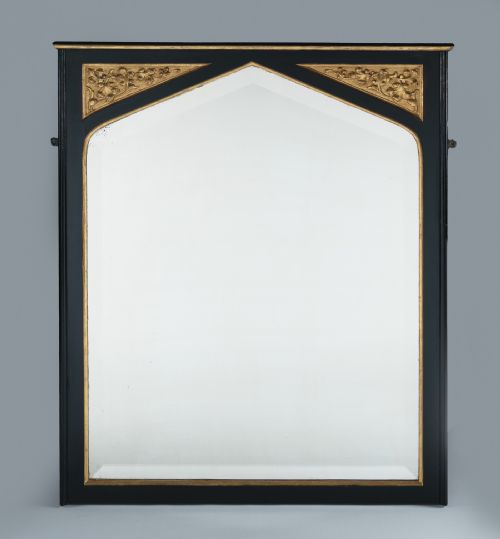
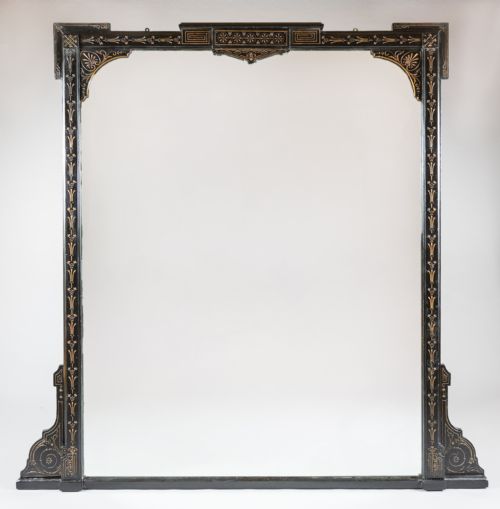
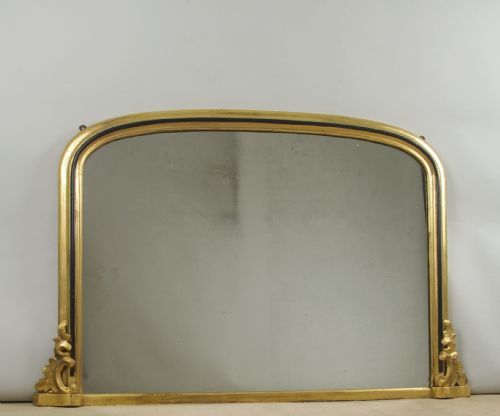
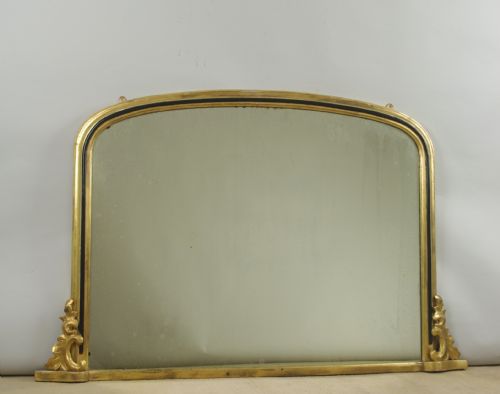
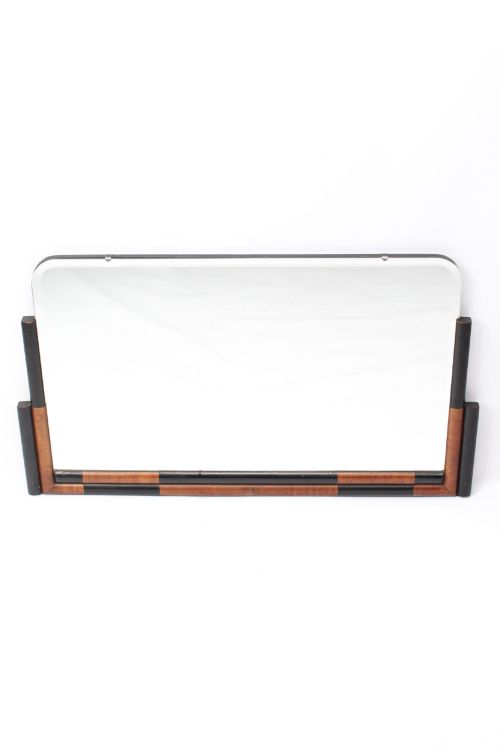
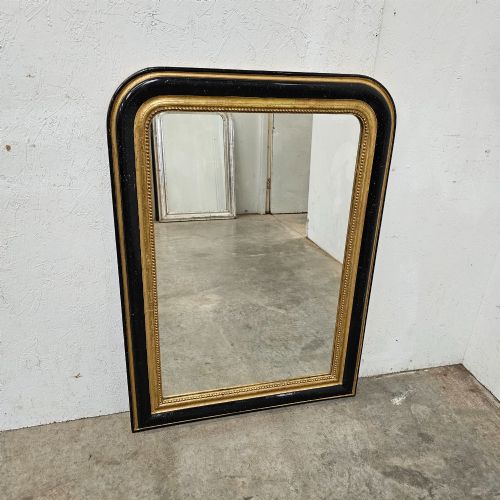
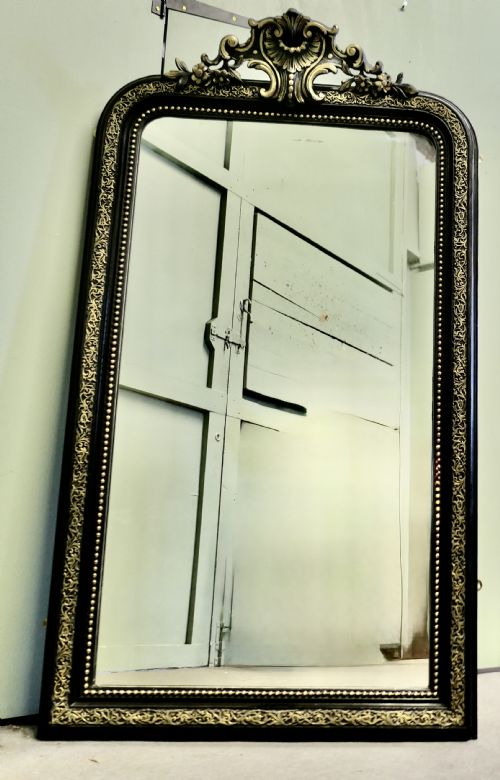
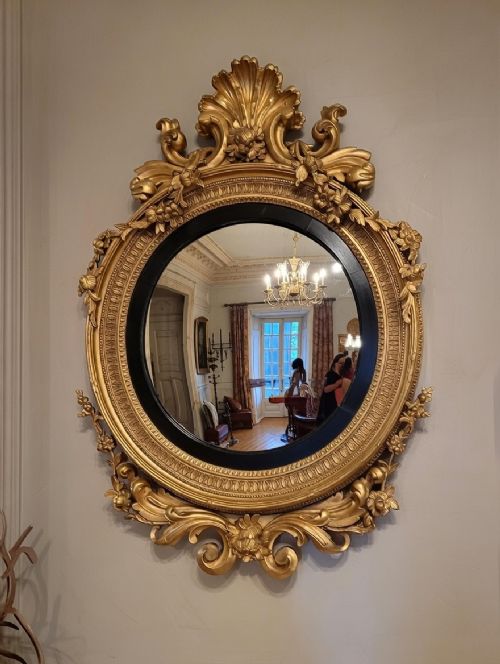
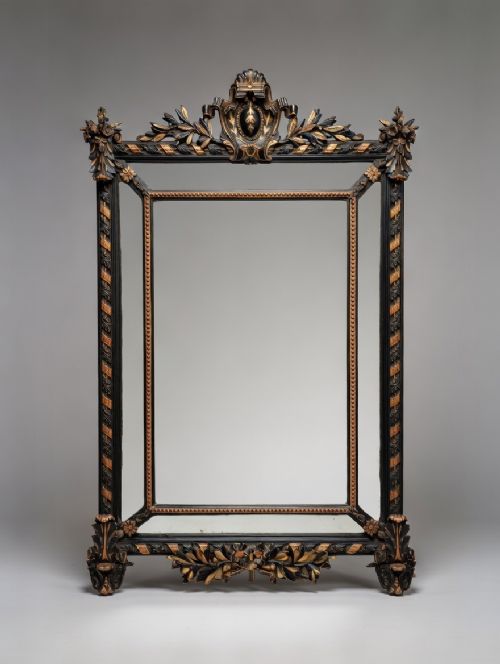
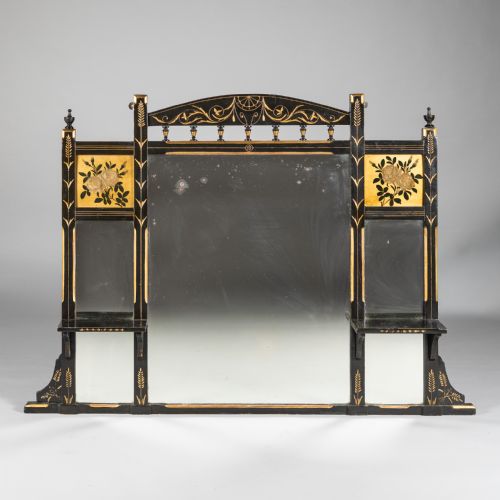


Ebonised Overmantel Mirror
An ebonised overmantel mirror brings heavy Victorian presence and sharp contrast to a room, designed to sit directly above the fireplace opening.
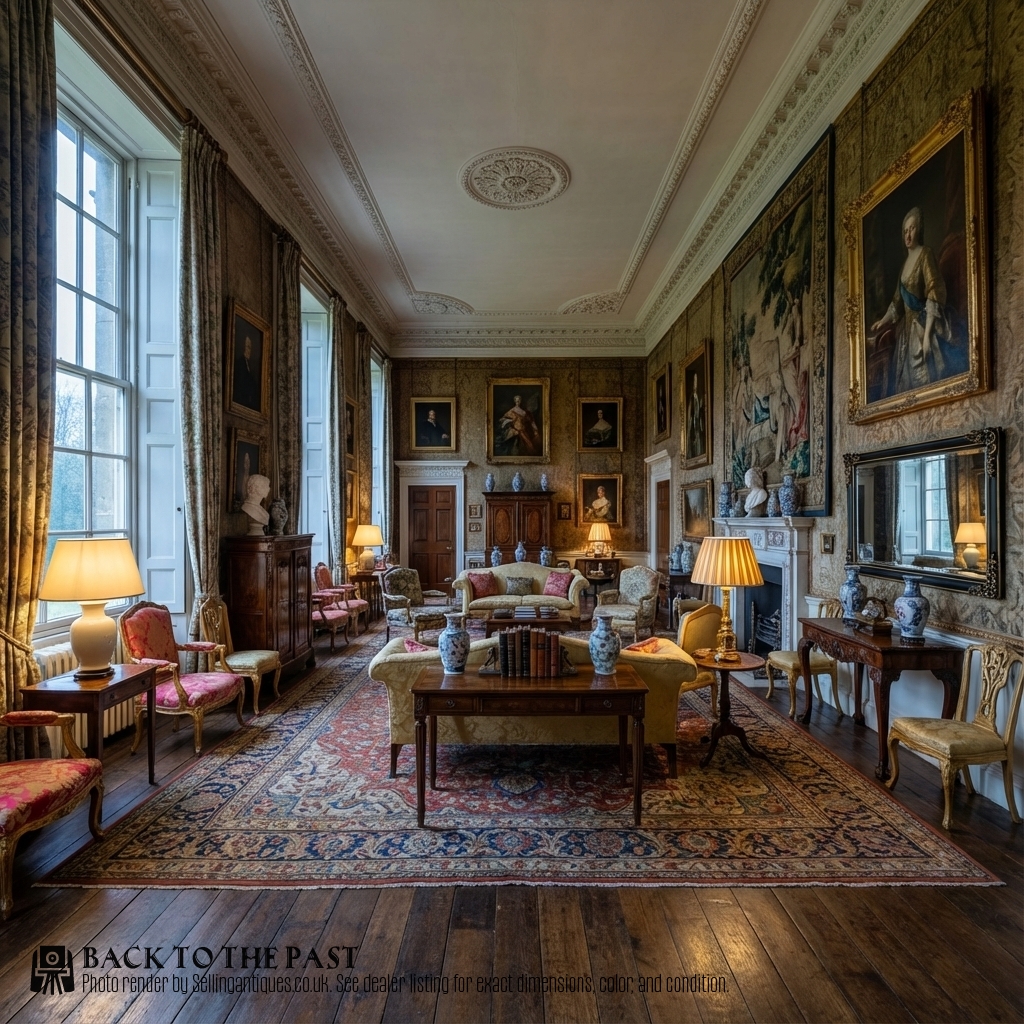
Ebonised Overmantel Mirror
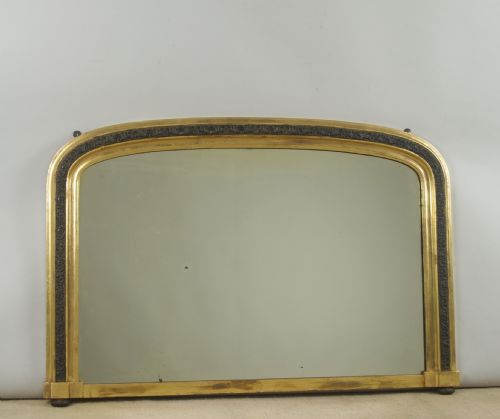
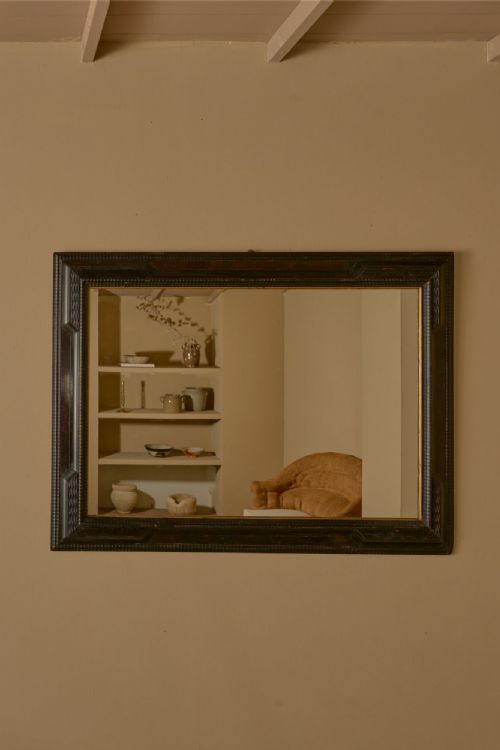
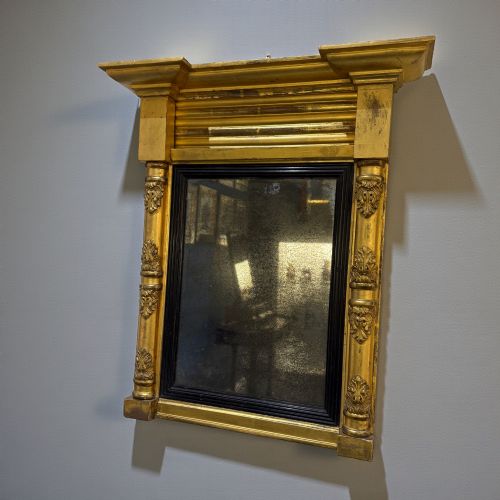
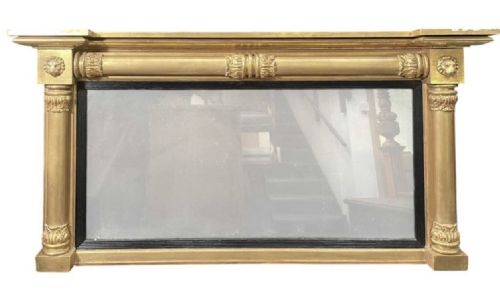
An ebonised overmantel mirror is a substantial looking-glass designed specifically to mount above a mantelpiece, serving as a focal point in nineteenth-century interiors. These pieces frequently appear from the Victorian era and the Aesthetic Movement, carrying dark finished wooden frames often brightened by parcel-gilt highlights.
The physical form is typically wide and rectangular to match the proportions of a fireplace below, occasionally incorporating arched tops or multi-section plates. While many examples rely on deep black wood finishes, related pieces combine ebonised surfaces with walnut, mahogany, or painted details.
Makers of these mirrors drew on diverse stylistic influences, ranging from Gothic Reform designs to French taste, creating both simple architectural frames and heavily carved, ornate structures. The survivor across these listings is most commonly a large Victorian or Aesthetic Movement piece featuring contrasting dark timber and reflective glass.
How they were made
The construction relies heavily on timber frames treated with dark finishes to imitate ebony, paired with carved gesso elements and delicate applications of gold or silver leaf. Artisans of the period built these large frames from woods such as mahogany, walnut, or oak before applying the characteristic black surface treatment.
Reflecting surfaces consist of heavy mirror glass, frequently featuring original silvered plates that show gentle age and oxidation. Gilding was applied selectively to raised carvings, fluted columns, and incised details, creating the striking black and gold contrast central to Aesthetic Movement and Victorian design.
Ebonised Overmantel Mirror Retail Price Guide 2026
Typical asking prices for ebonised overmantel mirror among the pieces listed under this phrase on Sellingantiques today, from the lower quarter to the upper quarter. They describe what is for sale here now, not the wider market.
Listings feature ebonised overmantel mirrors spanning the Regency, Victorian, and Aesthetic Movement periods, utilising glass, gesso, and gold leaf.
What varies in quality
The degree of refinement in the carved gesso and the crispness of the parcel-gilt highlights set finer examples apart from simpler utilitarian pieces. Superior frames show deep, deliberate detailing in the woodwork rather than flat, moulded ornament.
Preservation of the original mirror plate and the stability of the large wooden frame determine the overall integrity of the piece. Substantial overmantels require robust internal construction to support their heavy glass safely over time.
J H G Elliott Newland Sherborne·Rowley Gallery
The Ebonised Overmantel Mirror Glossary
- Ebonised
- Wood finished to resemble expensive ebony through staining, painting, or chemical treatment. This technique became popular during the nineteenth century to provide a sleek, dark surface for furniture and frames.
- Overmantel
- A large mirror or painting designed to hang specifically on the wall space immediately above a mantelpiece. These fixtures were proportioned to anchor the visual weight of the fireplace surround.
- Parcel-gilt
- Partially gilded, where gold leaf is applied only to specific raised portions of a carved surface. This highlights particular decorative motifs against a contrasting background colour.
- Gesso
- A plaster-like mixture applied to wooden frames as a base for carving and gilding. It allows for intricate relief ornamentation before finishing.
- Triptych
- A mirror plate divided into three distinct vertical sections within a single frame. This layout was frequently used in Regency and Victorian designs to widen the reflected field of view.
Ebonised Overmantel Mirror: Frequently Asked Questions
How do I hang a heavy overmantel mirror safely?
These large nineteenth-century frames carry considerable weight due to their thick timber construction and heavy glass plates. They require professional wall anchoring directly into masonry or secure studs to support the load safely.
Resting the frame partially on the mantelpiece itself while securing the upper section to the wall helps distribute the physical weight evenly.
What rooms suit an ebonised overmantel mirror?
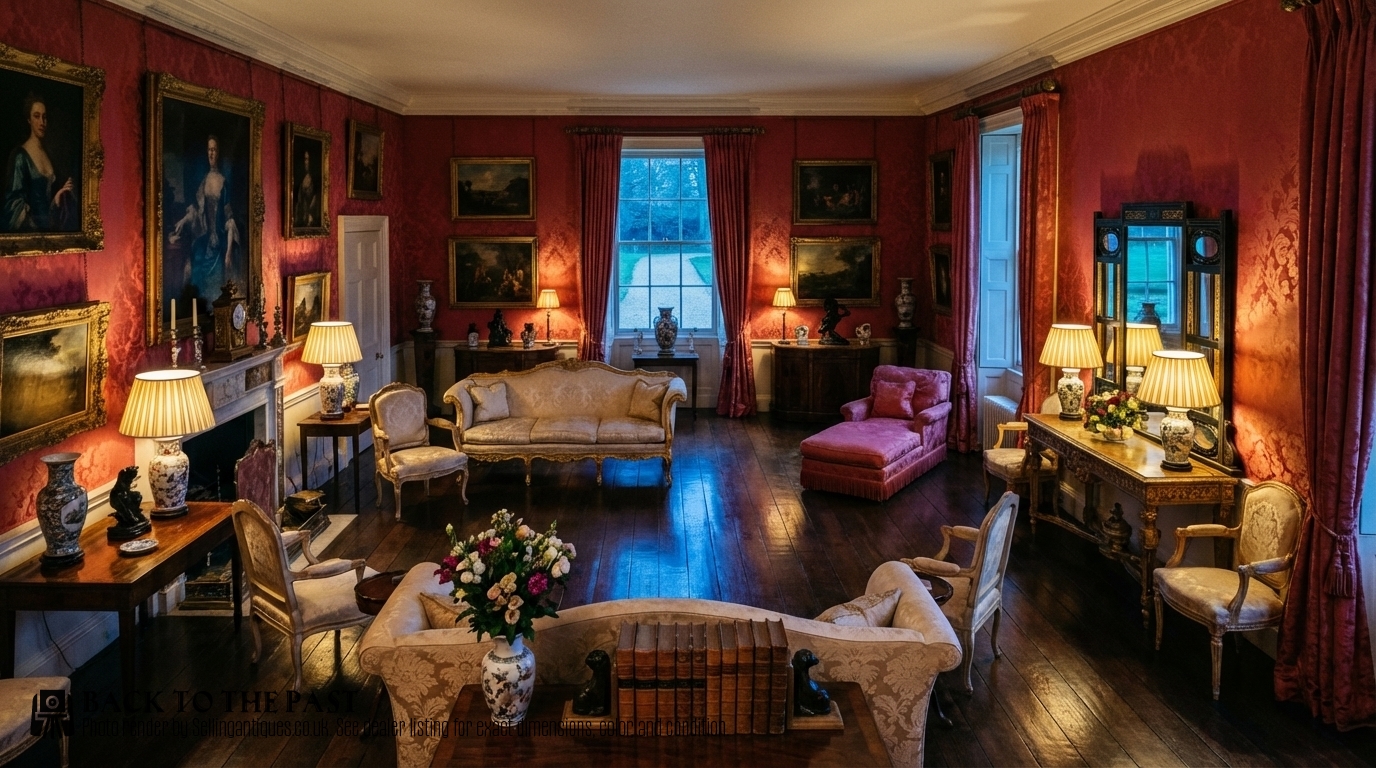
While originally built for Victorian reception rooms and formal drawing rooms above the fireplace, these mirrors work effectively in modern interiors to anchor large wall spaces. Their dark frames add dramatic contrast against neutral or brightly painted walls.
Beyond the mantelpiece, they function well as grand hallway mirrors or focal points in dining spaces where their reflective surface enlarges the room.
How do I clean an antique mirror plate?
Historic silvered glass requires gentle maintenance to preserve the original plate and any natural foxing or age spots. Avoid harsh chemical commercial sprays that can seep behind the glass and damage the backing.
Use a soft, dry microfibre cloth to remove dust, and apply a mild solution sparingly to the glass surface only when necessary, keeping moisture away from the wooden frame edges.
How do I tell Victorian from Regency mirrors?
Regency frames often lean towards classical architectural motifs, gilded finishes, and triptych divisions with delicate acanthus decoration. They frequently reflect the light, restrained tastes of the early nineteenth century.
Victorian and Aesthetic Movement pieces generally embrace darker ebonised wood, heavier proportions, incised gilt highlights, and bolder geometric or carved structures that emerged later in the century.