


Large Black Wall Mirror
A large black wall mirror brings scale and deep tone to a room, drawing the eye with dark wood, ebonised surfaces, and gilt highlights.
Large Black Wall Mirror
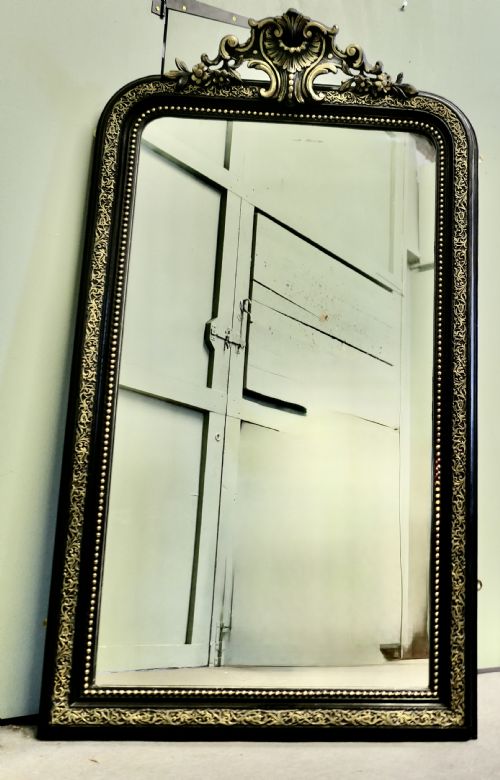
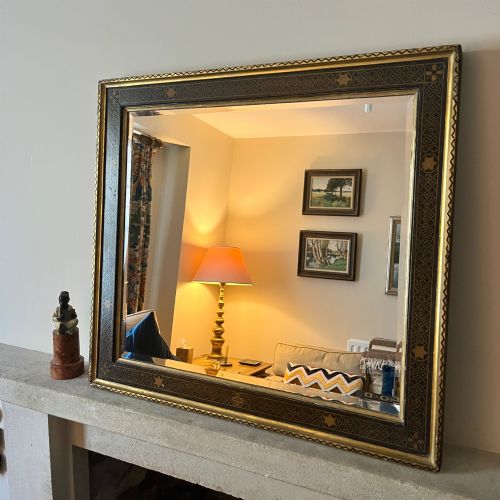
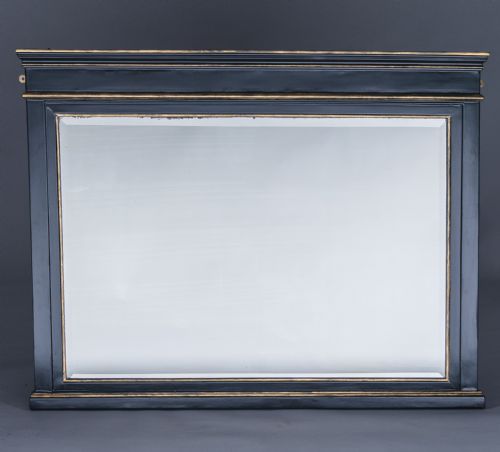
When you search for a large black wall mirror, you encounter substantial overmantle mirrors, grand floor mirrors, and wide pier glasses originating primarily from the nineteenth century and extending into the early twentieth century. These pieces combine dark ebonised finishes, paint, or black lacquer with architectural proportions designed to anchor a principal room.
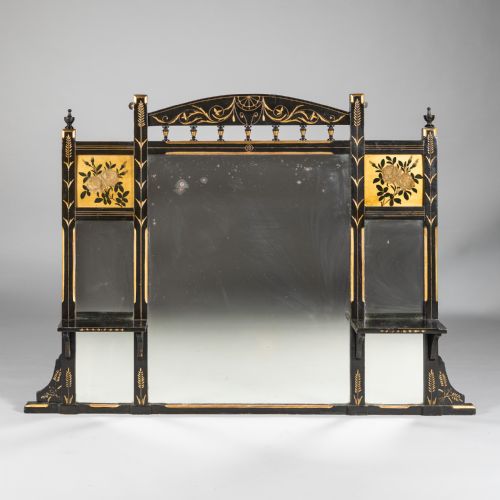
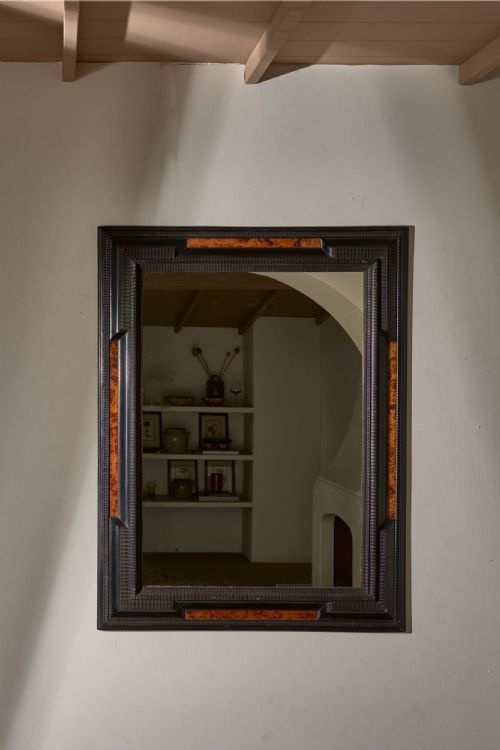
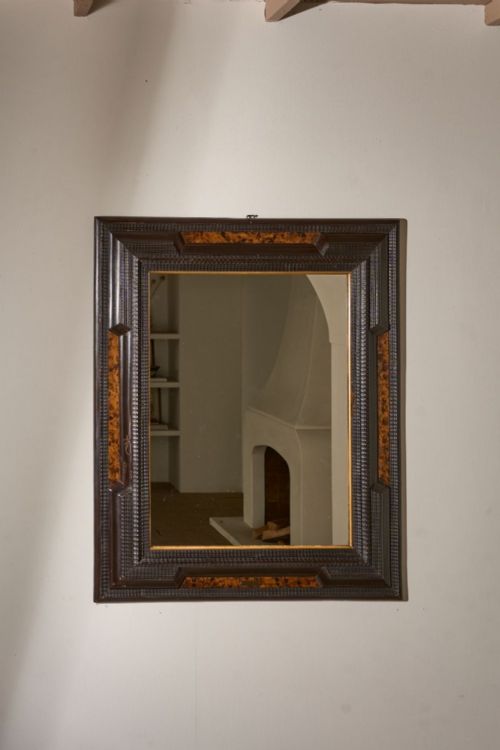
The most common forms on this page are Victorian overmantle mirrors finished in ebonised wood with parcel-gilt details, alongside French Napoleon III cushion mirrors and Italian frames featuring faux tortoiseshell. Many date from the 1860s through to the 1880s, displaying architectural mouldings, arched tops, and carved crests.
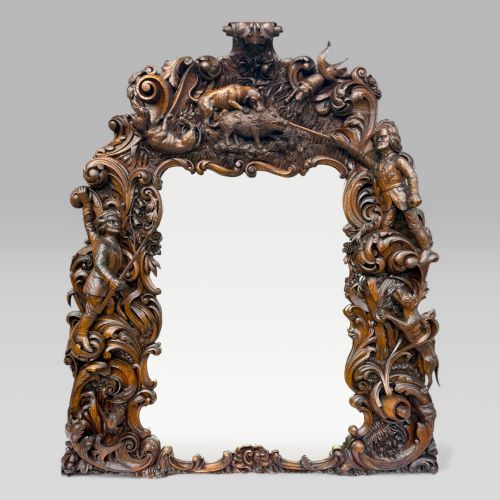
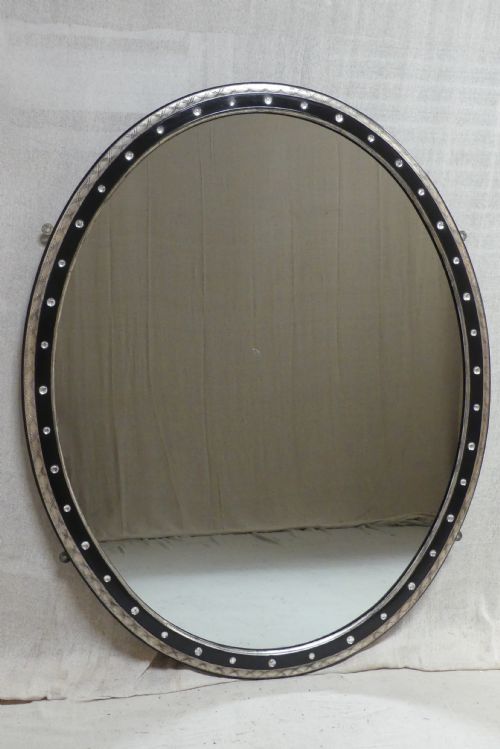
Beyond standard overmantles, the selection includes oval wall mirrors, heavy oak hunting lodge pieces, and Japanese-decorated black lacquer examples from the Edwardian era. These items served functional and decorative roles above fireplaces, along hallways, and across large wall expanses.
How they were made
Makers built these frames using solid woods such as oak, pine, or fruitwood, applying deep black paint, lacquer, or ebonisation processes to simulate costly ebony. Artisans then added gesso plaster layers to build up crisp surface ornamentation, geometric mouldings, and figurative carvings.
Gilding was applied as gold leaf or silver gilt onto the gesso details to create sharp contrasts against the dark black ground. Paint and parcel-gilt techniques highlighted specific architectural elements, crests, and incised patterns across the frame.
Listings feature ebonised wood, gesso, and gold leaf across Victorian and Edwardian wall mirrors.
What varies in quality
The standard of a frame rests on the depth of the ebonisation and the crispness of the carved gesso ornament beneath the black surface. Superior examples maintain intact mouldings and precise gilding that adheres firmly to the carved wooden carcass without heavy restoration.
Proportion and glass selection also distinguish finer pieces, particularly where heavy overmantle plates or bevelled mirror glass sit securely within deeply rebated, structurally sound wooden frames.
The Large Black Wall Mirror Glossary
- Ebonised
- Wood treated with chemical stains, paint, or polish to imitate the dark, dense appearance of genuine ebony. This dark finish dominated Victorian and Aesthetic Movement decorative arts.
- Overmantle
- A large mirror specifically proportioned to hang directly above a fireplace mantelpiece. These architectural items often feature lower platforms designed to rest flat on the shelf.
- Parcel-gilt
- A decorative technique where only specific raised portions, carvings, or mouldings of an object receive gold leaf, leaving the main black or dark ground exposed.
- Gesso
- A plaster mixture applied to wood frames to provide a smooth, flexible base for subsequent carving, painting, and gilding. Artisans used it to build up complex relief ornamentation.
- Cushion mirror
- A frame style with a convex, sloping profile that curves outward from the wall toward the glass, common in French Napoleon III interior furnishings.
Large Black Wall Mirror: Frequently Asked Questions
Where should I hang an overmantle mirror?
These mirrors were originally designed to sit securely on top of a fireplace mantelpiece, anchoring the vertical space of a chimney breast. They also function effectively when mounted directly to a main wall.
Because of their substantial weight and scale, they require sturdy wall fixings or structural support from a solid mantel shelf to bear the load safely.
How do I identify a Victorian ebonised mirror?
Victorian ebonised mirrors typically date from the mid to late nineteenth century, displaying dark black painted or stained surfaces combined with parcel-gilt highlights. They often feature heavy gesso mouldings and arched tops designed for overmantle placement.
Look for construction details like pegged joints, old backboards, and heavy glass plates that reflect the manufacturing methods of the period.
What is the Aesthetic Movement style?
The Aesthetic Movement emerged in the late nineteenth century, promoting simplicity, fine craftsmanship, and bold ebonised finishes influenced by Japanese design. Mirrors from this period balance dark frames with subtle gilt incisions.
These pieces move away from heavy Victorian clutter in favour of clean geometric lines and striking visual contrast.
Can these mirrors be placed on the floor?
Certain large frames are constructed as full-height floor mirrors or dressing mirrors intended to stand upright against a wall. Their substantial scale allows them to reflect light across an entire room.
When positioning a floor mirror, ensure the base rests evenly and secure the top of the frame to the wall to prevent tipping.