

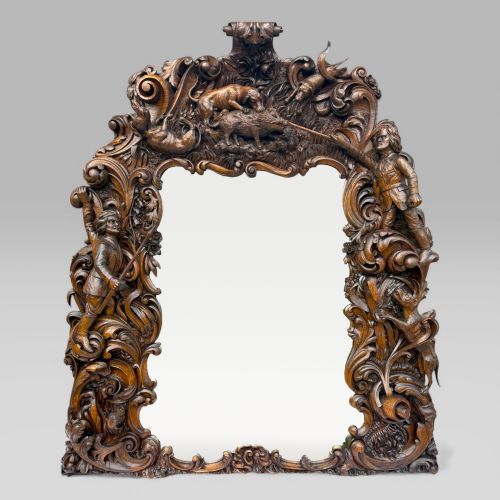


Black Overmantel Mirror
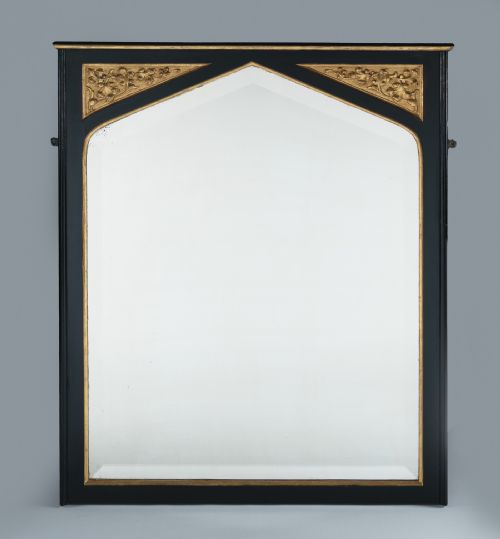
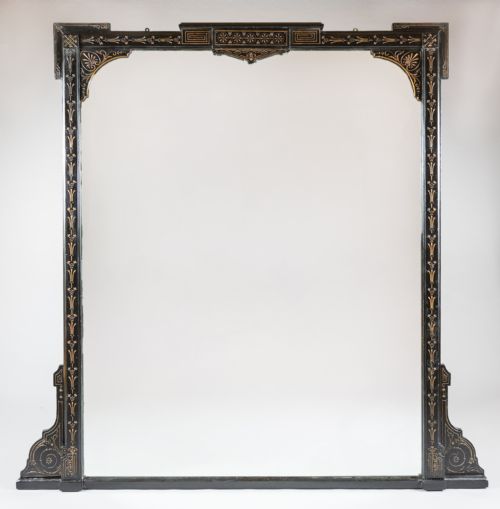
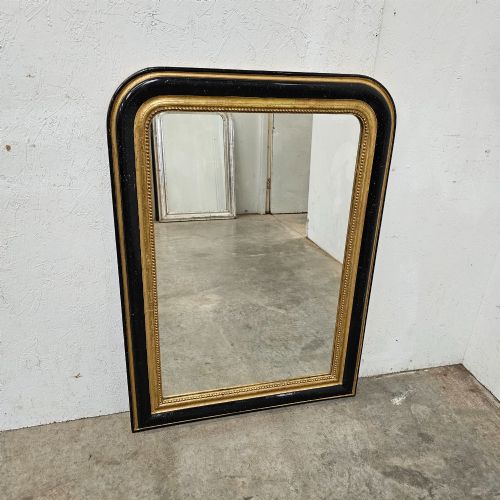
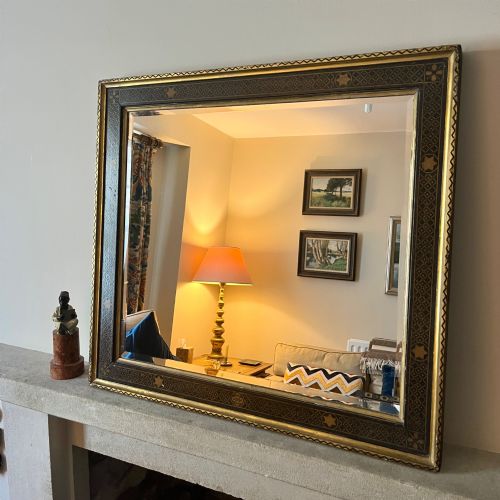
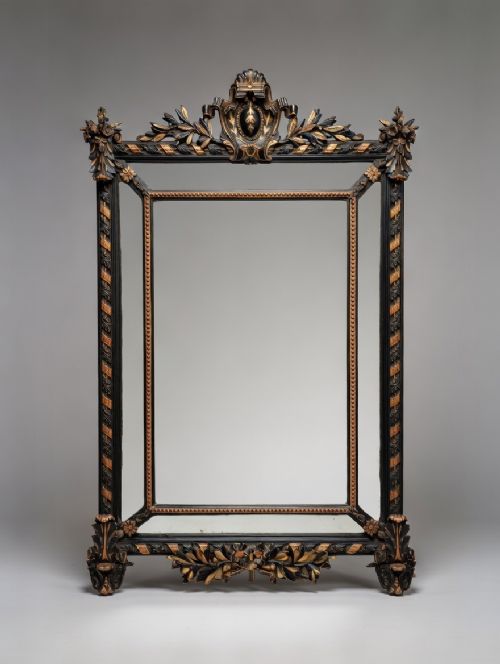
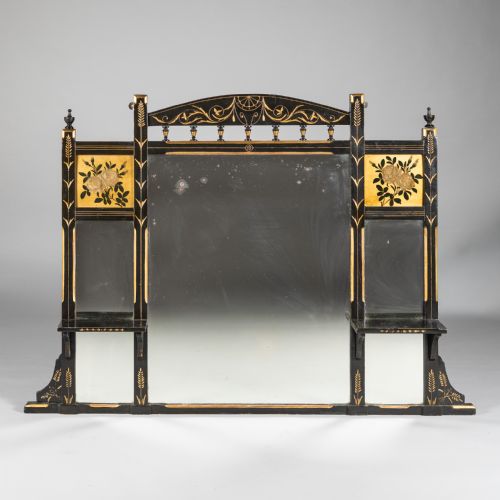
A black overmantel mirror anchors a fireplace with dark drama, offering a handsome sweep of glass framed in ebonised wood and gold leaf.
Black Overmantel Mirror
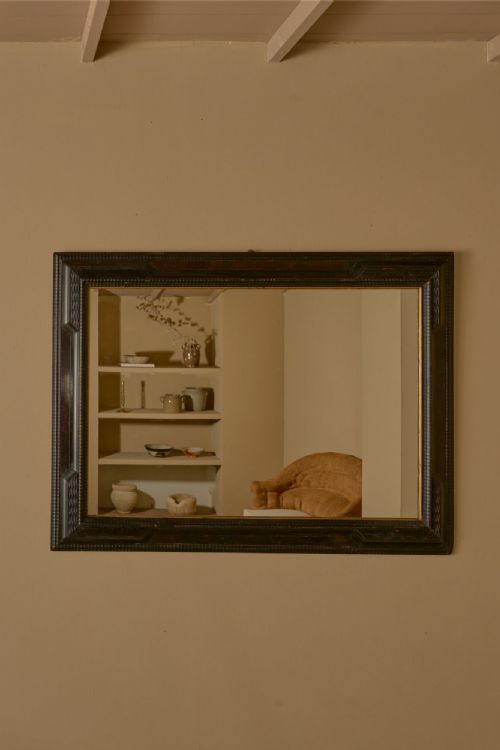
When you search for a black overmantel mirror, you encounter wide landscape and arch-top looking glasses designed to sit directly above a mantelpiece. These pieces primarily date from the nineteenth century, with strong representation from the Victorian and Aesthetic Movement eras.
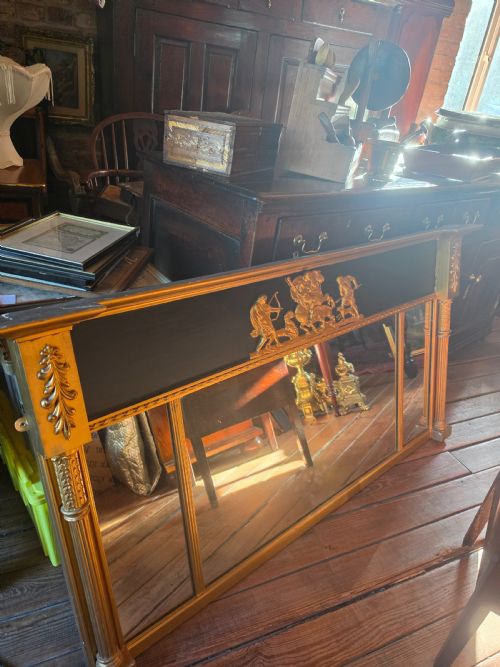
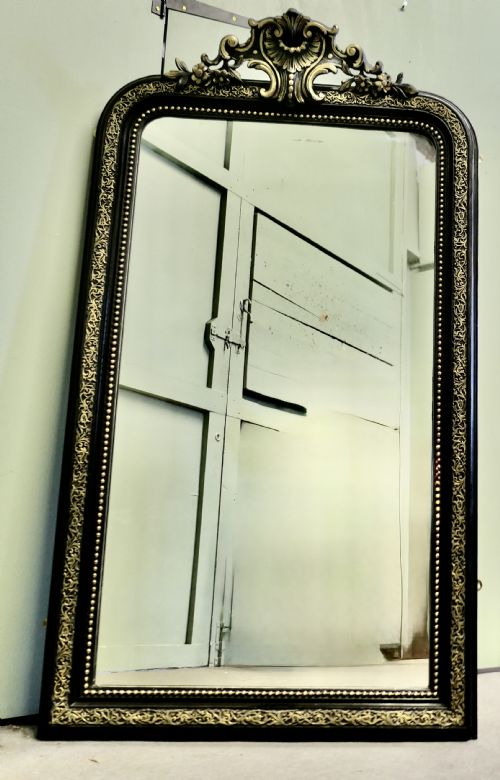
The selection ranges from large English ebonised and parcel-gilt frames to French cushion mirrors and Edwardian black lacquer designs. Many pieces combine dark painted or ebonised surfaces with contrasting highlights in gold leaf, parcel-gilt, or silver.
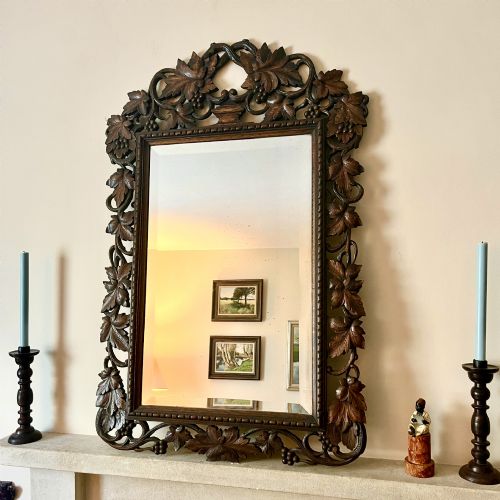
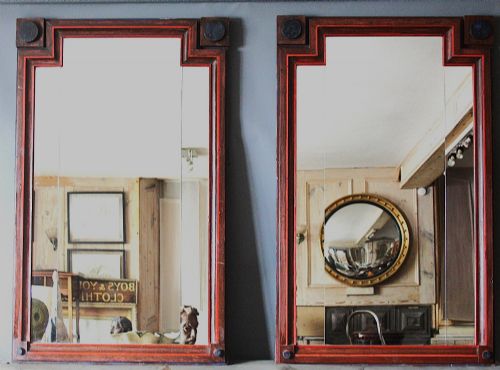
While primarily built as overmantel mirrors, the category also embraces related wall mirrors and architectural framing designed to dominate a chimney breast. The forms span simple geometric profiles to ornate carved wood and gesso crests.
How they were made
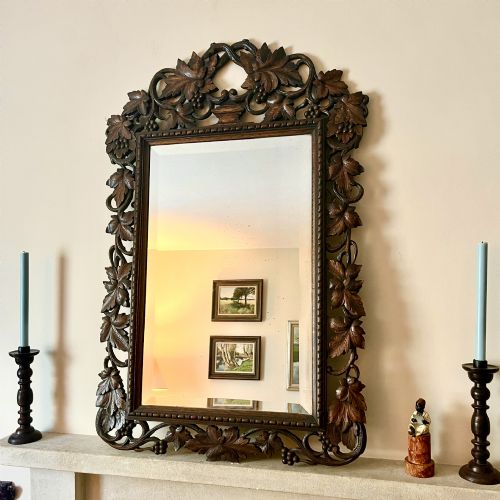
Carved wood and moulded gesso provide the foundational structure for the more decorative frames, allowing intricate reliefs of scrolls, crests, and foliage to be built up before finishing. Ebonised wood or black paint creates the deep dark ground, often paired with parcel-gilt highlights applied to raised carvings.
Mirror glass is set within these heavy timber or cast iron frames, sometimes divided into sections as seen in multi-plate configurations. Gold leaf and paint are applied by hand to accent borders, mouldings, and decorative motifs.
Black Overmantel Mirror Retail Price Guide 2026
Typical asking prices for black overmantel mirror among the pieces listed under this phrase on Sellingantiques today, from the lower quarter to the upper quarter. They describe what is for sale here now, not the wider market.
Listings feature pieces spanning the nineteenth century, including Victorian, Aesthetic Movement, Regency, and Edwardian periods.
What varies in quality
The depth and crispness of the carved wood and gesso ornamentation set apart standard frames from exceptional examples. Fine frames show sharply defined mouldings and well-preserved gilding that interacts harmoniously with the ebonised ground.
Proportion and scale dictate the visual impact of the piece, with larger, well-balanced architectural formats commanding attention over simpler utilitarian mirrors. The preservation of the original black finish and metal leaf determines the integrity of the antique surface.
The Black Overmantel Mirror Glossary
- Overmantel mirror
- A large looking glass specifically proportioned to hang on the wall directly above a fireplace mantel. These mirrors often stretch horizontally to match the width of the fireplace surround below.
- Ebonised wood
- Timber treated with a stain, dye, or black finish to imitate expensive ebony. This dark finish gained immense popularity during the Victorian and Aesthetic Movement periods.
- Parcel-gilt
- A decorative technique where selected portions of an object are covered in gold leaf while the rest remains painted or finished in another colour. It creates a striking contrast against black ebonised frames.
- Gesso
- A plaster-like mixture applied to wood frames and carved into decorative reliefs before gilding or painting. It provides the smooth, workable surface necessary for ornate Victorian mouldings.
- Aesthetic Movement
- A late nineteenth-century design style emphasising visual beauty over narrative or moral content. Mirrors from this movement frequently utilise ebonised surfaces with gilt and painted details.
Black Overmantel Mirror: Frequently Asked Questions
Where should I hang a black overmantel mirror?
Traditionally, these mirrors sit centrally on the wall immediately above a fireplace mantelpiece, reflecting light and filling the vertical space of the chimney breast. They also function effectively above large sideboards or as focal points on plain living room walls.
Because of their substantial weight and horizontal proportions, secure wall fixings into masonry or heavy studs are essential. Ensure the lower edge rests safely or hangs securely at the correct eye level relative to the room's furniture.
How do I identify a Victorian ebonised mirror?
Victorian ebonised mirrors typically feature heavy timber or gesso frames finished in deep black, frequently accented with parcel-gilt highlights. Look for nineteenth-century construction traits, such as older mirror plates with slight foxing or heavy wooden backboards.
Stylistic cues from this era include Aesthetic Movement motifs, arch tops, and ornate crests. The combination of black lacquer or ebonisation with gold leaf is a hallmark of high-status Victorian interior decoration.
What is the difference between an overmantel and a wall mirror?
Overmantel mirrors are specifically engineered in wide, landscape, or arch-top dimensions to span the horizontal space above a fireplace. Standard wall mirrors are generally proportioned for vertical hanging on any open wall space.
While both share similar construction methods using wood, gesso, and glass, an overmantel is typically heavier and designed to anchor a specific architectural feature of a room.
How do I care for antique ebonised and gilt frames?
Dust the carved frame gently with a soft, dry brush to prevent dirt accumulation in the recessed gesso details. Avoid using commercial liquid cleaners or polishes, which can damage fragile nineteenth-century painted finishes and gold leaf.
Keep the mirror away from direct sources of heat and damp environments to protect the wooden structure and prevent the silvering on the glass from deteriorating further.