
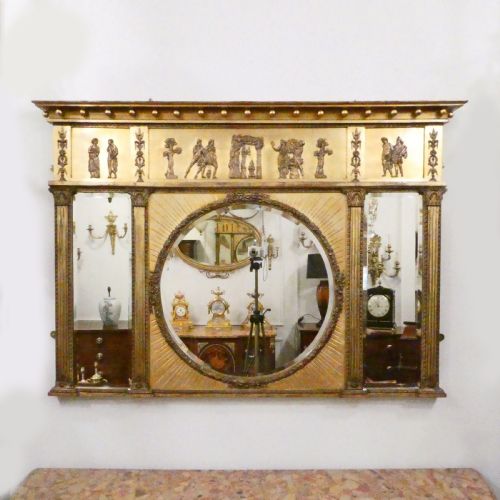


Giltwood Landscape Mirror
A giltwood landscape mirror brings scale and reflected light to a room, drawing the eye along a horizontal plane.
Giltwood Landscape Mirror
A giltwood landscape mirror is a wide-format looking glass designed to hang horizontally above a mantelpiece or along a principal wall. When you search for a giltwood landscape mirror, you encounter pieces spanning the Georgian, Regency, and Victorian periods, often taking the form of overmantels or triptych wall mirrors.
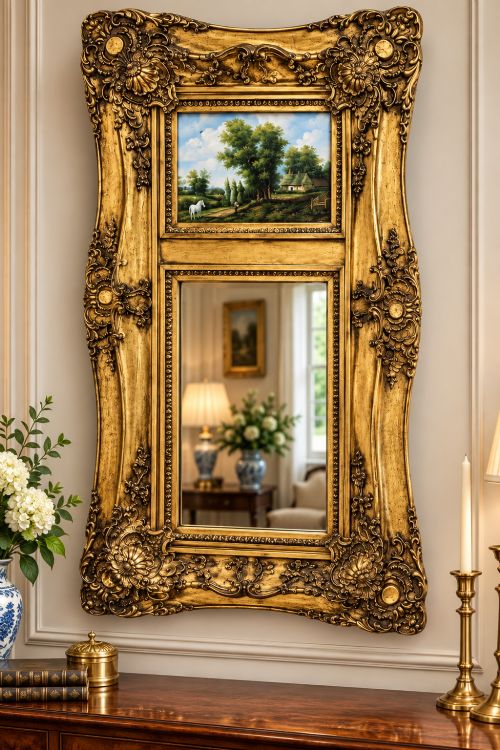
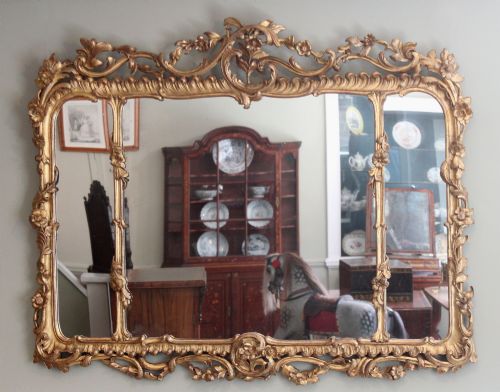
The selections on this page lean heavily towards nineteenth-century English and French examples, including grand scale trumeau mirrors and neat-sized pier mirrors. Makers and artisans of these eras frequently incorporated architectural columns, painted panels, or carved details such as acanthus leaves and birds.
The horizontal orientation sets these pieces apart from vertical portrait mirrors, designed specifically to fill wide spaces above furniture. They serve both functional reflection and decorative framing, anchoring a room's interior scheme.
How They Were Made
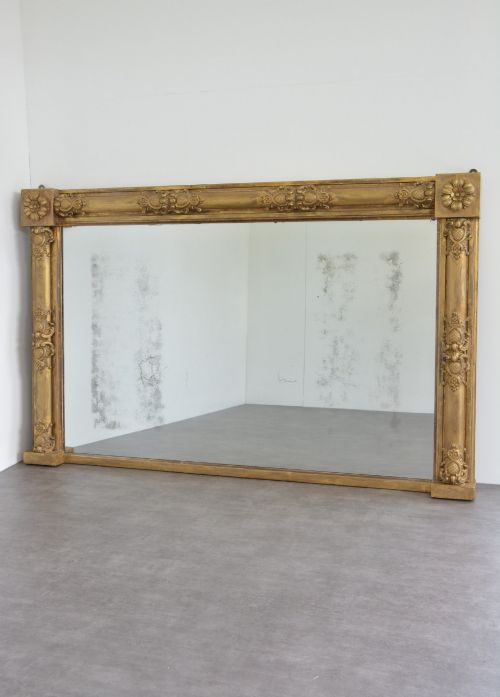
Carved wood and gesso provide the structural foundation for the gilded surfaces, moulded into relief ornament before the application of gold leaf or gilt finish. Wood and composition elements allow for intricate linear moulding and sculptural details like column capitals.
Mirror glass, occasionally lightly foxed with age, sits within the frame, sometimes divided into multiple plates in triptych or triple plate formats. Canvas, paint, and eglomisé panels appear in trumeau configurations, combining pictorial art with reflective glass.
Giltwood Landscape Mirror Retail Price Guide 2026
Typical asking prices for giltwood landscape mirror among the pieces listed under this phrase on Sellingantiques today, from the lower quarter to the upper quarter. They describe what is for sale here now, not the wider market.
Listings feature nineteenth-century English and French pieces, predominantly utilising giltwood, gesso, and multiple glass plates.
What Varies in Quality
The crispness of the carved or moulded gesso ornament dictates the visual strength of the frame, separating sharply defined acanthus and figural work from softer, worn impressions. Depth and execution in the carving reflect the standard of the workshop that produced the piece.
The integrity of the original gilding and the condition of the mirror glass establish the piece's character. Lightly foxed original glass holds historical depth, whereas replaced plates alter the historic balance of the reflection.
Ciceri and Co
The Giltwood Landscape Mirror Glossary
- Giltwood
- Wood carved and coated with gold leaf or a gilt finish. This surface provides the characteristic golden sheen found on period frames.
- Gesso
- A plaster-like mixture applied to wood frames to build up surfaces for fine carving and gilding. It allows for intricate relief decoration.
- Trumeau
- A decorative mirror incorporating a painted panel or canvas above the glass. These originate largely from French interior design traditions.
- Triptych
- A mirror divided into three distinct vertical sections or plates. This format is common in wide overmantel pieces from the Regency period.
- Foxed
- Age-related spots and discoloration within the mirror glass. It creates a cloudy, atmospheric reflection valued by collectors.
Giltwood Landscape Mirror: Frequently Asked Questions
Where should I hang a landscape mirror?
These horizontal mirrors find a natural home above a mantelpiece or a low sideboard, where their width balances the furniture below. They draw light across the room from adjacent windows.
Ensure the wall fixings match the substantial weight of carved wood and gesso frames. Positioning them at eye level maximises both their decorative impact and their reflective utility.
How do I identify a Regency mirror?
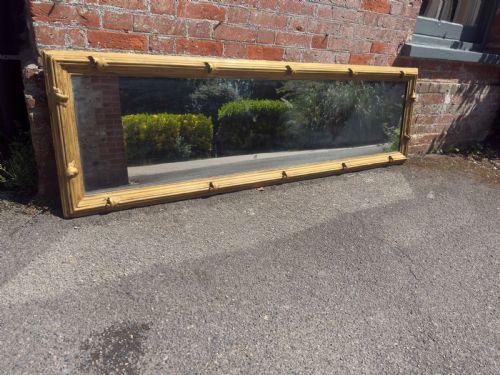
Regency mirrors typically display neoclassical motifs, such as ball-studded frames, acanthus leaves, and architectural columns. The influence of classical antiquity guides the proportion and ornament.
They often appear as overmantel or pier mirrors with a strong horizontal emphasis and dark woods beneath the gilt surface.
What does foxed glass mean?
Foxed glass refers to the natural oxidation and dark spots that develop behind the mirror plate over decades. This ageing process softens the reflection rather than providing a modern, clinical mirror image.
Collectors appreciate original foxed glass as evidence of authenticity and age. It adds a gentle, atmospheric quality to the reflected room.