
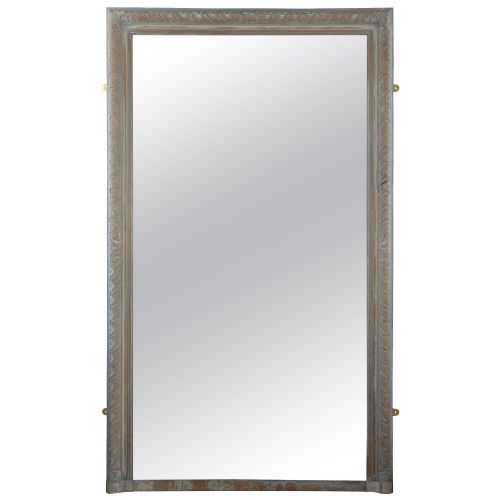


Grey Full Length Mirror
A grey full length mirror brings reflection and light into a room, offering tall proportions and painted charm.
Grey Full Length Mirror
When you search for a grey full length mirror, you find tall glass plates designed to show the entire figure, often resting against a wall as leaner mirrors. These pieces span the nineteenth century, with dates distributed across the eighteen-fifties, sixties, seventies, and nineties.
The aesthetic leans heavily toward continental traditions, with French Chateau, Louis XV Rococo, French Neoclassical, and French Provincial styles appearing alongside English Country and Victorian pieces. Formats include arched tops, column frames, plain borders, and bistro mirrors.
Most examples originate from the nineteenth century, combining substantial scale with painted wood surfaces. They function practically as dressing mirrors while visually expanding interior spaces through tall glass panels.
How they were made
Carpenters constructed the structural frames using timber such as oak, applying layers of gesso to build up decorative reliefs on carved wood surfaces. This foundation allowed makers to achieve intricate mouldings, arched profiles, and column details.
Makers finished these wooden and gesso frames with paint, creating the characteristic grey surfaces seen across French and English examples. Glass panels were then fitted securely into the substantial frames to complete the reflective surface.
Current listings feature nineteenth-century pieces utilising oak, carved wood, gesso, paint, glass, and brass across French and English styles.
What varies in quality
The distinction between ordinary and superior examples lies in the depth and crispness of the carved wood and gesso ornamentation. Finer mirrors display hand-carved details and well-balanced proportions that elevate the architectural presence of the frame.
The character of the painted finish and the integrity of the original glass plate contribute significantly to the overall merit of a piece. Hand-applied paint layers that have aged naturally carry more visual depth than simpler, uniform coatings.
The Grey Full Length Mirror Glossary
- Leaner mirror
- A tall mirror designed to stand directly against a wall without being hung from brackets. These pieces rely on their substantial weight and height for stability.
- Gesso
- A plaster-like mixture applied to wood frames to create a smooth surface for painting or to build up low-relief ornamentation. It allows carvers to achieve sharp decorative details.
- Bistro mirror
- A practical, often simpler mirror style historically used in commercial establishments. These typically feature straightforward frames without excessive ornamentation.
- Column framed
- A mirror style incorporating architectural pilasters or columns flanking the glass plate. This design references classical building traditions.
Grey Full Length Mirror: Frequently Asked Questions
How do I secure a leaner mirror?
A leaner mirror rests directly against a vertical wall, utilising its own height and gravity. Many owners add discreet wall fixings at the top to prevent tipping.
Ensuring the floor surface is level helps the heavy wooden frame stay steady in everyday use.
Are these mirrors genuinely nineteenth century?
The listings show periods ranging from eighteen-fifty to eighteen-ninety, placing them firmly in the nineteenth century. Construction methods involving gesso over carved wood reflect the manufacturing standards of that era.
Examining the timber behind the frame and the backing boards helps confirm the age of the piece.
How do I clean the painted wood frame?
Dust the carved wood and gesso surfaces gently with a dry, soft cloth to protect the painted finish. Avoid harsh chemical cleaners that might soften or strip the historic paint.
Glass cleaner applied directly to a cloth rather than the frame keeps the mirror plate clear without damaging the surrounding wood.