







Arts and Crafts Overmantel
These arts and crafts overmantel mirrors bring honest timber frames and hand-worked metal into the living room.
Arts and Crafts Overmantel
An arts and crafts overmantel sits above a fireplace to anchor the hearth with architectural wood and glass. Buyers seeking this phrase encounter sturdy timber frames, often built to span the width of a mantelpiece.
The pieces on this page draw from periods such as the nineteenth century, the Edwardian era, and the nineteen-twenties. Oak forms the backbone of these items, accompanied by mahogany, ebonised wood, and copper details.
Makers and designers of the movement shaped these mirrors for domestic interiors, ranging from simple oak panels to elaborate moorish revival frames. Many double as large wall mirrors or fireplace surrounds depending on their original mounting.
How they were made
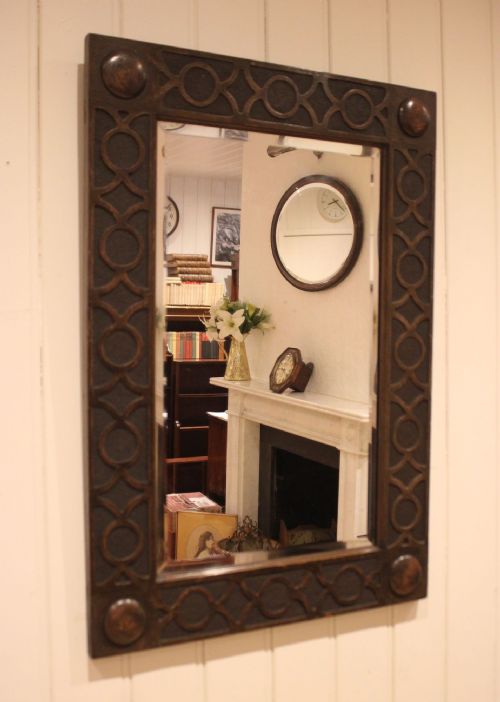
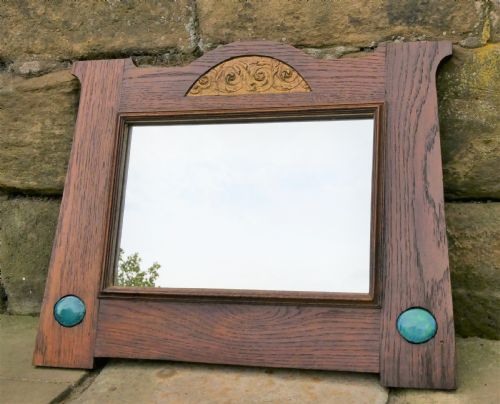
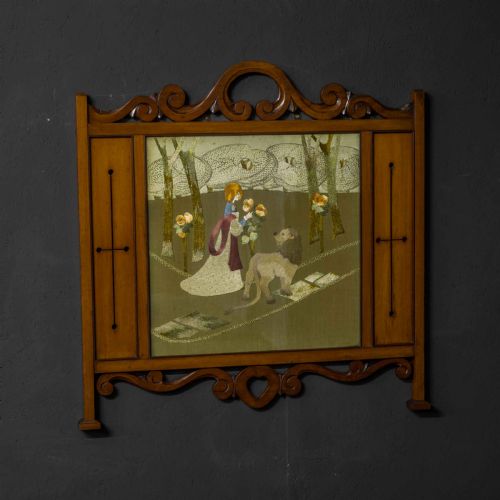
Joiners built these overmantels using solid oak and mahogany, often employing exposed pegged joints and visible grain. Carved decoration appears across the wooden borders, alongside marquetry veneers and ebonised finishes.
Metalwork played a central role, with hammered copper inserted into frames or used for decorative strapwork and hinges. Ceramic tiles and painted surfaces occasionally accent the timber, whilst bevelled glass sits securely within the rebate.
Listings feature oak as the primary timber, complemented by copper, mahogany, and ebonised wood across several decades.
What varies in quality
The grade of timber and the depth of hand-carving define the upper tier of these pieces. Dense oak boards and precise joinery distinguish workshop production from standard commercial output.
Hand-hammered copper details and original silvered mirror plates carry more distinction than later replacements. The integration of design elements, such as heart-shaped mirror apertures or marquetry work, shows the hand of a skilled maker.
Liberty & Co·Rowley Gallery·Sir Edwin Lutyens·Aymer Vallance
The Arts and Crafts Overmantel Glossary
- Overmantel
- A mirror or decorative frame designed to be hung or placed directly on the mantelpiece above a fireplace.
- Ebonised wood
- Timber treated with chemical stains or dark paint to imitate the dense, black appearance of ebony.
- Marquetry veneers
- Thin slices of decorative wood arranged in geometric or pictorial patterns and glued onto a primary timber carcase.
- Bevelled glass
- A mirror plate with edges cut and polished at an angle to catch the light and create a framed border effect.
Arts and Crafts Overmantel: Frequently Asked Questions
How do I hang an arts and crafts overmantel?
These heavy wooden frames require secure wall fixings or substantial mantel brackets to support their weight safely. Professional mirror hangers usually use battens or heavy-duty D-rings screwed directly into the structural timber of the frame.
Position the glass at a height that reflects natural light from windows rather than the ceiling. Check that the wall can bear the combined load of the oak and glass before mounting.
Can these mirrors go in rooms without fireplaces?
While originally designed for chimneypieces, many examples function successfully as standalone wall mirrors in hallways or living rooms. Their broad wooden borders provide a strong visual anchor on plain plaster walls.
Ensure the proportions match the surrounding furniture, such as placing a wide oak frame above a sideboard or console table. The hanging hardware on these pieces often suits vertical or horizontal placement depending on the design.
How do I clean the copper and wood?
Wipe solid oak and mahogany frames with a dry, soft cloth to remove dust without disturbing the grain or finish. Avoid commercial silicon polishes that build up a hazy film over decades of old wax.
Leave hammered copper surfaces unpolished to preserve their natural dark patina, removing only surface grime with a damp cloth. Harsh metal cleaners strip away the historical oxidation valued by collectors.
Are these pieces made of solid oak?
Many examples utilise solid oak throughout the frame and structural members, showing natural knots and medullary rays in the grain. Other pieces combine solid timber frames with veneered panels or secondary woods underneath.
Inspect the edges of the frame to understand the construction method and material thickness. Both solid and veneered construction techniques appear across the period output.