







Arts Crafts Wall Mirror
An arts crafts wall mirror brings handcrafted honesty and metalwork texture to a hallway or overmantel.
Arts Crafts Wall Mirror
An arts crafts wall mirror stands out through visible hand-working, earthy materials and straightforward construction. These pieces reflect a movement that prized domestic utility and artisan craft over machine manufacture.
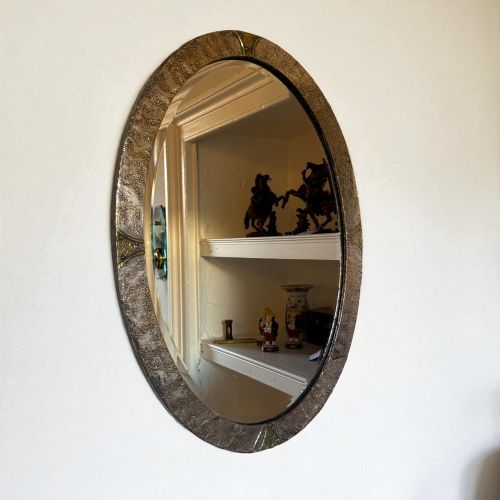
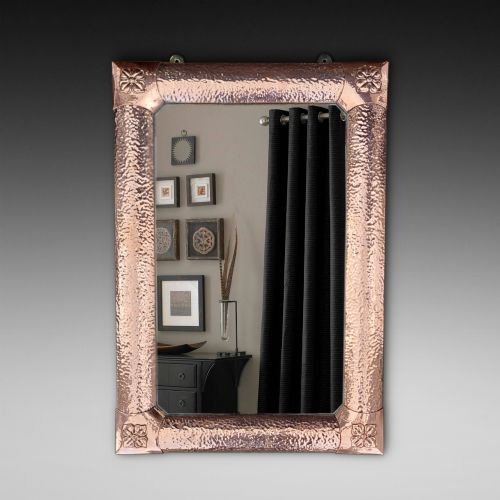
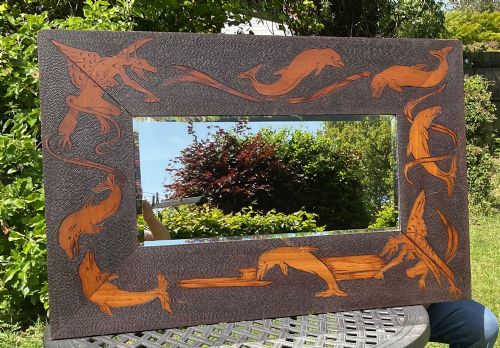
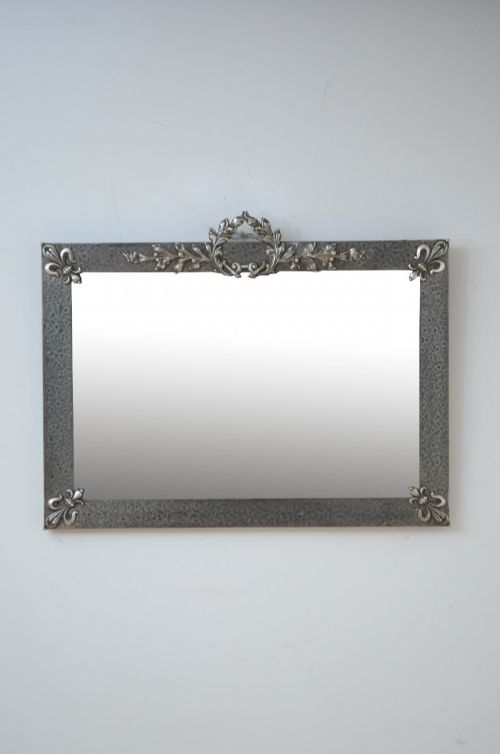
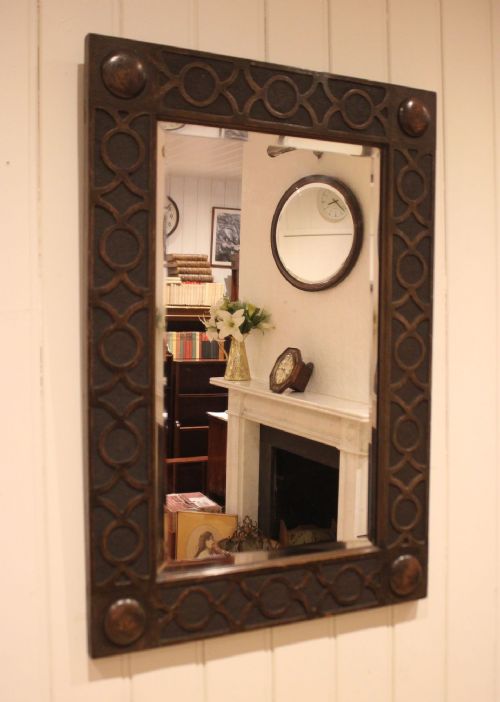
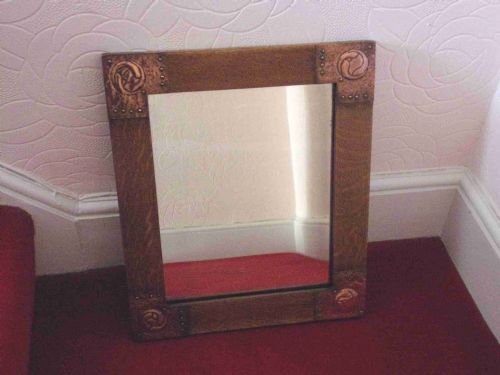
You will most frequently encounter wall mirrors framed in beaten copper, brass or solid oak. Forms range from compact circular frames to large overmantel mirrors designed to anchor a room.
Many examples incorporate decorative metalwork, repoussé panels or subtle carved woodwork. The overall effect remains grounded, functional and resolutely domestic.
Materials and construction
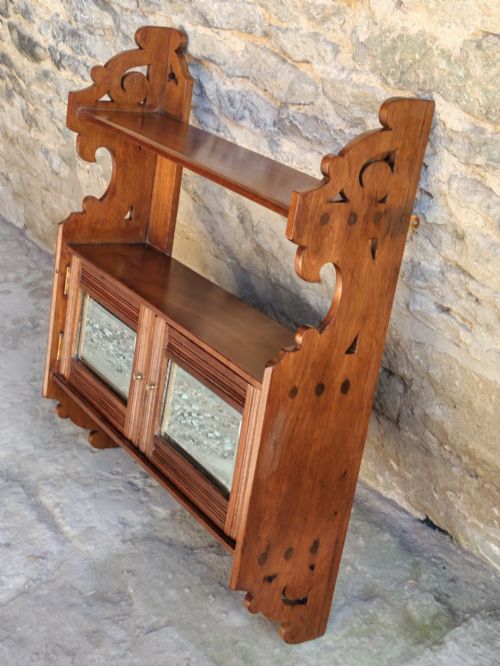
Makers built these frames using timber such as oak, pine and golden oak, often joined with visible pegs or simple mitres. Metal components relied on sheet copper and brass, shaped by hand hammers and finished with repoussé or embossed decoration.
Arts Crafts Wall Mirror Retail Price Guide 2026
Typical asking prices for arts crafts wall mirror among the pieces listed under this phrase on Sellingantiques today, from the lower quarter to the upper quarter. They describe what is for sale here now, not the wider market.
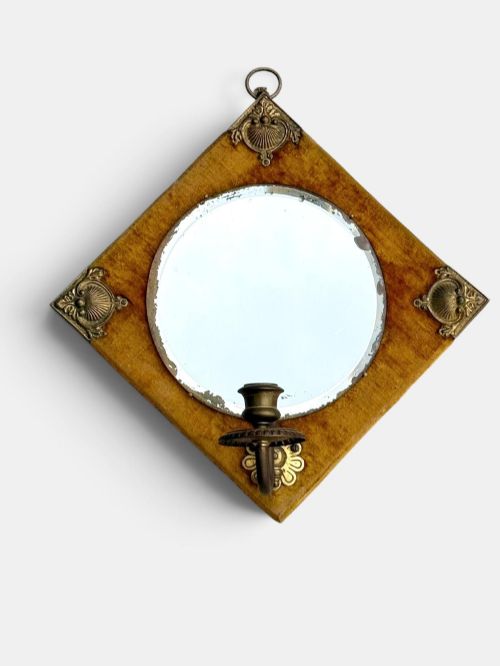
One recorded hall mirror includes a dedicated candle box for lighting the gloom of the Edwardian hallway.
Evaluating the standard
Quality reveals itself in the depth and precision of the hand-beaten metalwork and the structural integrity of the timber frame. Pieces bearing workshop attributions or distinct maker signatures command closer inspection for their design ambition.
The choice of materials, such as heavy gauge copper, enamel cabochons or specialised glazing like double bevelled glass, separates standard production from exceptional examples. Original wooden backings, chains and unpolished surfaces also contribute to desirability.
Liberty & Company·Hugh Wallis·Rowley Gallery·W A Chase
The Arts Crafts Wall Mirror Glossary
- Repoussé
- A metalworking technique where the artisan hammers the design from the reverse side to create a raised relief on the front. This process gives copper and brass frames their tactile, three-dimensional surface patterns.
- Overmantel mirror
- A large horizontal looking glass designed to hang on the wall directly above a fireplace mantel. These substantial pieces often feature carved oak or wide metal frames.
- Cabochon
- A polished, convex gem or enamel stone set without facets into metalwork. They frequently appear as colourful accents on copper frames.
- Bevelled glass
- A mirror plate with angled or polished edges that catch the light. This edge treatment adds depth and refinement to the glass.
- Stylised tree design
- A recurring decorative motif featuring simplified, organic botanical shapes. It reflects the movement's focus on nature and natural forms.
Arts Crafts Wall Mirror: Frequently Asked Questions
Where should I hang an arts crafts wall mirror?
These mirrors suit hallways, living rooms and bedrooms where their tactile metal or oak frames can catch natural light. Overmantel versions work best anchored above a fireplace or a sideboard.
Smaller formats with hooks or shelves fit neatly in narrow entrance spaces or cloakrooms.
How do I care for beaten copper frames?
Dust copper and brass surfaces gently with a dry, soft cloth to prevent the accumulation of grime. Avoid harsh chemical cleaners that strip the natural patina accumulated over decades.
Leaving the metal unpolished preserves the historic surface character that collectors value.
Are original mirror plates common?
Many pieces retain their original glass, which may show light foxing or small age spots. This gentle clouding confirms the age and authenticity of the piece.
Replacements do occur if the original glass suffered damage, so inspecting the silvering and backing provides clues.
How do I identify a workshop piece?
Look for stamped maker marks, signatures on the metalwork, or distinctive design characteristics associated with known guilds and retailers. Documentation or specific motifs like stylised trees often point to a named origin.
Unsigned examples still display the hand-hammered traits typical of the period.