

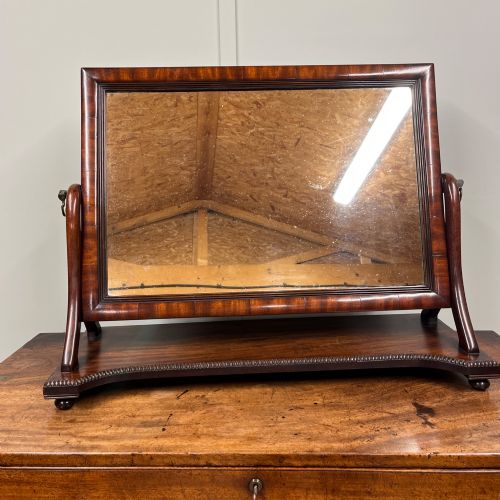
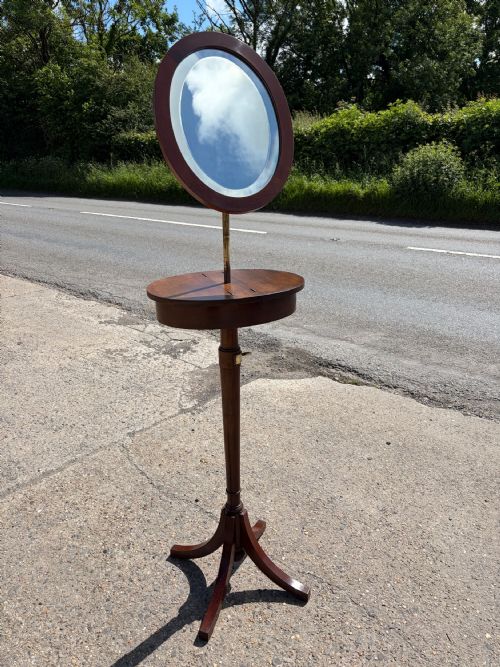
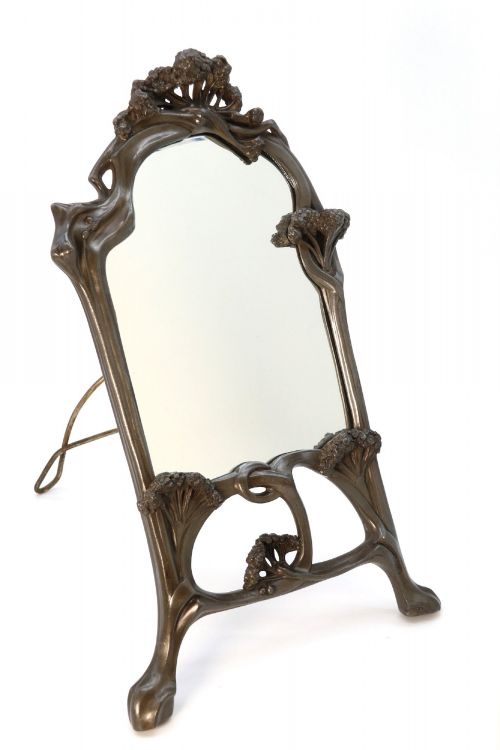

Freestanding Vanity Mirror
These freestanding vanity mirror pieces offer the classic utility of adjustable glass on stands, bringing period character and practical reflection to dressing rooms.
Freestanding Vanity Mirror
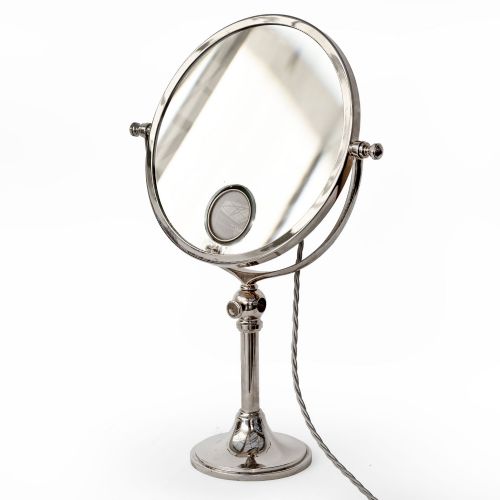
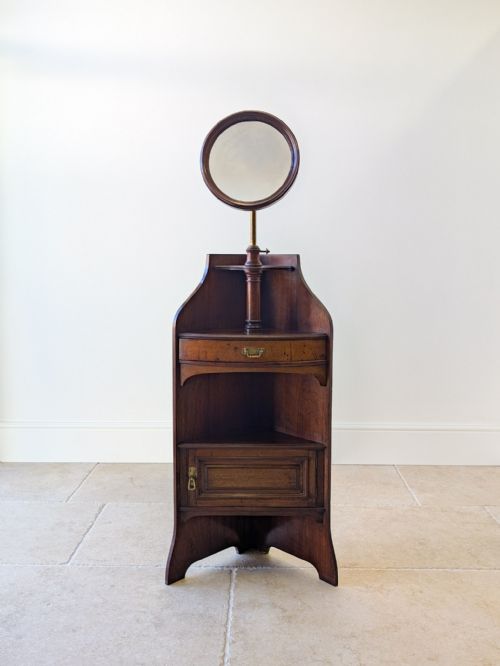
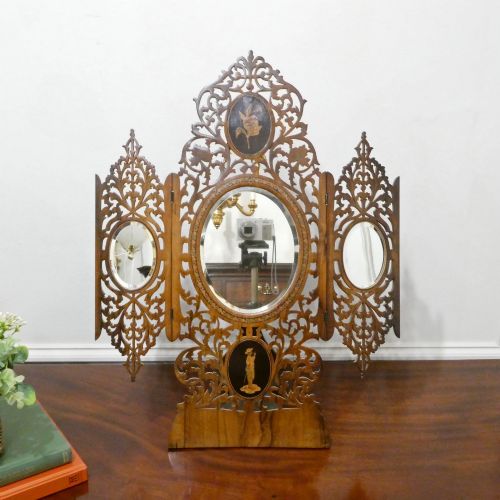
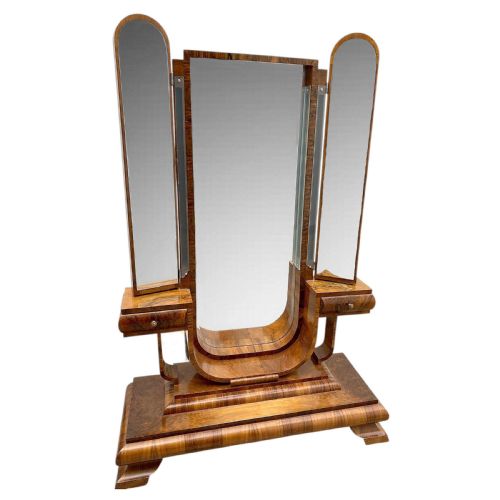
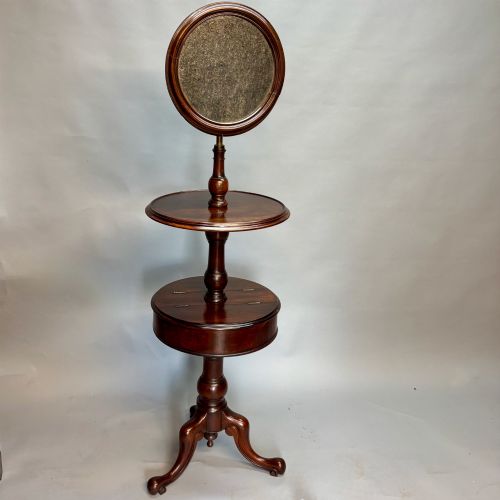
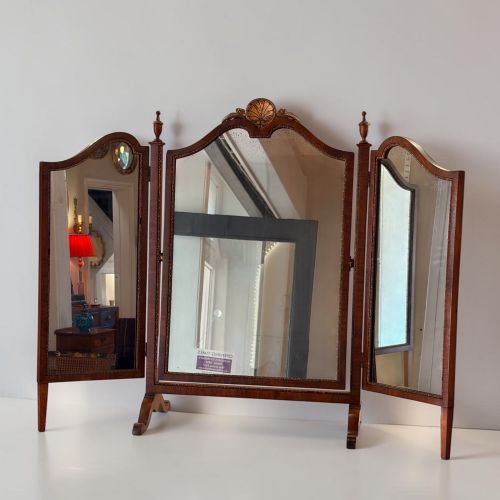
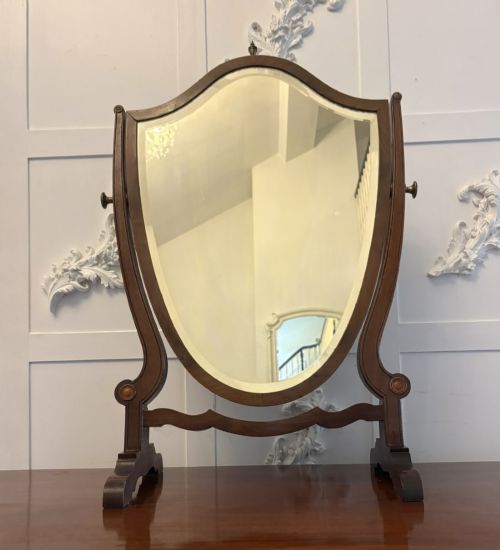
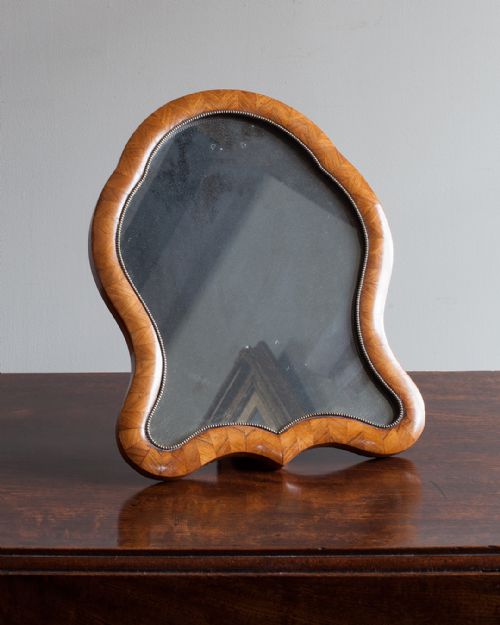
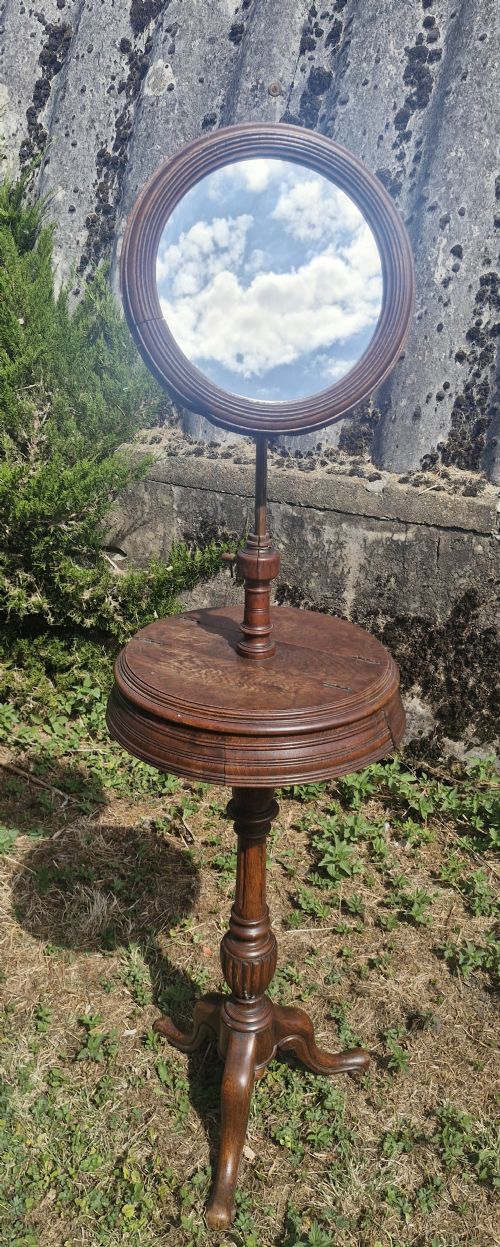
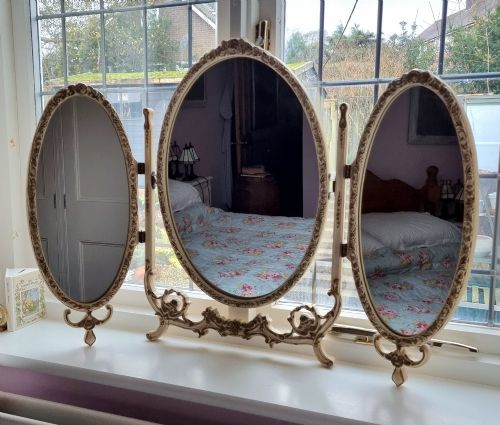
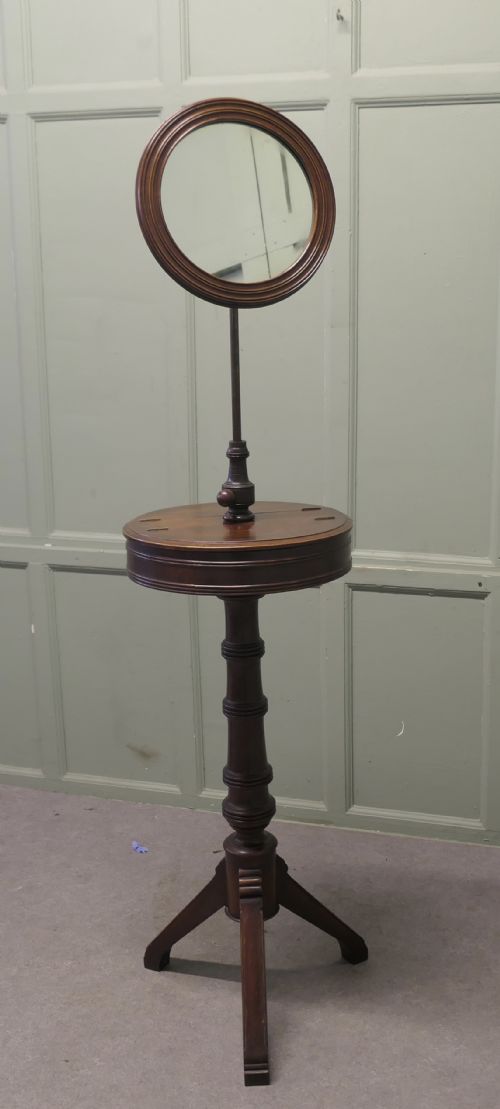
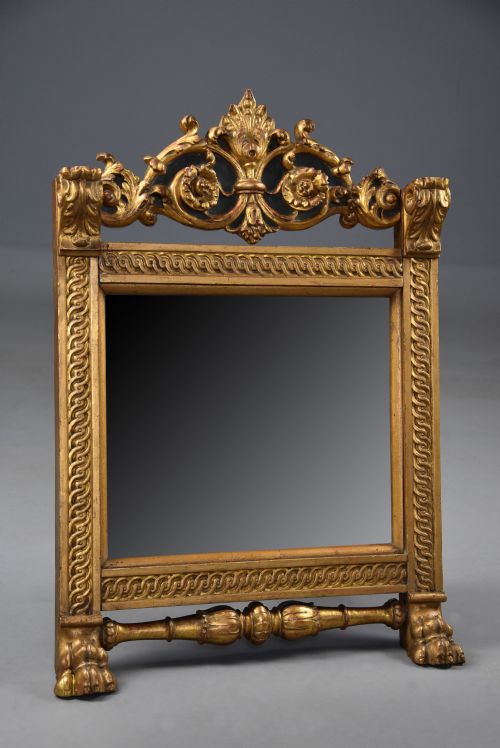
A freestanding vanity mirror sits upon a table, desk or floor, serving as a movable looking glass for daily grooming. These pieces include standing mirrors, shaving mirrors, shaving stands, and larger cheval mirrors.
The selection spans several distinct eras, featuring Victorian and Edwardian examples alongside Regency and 1930s designs. Buyers encounter sturdy tripod bases, adjustable frames, and telescopic mechanisms intended for everyday use.
Materials range from rich timbers such as mahogany and walnut to polished brass, chrome, and painted metal. Each object combines functional glass with a supportive stand tailored to its period style.
How They Were Made
Cabinetmakers constructed the wooden frames and stands using solid mahogany and walnut, often shaping tripod bases or supporting columns to hold the mirror securely. Joinery techniques varied according to the period, ensuring stability for the pivoting glass.
Metal components such as brass and chrome formed the adjustable arms, telescopic rods, and brackets that allowed the mirror to tilt and raise. Glass plates were fitted into protective wooden or metal surrounds.
Freestanding Vanity Mirror Retail Price Guide 2026
Typical asking prices for freestanding vanity mirror among the pieces listed under this phrase on Sellingantiques today, from the lower quarter to the upper quarter. They describe what is for sale here now, not the wider market.
The listings span five distinct periods, incorporating Victorian, 1890, Regency, 1930, and 1900 examples.
What Varies in Quality
The sophistication of the mechanical adjustments defines the upper tier of these mirrors, where telescopic stems and pivoting pivots operate with smooth precision. Simpler fixed frames sit at the other end of the scale, offering basic movement without complex hardware.
Material selection and decorative execution separate standard examples from finer works, visible in the choice of figured walnut or solid brass over painted metal. The clarity of the mirror glass and the stability of the base dictate the overall success of the piece.
The Freestanding Vanity Mirror Glossary
- Cheval mirror
- A large freestanding mirror supported in a frame that allows it to swing fully on horizontal pivots. These full-length glasses stand independently on the floor.
- Telescopic
- A construction method utilising concentric tubes that slide one inside another to adjust height. This mechanism allows the mirror glass to be raised or lowered.
- Tripod base
- A three-legged support structure designed to keep the standing mirror steady on uneven surfaces. It distributes weight evenly across the feet.
- Shaving stand
- A specialised furniture form incorporating a mirror and often a small platform or holder for grooming equipment. These pieces date across Victorian and later periods.
Freestanding Vanity Mirror: Frequently Asked Questions
What is a freestanding vanity mirror?
A freestanding vanity mirror is a movable looking glass mounted on its own base or stand rather than fixed to a wall or dressing table. These objects allow users to adjust the height and angle for grooming.
The selection includes Victorian shaving mirrors on tripod bases, Regency cheval mirrors, and 1930s chrome designs. Each piece brings period materials and mechanical adjustability to a room.
How do I use a telescopic shaving mirror?
A telescopic shaving mirror uses an adjustable vertical rod that raises or lowers the glass to the desired height. Tightening screws or friction collars hold the stem in place once positioned.
The pivoting frame then tilts the mirror glass forward or backward to achieve the correct angle. This combination of height and tilt adjustment provides tailored visibility for daily routines.
Where should I place a cheval mirror?
A cheval mirror requires floor space in a bedroom or dressing area where its full-length frame can stand unobstructed. Because these mirrors swing on pivots, ensure there is clearance around the base for movement.
Positioning the glass near natural light enhances its reflection and utility. The heavier floor-standing footprint suits corners or blank wall spaces.
What materials are used in antique vanity mirrors?
Antique vanity mirrors feature woods such as mahogany and walnut alongside metals including brass, chrome, and painted metal. Glass provides the reflective surface within these supportive structures.
Different eras favoured distinct finishes, moving from rich timber frames in the Victorian period to sleek chrome in 1930s designs. The combination of materials often indicates the manufacturing date.