

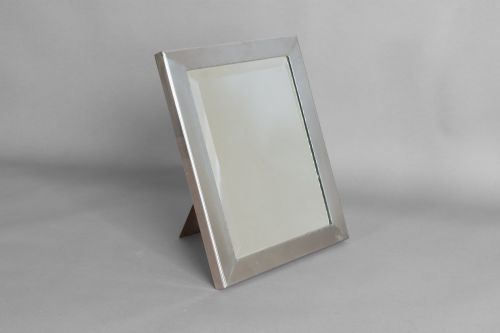
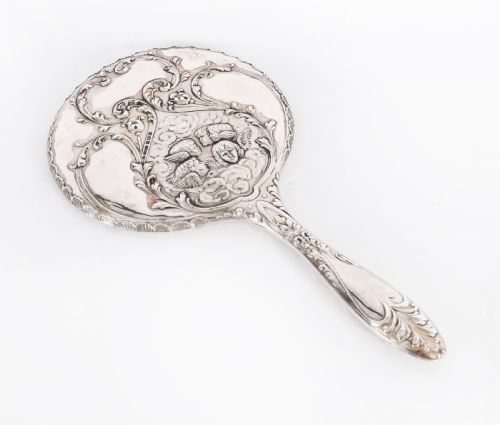

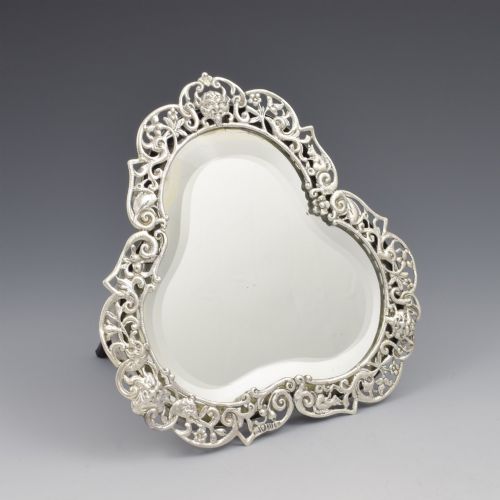


Silver Dressing Table Mirror
A silver dressing table mirror brings functional elegance to a vanity, reflecting both light and the intricate craftsmanship of past decades.

Silver Dressing Table Mirror
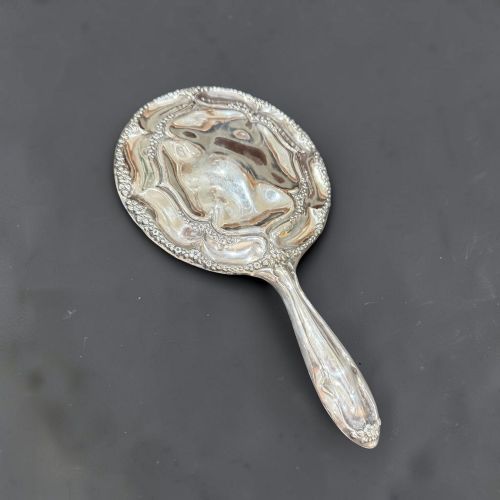
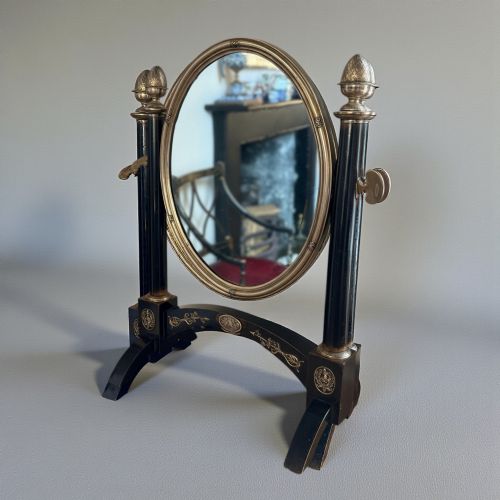
A silver dressing table mirror serves as both a practical vanity accessory and a decorative centrepiece for the bedroom. When searching this phrase, buyers encounter various forms designed for tabletop placement, handheld use, or travel.
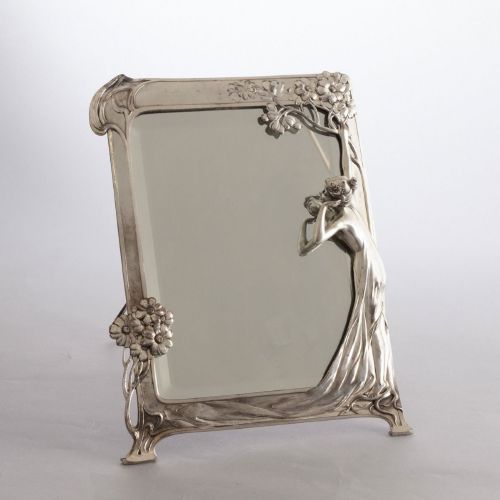
The pieces appearing here span from the late 19th century through the Victorian, Edwardian, and Art Deco periods. They showcase diverse aesthetic movements, including Art Nouveau, Rococo Revival, and clean geometric modernism.
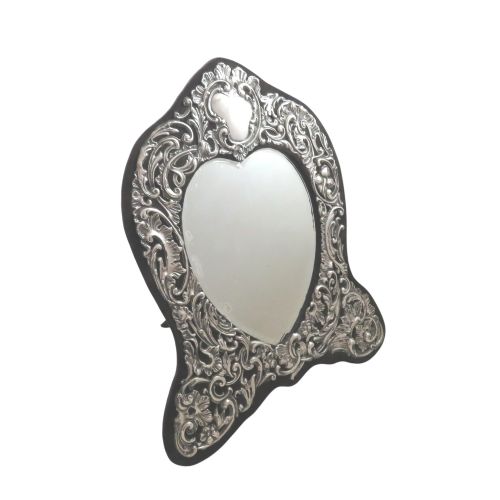
Most examples combine a reflective glass plate with a solid sterling silver, silver-plated, or pewter mount, often supported by a wooden or velvet-backed easel stand.
How They Were Made
Silversmiths constructed these frames using sterling silver, silver plate, or pewter, frequently mounting them over sturdy wooden cores or velvet-backed easel supports to provide stability on a tabletop.
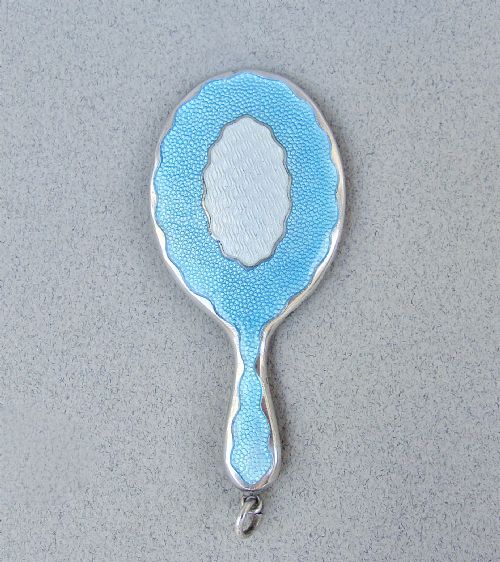
Ornamentation relied heavily on hand-embossing, piercing, and chasing, while later 20th-century pieces introduced colourful guilloche enamel and streamlined chrome finishes.
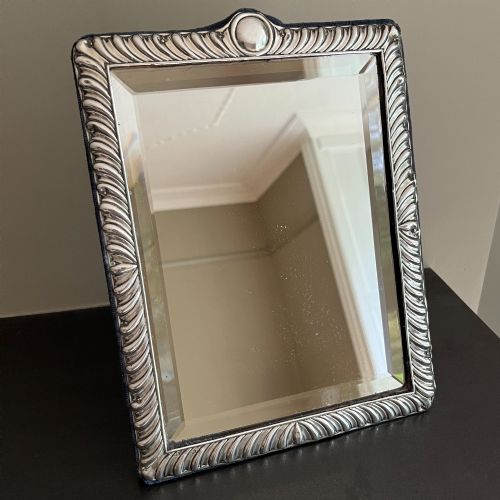
Makers utilised bevelled mirror glass held securely within the metal bezels, often incorporating hinged struts at the back for adjustable viewing angles.
Silver Dressing Table Mirror Retail Price Guide 2026
Typical asking prices for silver dressing table mirror among the pieces listed under this phrase on Sellingantiques today, from the lower quarter to the upper quarter. They describe what is for sale here now, not the wider market.
Listings feature sterling silver, silver plate, pewter, glass, and wood across Victorian, Edwardian, and Art Deco styles.
What Varies in Quality
The weight and gauge of the metal framework set apart standard production items from substantial presentation pieces. Heavier silver mounts provide greater durability and resist distortion over time.
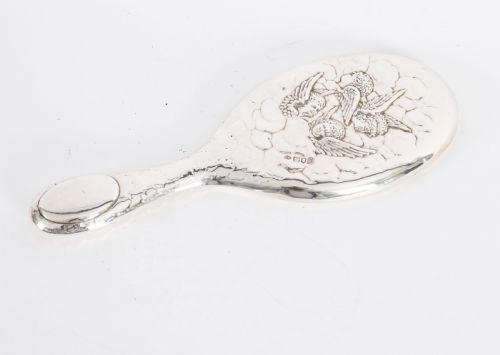
The intricacy and crispness of the hand-chased ornamentation or the preservation of applied enamel reveal the skill of the original workshop. Details such as figural cherubs, animals, or floral motifs demand superior craftsmanship compared to plain borders.
The condition and clarity of the original bevelled mirror glass, alongside the structural integrity of the easel support or wooden backing, dictate the overall standard of the survival.
WMF·Henry Williamson·Charles Boyton·S Blanckensee And Son·Jean Gille·William Comyns·Henry Matthews·Mappin And Webb
The Silver Dressing Table Mirror Glossary
- Easel back
- A hinged prop attached to the reverse of a mirror frame that allows it to stand upright on a table. This support is frequently covered in velvet or wood.
- Guilloche enamel
- A decorative technique where intricate geometric patterns are mechanically engraved beneath a translucent coloured enamel layer. This finish is particularly characteristic of Art Deco vanity items.
- Sterling silver
- An alloy consisting of pure silver and other metals, usually copper, to increase durability. Items made to this standard typically bear official hallmarks.
- Silver deposit
- A manufacturing process where pure silver is applied directly onto a ceramic or glass surface in decorative designs. This technique appears on specific period toilet and dressing mirrors.
- Strut mirror
- A tabletop mirror supported by a folding arm or prop at the back. It functions similarly to an easel design for vanity use.
Silver Dressing Table Mirror: Frequently Asked Questions
How do I date a silver dressing table mirror?
Dating relies primarily on the hallmarks stamped into the metal mount, which indicate the assay office, the specific year of manufacture, and the silversmith's mark. Stylistic clues such as floral motifs, scrolling borders, or geometric enamel work also help assign pieces to the Victorian, Edwardian, or Art Deco eras.
Examining the construction methods on the reverse, including the type of wood used for the backing or the style of the easel hinge, provides additional chronological context.
What is the difference between a strut mirror and an easel mirror?
In practice, both terms generally describe a tabletop mirror equipped with a hinged prop at the back to hold it upright. The distinction usually lies in regional terminology rather than a functional design difference.
Both styles were standard additions to dressing tables and vanity sets throughout the late 19th and early 20th centuries.
How were these mirrors used originally?
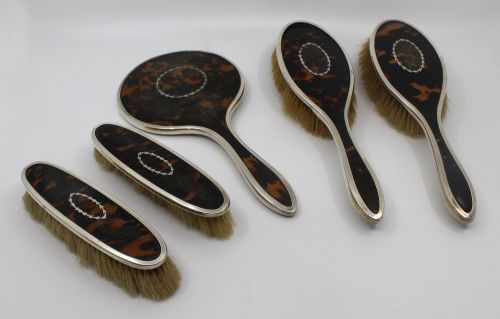
These mirrors formed an essential component of a lady's dressing table or vanity set, used daily for personal grooming, hairstyling, and applying cosmetics. Larger examples remained stationary on the dressing chest, while smaller matching hand mirrors and brush sets were kept alongside them.
Wealthy households often displayed elaborate silver-mounted mirrors as part of a matched suite of dressing table accessories.
Are Art Deco mirrors different from Victorian ones?
Art Deco mirrors feature streamlined silhouettes, symmetrical geometric shapes, and vibrant guilloche enamel panels that reflect the modernism of the 1920s and 1930s. In contrast, Victorian examples lean heavily into ornate floral repousse work, Rococo scrolls, and figural motifs such as cherubs or birds.
The materials also shifted over time, with chrome and coloured enamels joining traditional sterling silver and silver plate in later decades.