


Repousse Silver Dressing Mirror
A repousse silver dressing mirror brings gleaming chased metalwork and clear glass to your dressing table.
Repousse Silver Dressing Mirror
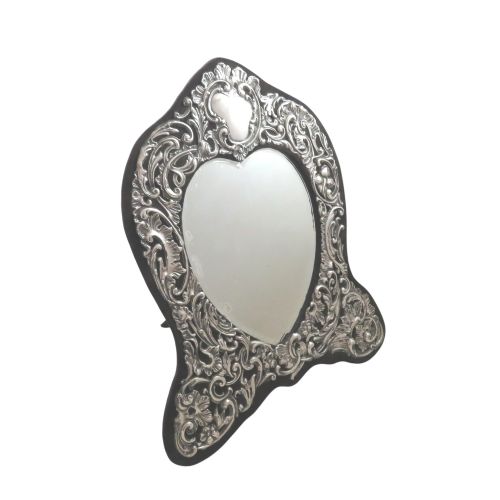
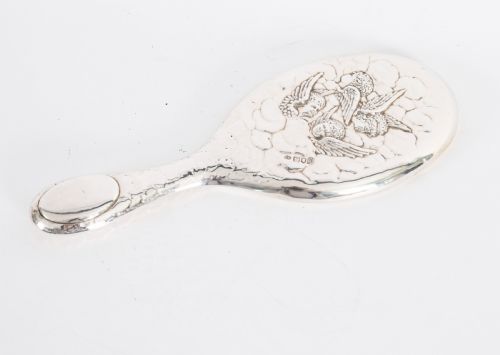
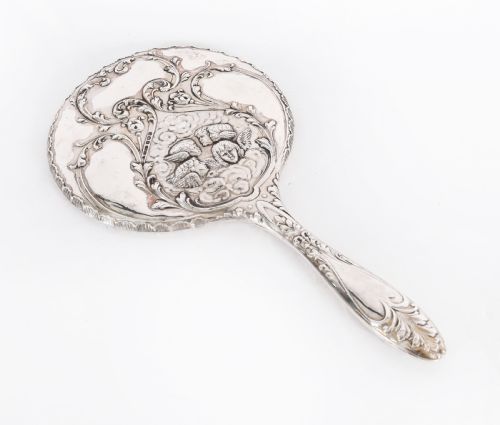
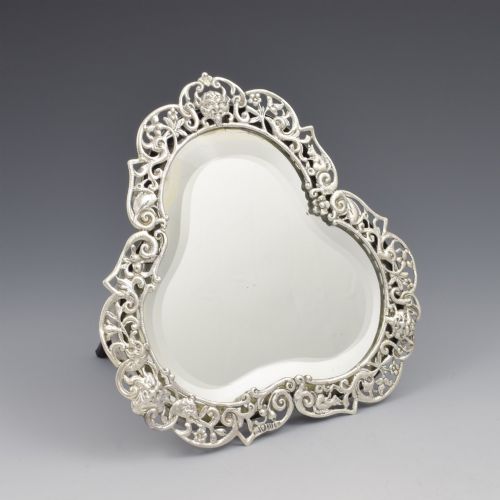
A repousse silver dressing mirror combines reflective glass with an ornate frame of hammered and embossed metal. These pieces appear in forms ranging from small hand mirrors to large easel-backed table mirrors and vanity mirrors.
The selections span the Victorian era, the Edwardian period, and the mid twentieth century, originating from English workshops, Chinese export makers, and Peruvian artisans. You will encounter hand mirrors and substantial tabletop variants featuring velvet, wood, and leather supports on the reverse.
Makers utilised sterling silver and silvered copper to create intricate surfaces decorated with cherubs, animals, birds, and stylised honesty seed pods. The Arts and Crafts movement and Victorian Rococo Revival styles heavily influence the decorative motifs seen across these pieces.
How they were made
Silversmiths formed the frames by hammering the metal from the reverse side to create raised, three dimensional designs in relief. This traditional technique allowed artisans to shape detailed cherubs, floral scrolls, and animal figures into sterling silver.
The silver frames were then mounted onto sturdy wooden backings, often lined with velvet or leather to provide structural support for the glass. Easel stands and handles were securely attached to allow the mirrors to stand upright on a dressing table or rest comfortably in the hand.
Listings feature sterling silver and silvered copper materials, spanning Victorian, Edwardian, and mid twentieth century periods.
What varies in quality
The crispness and depth of the chased metalwork distinguish the work of skilled silversmiths from simpler production pieces. Sharp definition in motifs like cherubs and birds indicates careful hand tooling rather than shallow pressing.
The integrity of the backing materials and the preservation of the original mirror glass affect the overall character of each piece. Substantial wooden structures and intact velvet or leather linings contribute to the longevity of the table mirror.
Charles Boyton·S Blanckensee & Son·William Comyns·Henry Matthews
The Repousse Silver Dressing Mirror Glossary
- Repousse
- A metalworking technique where the artisan hammers the reverse of a sheet to form a raised design on the front. This method creates the tactile relief patterns found on these mirror frames.
- Sterling silver
- An alloy containing a high proportion of pure silver combined with other metals for durability. English examples typically bear hallmarks indicating the standard and assay office.
- Easel mirror
- A tabletop mirror supported by a hinged prop on the back panel. This design allows the glass to stand at an angle on a dressing table.
- Hallmark
- An official stamp applied to precious metals indicating the maker, assay office, and year of testing. These marks provide reliable evidence of origin and date.
- Arts and Crafts
- A design movement favouring handcrafted execution and motifs inspired by nature. Pieces from this tradition often display stylised botanical elements like honesty seed pods.
Repousse Silver Dressing Mirror: Frequently Asked Questions
How do I clean a silver mirror frame?
Use a soft microfibre cloth and a gentle silver polish formulated to lift tarnish without harming the embossed details. Take care to avoid getting polish on the mirror glass or the fabric backing.
Work slowly around the raised repousse areas to preserve the dark patina in the recesses, which highlights the depth of the metalwork.
Can these mirrors stand on their own?
Table mirrors and easel mirrors feature a hinged rear strut designed to support the glass upright on a dressing table or chest of drawers. Hand mirrors are intended for pickup and lack this structural prop.
Check the reverse of the piece to confirm whether it relies on a wooden easel back or requires a vanity tray for display.
How do I identify the age of the silver?
Examine the metal frame for stamped hallmarks that indicate the assay office, standard, and date letter assigned by the guild. English pieces from this period frequently display clear maker marks and date ciphers.
Stylistic cues such as Art Nouveau curves or Victorian Rococo scrollwork also help narrow down the decade of production.
Are the mirror plates original?
Many pieces retain their original bevelled glass, which may show light foxing or small age spots consistent with genuine antique status. Original plates often exhibit slight dimpling or minor oxidation around the edges.
Replacement glass is sometimes fitted if the original mirror plate suffered damage over decades of daily use.