
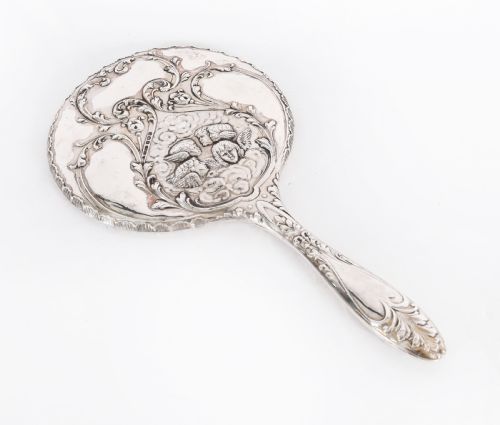


Edwardian Silver Vanity Mirror
These edwardian silver vanity mirror pieces are functional dressing table accessories made to sit on a bureau or be held in the hand.
Edwardian Silver Vanity Mirror
An edwardian silver vanity mirror brings polished metal and glass to the dressing table or dressing room. These objects serve both practical grooming needs and decorative display purposes in the bedroom.
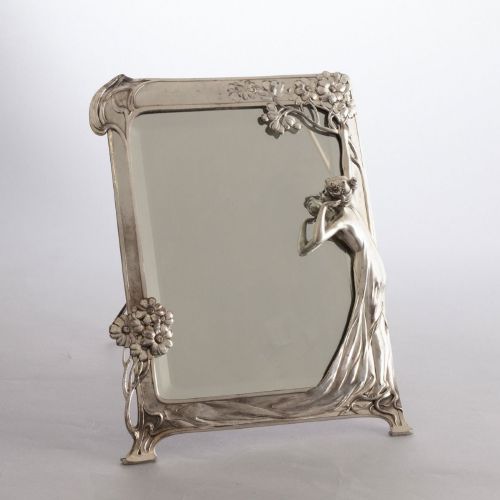
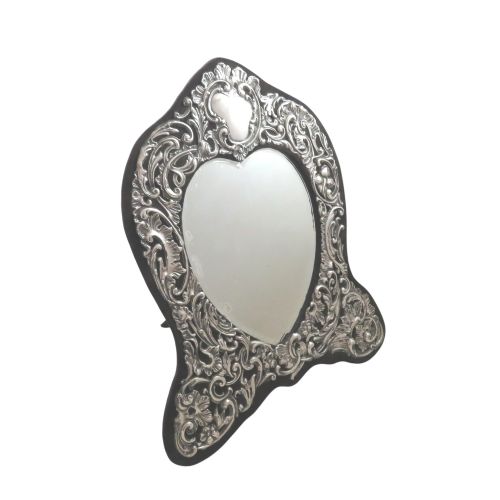
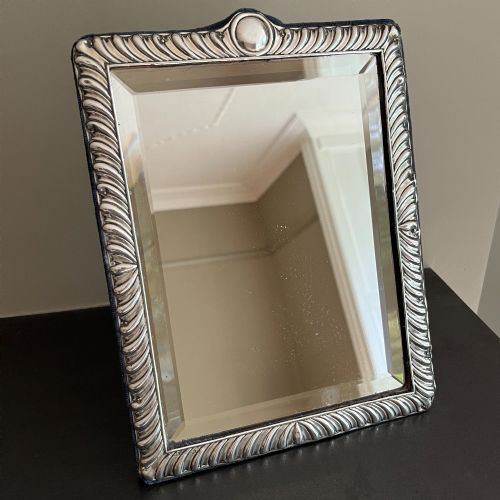
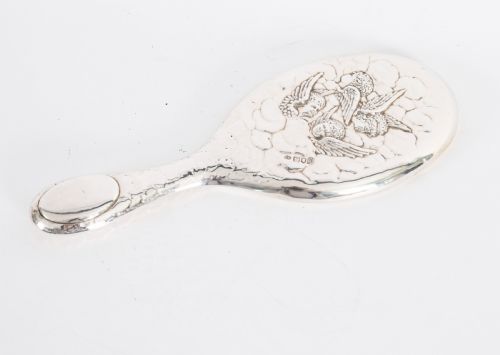
The pieces listed under this search phrase span formats from large tabletop dressing table mirrors supported by easel backs or wooden struts to handheld looking glasses. Smaller pocket powder compacts also appear within this category.
Most examples originate from the early twentieth century, alongside related pieces produced during the Victorian and Art Deco eras. Makers utilised sterling silver, silver plate, pewter and silvered copper alongside bevelled mirror glass.
How they were made
Silversmiths formed the frames and backs using sterling silver or silver plate, frequently employing techniques such as embossing, chasing and enamelling. Guilloché enamel and figural motifs often decorated the metal surfaces.
Backings typically incorporate wood, velvet or fabric supports for structural rigidity on easel backs and tabletop frames. Mirror glass is bevelled and set securely into the metal mounts.
Cherubs and honesty seed pods stare out from the metalwork, proving that Edwardians liked their reflections surrounded by tiny figures and flora.
What varies in quality
The weight and gauge of the silver frame dictate the physical substance of the piece, with thicker metal providing greater durability. Crispness in embossed decoration and hand-chased detail separates standard production items from finer workshop output.
The clarity and condition of the original mirror glass, together with the integrity of any applied enamel or velvet backing, determine the overall preservation of the object.
WMF·Charles Boyton·S Blanckensee & Son·Henry Matthews·William Comyns
The Edwardian Silver Vanity Mirror Glossary
- Sterling silver
- An alloy containing 925 parts of pure silver per thousand, standard for British hallmarked tableware and dressing items. This metal provides the primary structural and decorative material for the finest frames.
- Guilloché enamel
- A decorative technique where translucent enamel is layered over precisely machined geometric metal patterns. It creates a lustrous, patterned surface frequently found on compacts and mirror backs.
- Strut mirror
- A tabletop mirror supported by a hinged wooden or metal prop at the rear. This design allows the glass to tilt at a convenient angle for the user.
- Easel back
- A freestanding frame support that props the mirror upright on a horizontal surface. It functions similarly to the back of a photograph frame.
Edwardian Silver Vanity Mirror: Frequently Asked Questions
How are vanity mirrors supported?
Most tabletop and dressing table examples rely on a hinged wooden strut or metal easel back to hold the glass upright. Hand mirrors are designed to be lifted and held during use.
Larger triptych or folding formats stand independently on flat surfaces by angling their side panels.
What materials make up the frames?
Makers relied heavily on sterling silver and silver plate for the primary decorative metalwork. Pewter and silvered copper also appear in specific stylistic groups.
Wooden backing boards, velvet linings and enamel panels frequently complete the construction behind the metal frames.
How do I identify the period?
Hallmarks stamped directly onto the silver elements provide exact dates and assay office locations for British pieces. Stylistic markers such as floral Art Nouveau whiplash lines or geometric Art Deco patterns also indicate the era of manufacture.
Construction details, including the type of wood used for backing boards, offer further clues to age.
Where were these mirrors used?
These items belonged primarily on dressing tables, washstands and bureaus in private bedrooms. They assisted with daily grooming, hair styling and personal cosmetics.
Hand mirrors and compacts were also carried for travel and social use.