


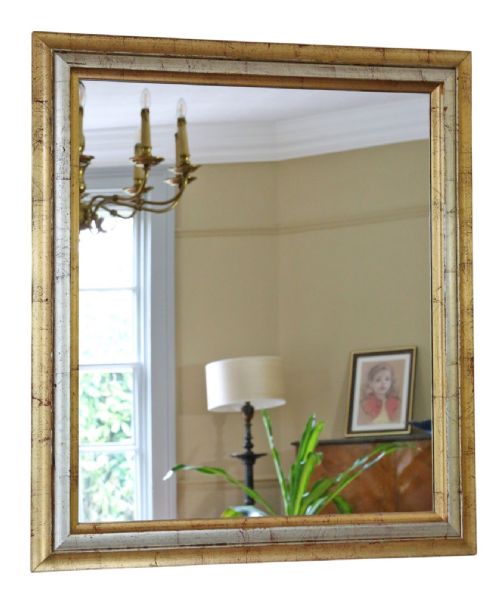
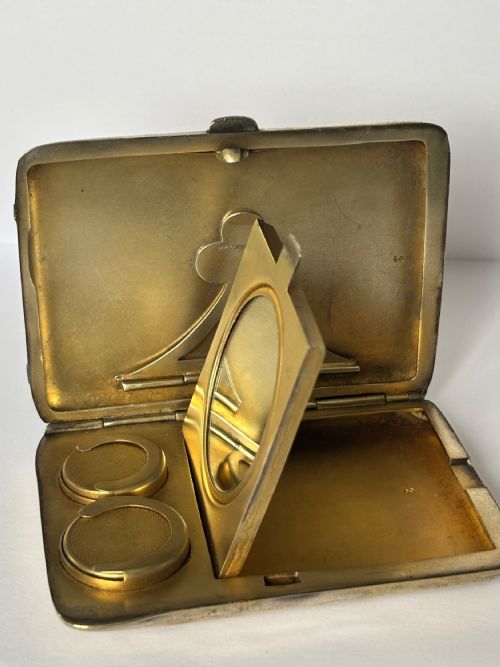
Vintage Silver Vanity Mirror
These vintage silver vanity mirror selections range from heavy Edwardian dressing table glass to crisp Art Deco enamel pieces.
Vintage Silver Vanity Mirror
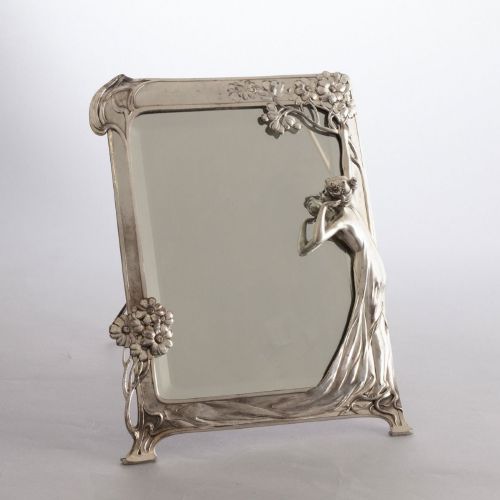
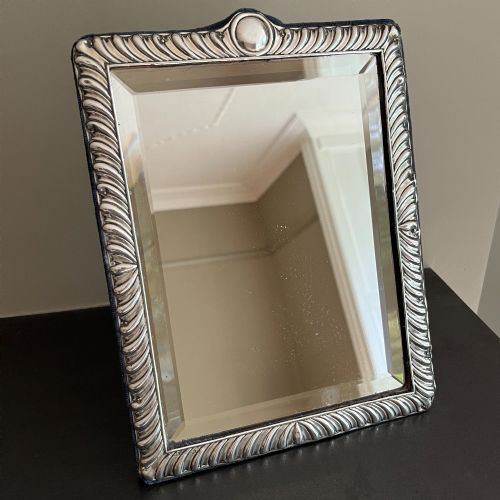
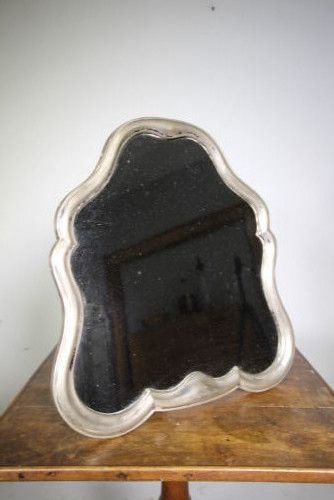
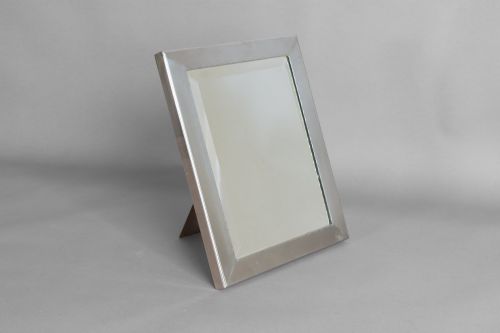
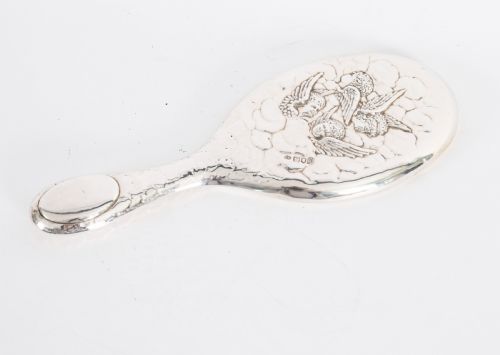
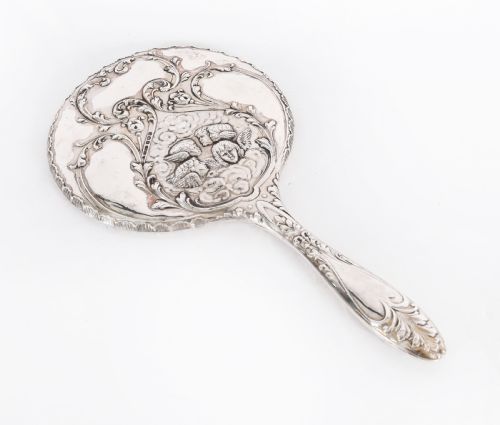
A vintage silver vanity mirror is primarily found in forms designed for the dressing table, including hand-held pieces, strut mirrors, and triptychs. These objects served daily grooming rituals in Edwardian bedrooms and later Art Deco boudoirs.
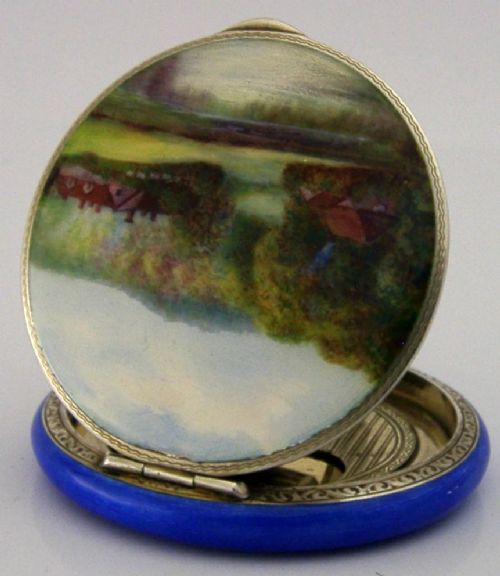
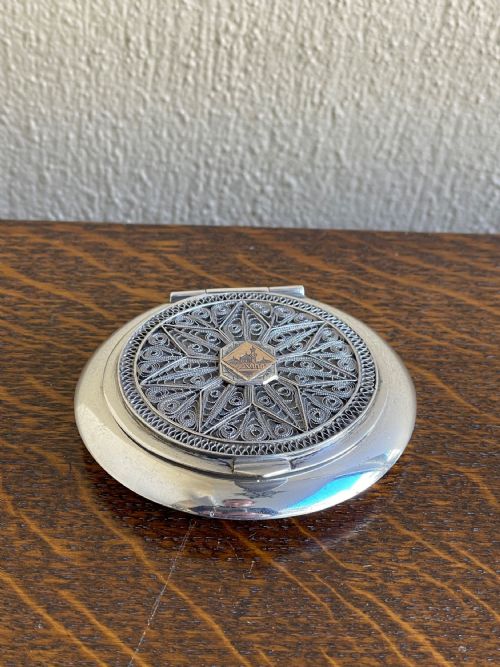
The selections here extend across compacts, trays, and smaller dressing accessories, reflecting the broader scope of personal metalwork from the late nineteenth century through to the middle of the twentieth century.
How they were made
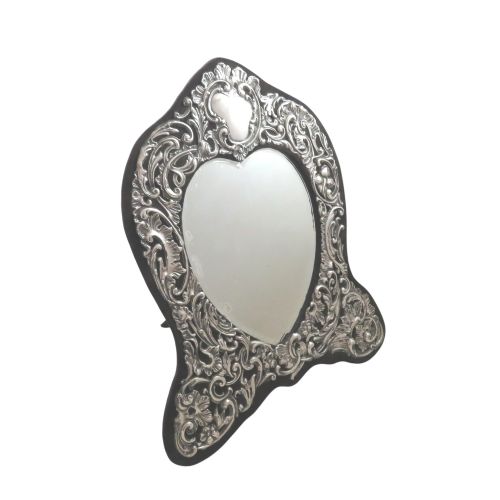
Silversmiths utilised sterling silver and silver plate for frames and casings, often combining the metal with clear or bevelled mirror glass. Handles and backs frequently incorporated timber foundations or structural iron fittings.
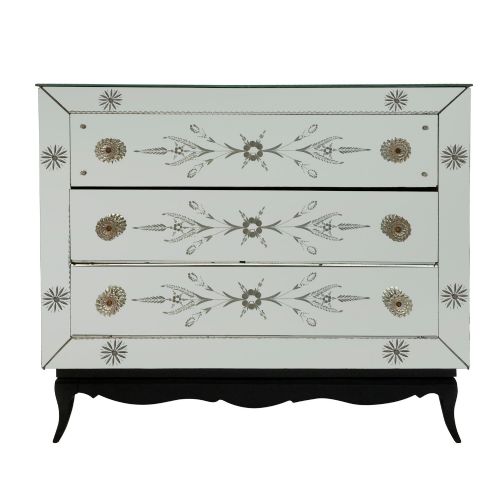
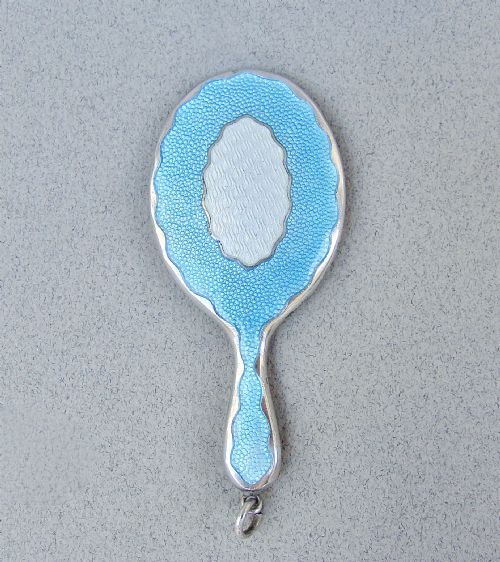
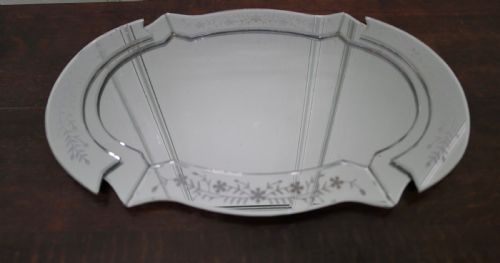
Decoration relied on hand embossing, engine turning, and brightly coloured guilloche enamel applied over engraved metal grounds. Some examples integrate glass panels with etched motifs or coloured cobalt accents.
The listings span multiple decades, incorporating Victorian, Edwardian, and Art Deco styles alongside mid-century Italian and Peruvian silver.
What varies in quality
The standard of a piece rests upon the crispness of its chasing and the depth of the silver gauge used in the frame. Thicker metal resists bending during daily handling and preserves maker marks clearly.
Enamel work shows distinction through smooth, unbroken surfaces free from heavy crazing, while glass quality is judged by the clarity of the reflection and the precision of bevelled edges.
Henry Williamson·Henry Matthews·Charles Boyton·S Blanckensee And Son·Giuliano Spinelli
The Vintage Silver Vanity Mirror Glossary
- Guilloche enamel
- A decorative technique where translucent enamel is layered over precisely engine-turned metalwork. It creates repeating geometric patterns that catch the light beneath the colour.
- Sterling silver
- An alloy containing a high proportion of pure silver combined with other metals for durability. British pieces commonly display hallmarks confirming this standard.
- Strut mirror
- A table-supported mirror featuring a hinged prop arm on the reverse side. This allows the glass to stand upright on a dressing surface without wall mounting.
- Triptych mirror
- A three-panel dressing mirror with hinged side sections that angle inward. This arrangement lets the user view reflections from multiple sides.
- Silver gilt
- Silver objects coated with a thin layer of gold over the surface. The technique introduces a warm golden tone to the metalwork.
Vintage Silver Vanity Mirror: Frequently Asked Questions
How do I date these mirrors?
Dating relies on matching hallmarks, maker marks, and stylistic indicators such as Edwardian embossing or Art Deco geometric framing.
Assay office symbols and date letters stamped into the silver provide precise years for many sterling pieces.
Are these mirrors heavy to hold?
Hand mirrors from the Edwardian period often feel substantial due to solid sterling silver framing and glass inserts.
Smaller compacts and purse mirrors utilise lighter gauge metals for portability during daily use.
How should I clean the silver?
Gentle dusting with a soft cloth preserves the original metal surface without removing delicate details or hallmarks.
Specialist silver creams should be used sparingly, keeping polish away from glass edges and enamel inlays.