


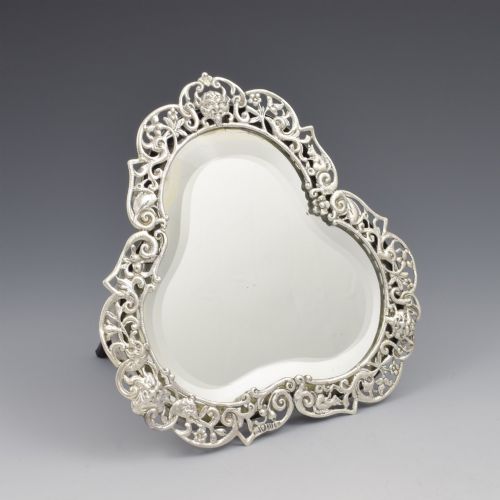


Silver Easel Mirror
A silver easel mirror brings brilliant reflection and substantial weight to a dressing table.
Silver Easel Mirror
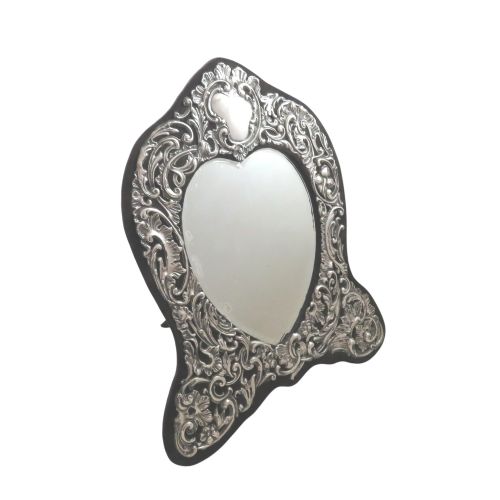
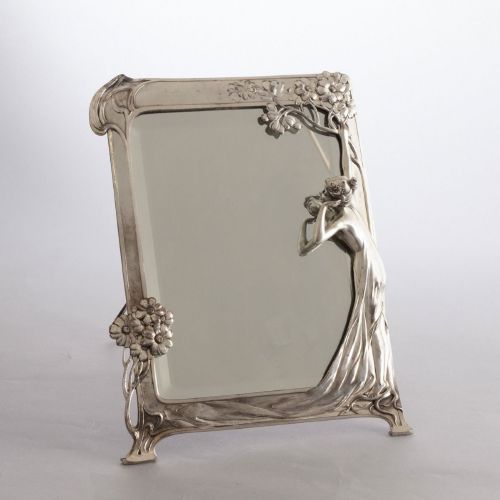
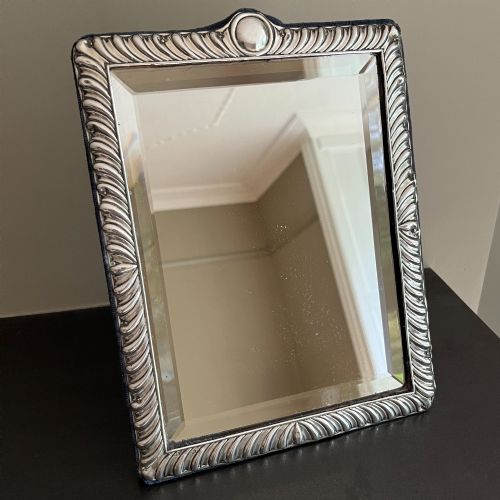
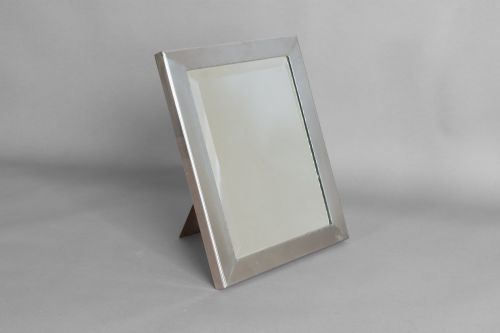
A silver easel mirror is a portable looking glass designed to stand upright on a dressing table or vanity, supported by a hinged back strut rather than hanging on a wall. The pieces seen here span the Victorian, Edwardian, and Art Deco periods, encompassing both substantial sterling silver frames and silver plated alternatives.
The most common formats on this page are tabletop vanity mirrors and dressing table mirrors, ranging from compact circular frames to large rectangular pieces measuring up to fourteen inches. Many examples incorporate a sturdy wooden or leather backing covered in fabric such as velvet, holding the heavy glass secure.
Origins vary across English provincial assay offices and Birmingham makers, alongside continental European workshops like WMF. Buyers encounter simple circular designs alongside elaborate Art Nouveau motifs featuring animals, birds, and pierced decoration.
How they were made
Makers constructed these frames using sterling silver or silver plate mounted over a core of wood, leather, or card, which provided structural rigidity. The glass itself is typically bevelled at the edges to catch the light and sits securely within metal bezels.
Surface decoration relied on traditional silversmithing techniques including embossing, piercing, and hammering. Back struts attach via sturdy metal hinges, often covered in plush velvet or dark leather to protect furniture surfaces.
Silver Easel Mirror Retail Price Guide 2026
Typical asking prices for silver easel mirror among the pieces listed under this phrase on Sellingantiques today, from the lower quarter to the upper quarter. They describe what is for sale here now, not the wider market.
Some Edwardian silver mirrors feature playful depictions of birds and animals peeking out from the pierced floral metalwork.
What varies in quality
Quality rests primarily on the gauge of the metal and the depth of the silversmith's hand-work. Finer pieces display crisp, deep embossing and intricate pierced work rather than shallow stamping.
The integrity of the structural backing and the original mirror glass also dictate the standard of a piece. Substantial sterling silver frames with fully intact, original bevelled glass represent the upper tier of the range.
Henry Matthews·William Comyns
The Silver Easel Mirror Glossary
- Easel back
- A hinged folding strut attached to the rear of a mirror frame that allows it to stand upright on a flat surface.
- Sterling silver
- An alloy containing 92.5 percent silver by mass, standard for quality British silver mirror frames.
- Silver plate
- A thin layer of silver applied to a base metal core such as brass or pewter, utilised by makers like WMF.
- Bevelled glass
- Mirror glass with edges cut and polished at an angle to create a decorative framing effect.
- Assay mark
- A stamp indicating the purity of the metal, the town of testing, and the date letter for the year of manufacture.
Silver Easel Mirror: Frequently Asked Questions
How do I clean a silver easel mirror?
Use a soft cloth and a gentle silver polish, taking care to avoid getting moisture behind the mirror glass or staining the velvet backing.
Work around the bezel carefully to preserve any embossed or pierced detailing without pressing too hard into the metal.
Are these mirrors heavy?
Yes, many examples feature substantial sterling silver mounted over a wooden core, giving them notable weight.
The sturdy easel back supports this mass safely when angled correctly on a dressing table.
Can I replace the mirror glass?
Replacement is possible, but original bevelled glass adds considerably to the character and authenticity of an antique piece.
Many listings retain their original glass, which often shows light age-appropriate foxing.
How do I date a silver mirror?
Look for the hallmarks stamped on the silver frame, which indicate the assay office and date letter for the year of creation.
Stylistic cues such as Art Nouveau curves or Victorian embossing also help identify the period.