


Silver Standing Mirror
A silver standing mirror brings reflective depth and period craftsmanship to a dressing table or mantelpiece.
Silver Standing Mirror
A silver standing mirror is a portable or tabletop looking glass designed to rest on surfaces without wall hanging, encompassing vanity pieces, dressing table accessories, and table plateaux.
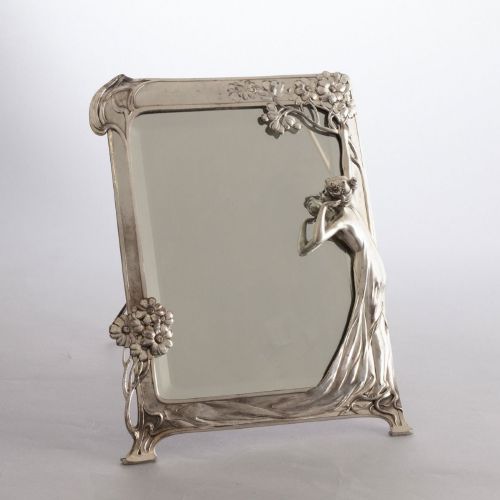
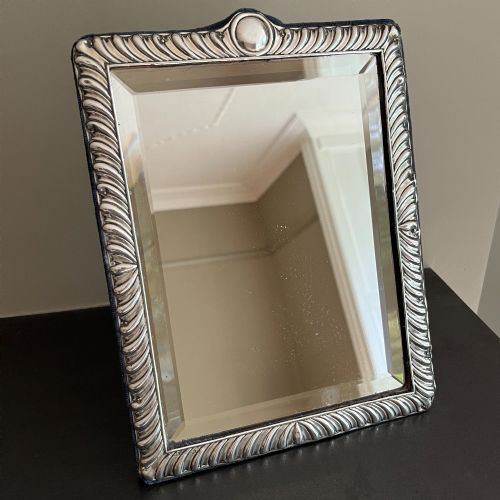
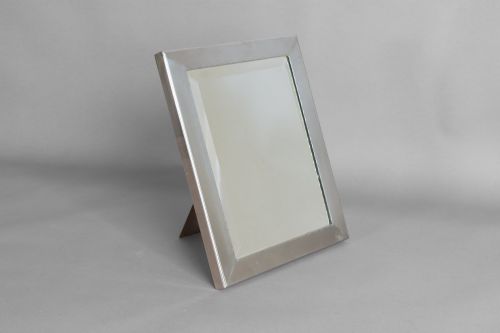
The selections available here range from Victorian and Edwardian examples to Art Deco and 1930s chrome or silver-plated designs.
Buyers frequently encounter easel-backed mirrors, strut mirrors, and pivoting toilet mirrors originating from British, French, and German workshops.
Materials and construction
Frames and stands utilise sterling silver, silver plate, pewter, chrome, wood, and gesso to support the glass.
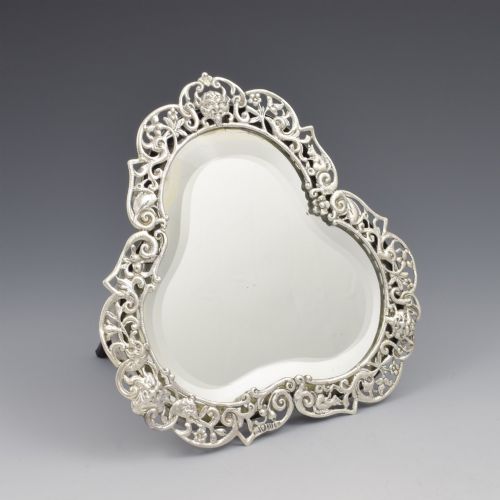
Decorative detailing employs techniques such as piercing, repousse work, enamel, etching, and carving.
Backing supports rely on wooden struts, metal easel stands, and weighted bases to maintain stability.
Listings span from the 19th century through the Victorian, Edwardian, and Art Deco periods, incorporating sterling silver, glass, wood, and chrome.
Distinctions in quality
The refinement of the metalwork and the clarity of the original mirror glass separate standard examples from finer creations.
Makers' marks, stamped hallmarks, and registered design numbers indicate the origin and standing of the piece.
Integrity of construction, from the sturdiness of the easel mechanism to the retention of original gilding or plating, determines longevity.
WMF·Henry Matthews·Elkington
The Silver Standing Mirror Glossary
- Easel mirror
- A looking glass supported by a hinged rear leg that allows it to stand upright on a horizontal surface.
- Strut mirror
- An alternative term for an easel mirror, relying on a rear brace to hold the glass at an angle.
- Table plateau
- A mirrored tray or stand placed on a dining table or surface, often used for display.
- Repousse
- A metalworking technique where the design is hammered into relief from the reverse side.
- Gesso
- A plaster-like material applied to wood frames as a base for silver or gilt finishes.
Silver Standing Mirror: Frequently Asked Questions
How do I date a silver standing mirror?
Dating relies on identifying hallmarks, registration numbers, and stylistic markers such as Art Nouveau curves or Art Deco geometric lines.
Materials like chrome point to the 1930s, while heavy cast metalwork and specific maker stamps often indicate Victorian or Edwardian origin.
Where should I place a table mirror?
These mirrors function effectively on dressing tables, mantelpieces, and sideboards where they bounce light around a room.
Smaller vanity pieces suit bedroom setups, while larger plateaux serve as decorative bases for display items.
Are these mirrors easy to maintain?
Maintenance involves gentle cleaning of the glass with standard glass cleaner and careful polishing of silver or plated surfaces using appropriate cloths.
Avoiding harsh abrasives preserves the integrity of delicate finishes like original silver plate or gesso.
What is the difference between a plateau and a vanity mirror?
A vanity mirror is designed for personal reflection during grooming, featuring an upright glass mounted on a stand or easel.
A table plateau is a flat mirrored tray intended to sit horizontally on a surface to reflect centrepieces or decorative objects.