


Silver Dressing Mirror
When you search for a silver dressing mirror, you are looking at vanity and table accessories designed to sit upon dressing tables and chests.
Silver Dressing Mirror
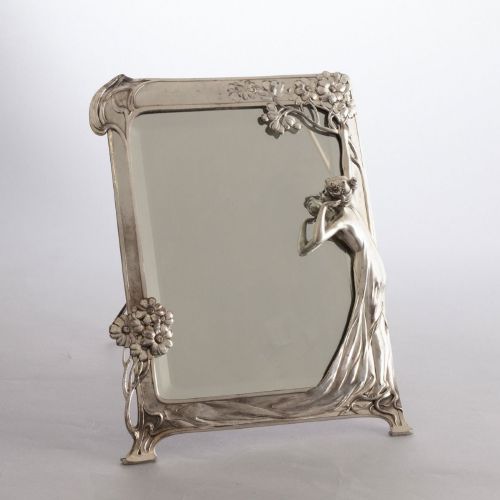
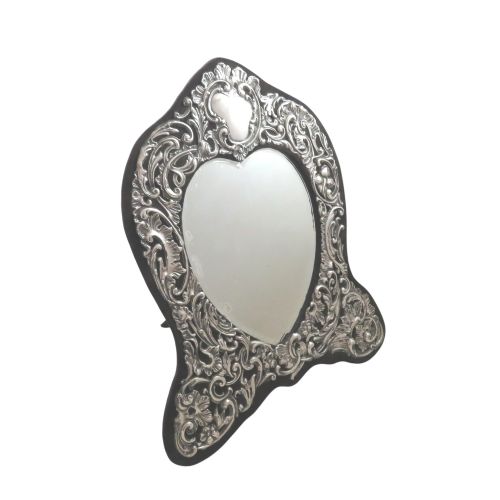
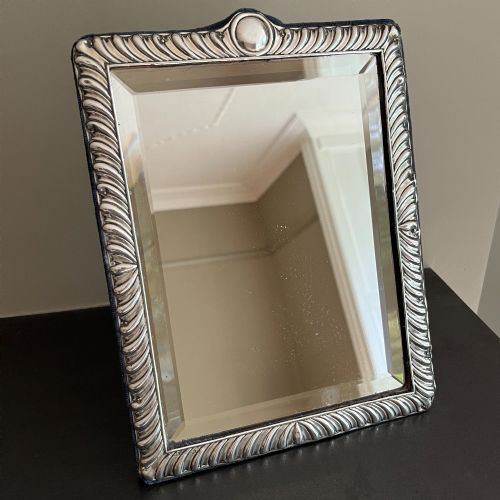
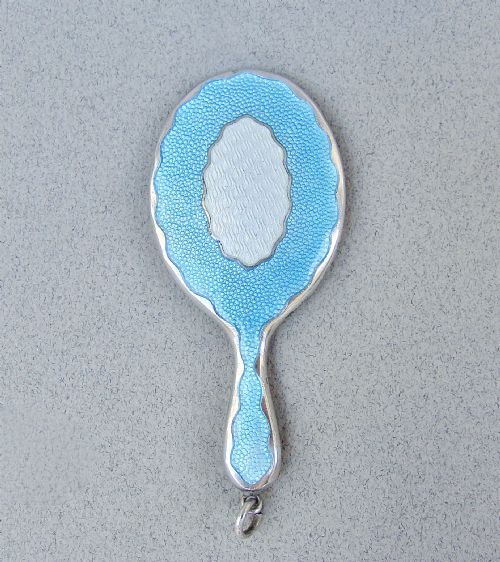
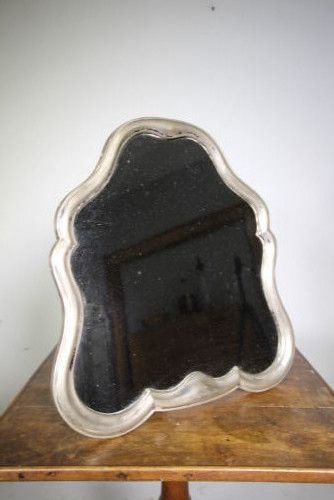
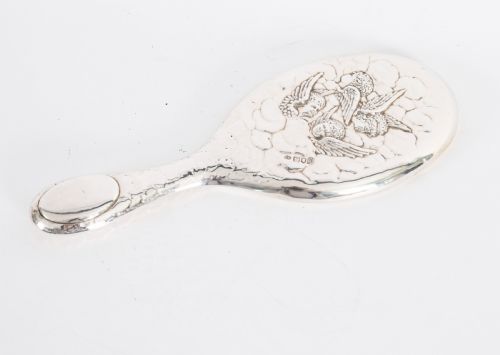
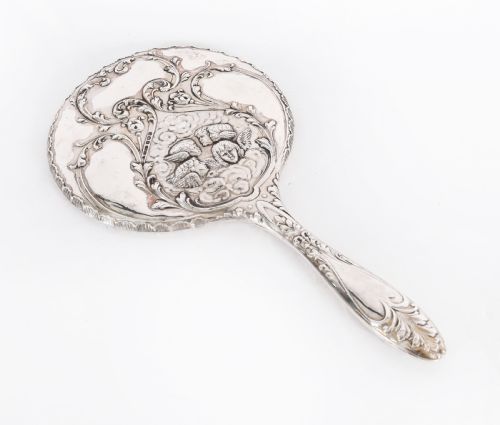
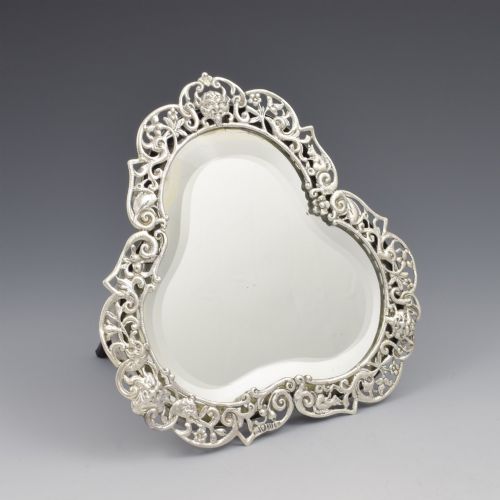
A silver dressing mirror is a tabletop or handheld looking glass designed for personal grooming on dressing tables, featuring frames and mounts fashioned from sterling silver, silver plate, or silvered wood. These pieces span from the late nineteenth century through the Art Deco era, encompassing compact strut mirrors, large easel-backed toilet glasses, and heart-shaped designs.
The versions most commonly met on this page originate from the Victorian and Edwardian periods, alongside Art Deco pieces from the 1920s and 1930s. Makers frequently employed materials such as glass, mirror glass, velvet, wood, and enamel to back and support these dressing table accessories.
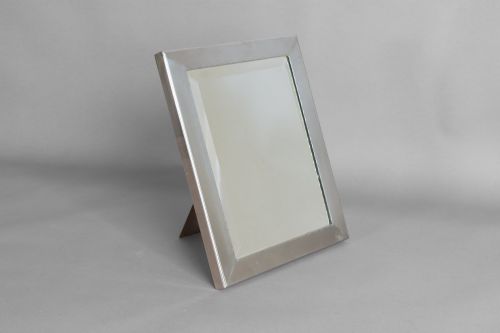
Table mirrors and dressing box mirrors serve both practical and decorative functions within domestic interiors. They range from small handheld vanity items to large, architectural pieces featuring repoussé work, pierced decoration, or clean geometric lines.
How They Were Made
Silversmiths constructed these frames using sterling silver or silver plate mounted over wooden cores or filled with plaster and weighted with velvet or baize backings to provide stability on a dressing table. Easel struts hinged to the reverse allowed the mirrors to tilt at desired angles.
Decoration relied on techniques such as embossing, piercing, and guilloché enamelling, where translucent enamel was applied over engine-turned metal grounds. Carved wood and gesso frames received silver leaf or silver deposit finishes, while some pieces incorporated celluloid, porcelain, or pewter.
Glass plates were bevelled at the edges to catch the light and secured into the metal or wooden surrounds with internal clips or backing boards.
Listings feature sterling silver, silver plate, pewter, and silvered wood across Victorian, Edwardian, and Art Deco periods.
What Varies in Quality
Quality rests upon the weight of the metal used in the frame and the depth and crispness of the chased or embossed ornament. Substantial gauge sterling silver and heavy cast frames provide greater structural integrity than thin plated metal or lightweight stampings.
William Comyns·Henry Matthews·Charles Boyton·S Blanckensee and Son·Henry Williamson·Mappin and Webb
The Silver Dressing Mirror Glossary
- Easel mirror
- A looking glass supported by a hinged leg or strut at the back, allowing it to stand upright on a flat surface.
- Guilloché
- A decorative technique where a precise, intricate pattern is mechanically engraved into a metal surface before translucent enamel is applied.
- Repoussé
- Metalworking method in which the design is hammered into relief from the reverse side of the sheet metal.
- Strut mirror
- An alternative term for an easel mirror, relying on a rear prop for support.
- Silver deposit
- A chemical process used to bond pure silver designs directly onto glass or porcelain surfaces.
Silver Dressing Mirror: Frequently Asked Questions
How do I clean a silver dressing mirror frame?
Use a soft microfibre cloth and a gentle, non-abrasive silver polish to remove tarnish from the metal surfaces. Avoid getting polish on the mirror glass or backing materials such as velvet and enamel.
Take care around embossed or chased areas where excessive rubbing can wear away the finer details of the decoration over time.
Were these mirrors meant to be packed for travel?
Some smaller examples, such as hand mirrors and folding travelling sets, were designed for packing into luggage. Larger easel mirrors and triptychs were intended as permanent fixtures on dressing tables.
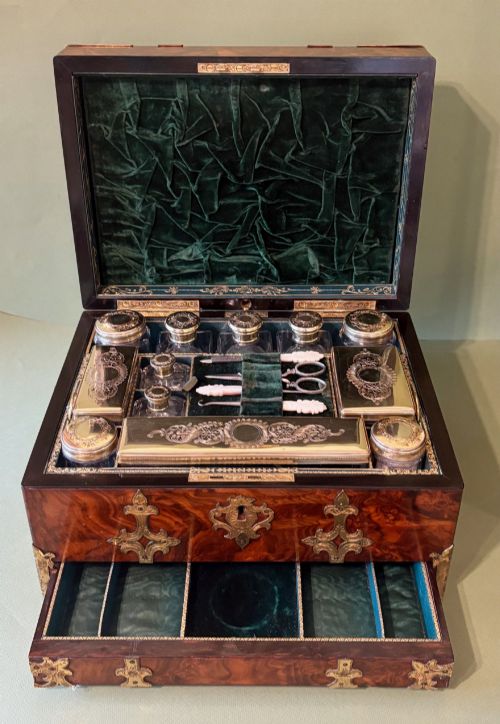
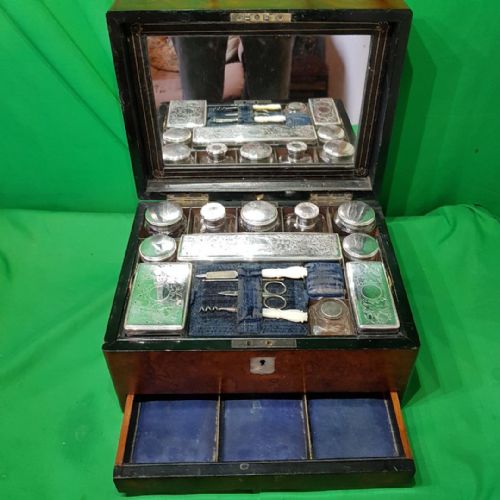
Travelling vanity sets incorporated mirrors alongside brushes and jars within fitted cases for protection on journeys.
What is a triptych dressing table mirror?
A triptych mirror consists of a central looking glass flanked by two smaller hinged side panels. This design allowed the user to view themselves from multiple angles while sitting at a dressing table.
The side panels could be angled inward to adjust the reflection.