



Victorian Silver Vanity Mirror
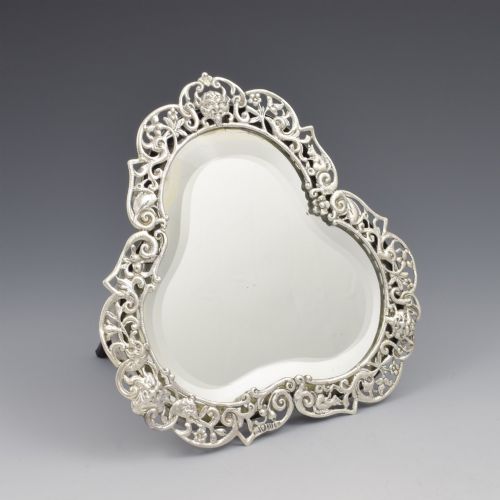
These victorian silver vanity mirror pieces bring dressing room elegance to a tabletop, offering bevelled glass and pierced metal work.
Victorian Silver Vanity Mirror
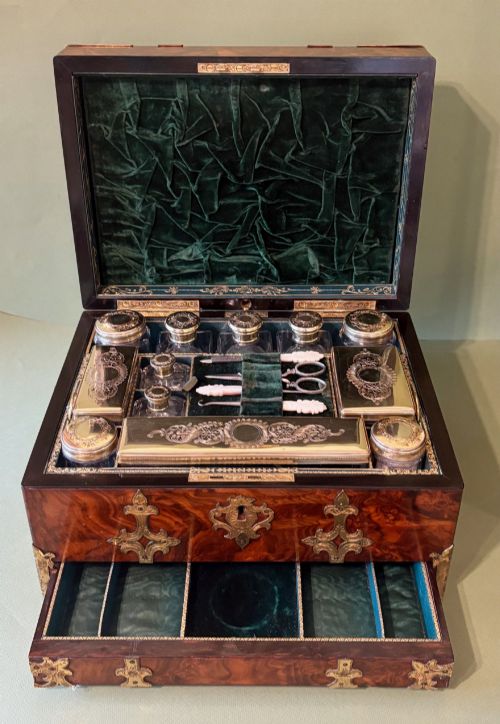
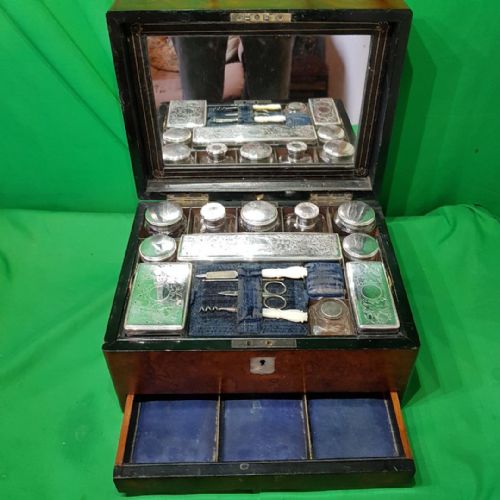
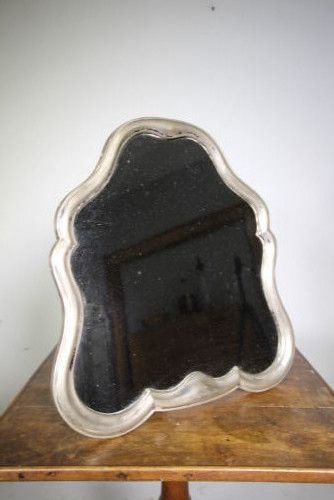
A victorian silver vanity mirror brings together tabletop mirrors, easel mirrors, and dressing cases designed for the nineteenth-century dressing table. These objects range from heart-shaped table mirrors and silver-mounted easel backs to elaborate travelling sets incorporating glass and velvet.
The pieces appearing on this page date principally from the Victorian era and the broader nineteenth century, with specific examples recorded from the eighteen-eighties and nineties. Makers and workshops utilised sterling silver, silver gilt, and brass to frame bevelled glass.
Forms span from simple table mirrors to complex dressing boxes and fitted travelling sets containing jewellery compartments. Rococo revival styling and French rococo revival influences appear frequently alongside the period's decorative metalwork.
How they were made
Silversmiths constructed these frames using sterling silver and silver gilt, often mounting the metal over wooden cores or easel supports. Burr walnut and brass also served as structural and decorative elements in travelling sets and dressing cases.
Makers applied techniques such as piercing, embossing, and silver deposit work onto porcelain and glass surfaces. Bevelled glass formed the reflective plate, whilst velvet and celluloid lined the interior compartments of the associated boxes.
Some Victorian dressing mirrors featured pierced silver frames decorated with small animals and birds peering through the scrollwork.
What varies in quality
Quality in a victorian silver vanity mirror lies in the depth and crispness of the metalwork, particularly in pierced designs involving animals, birds, and scrollwork. Heavier gauge silver provides greater structural integrity to easel stands and frames.
The choice of secondary materials, such as burr walnut for dressing boxes or the inclusion of original bevelled glass and interior velvet fittings, distinguishes higher tier examples. Works bearing the marks of known makers demonstrate superior craftsmanship in both mount construction and engraving.
Jean Gille·William Comyns·Henry Matthews
The Victorian Silver Vanity Mirror Glossary
- Sterling silver
- A silver alloy containing 925 parts of pure silver per thousand, widely used by nineteenth-century silversmiths for mirror frames and vanity sets. This standard was legally regulated and stamped with assay office hallmarks.
- Easel mirror
- A tabletop mirror supported by a hinged prop or leg at the rear, allowing the glass to tilt at an angle. These stands are frequently covered in velvet or silver-mounted leather.
- Silver gilt
- Silver that has been coated with a thin layer of gold on its surface, creating a rich two-tone decorative effect. This technique appears on specific Victorian travelling sets and vanity items.
- Silver deposit
- A manufacturing process where metallic silver is chemically bonded to a ceramic or porcelain base in intricate patterns. French pieces often employed this technique on blue ground porcelain.
- Bevelled glass
- Glass featuring an angled edge ground down to a narrower width around the perimeter. This treatment refracts light and adds depth to nineteenth-century mirror plates.
Victorian Silver Vanity Mirror: Frequently Asked Questions
How do I date a silver mirror?
Dating relies primarily upon the hallmarks struck into the silver frame, which indicate the assay office, standard, and date letter for the year of manufacture. Stylistic cues such as rococo revival scrolls or Art Nouveau motifs provide additional context.
Makers' marks stamped alongside these hallmarks help narrow the origin down to specific workshops operating during the Victorian period.
Were these mirrors meant for travel?
Many examples formed part of larger travelling sets or dressing cases equipped with fitted compartments for bottles and brushes. These portable items allowed Victorian owners to maintain their grooming routines away from home.
Table mirrors with fixed easel backs, however, remained stationary on dressing tables rather than accompanying travellers on journeys.
What is silver deposit work?
Silver deposit is a technique where liquid silver is applied in decorative designs directly onto a non-metallic surface like porcelain or glass. The piece is then electroplated to bond the metal permanently.
This method created striking contrasts between the dark ceramic body and the bright silver ornamentation on vanity items.
How should I clean the silver?
Cleaning requires a soft microfiber cloth and a gentle, non-abrasive silver polish formulated for antiques. Care must be taken around bevelled edges and velvet or celluloid linings to avoid staining.
Harsh chemical dips should be avoided to preserve the original patina and any delicate gilding on the metal surface.