

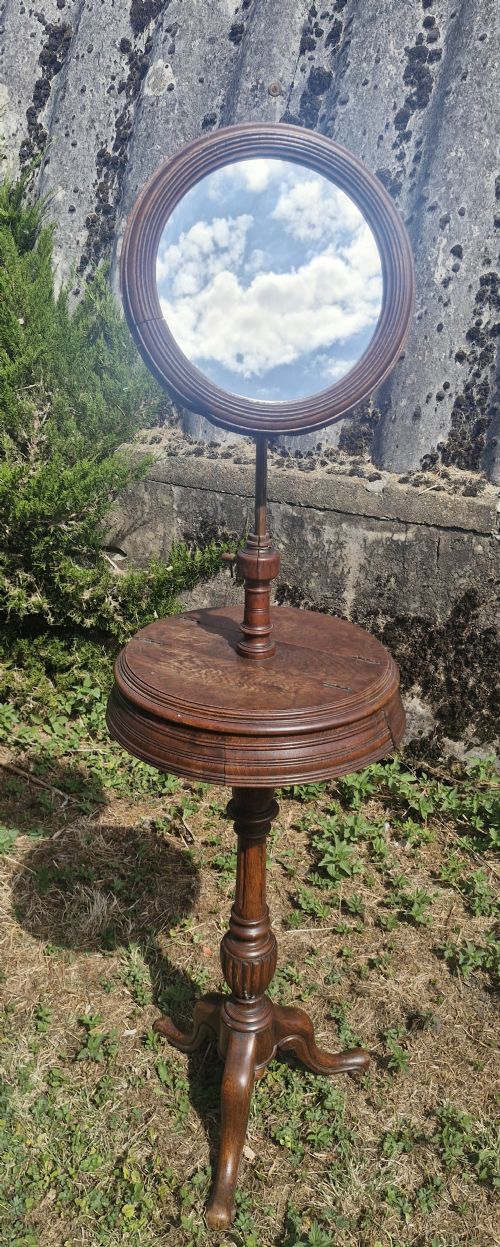
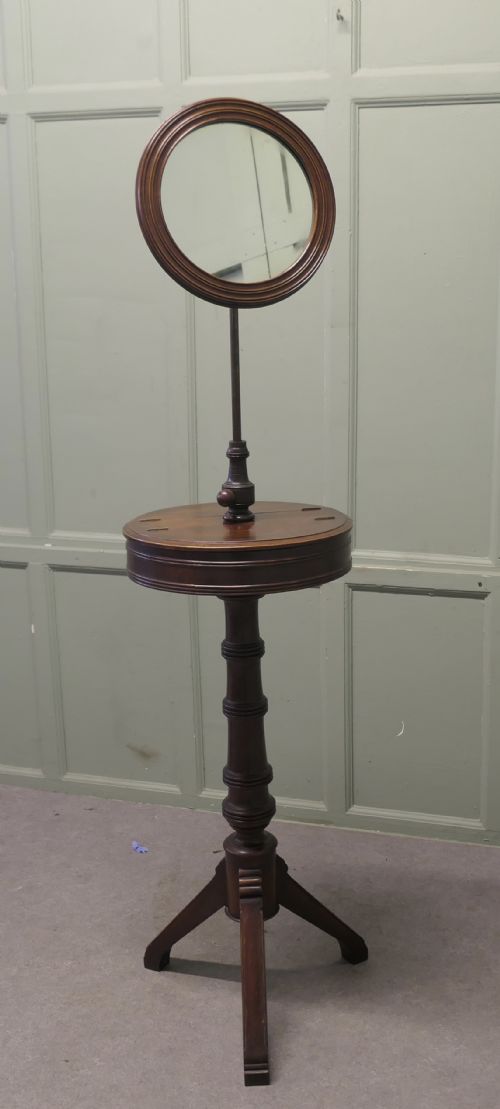
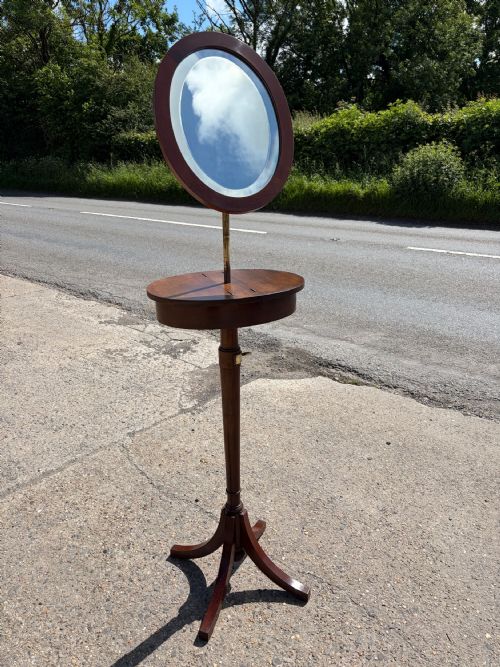


Antique Tripod Mirror
An antique tripod mirror is a practical grooming glass mounted on a three-legged stand, prized for its mobility and adjustable height.
Antique Tripod Mirror
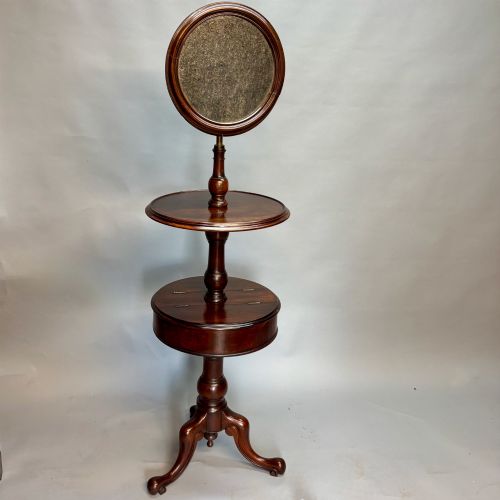
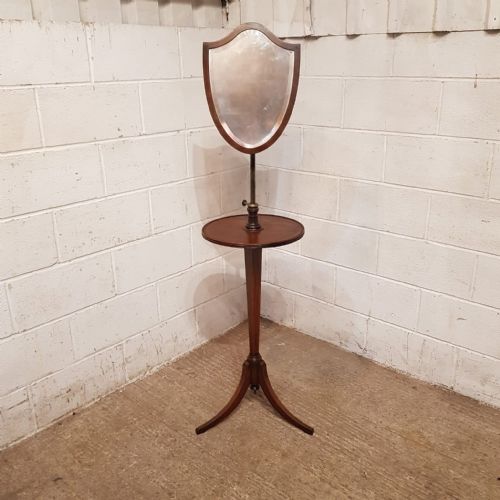
When you search for an antique tripod mirror, you are looking at nineteenth-century and early twentieth-century dressing and shaving stands designed for personal grooming. These pieces typically feature an adjustable glass mounted on a slender pillar supported by three legs.
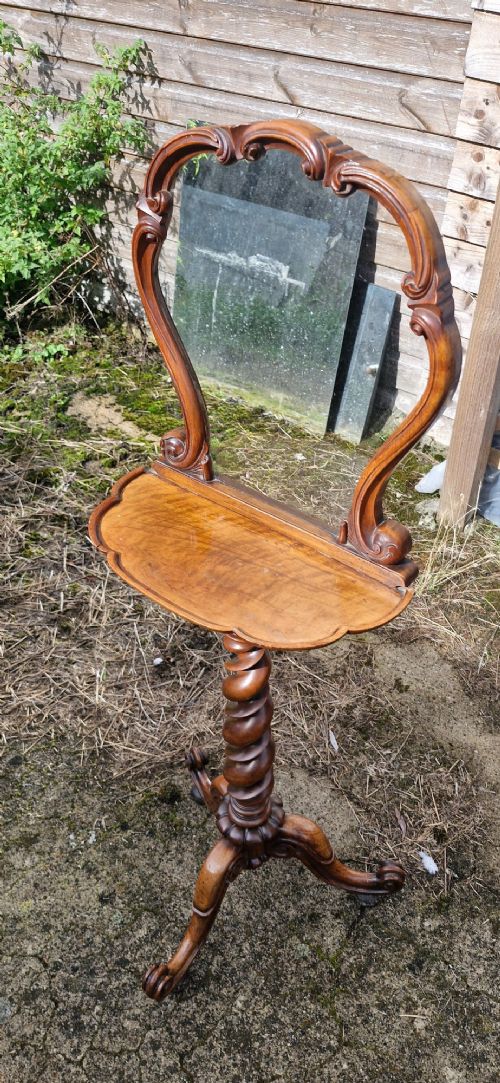
The versions most commonly met on this page date from the Victorian and Edwardian eras, appearing in forms such as shaving stands, occasional tables with glass backs, and telescopic vanity mirrors.
Materials span mahogany, walnut, oak, and satin birch, often paired with brass fittings and adjustable mechanisms that allowed nineteenth-century users to alter the height and angle of the glass.
Construction and materials
Cabinetmakers constructed these tripod stands primarily using dense timbers such as mahogany and walnut, turning the central columns on a lathe and shaping the three legs to ensure stability on uneven floors.
Brass fittings and telescopic mechanisms were incorporated to allow the mirror frame to pivot and adjust in height, while glass plates were silvered and secured within wooden or brass surrounds.
Antique Tripod Mirror Retail Price Guide 2026
Typical asking prices for tripod mirror among the pieces listed under this phrase on Sellingantiques today, from the lower quarter to the upper quarter. They describe what is for sale here now, not the wider market.
Listings span the Victorian, Edwardian, and Regency periods, utilising mahogany, walnut, oak, satin birch, and brass.
Judging quality in tripod mirrors
Quality rests on the integrity of the timber selection and the robustness of the turning on the tripod base, where finer examples display well-proportioned legs and tight joints rather than utilitarian assembly.
The sophistication of the adjustable mechanism distinguishes standard utilitarian items from superior pieces, particularly where brass screws, swivels, and telescopic inner rods operate smoothly without excessive play.
The Antique Tripod Mirror Glossary
- Telescopic
- An adjustable mechanism featuring an inner shaft that slides within an outer column to alter height. This allowed users to raise or lower the glass for standing or sitting use.
- Shaving Stand
- A dedicated grooming piece incorporating a mirror, often fitted with small ledges or surfaces for razors and water. These date predominantly from the Victorian period.
- Tripod Base
- A three-legged support structure designed to maintain balance on three points rather than four. It prevents rocking on uneven floorboards.
- Satin Birch
- A pale, figured hardwood utilised by nineteenth-century cabinetmakers for decorative furniture. It provides a distinct contrasting grain to darker timbers like mahogany.
Antique Tripod Mirror: Frequently Asked Questions
What is an antique tripod mirror?
An antique tripod mirror is a portable grooming glass supported by a three-legged base, typically dating from the nineteenth century.
These pieces were made for bedrooms and dressing rooms to assist with shaving and personal styling.
How do you adjust the height?
Many examples use a telescopic brass rod or a thumb screw mechanism located on the central pillar.
Loosening the fastener allows the mirror frame to slide up or down before locking into the desired position.
Were these mirrors used for shaving?
Numerous surviving pieces are specifically designated as gentleman's shaving stands or vanity mirrors.
They often include adjustable frames and small platforms for grooming implements.
What woods were commonly used?
Cabinetmakers primarily utilised mahogany and walnut throughout the Victorian and Edwardian periods.
Examples in oak and satin birch also appear alongside painted metal variants.