




Edwardian Shaving Mirror
An Edwardian shaving mirror brings practical morning routine and warm timber grain together on a dressing table or washstand.
Edwardian Shaving Mirror
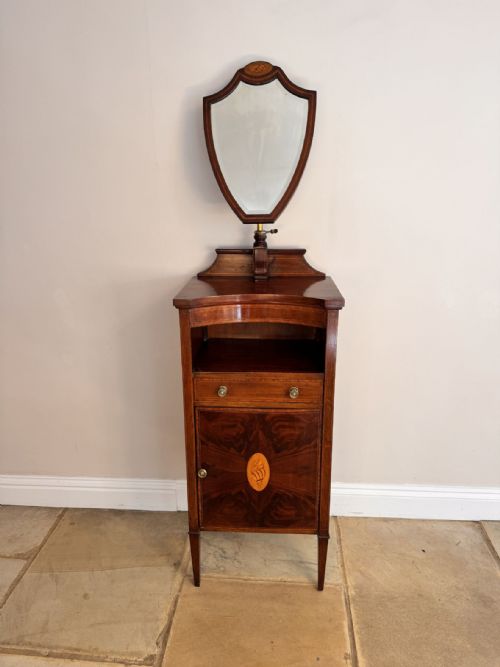
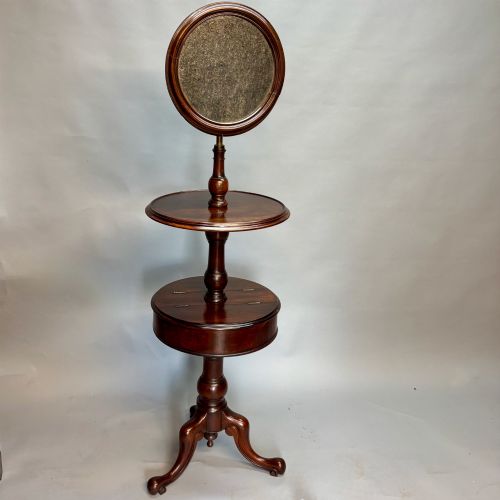
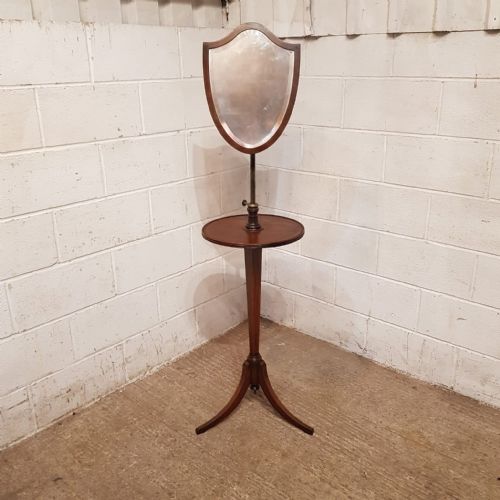
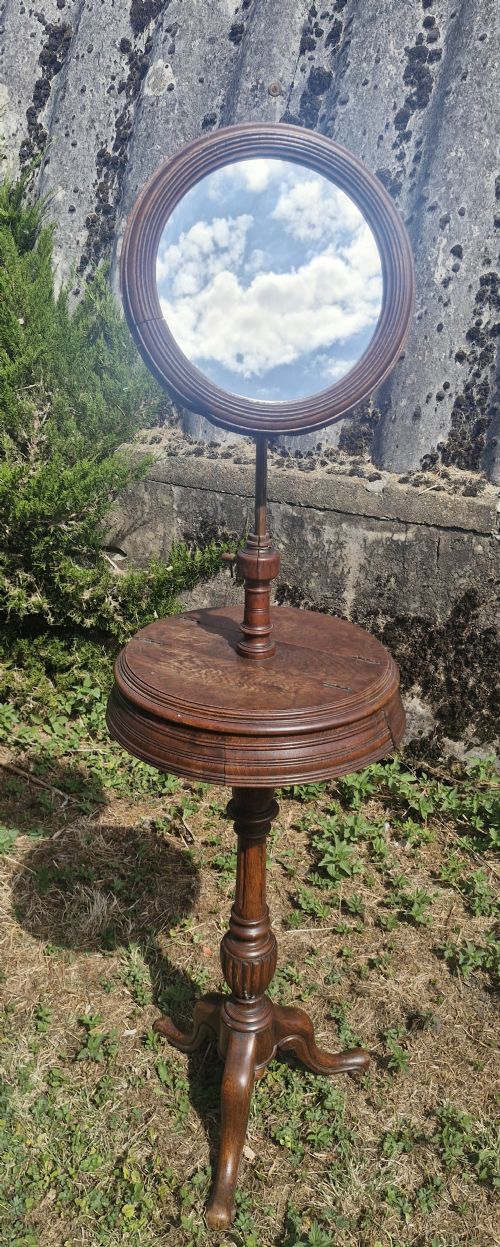
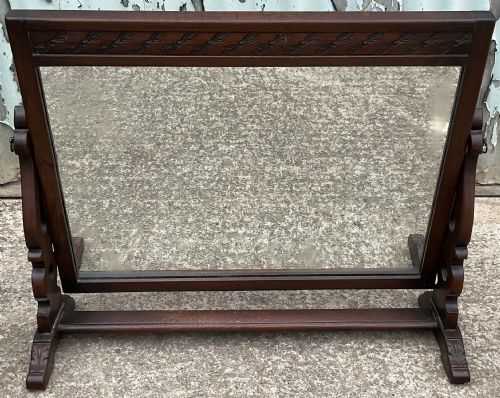
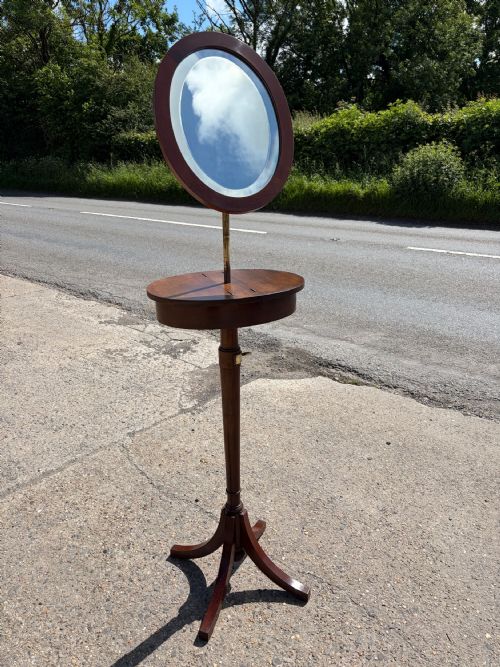
An edwardian shaving mirror is a specialised dressing glass designed for gentlemen's grooming, often standing on a tripod base, a table or a floor pedestal. The evidence shows these pieces spanning the late Victorian era up to around nineteen ten, capturing a period of refined domestic utility.
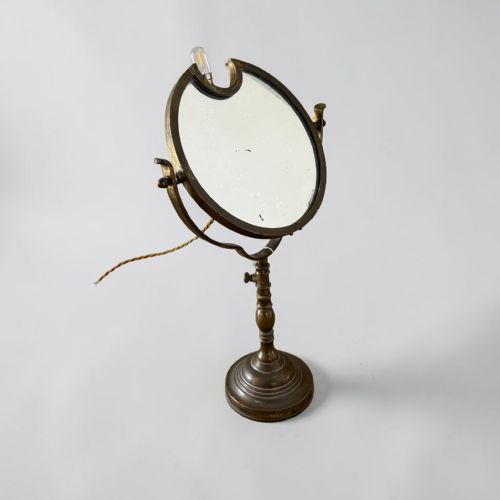
Most examples appearing in the current selection take the form of freestanding mahogany shaving stands or adjustable table models incorporating brass fittings and shield-shaped plates. Oak and copper also feature alongside the predominant mahogany frames, offering both floor-standing and hanging formats.
How they were made
Cabinet makers constructed these mirrors using solid timber and reliable veneers, turning mahogany and oak into slender columns, tripod legs and supportive frames. Metalwork components in brass and copper provided the adjustable joints, pivots and hanging brackets necessary for tilting the glass to the desired angle.
Mirrors relied on traditional silvered glass housed securely within wooden surrounds or metal rims, often accompanied by small drawers or stands for holding grooming implements. The integration of telescopic mechanisms allowed users to adjust the height of the glass according to preference.
Edwardian Shaving Mirror Retail Price Guide 2026
Typical asking prices for edwardian shaving mirror among the pieces listed under this phrase on Sellingantiques today, from the lower quarter to the upper quarter. They describe what is for sale here now, not the wider market.
Some gentlemen required extra assistance in the morning, leading to unusually large brass mirrors fitted with multiple drawers for spare blades.
What varies in quality
Superior execution shows in the substance of the timber and the precision of the brass or copper moving parts, which hold their position firmly without sagging. Better examples often incorporate thoughtful additions such as small storage drawers or stable tripod bases.
Simpler interpretations rely on plain frames without extra cabinetry, whereas high-end pieces feature richly figured mahogany, shield mirrors and robust telescopic columns that demonstrate accomplished period craftsmanship.
James Shoolbred
The Edwardian Shaving Mirror Glossary
- Shield mirror
- A dressing glass cut into the shape of a heraldic shield. This silhouette was frequently mounted on stands or pivot brackets during the Edwardian period.
- Telescopic shaving mirror
- A glass mounted on an adjustable vertical shaft that permits height alteration. This mechanism allowed gentlemen to stand or sit while shaving.
- Tripod base
- A three-legged support providing stability for freestanding floor pieces on uneven floorboards. It prevents the tall stand from tipping during daily use.
- Gents shaving stand
- A multi-functional piece combining a mirror with surface space or small drawers for razors and soap. These stands formed an essential part of a gentleman's dressing routine.
Edwardian Shaving Mirror: Frequently Asked Questions
Where should I place a shaving mirror?
These mirrors suit dressing tables, sideboards or chest tops where adequate daylight reaches the glass. Freestanding floor models fit neatly beside a washstand or in a bedroom corner.
Ensure the surface is level so that telescopic or pivoting mechanisms function correctly without straining the joints.
What woods were used for stands?
Mahogany forms the majority of surviving frames, often displaying rich red-brown tones and fine grain patterns. Oak also appears alongside occasional iron and brass combinations.
These timbers were chosen for their durability and capacity to take a smooth polished finish that resisted bathroom moisture.
Can I use it for daily shaving?
While these pieces are antique furnishings, sturdy Edwardian mirrors remain entirely functional for everyday personal grooming. The adjustable glass provides the clear angles needed for close work.
Treat the silvered glass and polished timber with care to preserve the original materials during daily use.