




Gentlemans Shaving Mirror
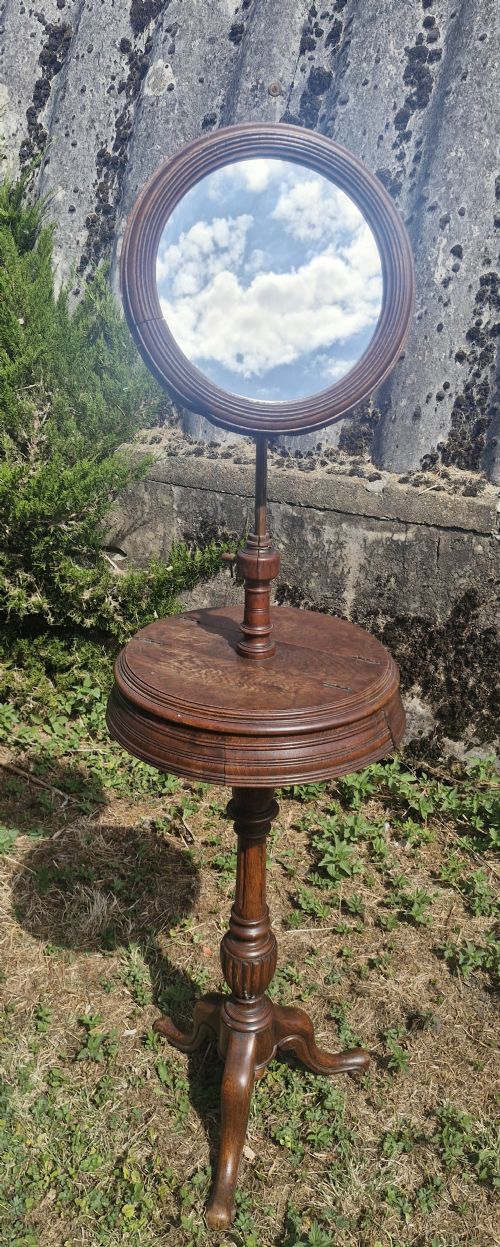
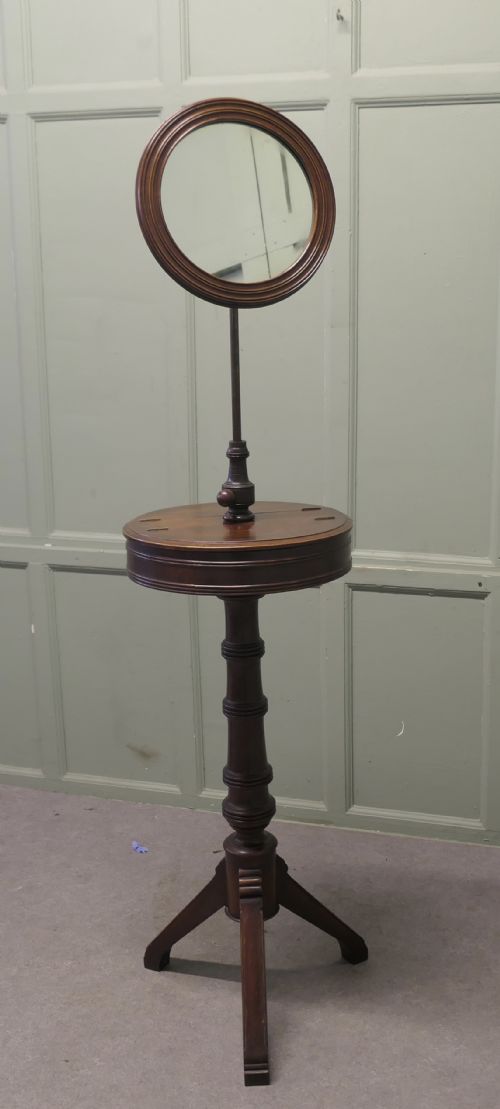
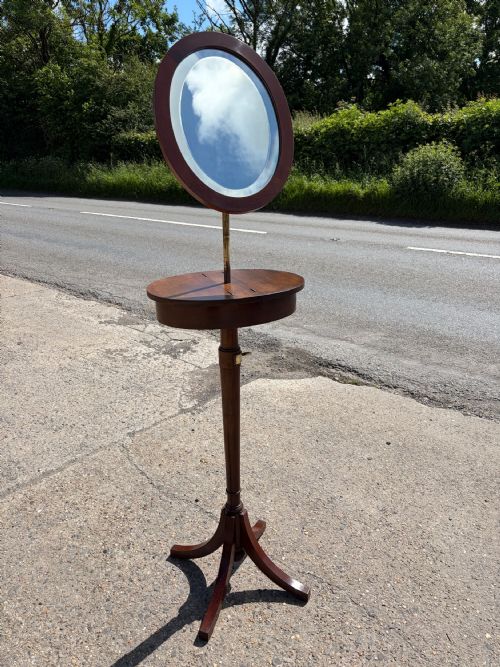
A gentlemans shaving mirror is a practical dressing piece designed for morning grooming, offering adjustable height and tilting glass.
Gentlemans Shaving Mirror
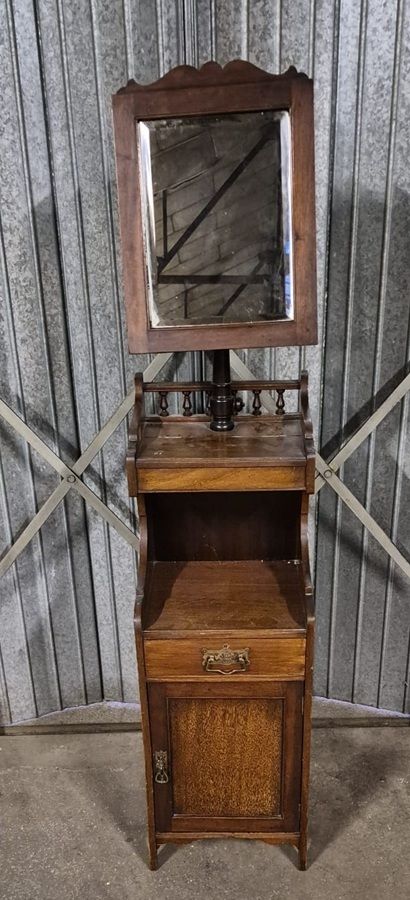
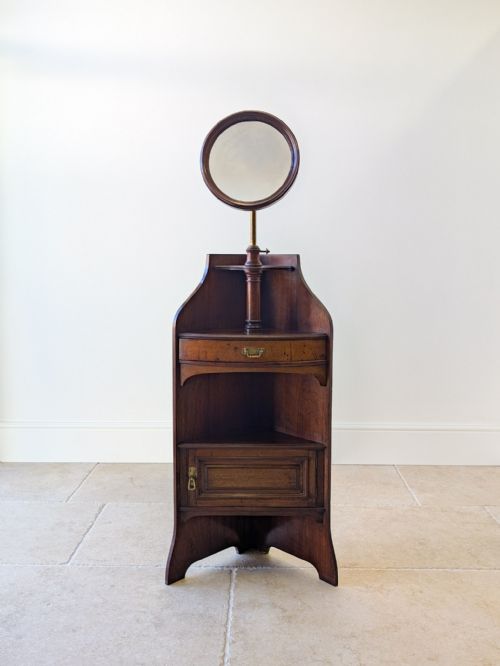
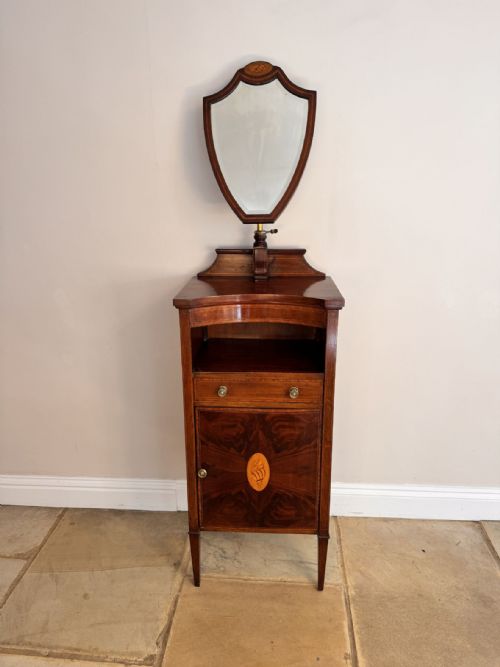
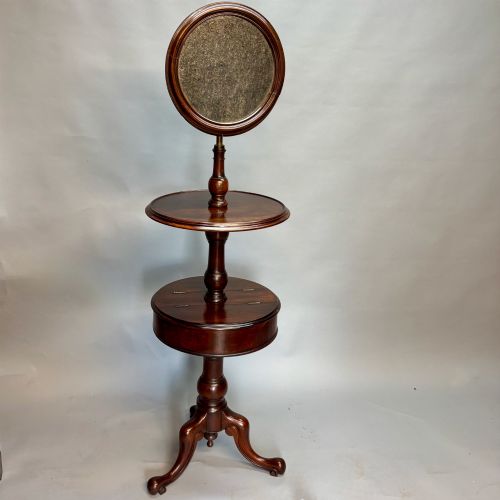
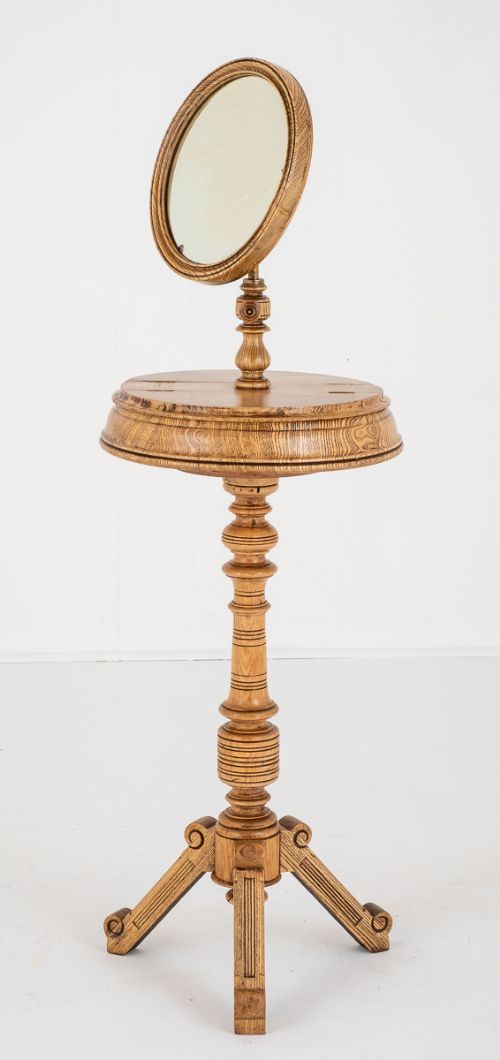
A gentlemans shaving mirror serves as a dedicated dressing item for daily grooming routines, appearing primarily in Victorian and Edwardian forms. These pieces take the shape of freestanding stands, tripod bases, tabletop mirrors, and vanity tables.
The most common versions met on this page are mahogany and walnut stands featuring adjustable or telescopic mirror glass. Examples range from compact portable campaign kits to substantial floor-standing pieces equipped with storage compartments or shaving cups.
Origins span the nineteenth and early twentieth centuries, capturing periods from Georgian roots through Victorian expansion to Edwardian and Viennese Secession designs. The variety includes ash, oak, and brass elements alongside the dominant rich hardwoods.
Materials and construction methods
Makers utilised dense timbers such as mahogany, walnut, oak, and ash to build these stands and mirror frames. These durable woods provided the structural stability needed for extending telescopic shafts and supporting swinging mirror plates.
Brass fittings, hinges, and screw mechanisms were integrated to allow smooth adjustment of height and angle. Glass plates formed the reflective surface, occasionally paired with painted metal components or fabric details.
Inlaid decoration and turned tripod bases demonstrate the joinery techniques of nineteenth-century cabinet makers. Portable examples utilised compact folding joints suitable for campaign use.
Gentlemans Shaving Mirror Retail Price Guide 2026
Typical asking prices for gentlemans shaving mirror among the pieces listed under this phrase on Sellingantiques today, from the lower quarter to the upper quarter. They describe what is for sale here now, not the wider market.
Some Victorian mirrors include hidden compartments once reserved for small soaps and shaving brushes.
What separates different examples
The sophistication of the mechanical adjustment mechanism dictates much of the standard, particularly in telescopic brass fittings and stable tripod joints. Solid timber selection and crispness of inlaid detailing further distinguish finer workshop output.
Proportion and balance determine daily utility, where heavier timber bases prevent tipping during height extension. The clarity and preservation of the original mirror glass contribute to overall integrity.
James Shoolbred
The Gentlemans Shaving Mirror Glossary
- Telescopic
- Describing a shaft that extends vertically to alter the height of the mirror plate. This mechanism often utilises a brass thumb screw to secure the position.
- Campaign kit
- A portable furniture form designed for easy transport and travel. These pieces fold down compactly for officers or travellers.
- Tripod base
- A three-legged support structure providing stability for tall standing mirrors. It balances the weight of the adjustable glass above.
- Vienna Secession
- An art movement associated with decorative styles emerging around nineteen hundred. Pieces from this origin display distinct modernist cabinetwork.
- Shaving stand
- A combined furniture form incorporating a mirror and a surface or cupboard for grooming implements. They appear in mahogany, walnut, and oak.
Gentlemans Shaving Mirror: Frequently Asked Questions
How do I adjust a telescopic shaving mirror?
Most examples use a brass collar or screw mechanism on the central shaft. Loosing this fitting allows the mirror to slide up or down before tightening to hold the position.
Take care to support the mirror glass with one hand while loosening the adjustment screw to prevent sudden drops.
Where were these stands used in the home?
Gentlemen placed these mirrors in bedrooms, dressing rooms, or wash spaces where natural morning light fell clearly. Portable versions travelled with owners on journeys.
Floor-standing models stood independently near washing basins or chests of drawers.
How do I date an Edwardian shaving stand?
Edwardian pieces typically date from the early twentieth century and often feature lighter mahogany timbers with delicate inlaid banding. Cabinetwork from this decade shows refined proportions compared to heavier mid-Victorian forms.
Look for construction details and hardware styles that match Edwardian manufacturing standards.
Are campaign shaving mirrors different from standard ones?
Campaign versions are built for portability, featuring folding legs or compact storage compartments for travel. They use durable timbers to withstand transit while maintaining a polished appearance.
Standard standing mirrors remain fixed in domestic settings without folding travel mechanisms.