
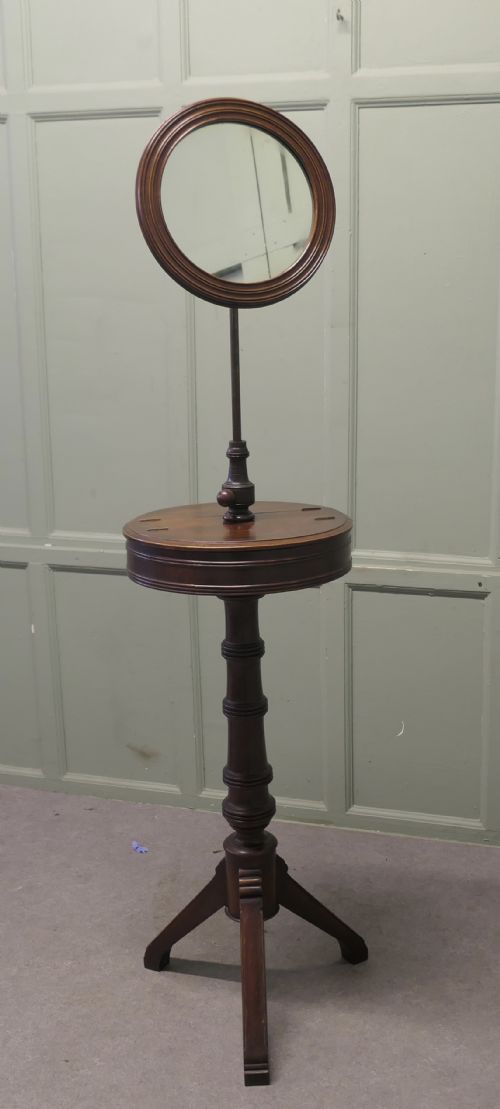
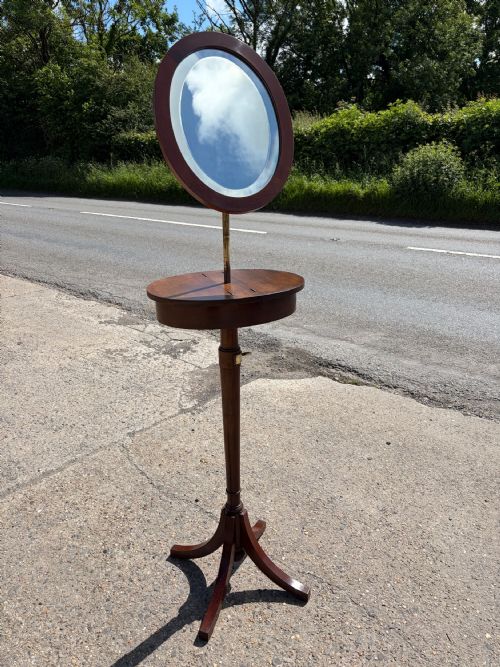


Dark Wood Shaving Mirror
A dark wood shaving mirror brings adjustable reflection and compact storage into any room, combining period timber with practical daily use.
Dark Wood Shaving Mirror
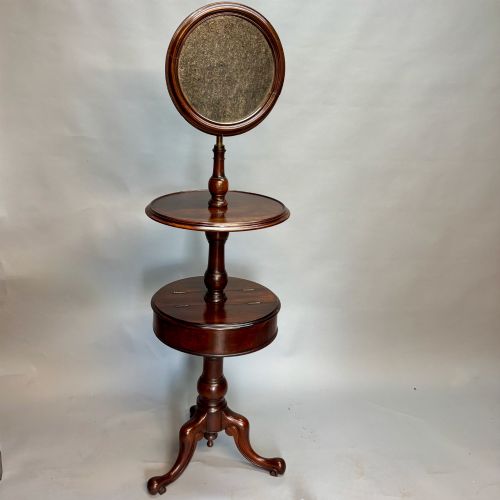
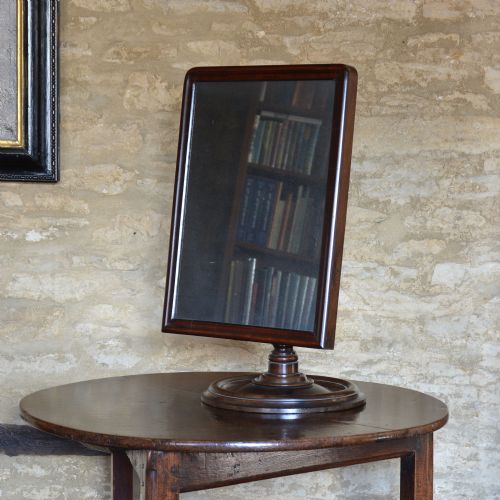
When searching for a dark wood shaving mirror, buyers encounter a selection of historic forms designed for grooming and personal care. These objects range from tabletop toilet mirrors to tall adjustable shaving stands supported on tripod or pedestal bases.
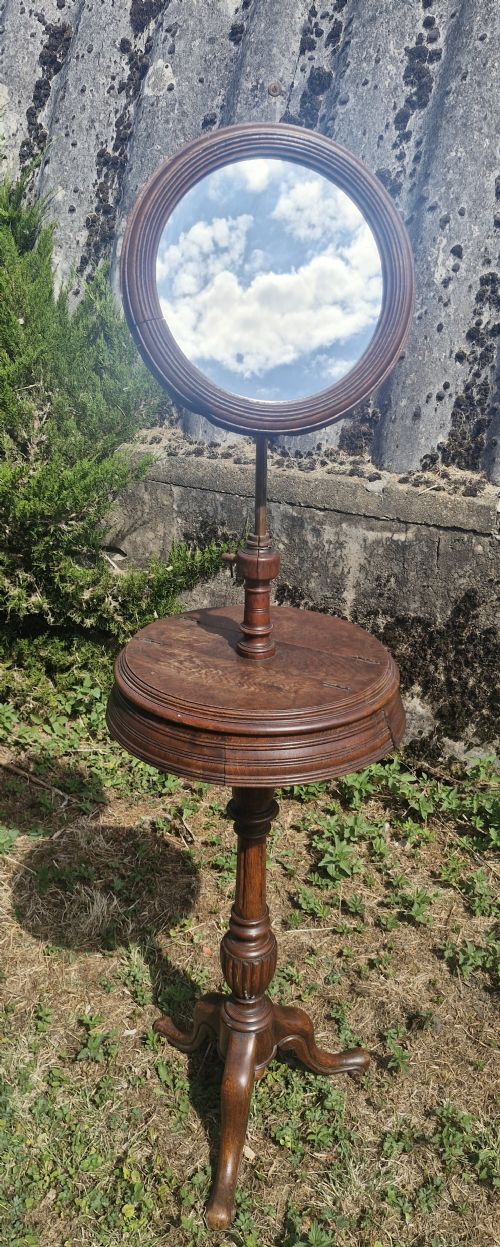
The versions most commonly met on this page date from the Georgian and Victorian eras, alongside 17th century walnut examples and early 20th century Edwardian pieces. Formats include swing plates on box bases, telescopic round mirrors, and standing vanity tables equipped with specialised fittings.
Originating as functional furniture for gentlemen's dressing rooms and bedrooms, these mirrors served to catch the light effectively. Today, they function equally well on chests of drawers or as freestanding floor pieces in modern interiors.
How they were made
Cabinetmakers constructed these pieces primarily using dense hardwoods such as mahogany, walnut, and oak, often accented with boxwood stringing or brass mounts. Timber selection prioritized rich grain patterns and structural stability to support pivoting or extending frames.
Mirrors utilised traditional glass plates set within adjustable frames, connected to brass mechanisms for tilting and height adjustment. Stands featured turned columns, tripod legs, or enclosed box bases containing small drawers for storage.
Early shaving stands occasionally retain their original tiny compartments, perfectly sized for hiding miniature razors and stray whiskers.
What varies in quality
The caliber of a dark wood shaving mirror rests on the crispness of its joinery and the selection of the timber veneer or solid boards. Pieces utilising finely figured mahogany or walnut with precise boxwood inlay demonstrate superior craftsmanship.
The sophistication of the mechanical elements, such as brass telescopic stems and original pivoting screw fittings, marks the distinction between standard utilitarian items and finer bespoke commissions. Original mirror glass and intact internal drawer fittings also elevate the standard of a piece.
The Dark Wood Shaving Mirror Glossary
- Toilet mirror
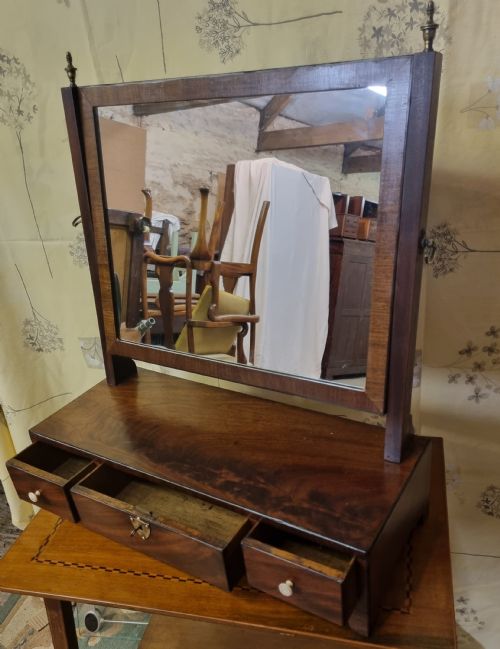
- A smaller mirror designed to sit upon a dressing table or chest, frequently featuring small drawers in the base. These were essential bedroom furnishings throughout the Georgian and Victorian periods.
- Telescopic
- A design incorporating a sliding vertical shaft that allows the mirror height to be adjusted. This mechanism is commonly found on 19th century standing shaving mirrors.
- Boxwood
- A pale, dense wood utilised for contrasting stringing and inlay work on dark cabinet furniture. It provides sharp visual borders around drawer fronts and mirror frames.
- Serpentine
- A front contour characterised by a gently undulating curve, convex at the centre and concave at the sides. This shape appears on select Georgian dressing mirror bases.
- Skeleton mirror
- An open framework design lacking the enclosed box base typical of standard toilet mirrors. This construction uses slender uprights to support the pivoting glass plate.
Dark Wood Shaving Mirror: Frequently Asked Questions
What is a shaving stand?
A shaving stand is a piece of tall furniture designed specifically for morning grooming routines. It typically incorporates an adjustable mirror mounted above a small table or tripod base.
These pieces were historically placed in bedrooms or dressing rooms to provide optimal lighting and height for shaving before the widespread use of fitted bathroom mirrors.
How do adjustable mirrors work?
Adjustable mirrors rely on mechanical joints, thumbscrews, or telescopic metal shafts to alter the height and angle of the glass plate. These allow the user to direct the reflection precisely.
Brass fittings and threaded rods were commonly employed by period makers to ensure the frame remained securely in position once adjusted.
Where should I place a toilet mirror?
Toilet mirrors are traditionally placed on top of a chest of drawers, sideboard, or dedicated dressing table. Their compact footprint makes them versatile for surface placement.
Positioning them near a natural light source maximises their utility while highlighting the rich grain of the surrounding mahogany, walnut, or oak woodwork.
How do I date a wooden mirror?
Dating relies on observing the timber species, construction methods, hardware types, and overall stylistic markers. Georgian pieces often feature fine mahogany and serpentine outlines, while Victorian versions frequently introduce telescopic brass stems.
Examining the backboards, dovetail joints, and fixings provides further clues regarding the period of manufacture and whether components remain original.