

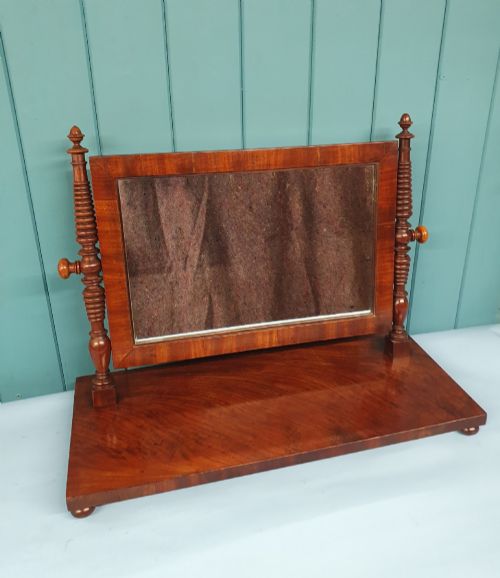


Tabletop Shaving Mirror
A tabletop shaving mirror brings functional historic design to a dressing surface, offering adjustable reflection through traditional pivoting frames.
Tabletop Shaving Mirror
A tabletop shaving mirror sits on a chest or dressing table, designed to provide a clear, adjustable reflection for grooming. When you search for a tabletop shaving mirror, you encounter pieces spanning from the seventeenth century through to the Edwardian period and the early twentieth century.
Mahogany and walnut predominate among the surviving examples, often paired with boxwood stringing or mounted on stands of polished oak and cast iron. These objects appear under various historical descriptions including toilet mirrors, dressing table mirrors, and vanity mirrors.
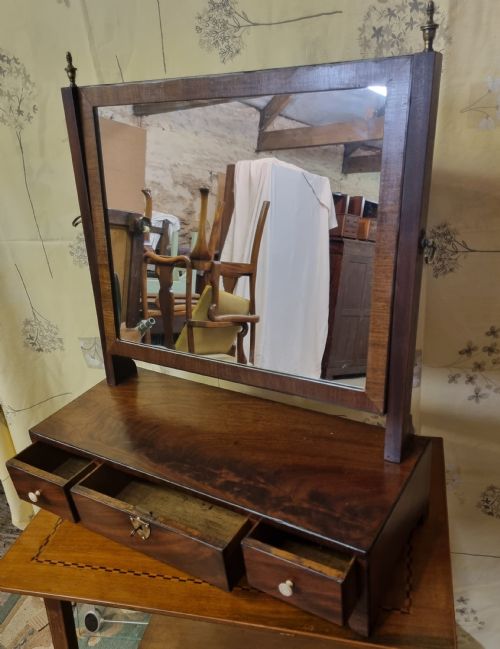
The format ranges from simple portable campaign kits to Dutch marquetry toilet swing mirrors and scientific optical instruments. Most pieces rely on a pivoting glass plate held within upright arms above a small drawer base.
How they were made
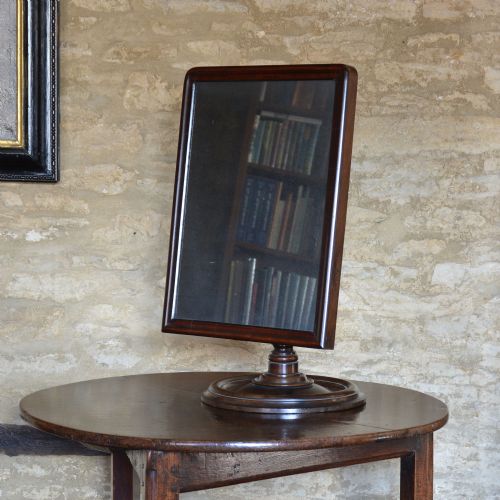
Cabinetmakers constructed the frames using timbers such as mahogany, walnut, and birch, frequently incorporating boxwood for decorative stringing and inlay. Brass fittings provide the pivoting mechanism that allows the glass to tilt.
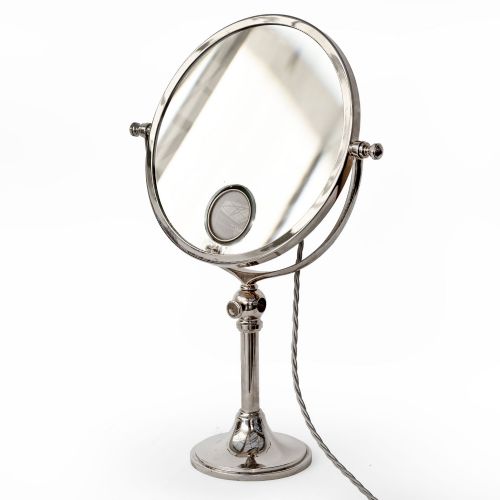
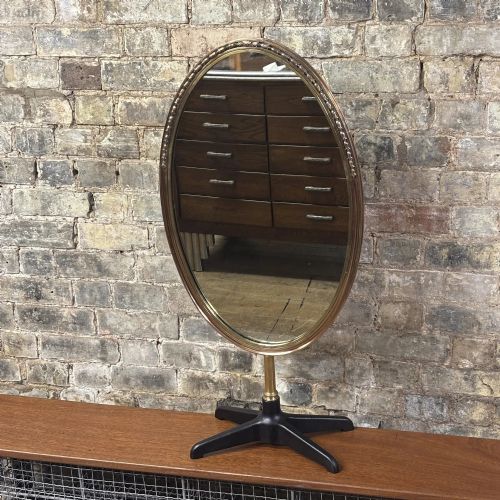
Later twentieth-century examples introduce chrome and cast iron alongside traditional materials, reflecting shifts in manufacturing methods and industrial design. Glass plates are fitted directly into wooden or metal surrounds designed for daily use.
Tabletop Shaving Mirror Retail Price Guide 2026
Typical asking prices for tabletop shaving mirror among the pieces listed under this phrase on Sellingantiques today, from the lower quarter to the upper quarter. They describe what is for sale here now, not the wider market.
Periods represented span from the seventeenth century through Georgian, Victorian, and Edwardian eras up to the 1930s.
What varies in quality
The standard of timber selection and cabinetmaking distinguishes standard examples from finer works, visible in the precision of the joinery and the depth of the wood grain. Details such as marquetry work and the integration of small drawers elevate the complexity of the piece.
The robustness of the brass pivoting hardware and the clarity of the surviving glass plate contribute significantly to the overall integrity of the mirror. Proportion and balance in the supporting stand determine how well the piece sits upon a surface.
Thomas Rubergall of London
The Tabletop Shaving Mirror Glossary
- Toilet mirror
- A portable mirror designed to sit on a dressing table or chest of drawers. These pieces often feature small box bases fitted with drawers.
- Cheval mirror
- A full-length freestanding mirror, though the term occasionally applies to larger tabletop swiveling variants. It allows the user to adjust the entire angle of the glass.
- Campaign kit
- Portable furniture designed for travel, featuring compact construction and robust fittings. These items pack down securely for transit.
- Marquetry
- Decorative veneer work forming pictorial or geometric patterns using various coloured woods. It appears frequently on eighteenth and nineteenth-century Dutch pieces.
- Stringing
- Thin inlaid lines of contrasting wood used to accent the edges of furniture panels. Boxwood is a common choice for this detail against darker timbers.
Tabletop Shaving Mirror: Frequently Asked Questions
How were these mirrors used historically?
These mirrors were placed on chests of drawers or dedicated dressing tables to assist with daily grooming and shaving. Their adjustable frames allowed users to tilt the glass for optimal lighting and angles.
Many included small base drawers to hold personal items, combining utility with compact tabletop furniture design.
Where should I place a tabletop mirror?
A tabletop shaving mirror sits comfortably on any stable surface, such as a dressing chest, sideboard, or desk. Ensure the supporting furniture matches the scale and weight of the mirror stand.
Positioning the piece near a natural light source helps make the most of the pivoting glass during daily use.
How do I date a dressing mirror?
Dating relies on identifying the primary timbers, construction methods, and hardware styles. Earlier seventeenth and eighteenth-century examples often feature walnut or mahogany with subtle boxwood details.
Later nineteenth and twentieth-century versions introduce materials like chrome, cast iron, and birch, alongside distinct industrial mounting brackets.