

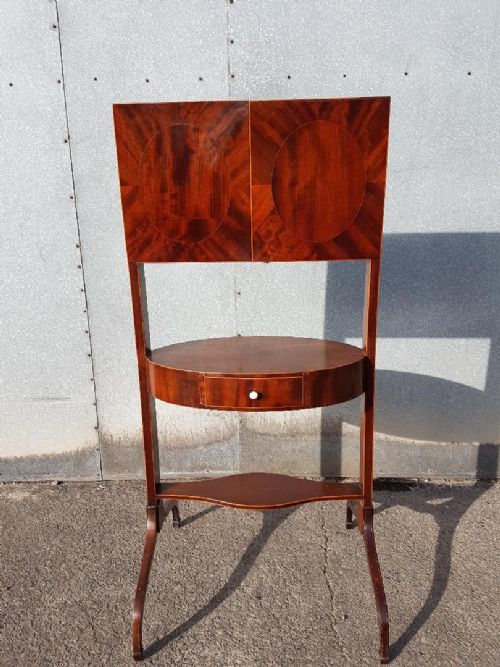


Folding Vanity Mirror
A folding vanity mirror brings compact adjustment and daily convenience to the dressing area.
Folding Vanity Mirror
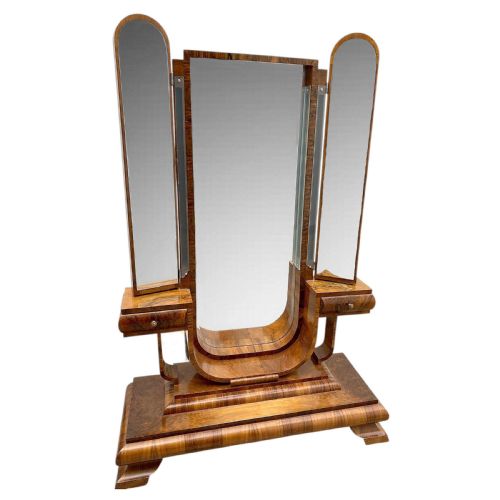
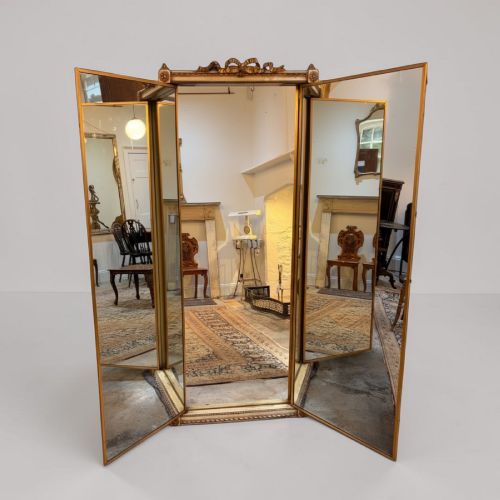
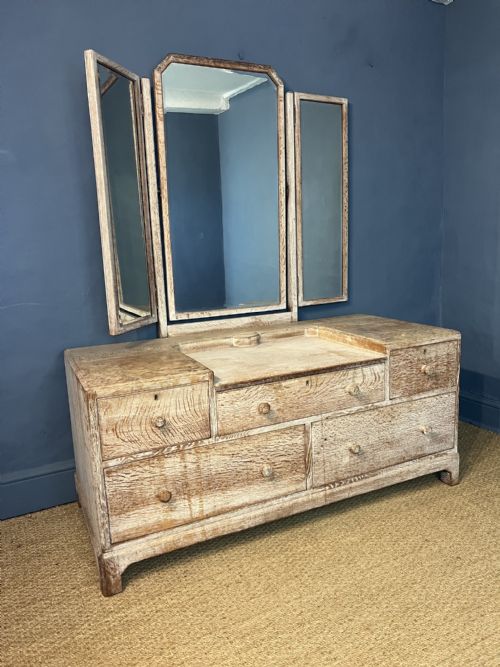
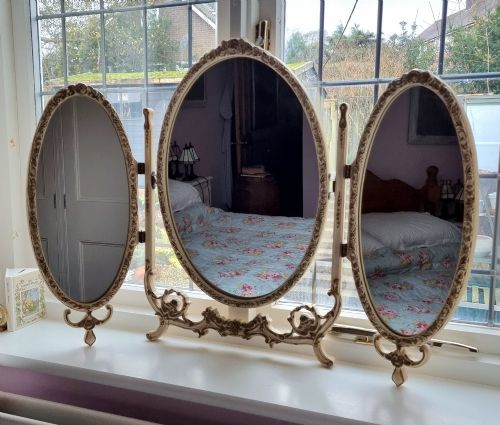
A folding vanity mirror provides multiple angles for grooming by using hinged side panels or folding frames. These pieces appear in forms ranging from portable campaign shaving mirrors to larger table mirrors and dressing table attachments.
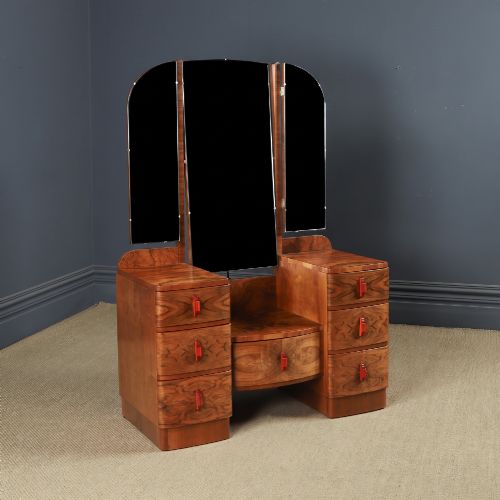
The selection includes Georgian examples alongside pieces from the Edwardian era and the 1920s and 1930s. Buyers frequently encounter timber frames in mahogany, walnut and oak, as well as brass and gilt constructions.
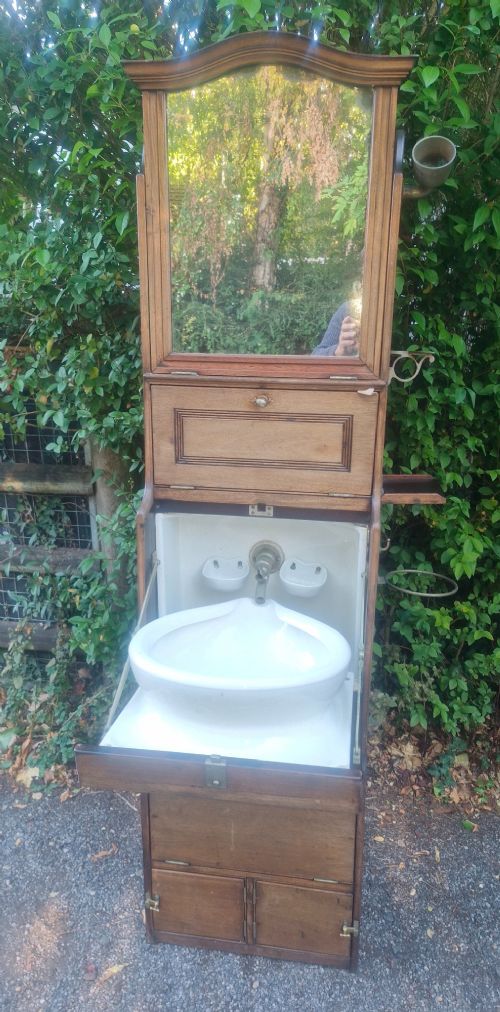
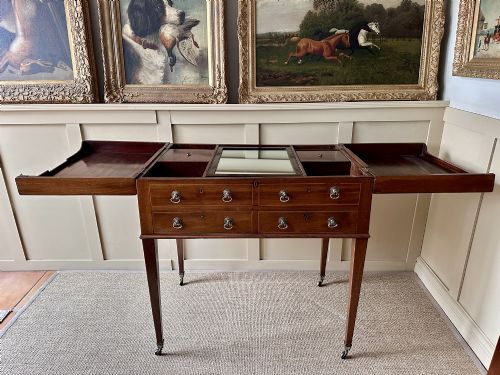
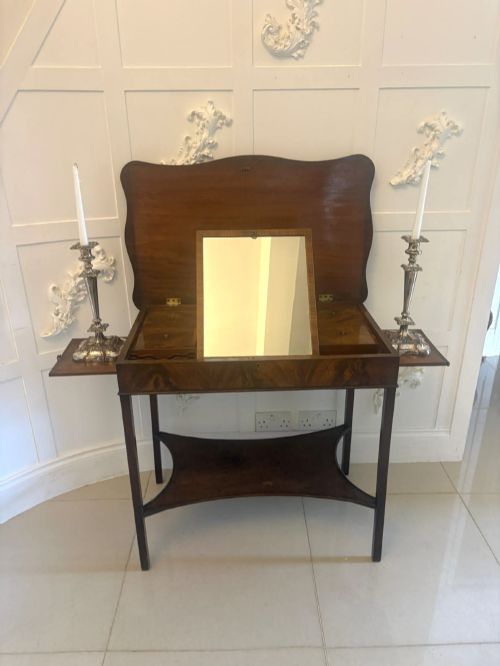
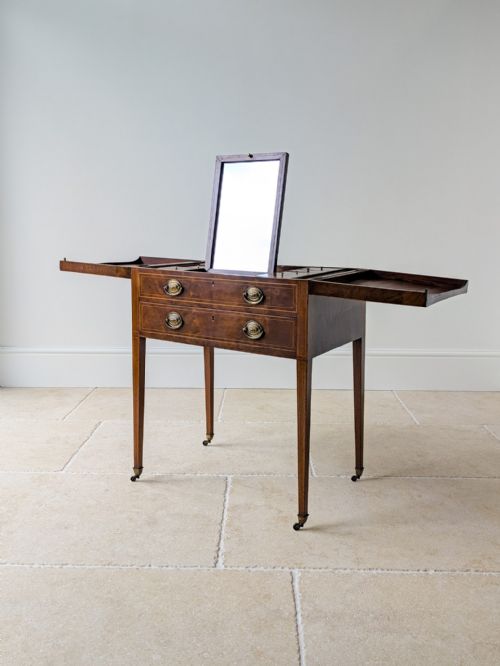
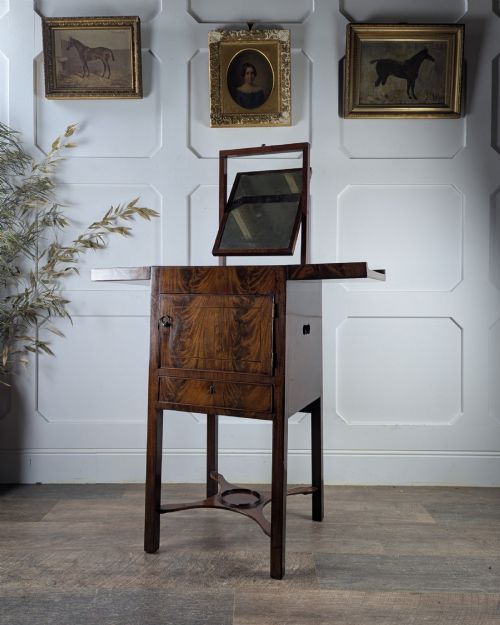
Objects on this page extend beyond simple glass to encompass complete dressing tables, washstands and portable travel kits. Each version serves the traditional function of personal grooming with adjustable reflection.
Materials and construction methods
Cabinetmakers utilised solid timbers and veneers such as Cuban mahogany, satinwood, walnut and oak for the frames and supporting furniture. Brass hinges and fastenings allowed the side leaves to fold neatly inward to protect the glass during travel.
Glass plates were bevelled or flat-set within wooden rebates or metal channels, secured by backing boards. Gesso and gilt embellishments provided decorative detail on French and early twentieth-century examples.
Folding Vanity Mirror Retail Price Guide 2026
Typical asking prices for folding vanity mirror among the pieces listed under this phrase on Sellingantiques today, from the lower quarter to the upper quarter. They describe what is for sale here now, not the wider market.
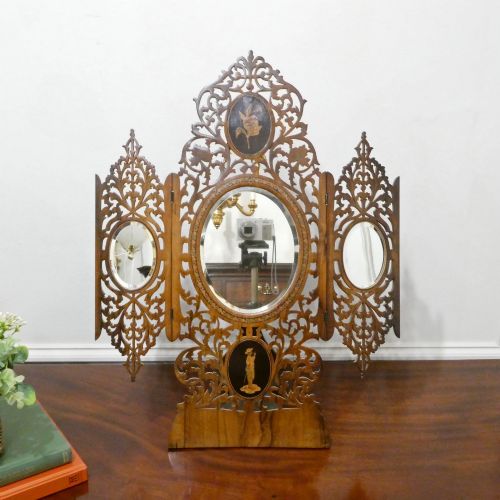
Sorrento travel mirrors bring Italian olive wood craftsmanship right to the dressing table.
Assessing quality and craftsmanship
Quality rests in the precision of the joinery and the durability of the folding hinges. Superior pieces feature tightly fitted corners, matching timber grain across the folding leaves, and heavy gauge brass work that supports the weight of the glass without sagging.
The clarity and depth of the mirror plate also distinguish finer examples from standard production. Original bevelled glass and well-preserved polish indicate careful manufacture and sustained preservation over the centuries.
Heals
The Folding Vanity Mirror Glossary
- Triptych
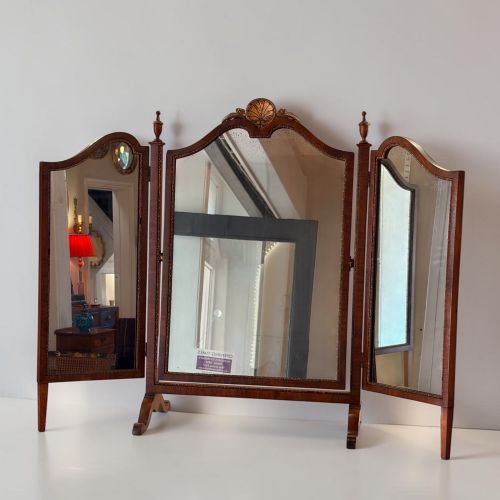
- A mirror composed of three panels, where two hinged side leaves fold over a central fixed glass. This arrangement allows the user to view side profiles during grooming.
- Campaign
- Describing portable furniture and mirrors designed for military officers or travel. These pieces often feature folding stands or protective wooden cases.
- Shaving mirror
- A small adjustable glass typically mounted on a stand or box, historically used by gentlemen for daily shaving. They frequently incorporate small storage drawers in the base.
- Crossbanded
- A method of applying veneer where the grain runs at right angles to the border. This decorative technique frames the primary wood surface on table tops and mirror surrounds.
- Gesso
- A plaster-based material applied to wood surfaces and carved or moulded before gilding. It appears on decorative frames from various periods.
Folding Vanity Mirror: Frequently Asked Questions
How do I date a folding mirror?
Dating relies on timber selection, hinge construction, and the style of the frame. Earlier Georgian pieces often utilise mahogany or satinwood with hand-cut screws, while twentieth-century examples show machine-made fittings and varied woods.
Examining the mirror plate itself helps. Older glass can display slight distortions, foxing, or bevels executed by hand rather than modern industrial machinery.
Were these mirrors meant for travel?
Many folding mirrors were specifically engineered for mobility, particularly campaign shaving kits and Sorrento travel mirrors. Their folding leaves and secure catches protected the glass during transit between residences or on campaigns.
Other variations remained static on dressing tables and washstands, utilising the folding mechanism solely to adjust the angle of reflection rather than for packing away.
How do I care for wooden frames?
Timber frames benefit from occasional applications of appropriate wax polish to nourish the wood and maintain the finish. Avoid placing them in direct sunlight or near heat sources to prevent the wood from warping and the veneer from lifting.
Brass elements can be dusted gently with a soft cloth. Avoid harsh chemical cleaners that might strip the historic patina from the metal fittings.
What is the difference between a triptych and a trio mirror?
Both terms describe a three-panel mirror with folding sides, though different makers and periods used the labels interchangeably. A triptych typically implies a central plate with two flanking hinged leaves used on dressing tables.
A trio mirror often refers to similar three-part configurations found in twentieth-century French and English designs, constructed from brass, walnut, or painted finishes.