


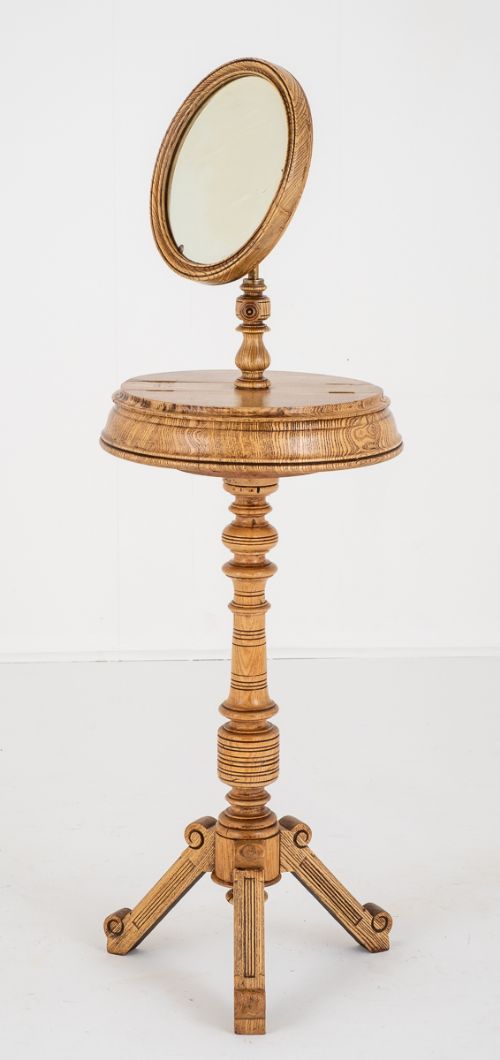

Pedestal Shaving Mirror
A pedestal shaving mirror brings functional Victorian and Edwardian grooming into the modern room with adjustable height and pivoting glass.
Pedestal Shaving Mirror
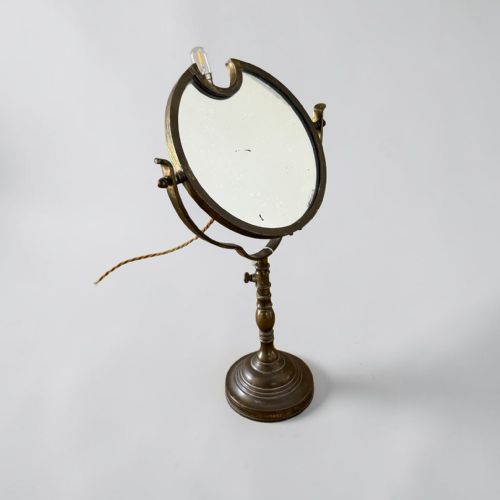
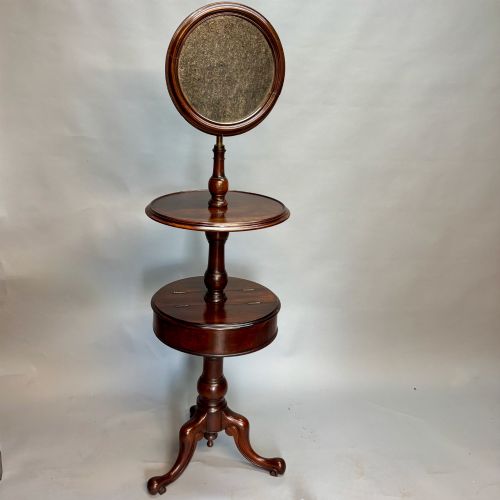
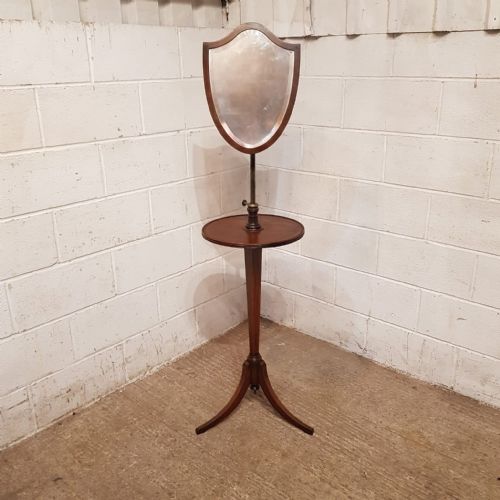
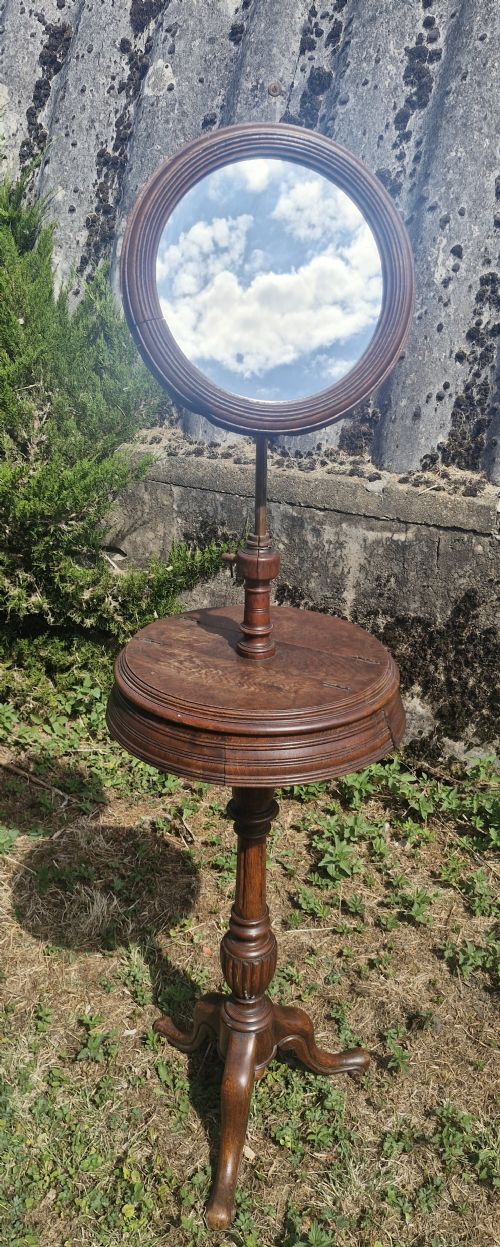
A pedestal shaving mirror is a piece designed for grooming, commonly encountered here as a Victorian or Edwardian standing glass on a tripod or weighted base. These objects range from compact vanity mirrors to tall shaving stands equipped with adjustable mechanisms.
The materials span mahogany, walnut, oak, ash, and painted wood, alongside later chrome examples from the 1930s. Most pieces originate from the nineteenth and early twentieth centuries, reflecting the domestic habits of the period.
You will see variations including tripod bases, telescopic shafts, and integrated cupboards or stands. The primary form remains the pivoting glass plate supported by a vertical column.
Materials and construction
Cabinetmakers constructed these mirrors using solid hardwoods such as mahogany and walnut, frequently incorporating brass fittings for the adjustable mirror pivots and telescopic stems. The timber frames were turned, carved, or polished to display the natural grain.
Later twentieth-century examples adopted chrome plating and simpler tubular metal supports. Glass plates were bevelled or plain, held securely within wooden or metal surrounds designed to tilt at the user's angle.
Some gentlemen needed an adjustable glass to catch the morning light just right.
Distinguishing quality in construction
Quality rests in the precision of the adjustable mechanism and the stability of the base, whether a tripod or a heavy weighted pedestal. Finer examples maintain smooth movement in the telescopic arms without sagging.
The choice of timber and the crispness of the turning on the upright column indicate the standard of workshop production. Secondary woods and simpler painted finishes appear on more utilitarian examples.
James Shoolbred
The Pedestal Shaving Mirror Glossary
- Telescopic
- A shaft design allowing the height of the mirror to be raised or lowered via an internal sliding rod and securing screw.
- Tripod stand
- A three-legged base providing stability for the upright column of the mirror.
- Shaving stand
- A taller piece of furniture incorporating a mirror alongside surfaces or storage for grooming implements.
- Bevelled glass
- A mirror plate with an angled, polished edge that catches the light.
Pedestal Shaving Mirror: Frequently Asked Questions
How do I adjust the height?
Most period pieces use a telescopic mechanism with a thumbscrew or collar on the central column. Loosening this allows the upper shaft to slide to the desired eye level before tightening again.
Older metal and wood threads require gentle handling to preserve the original components during adjustment.
Where should I place a pedestal mirror?
These mirrors suit dressing tables, chest tops, or freestanding floor locations depending on whether the piece is a compact vanity version or a full-height stand. Placing them near a natural light source assists with daily grooming tasks.
Ensure the base sits on a level surface to prevent strain on the pivoting brackets.
Are the mirror plates original?
Mirror glass frequently experienced replacement over decades of use due to foxing or breakage. Original plates often display minor age spots and slight distortions characteristic of nineteenth-century manufacturing.
Checking the silvering behind the glass helps determine the age relative to the wooden frame.
What is the difference between a vanity mirror and a shaving stand?
Vanity mirrors are generally smaller, designed to sit upon an existing piece of furniture like a chest of drawers. Shaving stands often incorporate their own dedicated pedestal, tripod, or storage cupboard beneath the glass.
Both types serve the same fundamental purpose of adjustable personal reflection.