


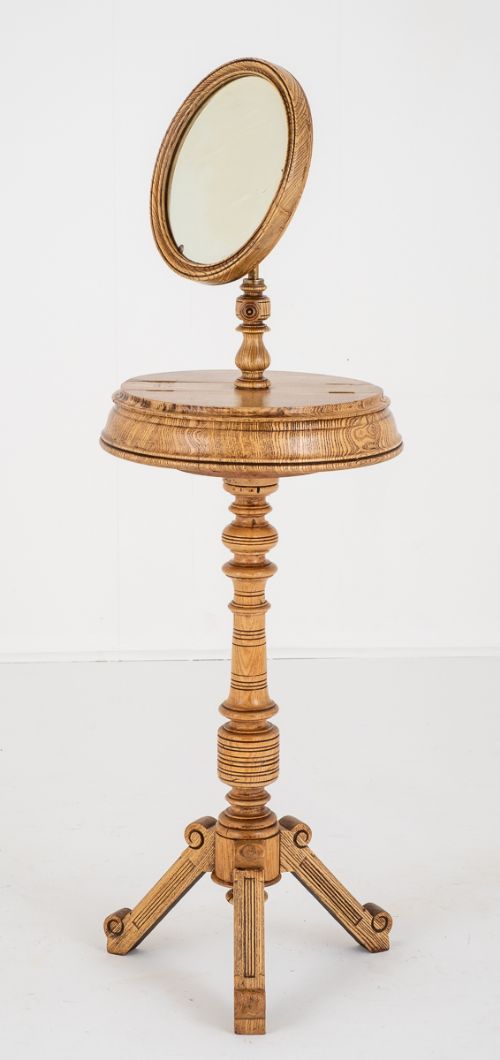

Freestanding Shaving Mirror Stand
A freestanding shaving mirror stand offers practical morning utility while bringing period character to a dressing space through adjustable glass and timber.
Freestanding Shaving Mirror Stand
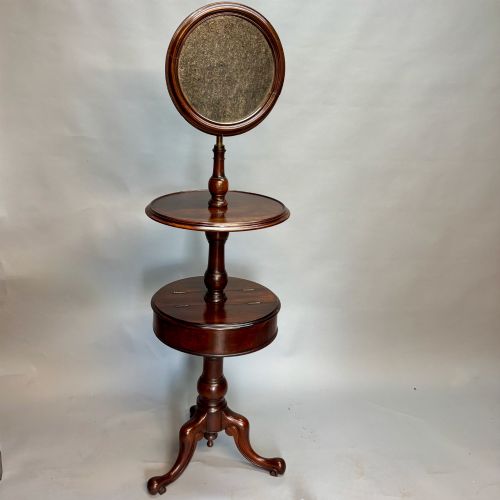
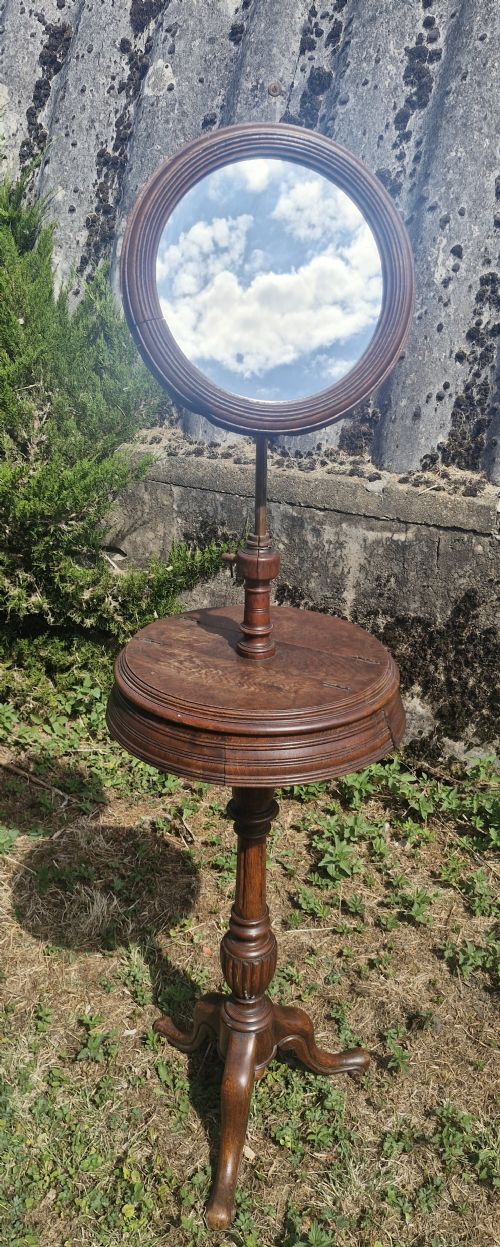
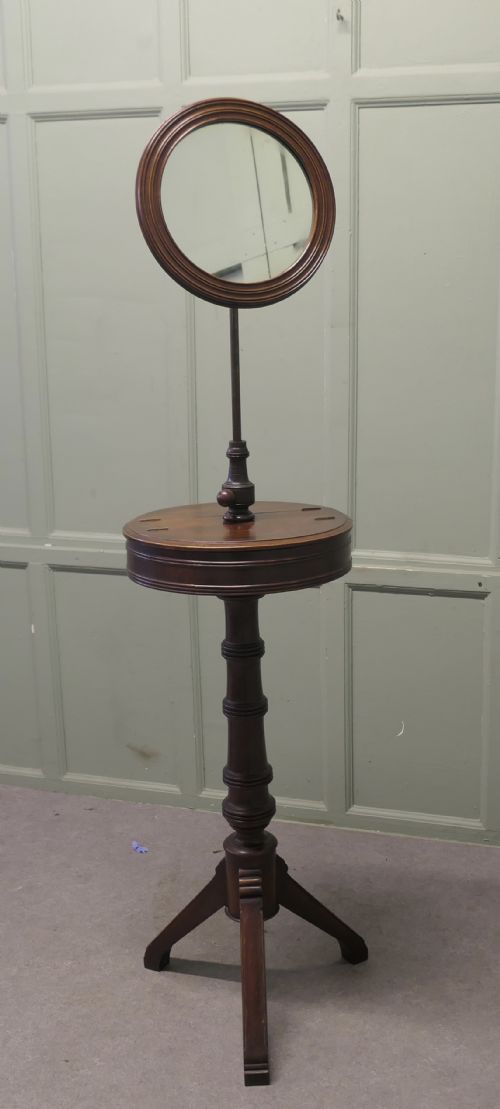
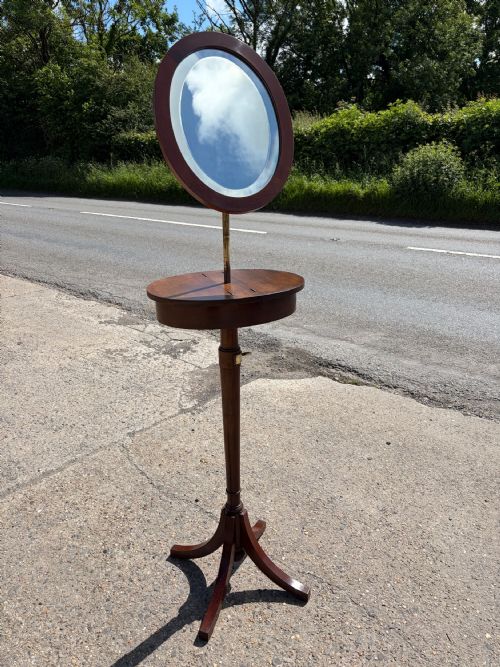
The form ranges from simple tripod bases with telescopic columns to more substantial dressing stands incorporating storage elements. Mahogany, walnut, and oak dominate the available examples across the nineteenth and early twentieth centuries.
Buyers encountering a freestanding shaving mirror stand on this page will primarily see nineteenth-century designs alongside occasional Edwardian and later twentieth-century variants. The underlying mechanics allow the glass to tilt or extend for optimal use.
Materials and construction methods
Makers utilised solid hardwoods such as mahogany, walnut, and oak to build the structural framework and tripod or pedestal bases. Brass fittings often facilitate the telescopic height adjustment and mirror pivot mechanism.
Glass panels provide the reflective surface, occasionally held within shaped timber frames or mounted directly to brass arms. Painted metal and fabric appear in specific iterations, particularly within later twentieth-century pieces.
Assessing quality in mirror stands
Quality reveals itself in the precision of the brass mechanical adjustments and the stability of the tripod or pedestal base. Superior pieces maintain smooth telescopic movement without slipping or excessive play in the joints.
The selection of timber grain and the joinery executed on the upright standards separate standard utility items from finer workshop productions. Heavier gauge brass hardware and clear, undistorted mirror glass indicate higher grade manufacture.
The Freestanding Shaving Mirror Stand Glossary
- Telescopic
- A design feature allowing the vertical stem to extend and lock at various heights. This mechanism uses a thumb screw or internal friction collar.
- Tripod base
- A three-legged support structure providing stability on uneven floor surfaces. These legs often terminate in pad feet or scroll details.
- Cheval mirror
- A full-length or large mirror hung in a frame that allows it to swing. The term occasionally overlaps with large adjustable dressing glass forms.
- Adjustable mirror
- A reflective glass plate mounted on pivots or hinges to alter the viewing angle. This mobility is central to the function of grooming stands.
Freestanding Shaving Mirror Stand: Frequently Asked Questions
How do I date a mirror stand?
Dating relies on observing timber choices, construction techniques, and brass hardware styles across periods. Victorian and Edwardian examples show distinct turning patterns and wood finishes.
Examining the mirror glass backing and screw threads also helps determine the manufacturing era. Earlier pieces utilise hand-turned components and specific joint types distinct from twentieth-century metal versions.
Where were these stands used?
These pieces sat in bedrooms, dressing rooms, or wash spaces to facilitate morning shaving and personal grooming. Their portable nature allowed them to be positioned near windows for natural light.
Wealthy households kept dedicated dressing rooms furnished with specialised stands. Today they function effectively in modern bathrooms or bedrooms as decorative accessories.
Are the mirror glasses original?
Mirror glass often underwent replacement over the decades due to accidental breakage or silvering degradation. Original plates frequently display minor foxing and subtle imperfections within the reflection.
Replacement glass does not necessarily diminish utility, but collectors look for period-correct thickness and bevelling where applicable. Inspecting the rebate reveals how the glass is secured into the frame.
How do I maintain the brass parts?
Brass mechanisms benefit from gentle dusting and occasional cleaning with a non-abrasive metal polish to remove oxidation. Avoiding harsh chemical agents preserves the underlying patina developed over generations of use.
Lubricating telescopic joints with a minute amount of suitable oil ensures smooth height adjustment without damaging surrounding timber. Regular care keeps the moving parts functioning precisely.