




Adjustable Vanity Mirror
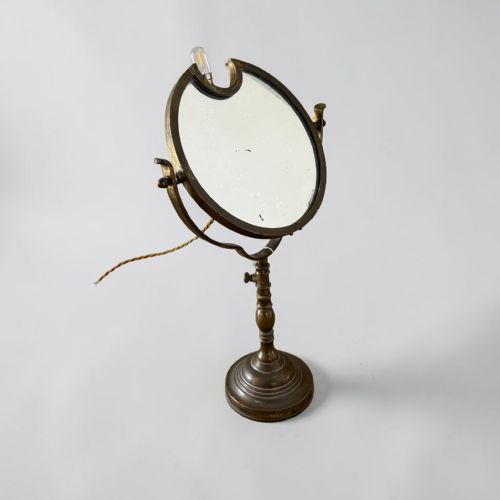
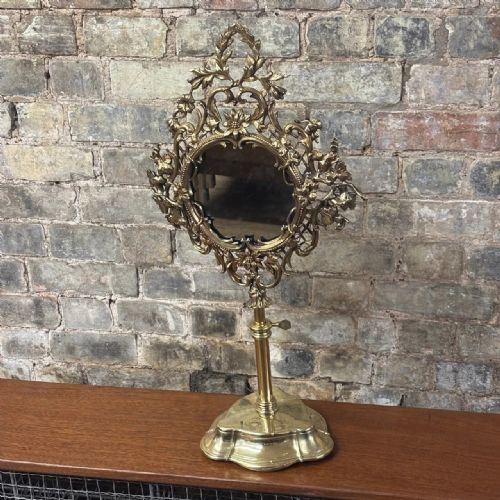
An adjustable vanity mirror pivots to catch the light, offering a clear view for grooming through centuries of design.

Adjustable Vanity Mirror
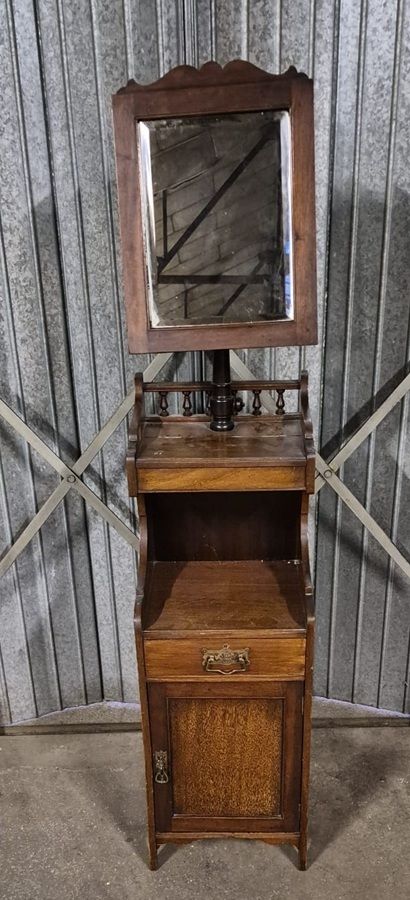
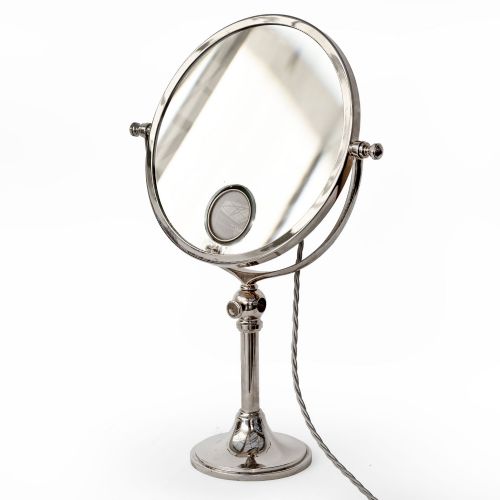
An adjustable vanity mirror is a dressing or grooming glass mounted to swivel, tilt or extend on a stand, pedestal or frame. Buyers look for these pieces to combine practical daily utility with period character in a bedroom, dressing room or bathroom. You will most frequently meet Victorian mahogany shaving stands and table mirrors on this page, alongside Edwardian and earlier examples.
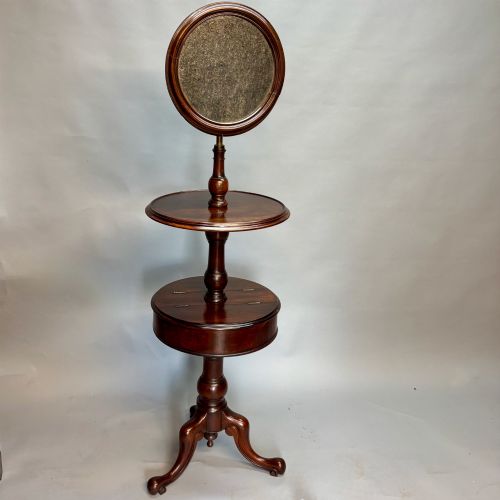
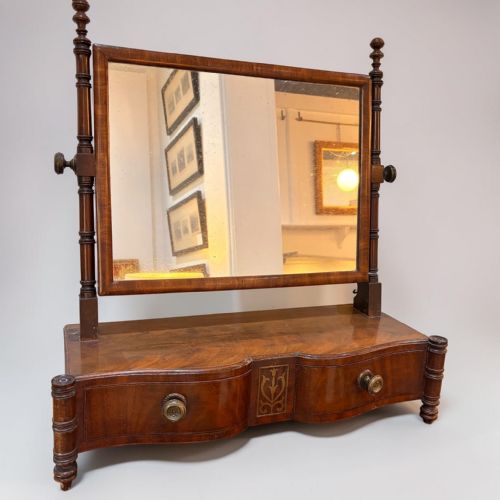
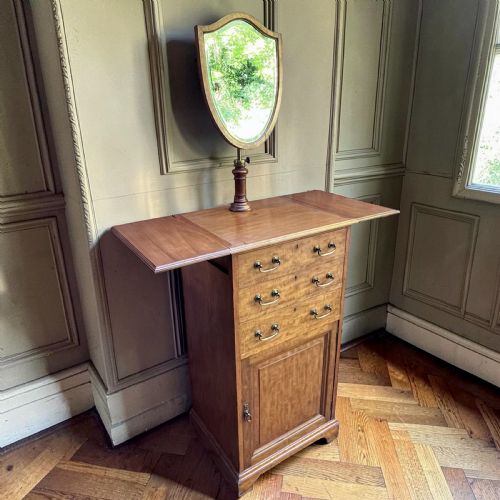
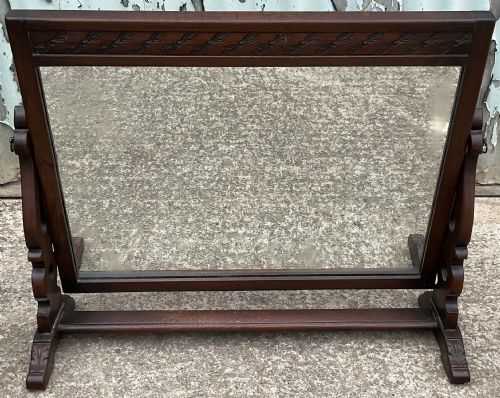
The forms range from compact table glasses and shield mirrors on dressing chests to tall telescopic shaving stands resting on tripod bases or cabinet cupboards. Styles stretch from restrained George III and Regency pieces to ornate Victorian Gothic Revival, Louis XV Revival and Dutch Neo-Classical iterations. Standing mirrors and wall-mounted versions complete the selection available to collectors.
Materials and construction
Timbers such as mahogany, walnut, oak, ash and boxwood inlay form the structural carcass and frames of these mirrors, often paired with clear mirror glass. Cabinetmakers utilised sturdy turning, tripod legs and box construction to support the pivoting mirror plates securely.
Metal fittings in brass, bronze, copper and chrome provide the adjustable mechanisms, hinges, telescopic shafts and brackets that allow the glass to tilt and hold its position. Painted surfaces and specialised hardware appear on specific period pieces, such as the triple wall-mounted units.
Adjustable Vanity Mirror Retail Price Guide 2026
Typical asking prices for adjustable vanity mirror among the pieces listed under this phrase on Sellingantiques today, from the lower quarter to the upper quarter. They describe what is for sale here now, not the wider market.
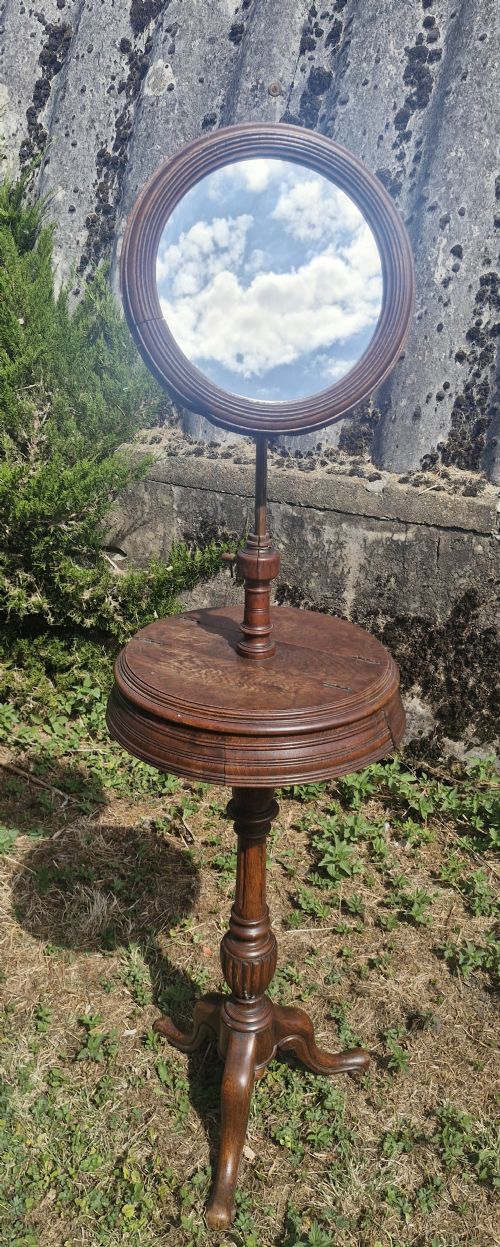
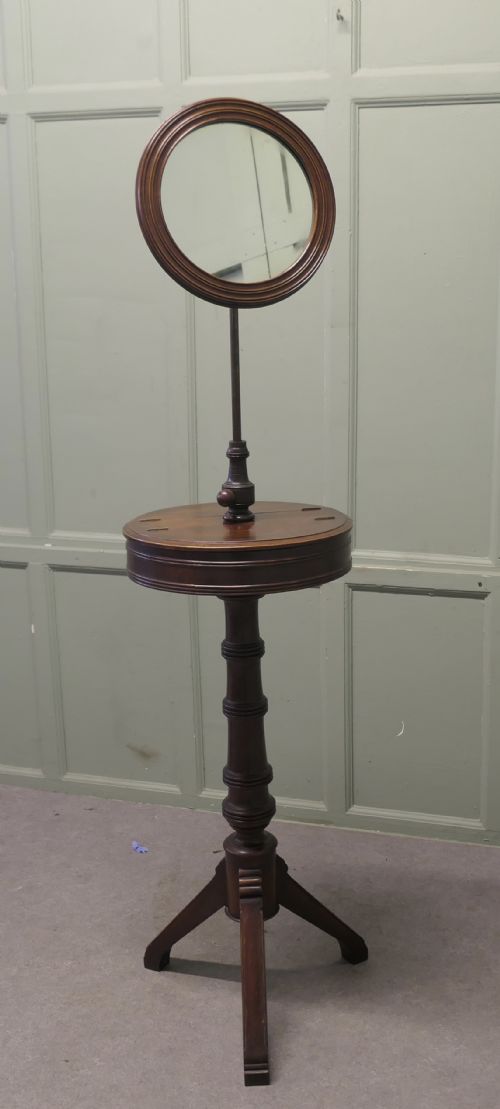
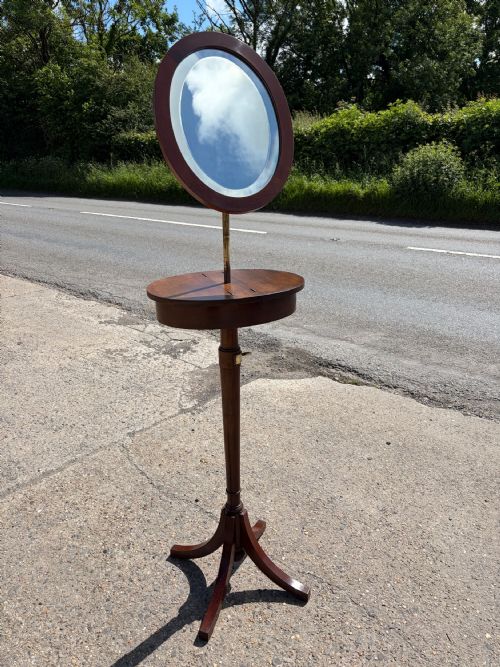
Gentlemen of the nineteenth century relied on these clever telescopic stands to catch the morning light just right for a clean shave.
Judging quality
The standard of a piece rests on the selection of timber veneers, the crispness of turned columns or carved details, and the robustness of the adjustable brass or bronze fittings. Superior examples exhibit seamless movement in the swivelling mechanism alongside finely figured mahogany, walnut or burr maple.
Makers who integrated clever telescopic mechanisms or fitted cupboards and drawers into the base demonstrate a higher level of workshop skill. Inferior items display loose joints, replacement mirror glass lacking age, or worn mechanical components that fail to hold the glass at the desired angle.
J. Shoolbred
The Adjustable Vanity Mirror Glossary
- Telescopic
- An adjustable mechanism allowing a stand or mirror shaft to raise and lower vertically. This allows the user to customise the height for standing or sitting.
- Shield mirror
- A mirror plate cut into the shape of a heraldic shield. It typically swings between two upright posts on a dressing chest or table base.
- Shaving stand
- A specialised piece of furniture featuring an adjustable mirror combined with a small table, shelf, cupboard or tripod base. Gentlemen used these for morning grooming.
- Toilet mirror
- A smaller mirror designed to sit on top of a dressing table or chest of drawers. These often incorporate small storage drawers in the base.
- Boxwood inlay
- Contrasting pale wood inserted into dark timber surfaces to create geometric or floral patterns. This decorative technique characterises many Edwardian and Georgian pieces.
Adjustable Vanity Mirror: Frequently Asked Questions
What is an adjustable vanity mirror?
An adjustable vanity mirror is a pivoting or extending glass designed for grooming and dressing. These pieces range from tabletop toilet mirrors to tall telescopic shaving stands.
They allow the user to angle the reflection precisely, combining mechanical function with period woodwork.
How do I use a telescopic shaving mirror?
Telescopic shaving mirrors feature a central shaft that raises or lowers to suit the user. You simply adjust the height and tilt the glass to the preferred viewing angle.
Many incorporate tripod bases or heavy stands to remain stable while extended.
Where were these mirrors placed?
These mirrors historically stood on dressing tables, chests of drawers or directly on the floor in bedrooms and dressing rooms. Tall shaving stands often stood in corners or beside washing basins.
Today, they function well on modern dressing tables or bathroom surfaces.
How can I tell a Victorian mirror from an Edwardian one?
Victorian mirrors often employ dark, solid mahogany or walnut with heavier turned columns and Gothic or revival detailing. Edwardian examples frequently feature lighter mahogany with delicate boxwood inlay.
Construction methods and secondary woods also help differentiate the nineteenth-century periods from later decades.