


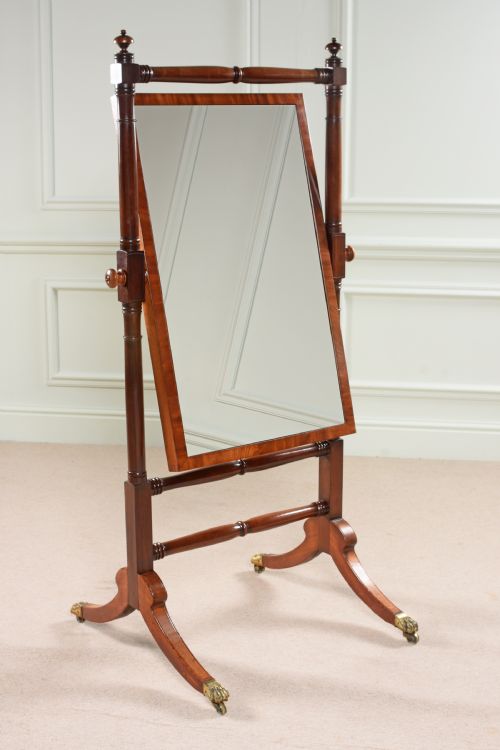


Brass Floor Mirror
These brass floor mirror pieces are substantial standing glasses built to anchor a room, and collectors choose them for their presence and utility.

Brass Floor Mirror
When you search for a brass floor mirror, you are looking at substantial standing glasses and cheval mirrors designed to reflect light and space in a room. These pieces combine functional glass with robust frames, often incorporating brass details or fully supporting metal structures.
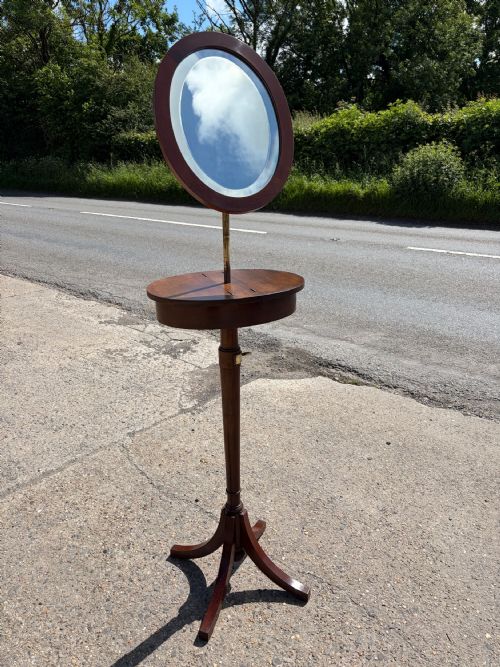
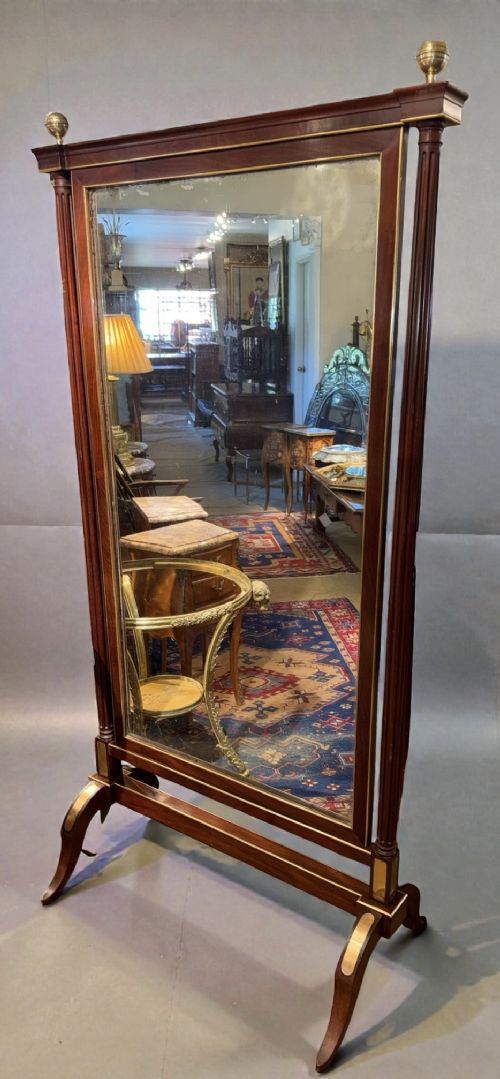
The versions you are most likely to meet on this page span the eighteenth and nineteenth centuries, alongside later twentieth-century interpretations. They appear in forms such as cheval mirrors, shaving stands, and dressing room mirrors.
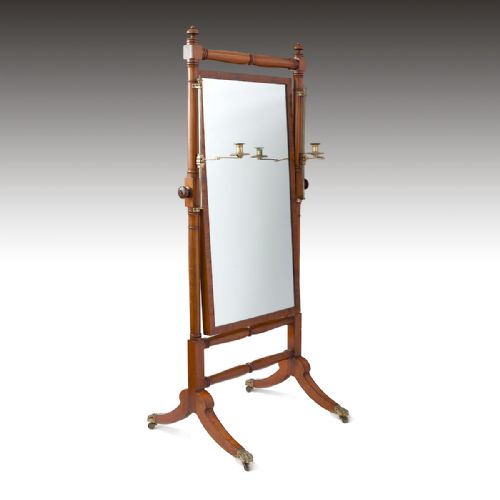
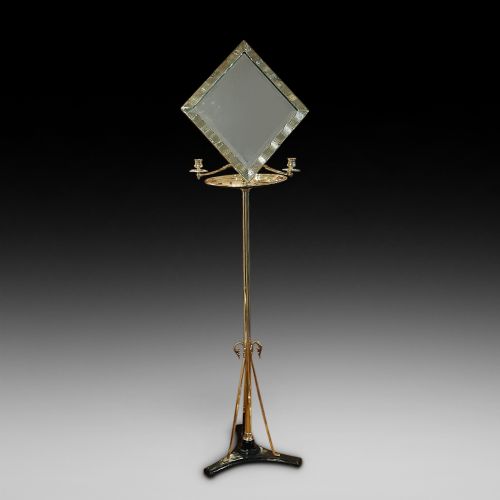
Materials vary from solid mahogany frames accented with brass sabots, candle holders, and castors, to framed bronze and painted metal. Styles range from French Empire and Regency to Victorian and Art Deco glamour.
How they were made
Makers constructed these frames using timber such as mahogany alongside structural metals including brass, bronze, and cast iron. Glass plates were set into these supports, sometimes paired with adjustable mechanisms for tilting.
Construction techniques involved mounting swinging mirror plates within standing frames, utilising brass sabots, castors, and articulated candle holders for both mobility and function.
Some dressing mirrors arrived with articulated candle holders, ensuring proper illumination before the invention of the electric light bulb.
What varies in quality
Quality rests in the heaviness of the casting, the precision of the turning on wooden supports, and the integration of metal components like brass sabots and telescopic adjustments. Better examples demonstrate weight and balance in their standing frames.
The execution of period details, such as flame mahogany grain and finely chased bronze or brass mounts, distinguishes standard production from bespoke workshop output.
The Brass Floor Mirror Glossary
- Cheval mirror
- A large standing mirror supported in a frame that allows the glass to swing. It is designed to show the full figure.
- Sabot
- A metal shoe fitted to the foot of a furniture leg. In these pieces, they are typically made of brass to protect the timber base.
- Telescopic
- An adjustable mechanism allowing a mirror height to be raised or lowered. This feature appears frequently on shaving mirrors.
- Castor
- A small wheel mounted on a swivel attached to the base of a standing frame. It allows heavy mirrors to be moved across a floor.
Brass Floor Mirror: Frequently Asked Questions
Where should I place a floor mirror?
Position these glasses opposite a window to maximise natural light and create a sense of depth in a bedroom or dressing room. Their substantial frames require adequate floor space to stand securely.
Ensure the freestanding base rests on an even surface so the swinging mirror mechanism operates without strain on the pivots.
How do I adjust a cheval mirror?
Most standing mirrors use side pivots or thumbscrews that allow the glass frame to tilt to the desired angle. Adjust these gently to avoid putting pressure on the surrounding wood or metal.
Telescopic versions lift vertically from a central stem and lock into position with a collar or screw fitting.
What is a shaving mirror?
A shaving mirror is a smaller glass mounted on a stand, often with telescopic height adjustment or double-sided panels. They were historically used for grooming in bedrooms and dressing spaces.
Many examples combine a timber base with brass fittings and sometimes include articulated candle holders for task lighting.
How do I care for brass and mahogany?
Clean the wooden frames with a dry cloth and apply occasional wax to nourish the grain. Avoid chemical sprays that can damage the finish.
Polish the brass components sparingly with a soft cloth, taking care not to let cleaning substances come into contact with the glass or timber.