






Brass Shaving Mirror
These brass shaving mirror examples combine practical grooming utility with period design, offering adjustable frames and polished metal that suit modern interiors.

Brass Shaving Mirror
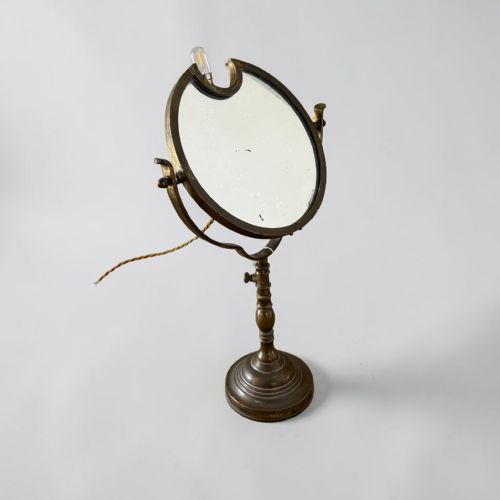
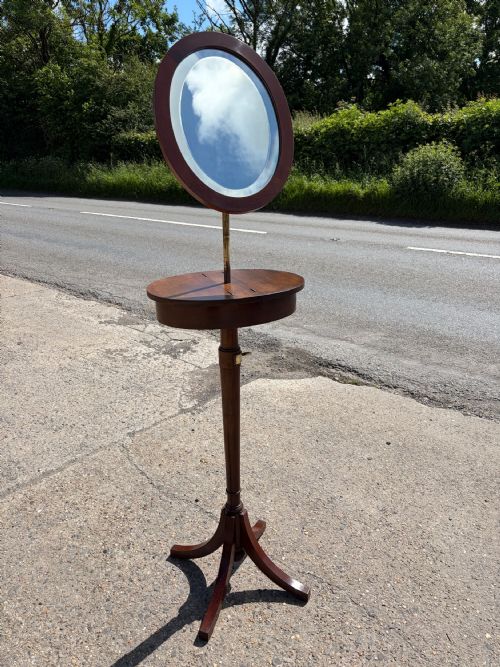
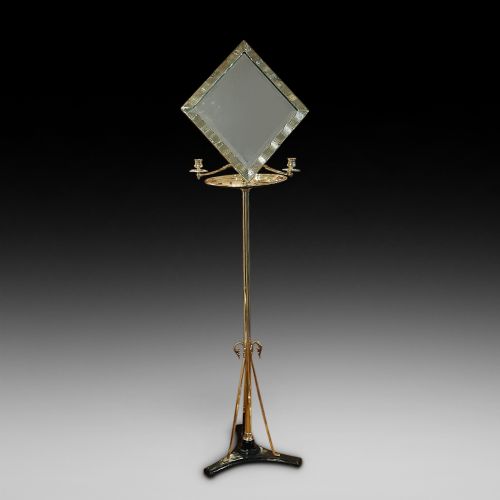
A brass shaving mirror serves as a functional dressing piece, appearing in forms such as table mirrors, standing mirrors, and dedicated shaving stands. These items originate from periods spanning the eighteenth century through the early twentieth century, including Georgian, Regency, and Victorian eras.
Buyers most frequently encounter Victorian and Edwardian examples featuring adjustable frames and telescopic stands. The design often integrates brass with timber supports like mahogany, walnut, and oak to create stable desk or floor-standing units.
Objects catalogued under this search phrase also include wall mirrors and scientific optical instruments. Each variation provides a distinct method for positioning the reflective glass at various angles.
Materials and construction
Makers utilised cast and sheet brass for the frames, hinges, and telescopic mechanisms. This metal offers durability and accepts a polished finish that contrasts with wooden stands.
Timber components in mahogany, walnut, and oak provide structural weight and decorative grain. Cabinet makers shaped these woods into tripod bases, shield outlines, and rectangular box stands.
Mirror glass sits within metal bezels or wooden surrounds, occasionally paired with copper fittings or cast iron elements. Telescopic rods and screw adjustments allow the height and tilt of the glass to change.
Brass Shaving Mirror Retail Price Guide 2026
Typical asking prices for brass shaving mirror among the pieces listed under this phrase on Sellingantiques today, from the lower quarter to the upper quarter. They describe what is for sale here now, not the wider market.
Listings feature brass alongside mirror glass, mahogany, cast iron, walnut, painted metal, and oak across Victorian, Edwardian, and Georgian periods.
Assessing quality and finish
Quality shows in the precision of the telescopic action and the stability of the base. Finer examples maintain smooth adjustment without slipping and feature well-fitted joints in the woodwork.
The choice of materials distinguishes standard production from superior pieces. Solid mahogany or walnut frames combined with heavy cast brass represent a higher standard of construction than lighter painted metal substitutes.
Thomas Rubergall·Albany
The Brass Shaving Mirror Glossary
- Telescopic
- A construction method allowing vertical adjustment through nested sliding tubes. This permits the mirror height to alter according to user preference.
- Shield Mirror
- A dressing glass shaped like a heraldic shield, typically supported on upright pivots above a box base or stand. The wooden frame often receives decorative brass fittings.
- Campaign Mirror
- A portable piece designed for travel, often fitted with folding stands or protective cases. These items use robust brass frames to withstand transport.
- Tripod Base
- A three-legged support structure providing stability on uneven surfaces. This configuration appears frequently on nineteenth-century standing shaving mirrors.
Brass Shaving Mirror: Frequently Asked Questions
What is a brass shaving mirror?
A brass shaving mirror is an adjustable dressing glass mounted on a stand, designed for close-up grooming and daily personal care. These objects date from the eighteenth to the early twentieth century.
They combine reflective glass with metal frames and wooden supports, allowing users to alter the angle and height for optimal visibility.
How do you adjust a telescopic mirror?
Telescopic mirrors operate via a central sliding rod held in position by a thumb screw or friction collar. Loosening the fitting permits the mirror to slide up or down.
Once the desired height is reached, tightening the mechanism secures the frame in place for use.
Where were these mirrors placed?
These mirrors stood upon dressing tables, chests of drawers, or washstands within bedrooms and dressing rooms. Tall standing versions functioned as independent floor pieces.
Their portable nature also suited temporary travel use during the nineteenth century.
How do I care for antique brass?
Antique brass benefits from gentle dusting with a soft cloth to prevent the accumulation of dirt. Avoid harsh chemical cleaners that strip away the natural historic patina.
Preserving the surface finish maintains the character acquired over centuries of use.