



Antique Travelling Mirror
An antique travelling mirror is a portable glass made to fold, pack, or swing for personal grooming on the move.
Antique Travelling Mirror
An antique travelling mirror brings domestic grooming habits onto the road, housed in compact portable forms. Buyers seeking an antique travelling mirror encounter items ranging from simple campaign shaving mirrors to elaborate fitted vanity sets.
The selection on this page draws from the Georgian, Victorian, and Edwardian eras, spanning portable campaign kits and folding table models. Cabinetmakers of the eighteenth and nineteenth centuries built these pieces to withstand movement while retaining domestic refinement.
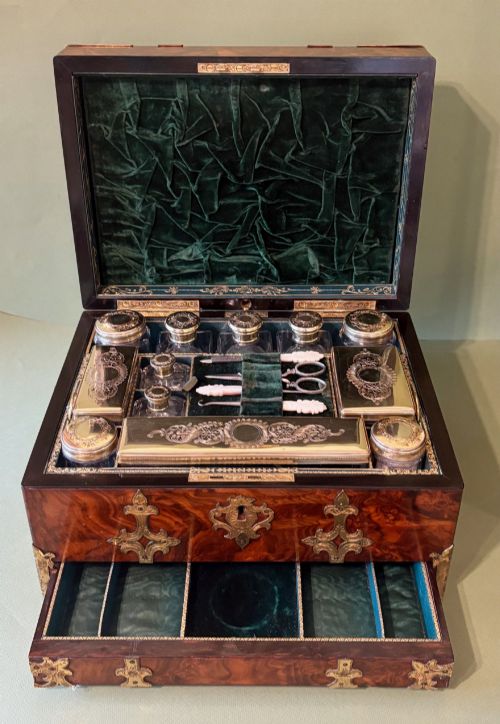
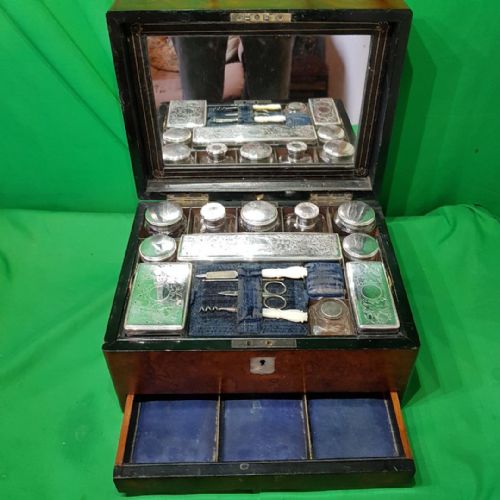
Most examples take the form of swing mirrors, dressing cases, or fitted boxes with integrated glass. Mahogany, walnut, and rosewood dominate the surviving inventory, often lined with velvet or fitted with silver and glass containers.
How they were made
Cabinetmakers utilised dense timbers such as mahogany, walnut, and rosewood to construct sturdy outer cases that protected the glass during transit. Boxwood inlay, Sorrento olive wood, and Tunbridge Ware decoration added surface ornament to the more elaborate folding compartments.
Brass fittings, hinges, and corner brackets reinforced the structural joints of campaign pieces designed for military officers and travellers. Sterling silver gilt, celluloid, and glass components completed the interior fittings of gentleman's vanity sets and lady's dressing cases.
Celluloid hairbrushes and velvet linings whisper of Victorian gentlemen determined to smell of lavender oil while sleeping in a tent.
What varies in quality
The sophistication of the internal fit-out separates standard campaign kits from luxury dressing boxes. Complete sets retaining their original silver-gilt containers, velvet linings, and maker labels command greater attention than depleted cases.
The choice of timber grain, from burr walnut to figured mahogany, dictates the visual appeal of the exterior. Precision in the brass hinges and the tightness of the folding mechanism demonstrate the original maker's skill.
The Antique Travelling Mirror Glossary
- Campaign mirror
- A portable mirror framed in timber with brass reinforcement, designed for military officers on the move. These pieces often feature folding stands or protective box surrounds.
- Dressing case
- A fitted box containing compartments for cosmetics, grooming tools, and an integrated mirror. They range from gentleman's shaving kits to elaborate lady's jewellery cases.
- Swing mirror
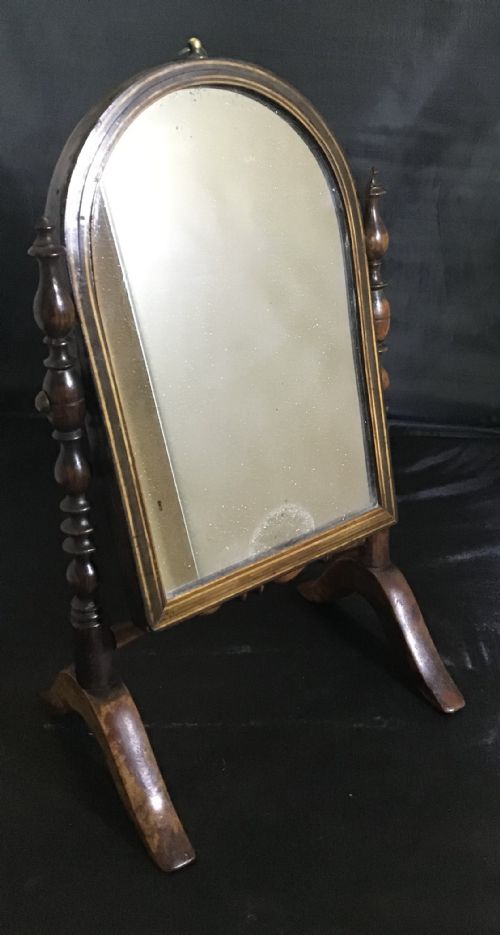
- A glass mounted on vertical pivots between two upright posts, allowing the user to tilt the angle. This form appears on table stands and atop dressing chests.
- Tunbridge Ware
- Small wooden objects decorated with intricate mosaic patterns made from tiny segments of naturally coloured woods. This technique adorns specific Georgian travelling pieces.
- Sorrento Ware
- Inlaid wood ornamentation originating from Italy, featuring geometric or pictorial marquetry. Edwardian travel mirrors occasionally showcase this regional decorative style.
Antique Travelling Mirror: Frequently Asked Questions
What is an antique travelling mirror?
An antique travelling mirror is a portable looking glass housed in a folding wooden case, campaign box, or dressing chest designed for personal grooming away from home.
Craftsmen built these items from the Georgian era through the Edwardian period, utilising durable timbers and protective brass hardware to survive journeys.
How were campaign mirrors used?
Campaign mirrors were utilised by officers and travellers on military campaigns or long journeys to maintain daily shaving and grooming routines.
The portable design allowed the mirror to pack flat or lock securely inside a wooden case when moving between locations.
How do I date a travelling mirror?
Dating relies on timber selection, brass hardware styles, and construction techniques characteristic of Georgian, Victorian, or Edwardian cabinetmaking.
Georgian and Regency examples often feature plain mahogany or rosewood, while Victorian pieces incorporate burr walnut, silver gilt, and fitted compartments.
What timbers were used for travel mirrors?
Mahogany, walnut, rosewood, and olive wood form the primary structural materials seen across surviving portable mirrors and dressing boxes.
Boxwood stringing and Tunbridge Ware or Sorrento inlay frequently appear as decorative surface enhancements on the exterior cases.
Are interior fittings usually original?
Many surviving dressing cases retain their fitted velvet interiors, glass bottles, and silver gilt items, though some components naturally suffer loss over centuries.
Original labels, untouched brass hinges, and matching glassware add historical completeness to a travelling vanity set.