

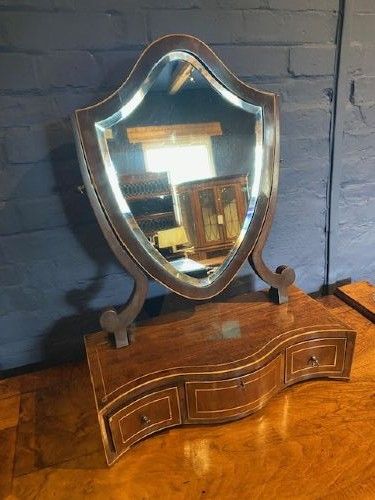
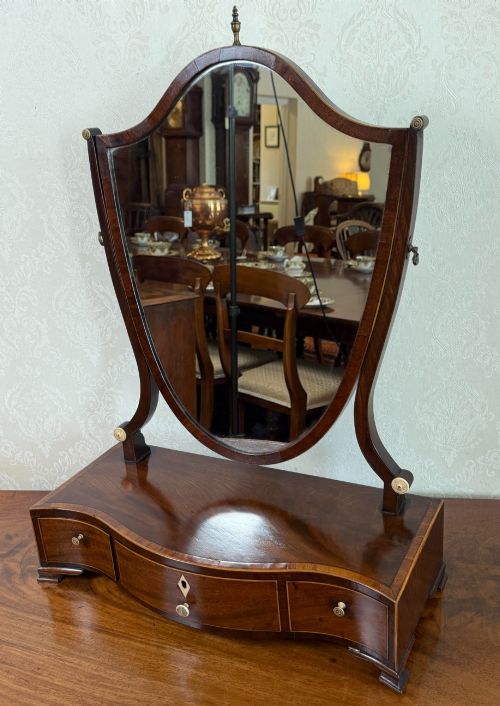
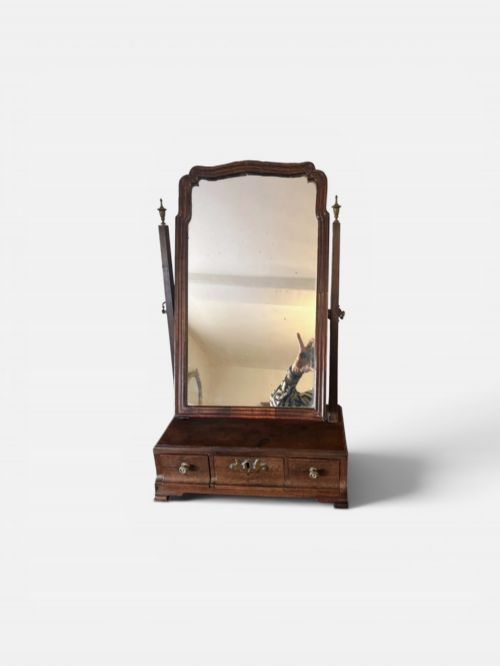


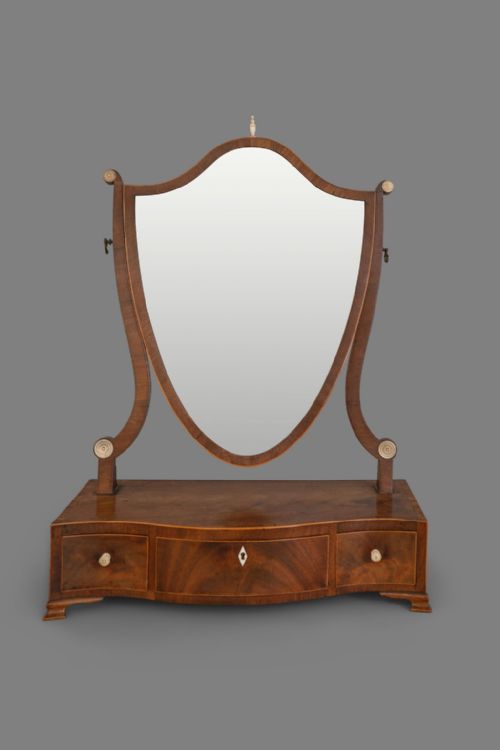


George III Vanity Mirror
A george iii vanity mirror sits on the table to catch the morning light, bringing polish and practicality to any dressing routine.
George III Vanity Mirror
When you search for a george iii vanity mirror, you encounter pieces designed for personal grooming and adjustment upon a chest or table. These items take the form of toilet mirrors, dressing mirrors, and swing mirrors equipped with tilting frames.
The pieces on this page span Georgian, eighteenth century, nineteenth century, and Edwardian periods, reflecting styles such as George III, Regency, and Sheraton. Mahogany forms the backbone of these selections, alongside satinwood, walnut, and burr maple.
Formats range from simple rectangular plates to serpentine box bases fitted with multiple drawers. Certain iterations include campaign styles and oval glasses supported by delicate upright arms.
How they were made
Cabinetmakers utilised dense timbers like mahogany, walnut, and satinwood, frequently embellishing surfaces with boxwood inlay and bone details. Timber frames were constructed with precise joinery to house the mirror glass securely.
Brass fittings, including swing-lock pins and hinges, allow the glass plate to tilt at various angles. Drawer boxes were built into the base structures to hold small personal items and accoutrements.
George III Vanity Mirror Retail Price Guide 2026
Typical asking prices for george iii vanity mirror among the pieces listed under this phrase on Sellingantiques today, from the lower quarter to the upper quarter. They describe what is for sale here now, not the wider market.
Some gentlemen's wash stands and work tables sneak secret rising compartments into their frames for confidential storage.
What varies in quality
The sophistication of the timber figure defines much of the distinction between standard examples and finer works. Selection of burr maple, highly figured mahogany, or contrasting satinwood veneer elevates the visual depth of the base.
Execution of serpentine shaping and delicate boxwood stringing reveals the hand of a skilled maker. Original mirror glass plates and intact brass hardware preserve the integrity of the piece far better than later replacements.
The George III Vanity Mirror Glossary
- Toilet mirror
- A smaller mirror designed to stand upon a dressing table or chest of drawers. These pieces typically feature a small box base with fitted drawers.
- Swing mirror
- A mirror plate mounted on pivots between two upright arms, allowing the user to tilt the glass. This mechanism is central to the function of a vanity mirror.
- Serpentine
- A front contour that curves inward at the centre and outward at the ends in a gentle wave. This shape requires considerable woodworking skill to execute cleanly on drawer fronts.
- Satinwood
- A durable, yellowish timber prized for its lustrous sheen and smooth grain. It was frequently used for veneers and decorative inlay during the late eighteenth century.
- Boxwood inlay
- Narrow strips of pale wood inserted into contrasting darker timber to create geometric borders. This technique highlights the edges of drawers and framing.
George III Vanity Mirror: Frequently Asked Questions
What is a george iii vanity mirror?
A george iii vanity mirror is a portable table glass used for personal grooming, featuring an adjustable frame mounted on a wooden base.
These pieces were made to sit atop existing furniture such as chests of drawers or dedicated dressing tables during the late eighteenth and early nineteenth centuries.
How were these mirrors used?
Users placed the mirror on a flat surface in natural light to assist with shaving, hairstyling, and dressing.
The pivoting frame allowed the glass to be angled precisely, while the drawers in the base stored small personal effects and cosmetics.
How do I date a mirror?
Dating relies on observing timber choices, construction techniques, hardware style, and overall proportions. Eighteenth-century examples often display specific secondary woods, hand-cut dovetails, and original brass pivot screws.
Cross-referencing stylistic traits like serpentine shaping or Sheraton oval frames helps narrow the period of manufacture.
Are the mirror plates original?
Many surviving pieces retain their original glass, which can exhibit subtle foxing, minor silver loss, or slight distortion. Replacement glass is also common due to the fragile nature of old mirrors.
Examining the silvering behind the glass and the way the plate is secured in the frame provides clues to its age.
How do I care for the wood?
Maintain the timber by keeping the mirror away from direct sunlight and sudden temperature shifts that dry out old finishes. Periodic application of appropriate wax preserves the sheen of mahogany and satinwood surfaces.
Avoid using harsh liquid cleaners on the wood or the antique glass plate.