






18th Century Dressing Glass
An 18th century dressing glass sits on a chest or table to catch the morning light, offering a portable mirror for daily grooming.
18th Century Dressing Glass
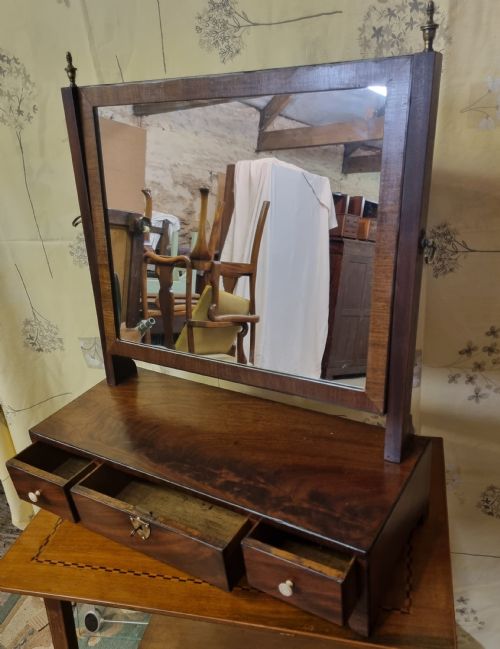
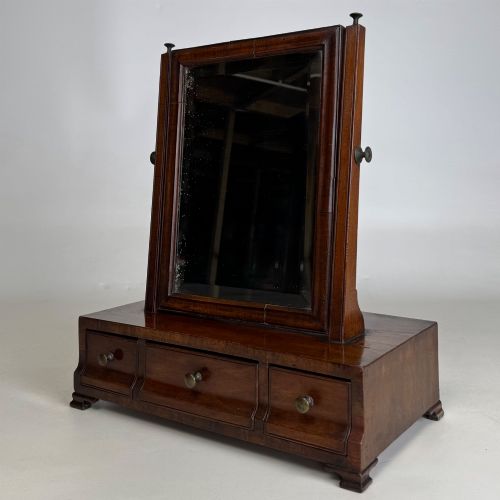
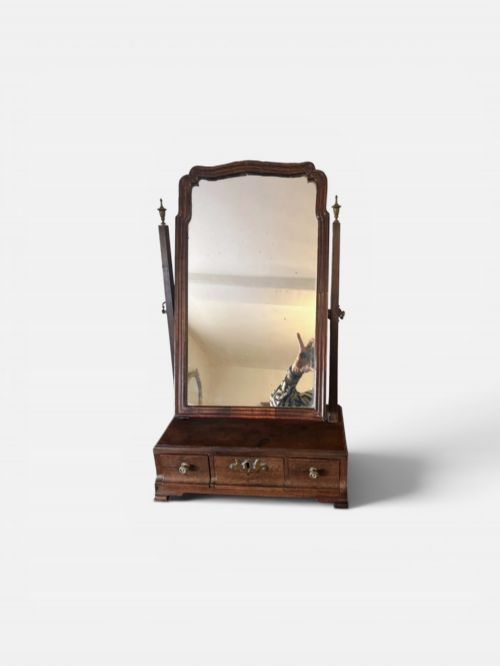
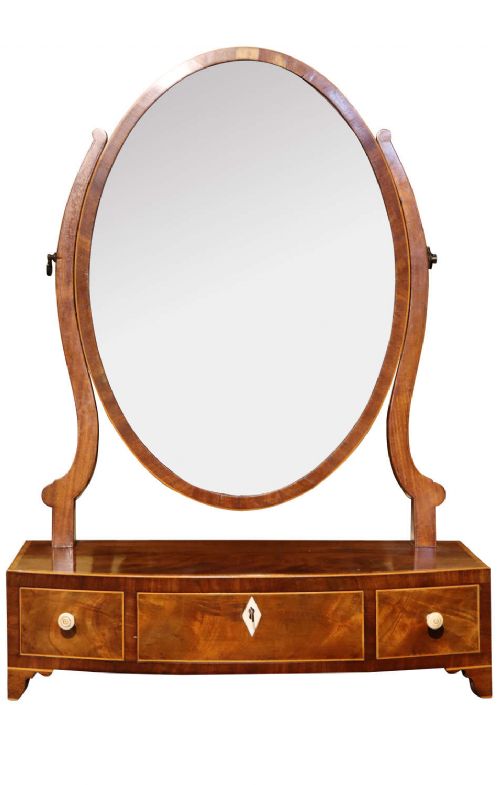
When you search for an 18th century dressing glass, you encounter compact table mirrors designed for personal grooming and cosmetic application in bedrooms and dressing rooms. These pieces combine a pivoting glass plate within an upright frame, mounted above a small box base that often incorporates drawers for cosmetics, trinkets, and patches.
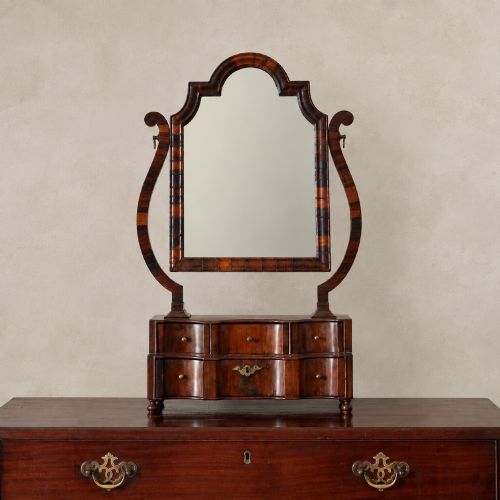
The examples appearing here span several decades of British craftsmanship, with mahogany and walnut forming the primary structures of the surviving pieces. You will frequently meet rectangular or oval swing mirrors atop serpentine or straight bases, reflecting stylistic shifts from Queen Anne simplicity through George III elegance.
How they were made
Cabinetmakers constructed these frames using dense hardwoods like mahogany and walnut, frequently enhancing the surfaces with crossbanding, burr maple, or black lacquer. Brass hinges, brackets, and delicate drawer pulls secure the pivoting glass and operate the small compartments below.
The silvered glass plates are held within rebated wooden frames that tilt on brass screw pins, allowing the user to adjust the angle of reflection. Some variants incorporate intricate fretwork or miniature bureau bases fitted with tiny drawers for safe storage.
18th Century Dressing Glass Retail Price Guide 2026
Typical asking prices for 18th century dressing glass among the pieces listed under this phrase on Sellingantiques today, from the lower quarter to the upper quarter. They describe what is for sale here now, not the wider market.
Listings feature woods such as mahogany, walnut, harewood, and laburnum alongside brass hardware and glass.
What varies in quality
The refinement of the cabinetwork dictates the standing of each piece, particularly the tightness of the dovetail joints in the base drawers and the selection of figured wood veneers. Crossbanding and well-matched grains distinguish more ambitious examples from utilitarian workshop output.
Proportion and the retention of original mirror plates and brass hardware also influence the character of the object. Subtle details such as serpentine fronts, ogee bracket feet, and secondary timbers reveal the care taken by the original maker.
The 18th Century Dressing Glass Glossary
- Toilet mirror
- An alternative period term for a dressing glass or dressing table mirror. These pieces sat upon dressing tables or washstands.
- Serpentine
- A curved outline featuring a convex centre flanked by concave wings. This contour appears frequently on the drawer fronts of finer Georgian pieces.
- Crossbanding
- A strip of veneer applied across the grain of the primary wood surface. It frames the panels and adds decorative contrast.
- Patch stand
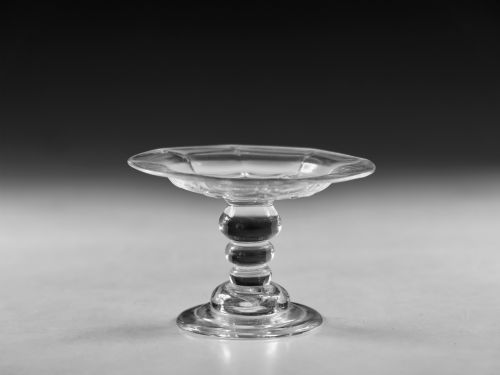
- A small pedestal or glass dish used for holding cosmetic beauty patches. These tiny accessories date to the same period as the dressing glasses.
18th Century Dressing Glass: Frequently Asked Questions
What is an 18th century dressing glass?
An 18th century dressing glass is a small, portable mirror mounted on a wooden stand or miniature chest of drawers. Designed to sit upon a dressing table, chest, or bureau, it allowed individuals to adjust their appearance during morning toilet.
These pieces typically feature a pivoting mirror frame attached to upright arms, perched above a base equipped with small drawers for storing cosmetics, pins, and personal items.
How do you date an 18th century dressing glass?
Dating these mirrors involves examining the timber species, construction techniques, and stylistic vocabulary of the base. Walnut frames with candle slides or simple box bases often point toward the earlier decades of the century, while mahogany serpentine fronts and oval glass plates align with later Georgian periods.
Secondary woods inside the drawers and the style of the brass screw pins and bracket feet provide further clues to the decade of manufacture.
Where were dressing glasses placed?
These mirrors sat upon existing case furniture rather than standing independently on the floor. Owners placed them on top of chests of drawers, dedicated dressing tables, or pier tables where natural light from a window fell across the glass.
Because they were portable, they could be moved around the home to follow the best light for shaving, powdering wigs, or applying cosmetics.
What are toilet mirrors?
Toilet mirrors are simply the period term for dressing glasses. The word toilet derives from the French term toile, referring to the cloth spread over a dressing table.
Over time, the designation shifted from the entire grooming ritual and its associated linens to the specific mirror used during the process.