




George II Vanity Mirror
A george ii vanity mirror brings mid-eighteenth-century craftsmanship into your home, offering compact tabletop reflection with deep wood tones.
George II Vanity Mirror
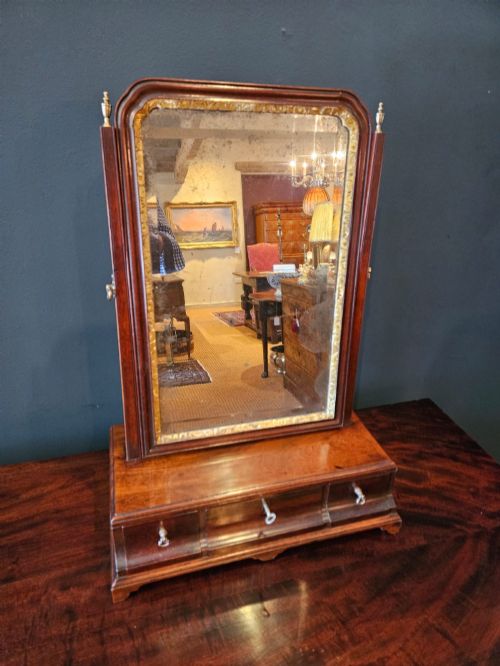
When searching for a george ii vanity mirror, you are looking at compact dressing glasses designed to sit atop tables or chests. These pieces provide a moveable reflecting surface supported by upright framing and a small base box.
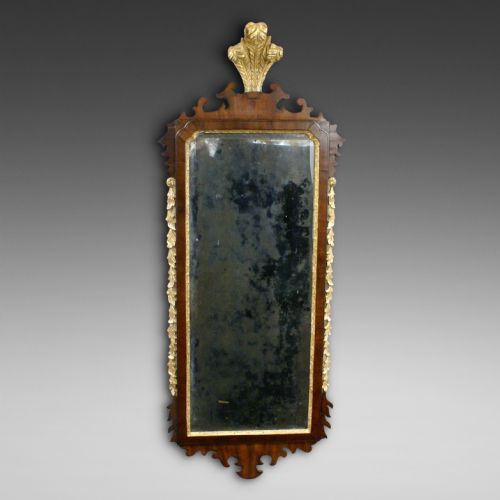
You are most likely to meet mahogany or walnut versions on this page, often featuring parcel-gilt details or simple woodwork. The forms include dressing mirrors, toilet mirrors, and dressing table mirrors spanning the Georgian period and the mid-eighteenth century.
The evidence shows examples ranging from plain red walnut to inlaid figured walnut and parcel-gilt mahogany. Certain pieces trace back to specific makers or regional origins like Scottish workshops, whilst others reflect later Victorian interpretations of the George II style.
Materials and construction
Cabinetmakers built these mirrors primarily using dense hardwoods such as mahogany and walnut, frequently selecting figured veneers for the drawer fronts and bases. Mirror glass forms the central reflective element, supported by upright arms that allow the glass to tilt.
Makers applied parcel-gilt details and gold leaf to accent carved mouldings, cornices, or gilded motifs on the wooden frames. Brass components such as hinges, knobs, or small drawer pulls finish the structural assembly.
George II Vanity Mirror Retail Price Guide 2026
Typical asking prices for george ii vanity mirror among the pieces listed under this phrase on Sellingantiques today, from the lower quarter to the upper quarter. They describe what is for sale here now, not the wider market.
A Scottish cabinetmaker from seventeen-fifty evidently decided his walnut needed a northern pep-talk.
Judging the quality
Quality rests upon the selection of timber veneers and the crispness of the woodwork. Superior examples display carefully matched grain patterns across the base drawers and refined proportions in the upright framing.
The integration of parcel-gilt decoration separates standard utility pieces from finer commissions. Original brass hardware and clean joinery elevate an object within the range.
John Franklin London
The George II Vanity Mirror Glossary
- Toilet mirror
- A small tabletop dressing glass equipped with a set of small drawers in the base. These pieces sat upon chests or dedicated dressing tables.
- Parcel-gilt
- Partially gilded woodwork where thin layers of gold leaf highlight specific carved details. This technique contrasts the natural grain of walnut or mahogany.
- Dressing glass
- An alternative period term for a vanity or toilet mirror. It describes any moveable mirror designed for personal grooming.
- Kneehole dressing chest
- A larger furniture form incorporating a central recess for the legs beneath a bank of drawers. Some later interpretations of the George II style pair these with integrated mirrors.
George II Vanity Mirror: Frequently Asked Questions
What is a george ii vanity mirror used for?
These pieces served as functional dressing aids for personal grooming and hair arrangement in eighteenth-century bedchambers. Placed upon chests or tables, their tilting glass frames directed light precisely where needed.
Today, they function as decorative tabletop accessories that bring historical character and compact reflection to modern interiors.
How do I distinguish walnut from mahogany?
Walnut typically displays a rich brown colour with darker swirling grain patterns and figure variations. It was widely utilised during the early part of the Georgian era.
Mahogany offers a denser reddish-brown hue that became dominant as the eighteenth century progressed. Both timbers received polish to highlight their natural tones.
Are these mirrors adjustable?
Yes, the central glass frame connects to two upright arms via pivot screws or pins. This mechanism allows the user to tilt the mirror angle forward or backward.
Original hardware permits smooth movement without slipping, holding the glass securely in the chosen position.
What does parcel-gilt mean?
Parcel-gilt describes woodwork where only selected carved portions receive a thin application of gold leaf. This creates a striking visual contrast against the dark polished walnut or mahogany beneath.
Craftsmen used this finish to draw attention to mouldings, ears on mirror frames, or architectural pediments.