


Georgian Swivel Mirror
A georgian swivel mirror offers an adjustable glass for the dressing table, prized for combining practical reflection with rich timber grain.
Georgian Swivel Mirror
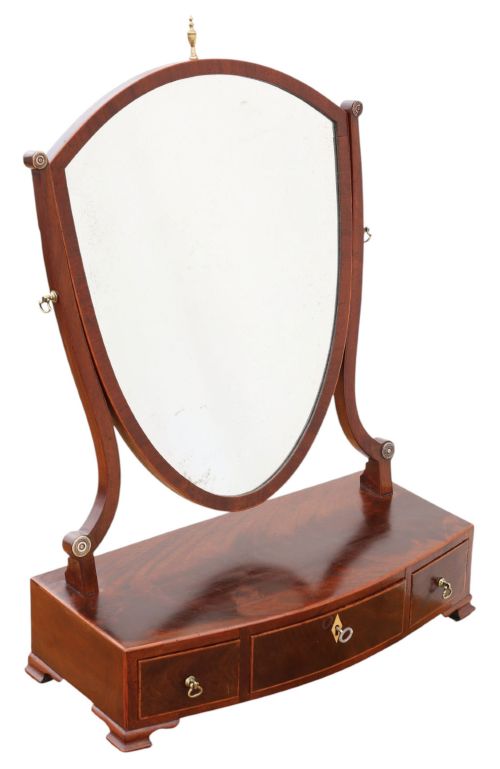
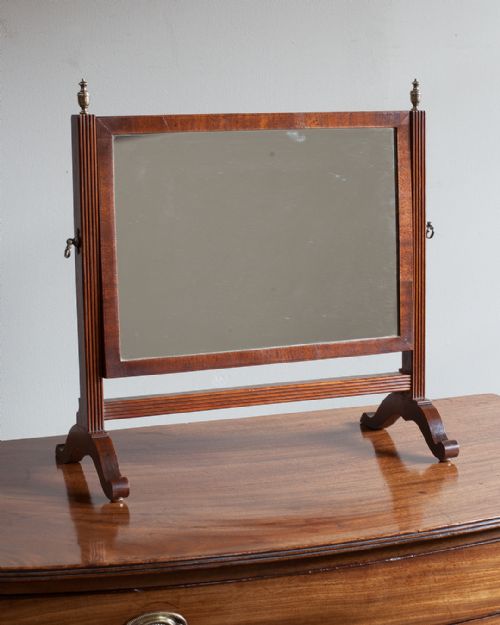
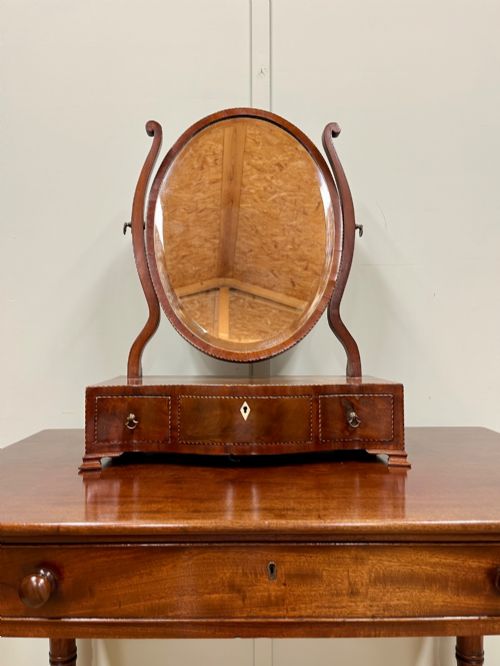
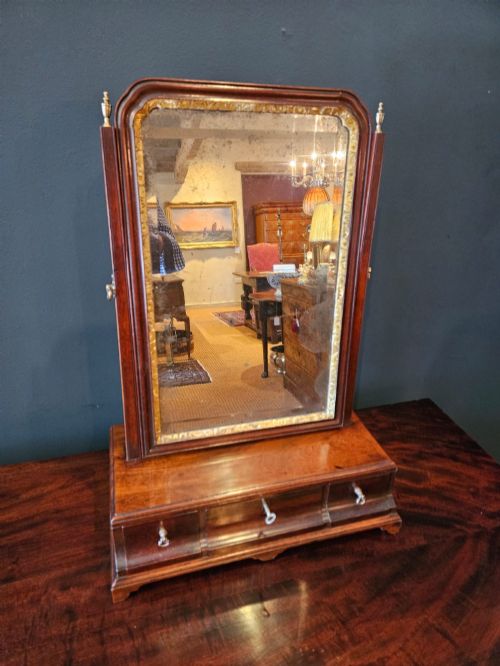
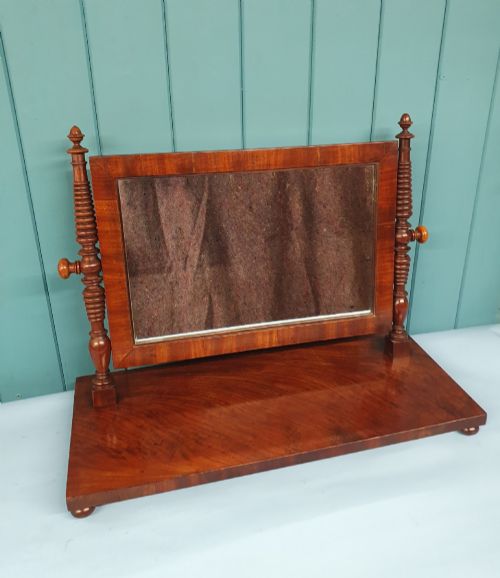
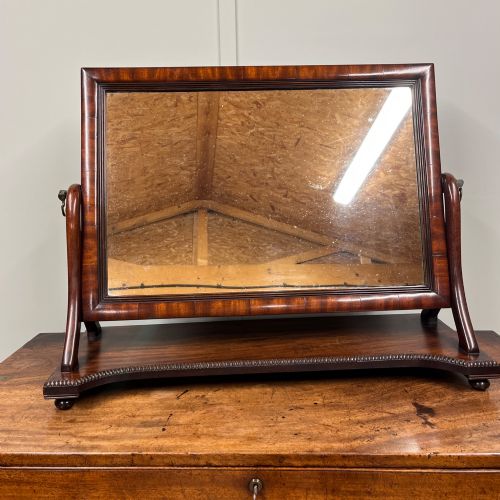
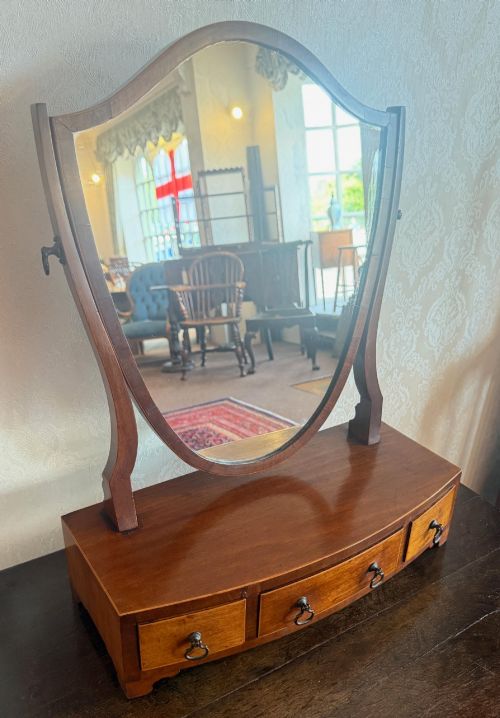
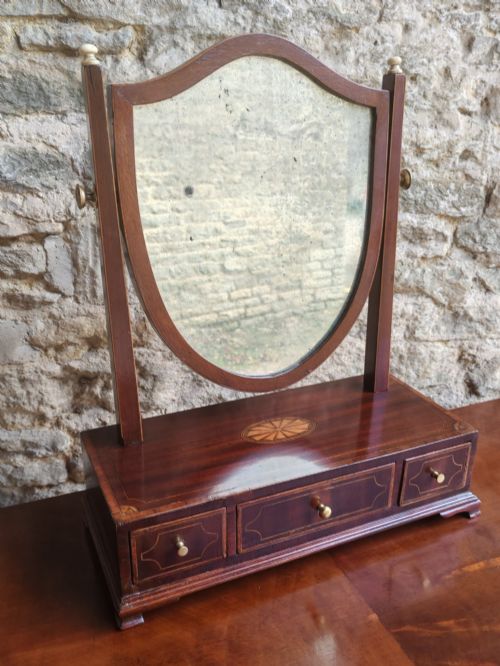
A georgian swivel mirror is primarily encountered as a compact toilet or dressing table mirror designed to sit upon a chest or base fitted with small drawers. These pieces span the eighteenth century and the Regency period, appearing in forms such as shield, oval, and rectangular swing plates mounted between upright supports.
Larger freestanding versions, known as cheval mirrors, also emerge in the record, standing full-length upon framed legs with brass castors. Buyers searching for a georgian swivel mirror will frequently meet nineteenth-century revival interpretations alongside genuine pieces from the seventeen-fifties through to the eighteen-hundreds.
Materials and Construction
Makers constructed these mirrors predominantly using solid and veneered mahogany, often enriched with walnut, satinwood, and giltwood details. Supporting frames incorporated brass pivots, bone escutcheons, and ebony inlay to accent the timber structures.
Mirror glass was set into swinging plates supported by upright arms, while the base boxes utilised dovetail joinery for the small storage drawers. Metal elements such as sabots and castors finished the larger cheval forms.
Listings for a georgian swivel mirror span multiple eras, including George II, George III, Regency, and William IV periods.
Judging the Workmanship
The distinction between ordinary and superior examples lies in the proportion of the frame and the selection of timber figure, such as richly grained mahogany or delicate satinwood veneer. Finer pieces demonstrate precise dovetailing on the base drawers and clean execution of inlay or parcel-gilt carving.
The integration of the swivel mechanism and the quality of the original mirror glass further separate standard workshop production from high-grade cabinet work.
Gillows
The Georgian Swivel Mirror Glossary
- Toilet mirror
- A small dressing glass designed to sit on a table or chest, typically featuring a small box base with drawers.
- Cheval mirror
- A full-length freestanding swivel mirror supported by four legs, allowing the user to view their entire outfit.
- Parcel-gilt
- Partially gilded woodwork where gold leaf highlights specific carved details against a dark timber ground.
- Sabot
- A metal sleeve fitted to the foot of a leg, most commonly cast in brass to protect the wood from wear.
Georgian Swivel Mirror: Frequently Asked Questions
What is a georgian swivel mirror?
A georgian swivel mirror is an adjustable dressing glass designed to tilt on vertical pivots between two upright posts. These pieces usually sit on a small table base or chest fitted with drawers.
Originating in the eighteenth and early nineteenth centuries, they served a practical role for grooming before evolving into decorative bedroom furnishings.
How do I use one today?
These mirrors function effectively placed upon dressing tables, sideboards, or chests of drawers in modern bedrooms and hallways. The tilting glass allows you to adjust the angle easily for daily use.
They also provide useful concealed storage in the small drawers located within the box bases of the smaller toilet mirror formats.
How do I tell original pieces apart?
Distinguishing period pieces involves examining the secondary timbers, hand-cut dovetails on the drawers, and the construction of the pivot joints. Older mirrors often feature bevelled glass and older fixings that show signs of age.
Revival pieces from later periods typically display different construction methods and more uniform timber finishes compared to eighteenth-century examples.
What woods were used?
Mahogany forms the primary timber across the vast majority of these listings, appearing in both solid boards and fine veneers. Walnut and satinwood also feature prominently in the construction.
Decorative highlights were added using giltwood, ebony inlay, and brass hardware to enhance the appearance of the frames.