

Antique Mahogany Swing Glass
These antique mahogany swing glass pieces are traditional dressing mirrors that bring warm timber tones and adjustable reflection to a room.
Antique Mahogany Swing Glass
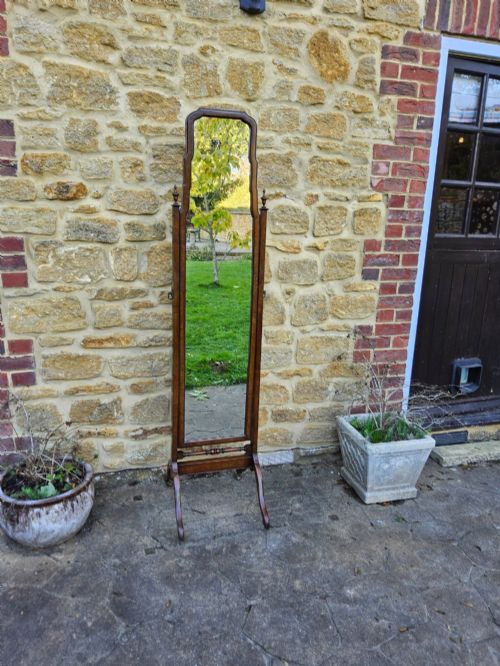
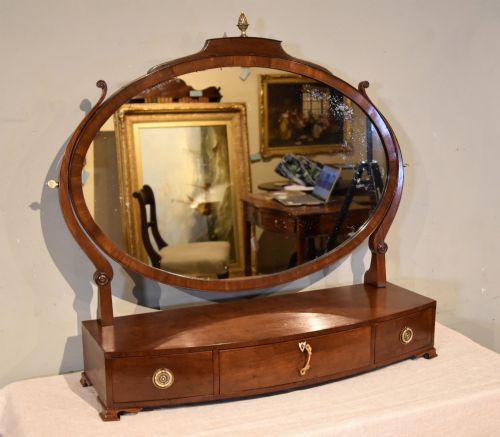
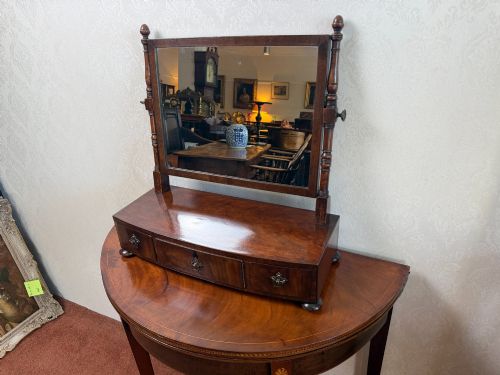
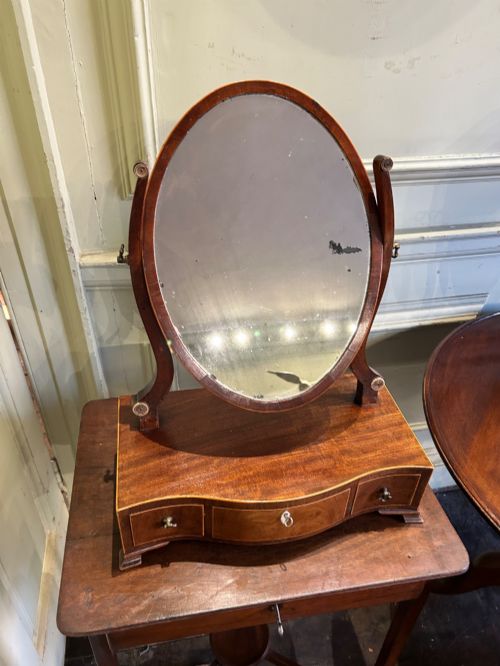
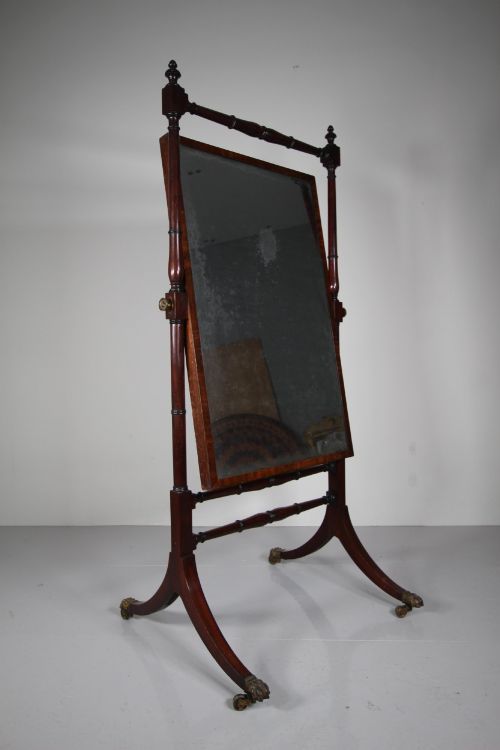
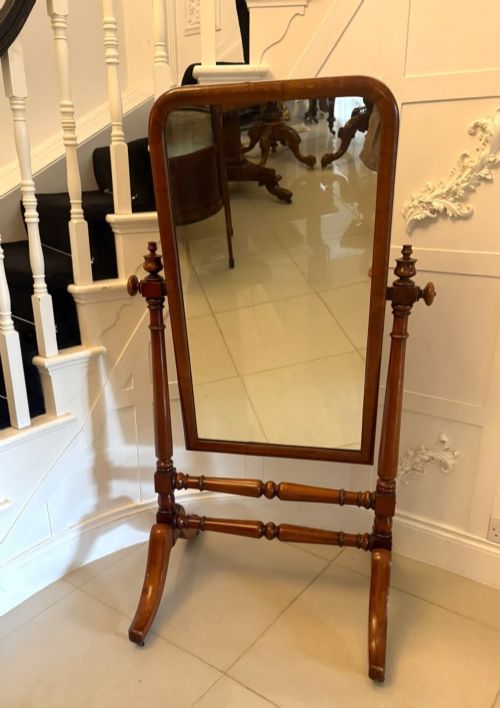
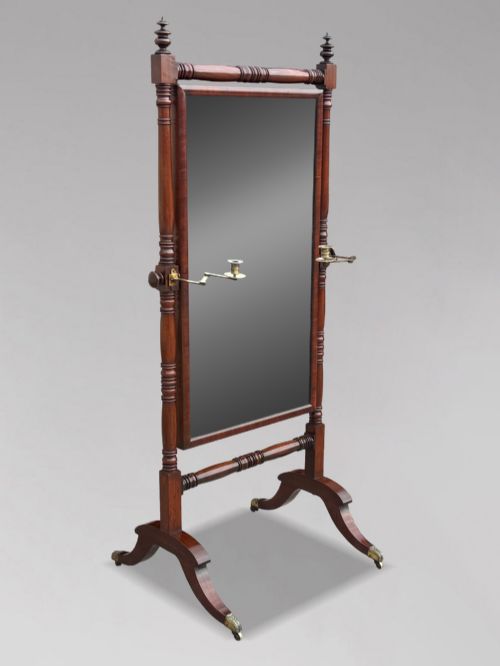
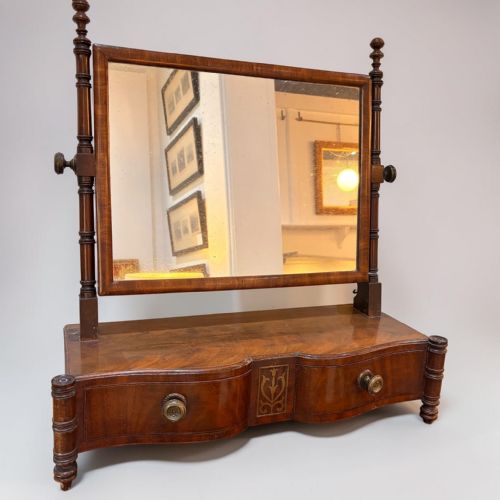
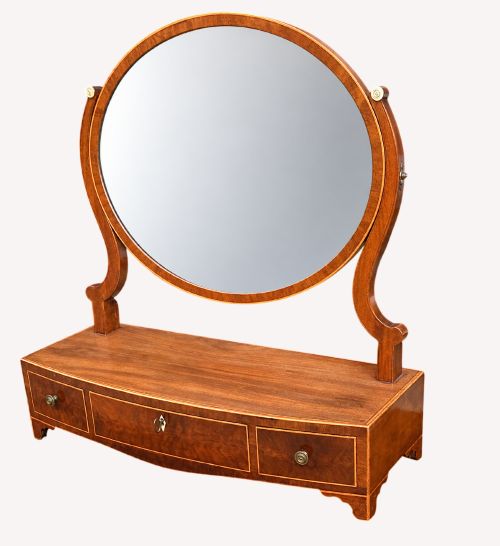
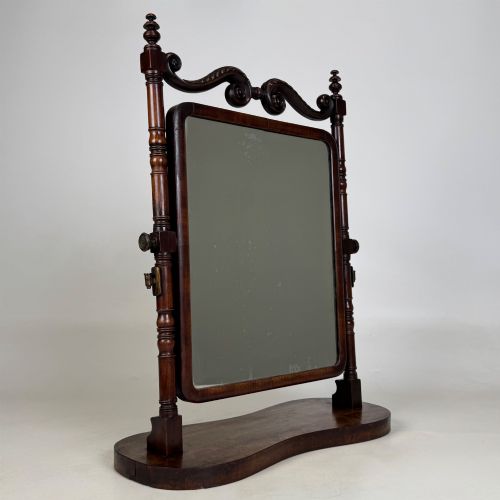
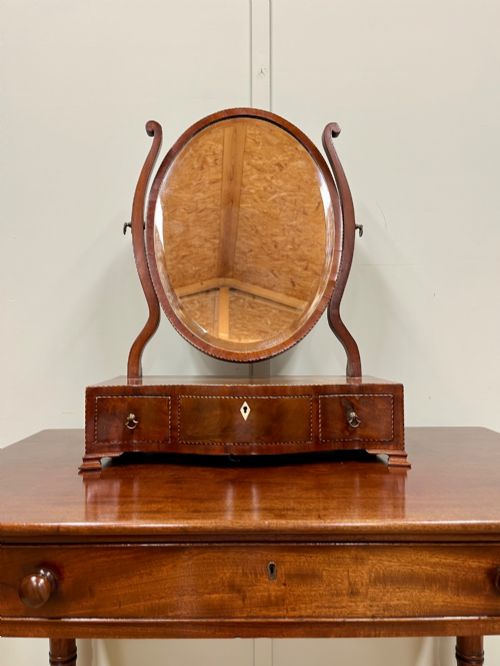
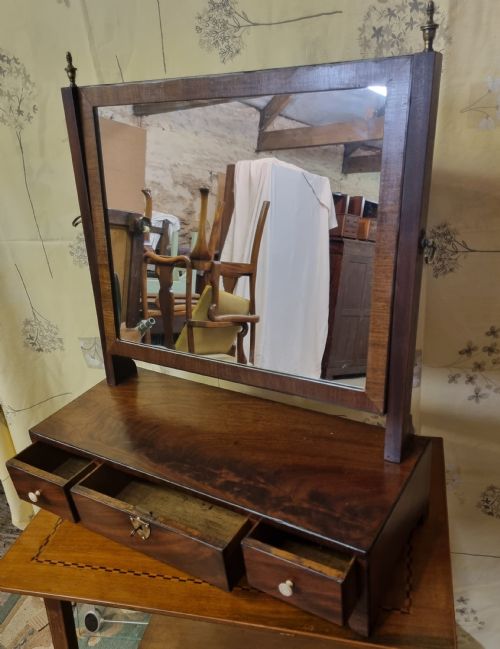
When you search for an antique mahogany swing glass, you are looking at mirrors designed to pivot within a supportive frame on a table base or stand alone on the floor. The most common form on this page is the dressing table mirror or toilet mirror, typically featuring a rectangular or oval glass plate suspended between two upright posts.
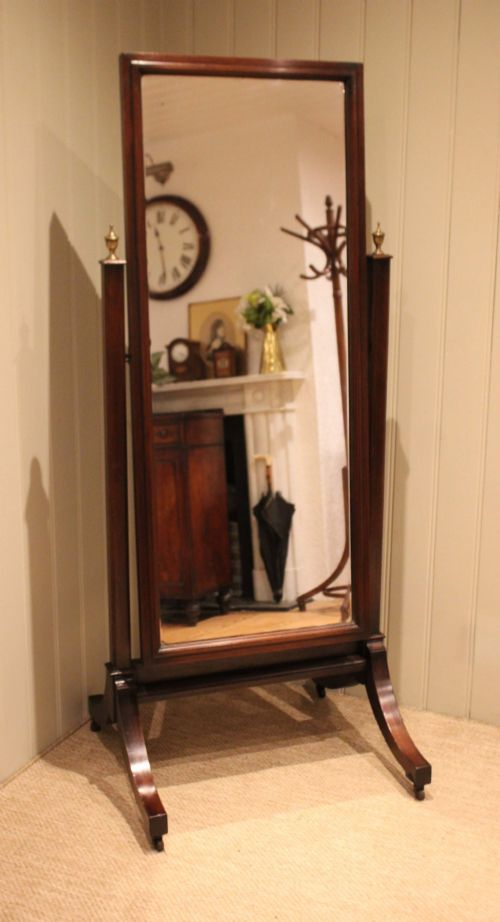
These mirrors date across the Georgian, Regency and Victorian periods, reflecting changing domestic fashions from small tabletop boxes with drawers to large freestanding cheval mirrors. You will encounter pieces showing regional variations such as Scottish proportions or Dutch marquetry inlay alongside standard English forms.
The primary purpose of these items was personal grooming in bedrooms and dressing rooms, but their rich timber surfaces and brass fittings also served to bounce light around period interiors. They remain versatile items that function effectively on modern chests of drawers or as full-length standing mirrors.
How they were made
Cabinet makers utilised solid mahogany and mahogany veneers, often enhanced with crossbanding, satinwood stringing or bone inlay to create decorative contrast on the frames and drawer fronts. The wood was selected for its grain pattern and deep warm colour, then polished to a smooth finish.
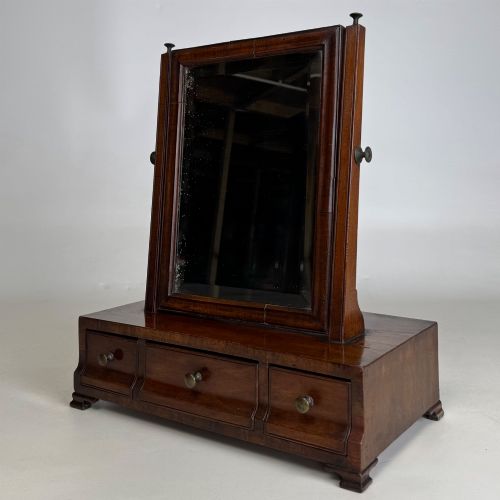
The mirror plates are held in pivoting frames connected by brass screw pins or pivoting hardware that allows the glass to tilt to the desired angle. Many table models incorporate small box bases fitted with drawers constructed using traditional dovetail joints.
Antique Mahogany Swing Glass Retail Price Guide 2026
Typical asking prices for mahogany swing glass among the pieces listed under this phrase on Sellingantiques today, from the lower quarter to the upper quarter. They describe what is for sale here now, not the wider market.
The listings on this page span the 18th century, Georgian, Regency, Victorian, and Edwardian periods, utilising mahogany, glass, brass, bone, and giltwood.
What varies in quality
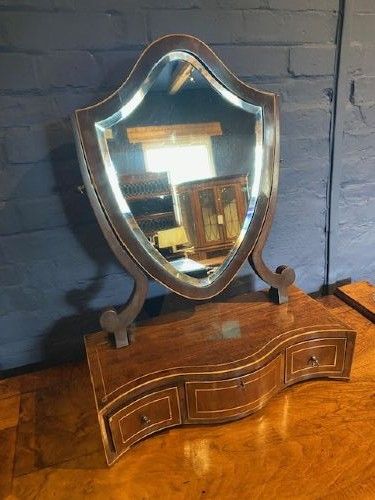
The distinction between standard domestic pieces and the finest examples lies in the selection of timber figures, the crispness of inlaid details such as marquetry, and the overall harmony of the proportions. Superior mirrors often feature secondary timbers of high grade and meticulous attention to the shaping of serpentine or oval frames.
Gillow·Heal & Sons
The Antique Mahogany Swing Glass Glossary
- Cheval mirror
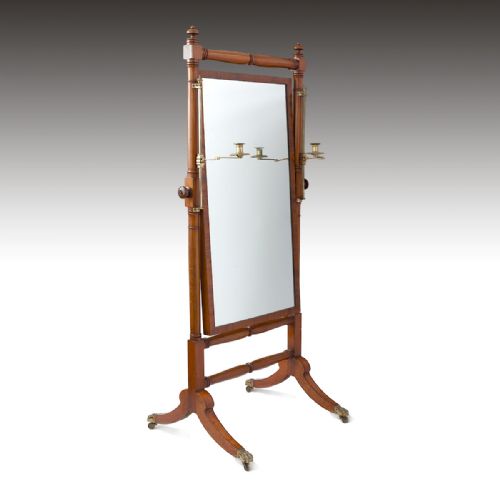
- A large freestanding full-length dressing mirror mounted in a frame with four legs that allows the glass to swing freely. This format became popular in the late 18th century for viewing an entire outfit.
- Toilet mirror
- A smaller tabletop dressing mirror, frequently mounted on a box base containing one or more small drawers. These sat upon dressing tables or chests.
- Crossbanding
- A border veneer applied around the edges of a panel where the grain runs perpendicular to the central wood. It frames the primary surface with a decorative contrasting edge.
- Serpentine front
- A furniture front curving outward in the centre and inward at the sides in a continuous wave shape. This contour requires precise woodworking skill.
- Parcel-gilt
- Partially gilded woodwork where gold leaf highlights specific carved details against the dark mahogany background. It provides a subtle touch of contrast.
Antique Mahogany Swing Glass: Frequently Asked Questions
What is a cheval mirror?
A cheval mirror is a tall, freestanding dressing glass that stands directly on the floor. It swings within a heavy frame supported by four legs.
These large pieces allowed people to view their entire attire before leaving the room during the Georgian and Victorian eras.
How do you date an old swing glass?
Dating relies on observing the timber species, the style of the frame supports, and the construction methods of any drawers. Georgian examples often feature slender uprights and mahogany crossbanding.
Later Victorian and Edwardian pieces tend to show heavier proportions, machine-sawn timber elements, or different inlay motifs.
Are the mirror plates original?
Many older mirrors have replacement glass because original mercury silvering degrades over centuries. Newer replacement plates often look noticeably clearer and lack minor surface imperfections.
Examining the backboards and the way the glass is secured helps determine if the plate has survived from the period of manufacture.
Where should I place a toilet mirror?
Toilet mirrors were originally designed to sit on top of dressing tables or large chests of drawers in bedrooms. Today, they function well on modern sideboards or heavy wood desks.
Their adjustable swing mechanism lets you angle the reflection to suit the height of the room and surrounding furniture.