

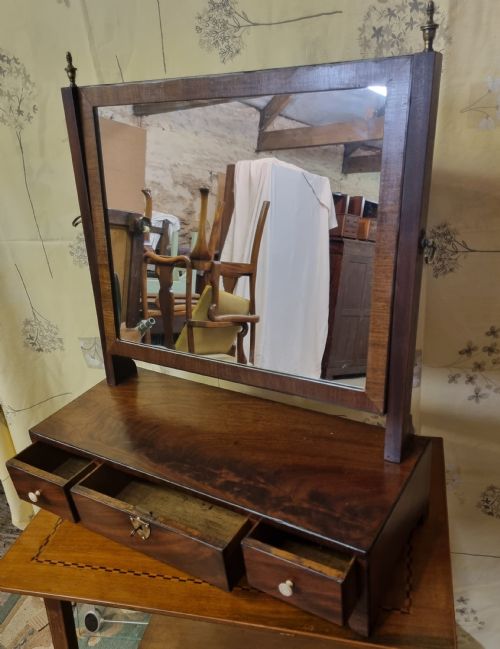
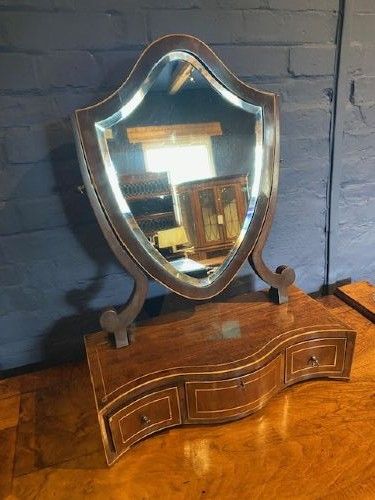
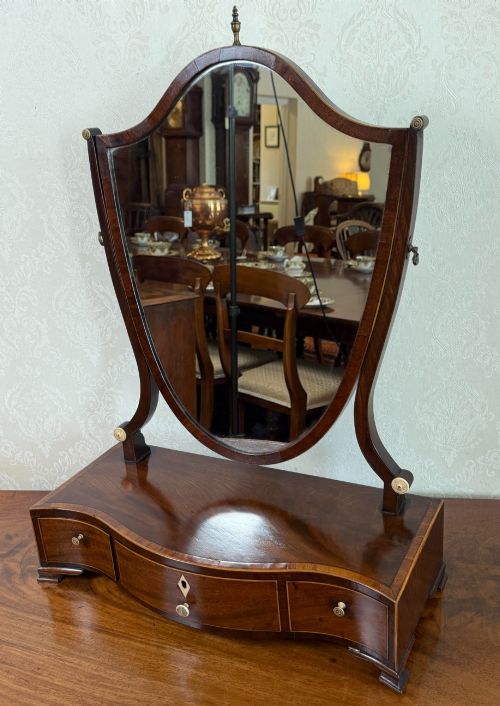
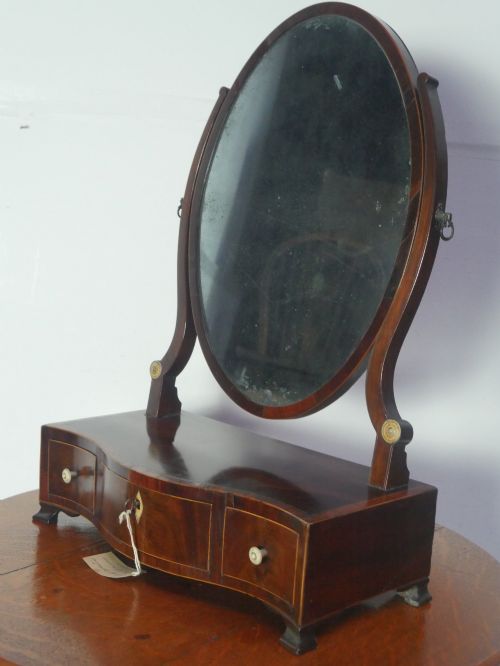

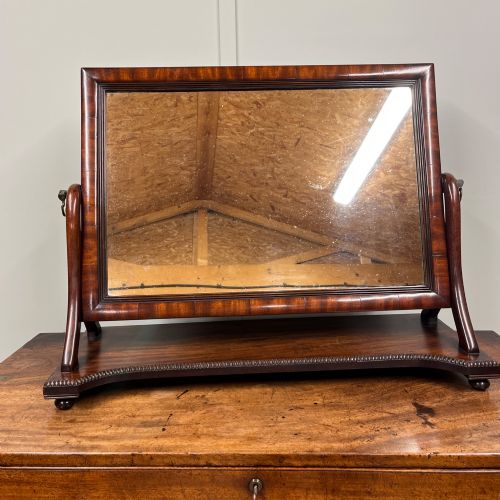

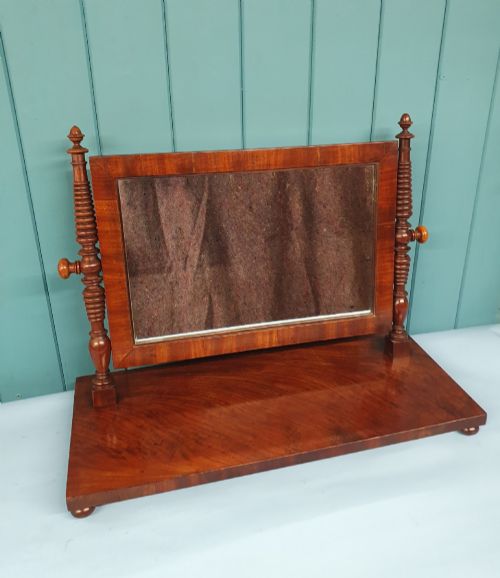
Regency Mahogany Toilet Mirror
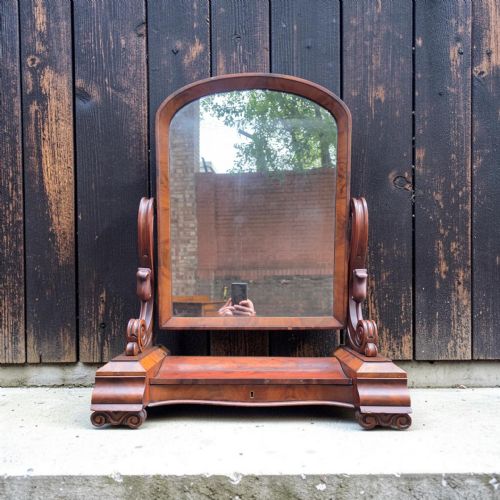
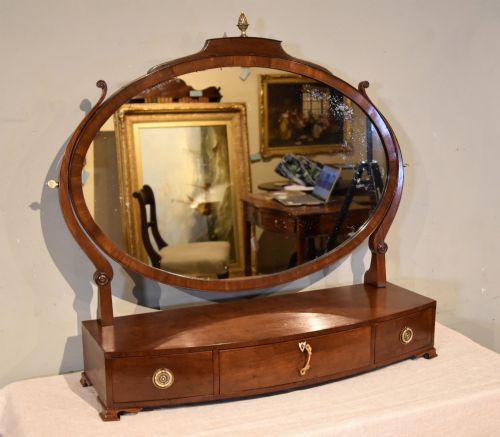
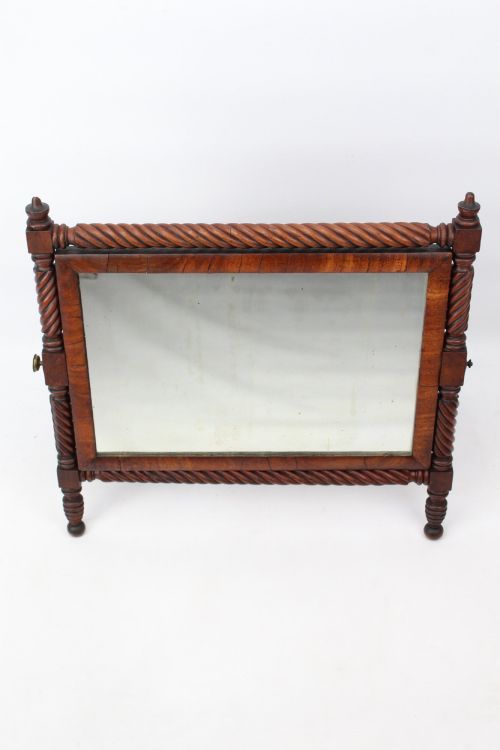
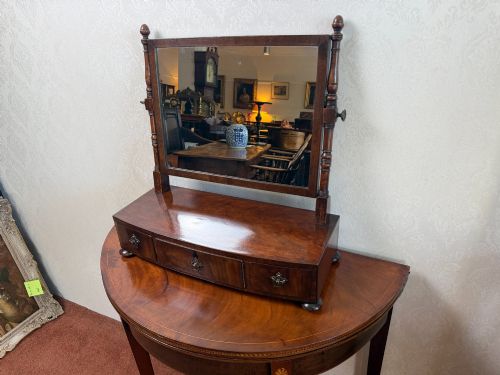
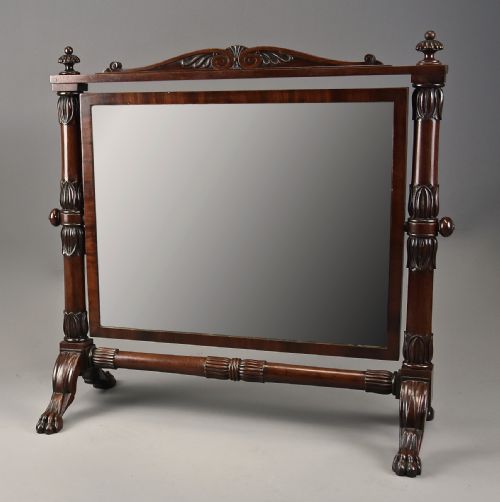
A regency mahogany toilet mirror sits on a dressing table to frame morning routines with timeless timber grain and swinging glass.
Regency Mahogany Toilet Mirror
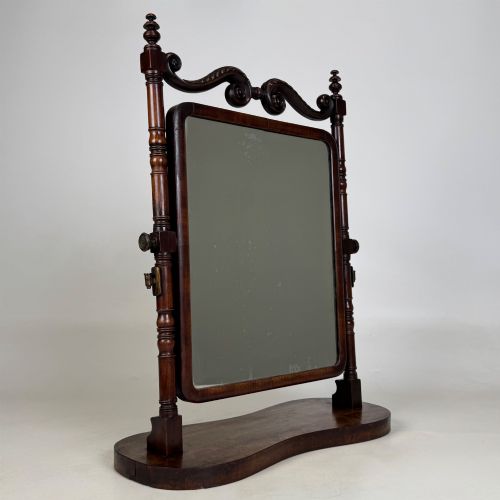
A regency mahogany toilet mirror provides a tabletop surface for grooming and dressing across bedrooms. These compact pieces rest upon chests or dressing tables, moving between periods like the Georgian era, Regency period, and the nineteenth century.
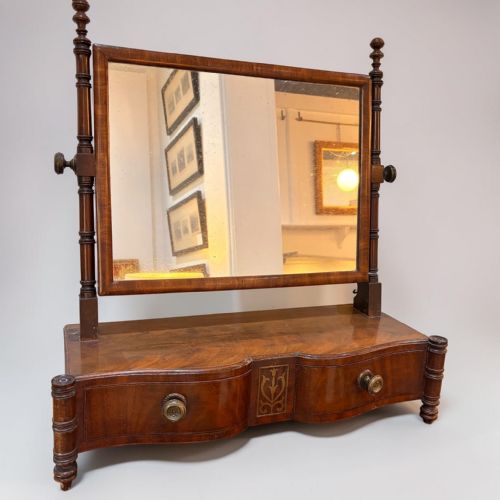
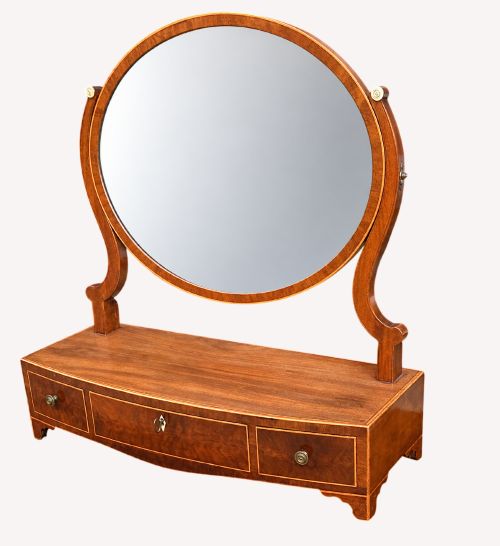
The evidence shows various formats including swing mirrors, platform mirrors, and multi-drawer boxes. Makers constructed them as dressing table mirrors, vanity glasses, and toilet mirrors to serve personal grooming.
Forms span simple small mirrors to large flame mahogany and bow-fronted designs with stringing details. Buyers most frequently meet pieces from the nineteenth century and Regency period utilising rich timber.
How They Were Made
Cabinet makers utilised mahogany as the primary timber, sometimes pairing it with rosewood, oak for drawer linings, and boxwood stringing for fine linear inlay. Flame mahogany veneers provided striking figured grain patterns across the surfaces of better examples.
Brass fittings, bone details, and clear glass plates completed the construction of these swing mirrors. Workshops mounted the tilting mirror frames upon upright support arms secured to weighted box bases or platforms.
Regency Mahogany Toilet Mirror Retail Price Guide 2026
Typical asking prices for regency mahogany toilet mirror among the pieces listed under this phrase on Sellingantiques today, from the lower quarter to the upper quarter. They describe what is for sale here now, not the wider market.
The site listings combine mahogany, glass, brass, and bone across nineteenth-century and Georgian periods.
What Varies in Quality
The distinction between standard and superior pieces rests in timber selection and decorative restraint. Flame mahogany veneers and precise boxwood stringing elevate the visual impact of the wood.
Internal construction reveals finer cabinet work through oak-lined drawers and substantial brass hardware. The proportion between the swinging glass frame and the supporting base dictates the architectural balance of the mirror.
Gillows
The Regency Mahogany Toilet Mirror Glossary
- Toilet mirror
- A small tabletop mirror designed for dressing and grooming. These pieces sit on top of furniture rather than standing on the floor.
- Swing mirror
- A mirror plate mounted on pivots that allows the glass to tilt back and forth. This movement helps users adjust the angle during daily use.
- Flame mahogany
- A highly figured wood grain pattern resembling flickering flames. Cabinet makers selected these veneers for the most prominent surfaces.
- Stringing
- Thin inlaid lines of contrasting wood used to accent furniture edges. Boxwood provided a pale contrast against darker mahogany.
- Platform mirror
- A toilet mirror built upon an extended base box. These often incorporate small drawers for storage.
Regency Mahogany Toilet Mirror: Frequently Asked Questions
Where should I place a toilet mirror?
These mirrors suit bedroom dressing tables, chests of drawers, or sideboards. Their compact footprints allow them to anchor small surfaces while providing functional reflection.
Ensure the supporting furniture matches the depth of the mirror base so the piece remains stable during daily tilting.
How do I tilt the glass safely?
Most pieces rely on brass screw pivots set into the upright support arms. Adjusting these tension screws allows the swing frame to hold its angle without slipping.
Support the glass with one hand while loosening or tightening the hardware with the other to protect the antique frame.
What is the difference between Georgian and Regency styles?
Georgian pieces often display heavier proportions and classic architectural lines. Regency examples lean towards classical revival forms with cleaner surfaces and figured veneers.
Both styles utilise mahogany timber, but Regency pieces frequently incorporate flame veneer and contrasting stringing.
Did these mirrors always have drawers?
Some early forms sat on simple platform frames without storage compartments. Many examples incorporate box bases containing one, two, or three small drawers.
These drawers held small personal items, jewellery, or grooming tools during the nineteenth century.