







Oval Tabletop Mirror
An oval tabletop mirror brings functional elegance to a dressing space, combining reflective utility with period woodwork and metalwork.
Oval Tabletop Mirror
An oval tabletop mirror sits upon a dresser, chest, or vanity, designed to tilt or swing within a supportive frame. Buyers seek these pieces for their practical proportions and the warmth that period timber brings to a bedroom or dressing room.
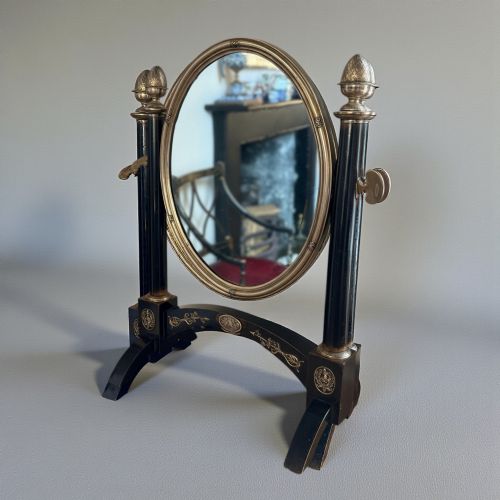
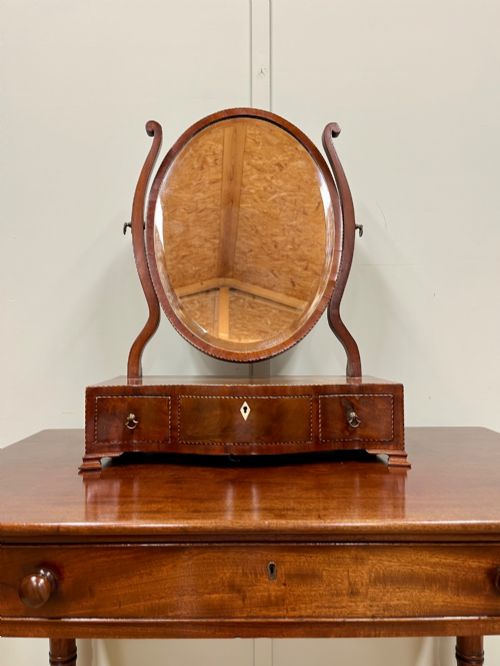
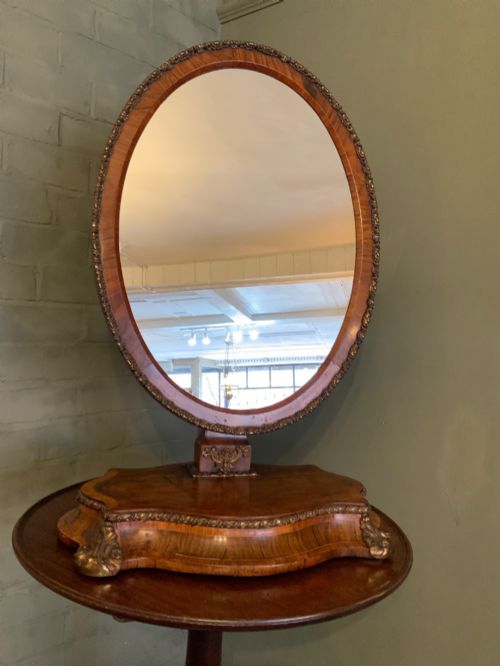
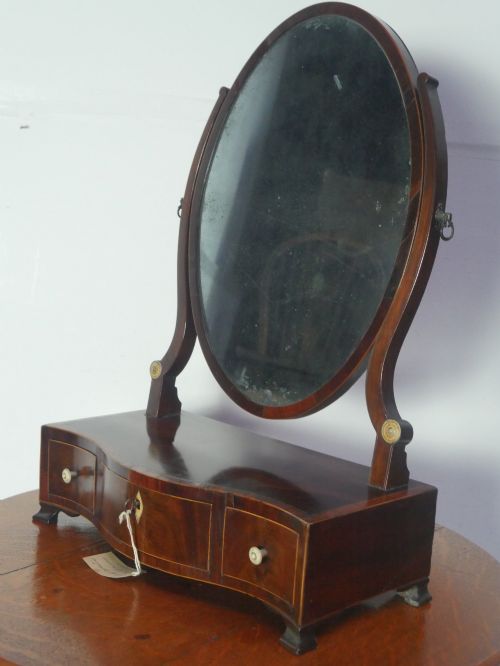
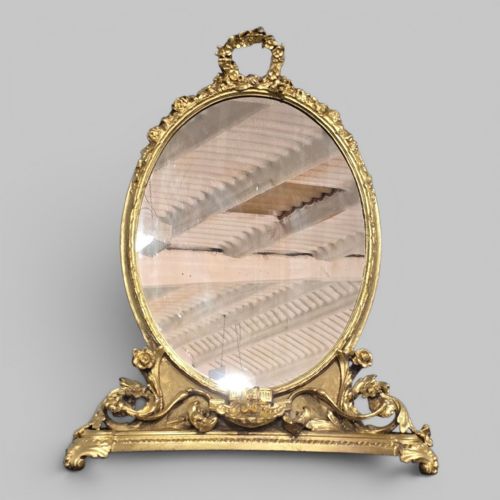
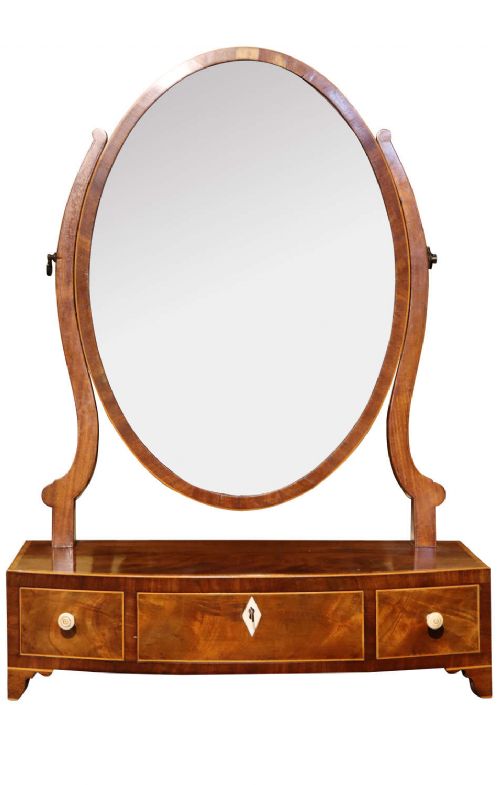
The selections available range from Georgian mahogany examples with serpentine drawer bases to Victorian, Edwardian, and later 20th-century brass, chrome, and giltwood creations. Mahogany forms with boxwood inlay, flame grain, and small storage compartments dominate the selection.
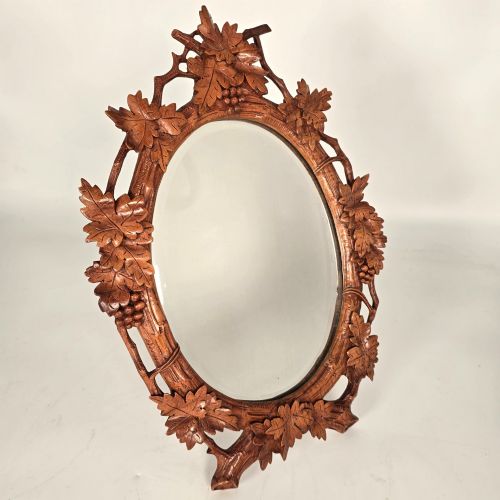
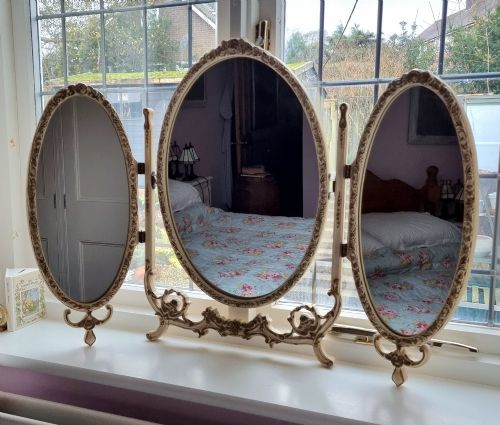
Originating primarily from British and European workshops, these mirrors vary from simple swing frames on bracket feet to elaborate carved Black Forest lime wood, French chateau styles, and multi-panel dressing mirrors.
Materials and Construction Techniques
Cabinetmakers constructed the primary frames and drawer bases using solid and veneered timbers such as mahogany, walnut, satinwood, and lime wood, frequently employing crossbanding and boxwood inlay to define the edges.
Metal components, including brass arms, cast bronze, ormolu, and chrome, provide the pivoting mechanism that allows the glass to tilt smoothly between upright supports.
The silvered glass sits within rebated wooden or cast metal frames, while decorative elements rely on hand-carved gesso, giltwood, or intricate Black Forest foliage.
Oval Tabletop Mirror Retail Price Guide 2026
Typical asking prices for oval tabletop mirror among the pieces listed under this phrase on Sellingantiques today, from the lower quarter to the upper quarter. They describe what is for sale here now, not the wider market.
Some Victorian and Edwardian examples include secret compartments hidden behind the tiny drawers of the base.
Judging Quality in Period Table Mirrors
Quality rests in the crispness of the timber selection, such as vibrant flame mahogany veneers and precise crossbanding, paired with the subtlety of inlay work rather than plain secondary woods.
Construction fidelity distinguishes finer examples, visible in hand-dovetailed miniature drawers, substantial brass hardware, and carefully carved supports rather than mass-produced joints.
The depth and clarity of the original or period-replacement mirror plate, alongside the integrity of the pivoting mechanism, determine the overall execution of the piece.
The Oval Tabletop Mirror Glossary
- Serpentine
- A curved front edge featuring a central convex sweep flanked by concave curves. This contour appears frequently on the drawer bases of Georgian dressing mirrors.
- Crossbanding
- A decorative border of veneer laid so that the grain runs at right angles to the main surface. It frames the primary wood on high-grade table mirrors.
- Swing mirror
- A mirror plate mounted on pivots between two upright arms, allowing the glass to tilt. This is the defining mechanical feature of a toilet mirror.
- Ormolu
- Gilded bronze mounted as decorative ornamentation on furniture and frames. It adds a metallic sheen to Victorian and continental examples.
- Flame mahogany
- A highly figured veneer cut from the fork of the mahogany tree, creating a distinctive flickering flame pattern. Cabinetmakers utilised it for statement facades.
Oval Tabletop Mirror: Frequently Asked Questions
Where were toilet mirrors placed?
These mirrors stood primarily on dressing tables, chests of drawers, or washstands in bedrooms and dressing rooms. Their compact footprint allowed them to be positioned wherever the light was best for grooming.
Because they were portable, owners frequently moved them between rooms depending on the time of day and available natural illumination.
How do I date a mahogany mirror?
Dating relies on timber choice, construction methods, and hardware styles. Georgian examples often feature slender serpentine bases with small drawers and fine secondary woods.
Victorian and later pieces tend to show heavier proportions, cast brass or bronze fittings, and different foot styles such as squashed bun feet.
What is a serpentine base?
A serpentine base is a shaped wooden box foundation featuring a distinct wavy front profile. These bases often incorporate one, two, or three small drawers for storing small items.
The contour requires skilled woodworking and signals a more ambitious design than a flat-fronted box.
Can the mirror glass be replaced?
Mirror plates are held within the frame by wooden slips or backing boards and can be replaced if damaged. Many surviving pieces retain older or original glass with characteristic slight imperfections.
Collectors often value original glass, but replacement is straightforward when a plate has deteriorated beyond use.