

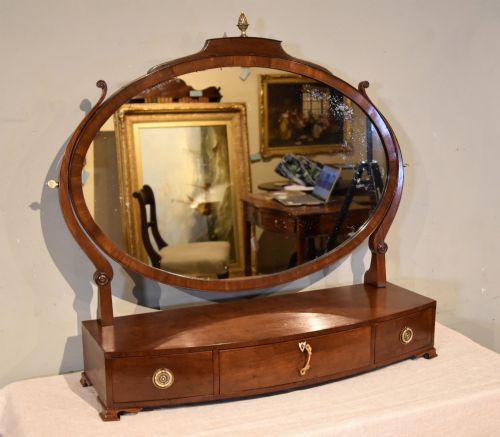
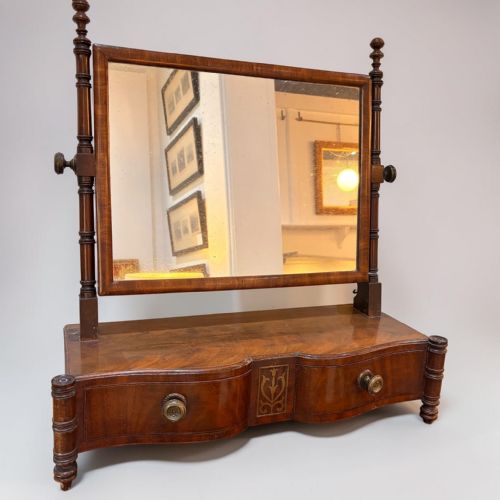
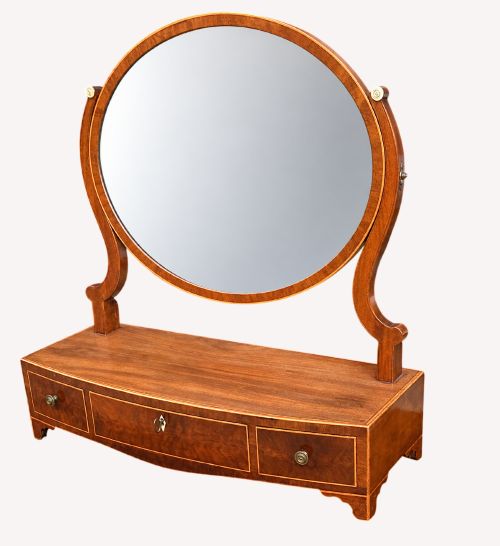

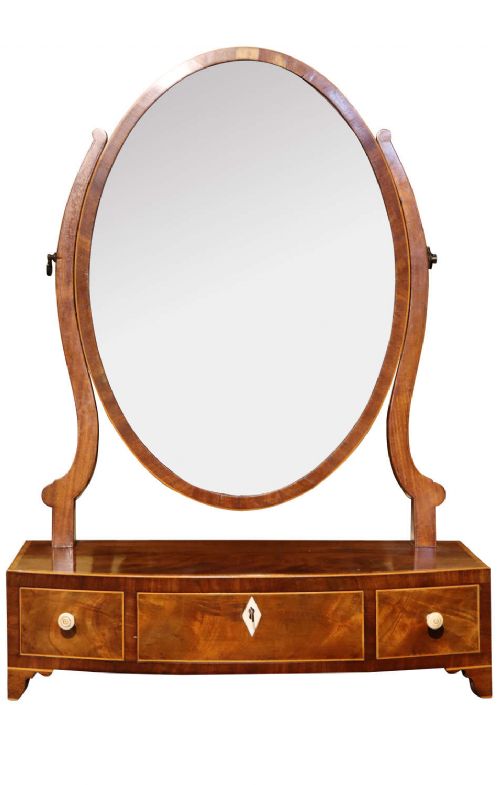
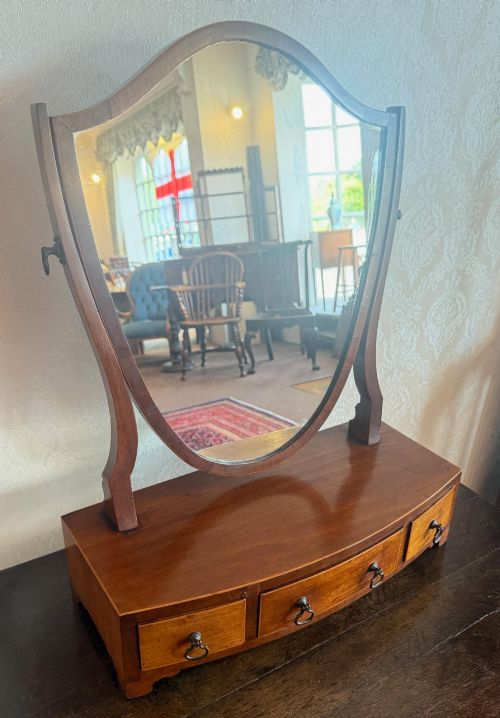


Bowfront Dressing Mirror
A bowfront dressing mirror offers a curved silhouette and practical surface reflection, bringing Georgian elegance straight to the tabletop.
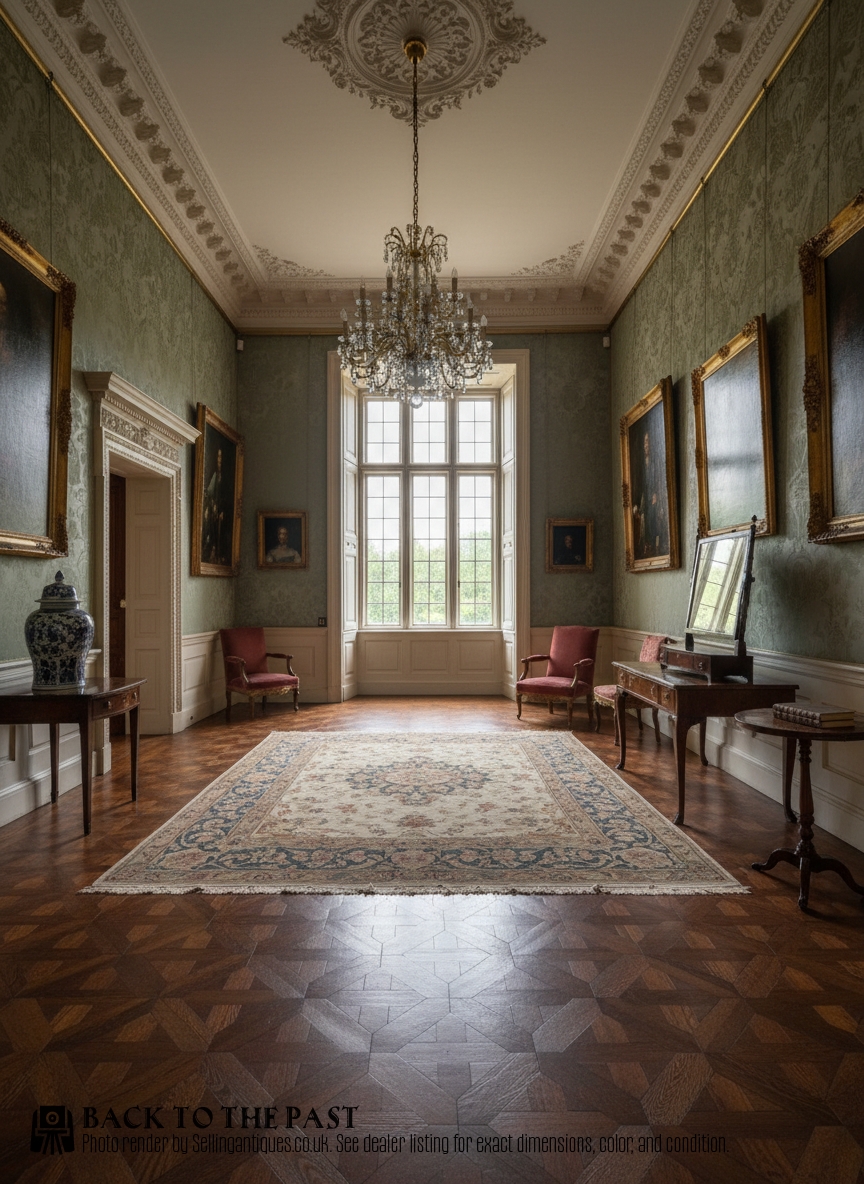
Bowfront Dressing Mirror
A bowfront dressing mirror provides a distinctive curved front facade that softens the lines of a traditional table setting. These pieces function as tabletop or dressing table mirrors designed for personal grooming and domestic display in bedrooms or dressing rooms.
The versions most commonly met across these listings belong to the Georgian and Regency periods, spanning the eighteenth and early nineteenth centuries. Makers shaped these objects primarily as dressing table mirrors or toilet mirrors featuring pivoting glass plates.
Makers constructed these mirrors to sit atop matching case furniture, offering adjustable angles through side arms mounted on upright supports. The inclusion of small drawers within the bowfront base allowed owners to store small personal items safely.
How They Were Made
Cabinet makers utilised solid mahogany and flame mahogany veneers over secondary timbers, often accentuating the curved drawer fronts with boxwood inlay, bone stringing, and crossbanding. The selection of finely figured timber created striking grain patterns across the bowfront structure.
Makers incorporated brass elements such as small bracket feet, decorative finials, and delicate drawer knobs to complement the dark wood tones. The glass plates were silvered by hand and held securely within pivoting wooden frames supported by shaped arms.
Bowfront Dressing Mirror Retail Price Guide 2026
Typical asking prices for bowfront dressing mirror among the pieces listed under this phrase on Sellingantiques today, from the lower quarter to the upper quarter. They describe what is for sale here now, not the wider market.
A secret compartment hidden behind the tiny drawers occasionally greets those who peer too closely into the bowfront base.
What Varies in Quality
Quality rests in the harmony of proportions, the selection of highly figured flame mahogany veneers, and the crispness of any inlaid decoration. Pieces exhibiting refined craftsmanship show careful attention to the curve of the bowfront and the integration of small drawers.
The handling of secondary woods and the retention of original brass fittings and mirror glass distinguish superior examples from simpler workshop productions. Finer mirrors maintain a balanced relationship between the tilting glass frame and the substantial pedestal base.
The Bowfront Dressing Mirror Glossary
- Bowfront
- A convex curved front facade that projects outward in a smooth arc. This shape gained popularity during the Georgian and Regency periods for case furniture and small mirrors.
- Crossbanding
- A strip of veneer applied across the grain of the primary wood surface to create a decorative border. Cabinet makers often used contrasting timbers to frame drawer fronts and tabletops.
- Toilet mirror
- A historical term for a small dressing table mirror designed to sit on a larger chest or dedicated dressing table. These objects typically incorporate a set of small drawers in the base.
- Flame mahogany
- A highly figured cut of mahogany showing a characteristic flickering grain pattern resembling flames. Craftsmen reserved this choice timber for prominent exterior surfaces.
- Bone inlay
- Small decorative pieces of carved bone inserted flush into the surrounding wood surface. This technique added bright linear contrast to dark cabinetwork.
Bowfront Dressing Mirror: Frequently Asked Questions
Where did people place these mirrors?
These mirrors sat atop matching dressing tables, chests of drawers, or sideboards within private bedchambers and dressing rooms.
Their elevated position allowed individuals to adjust the glass angle for personal grooming and dressing.
How do I spot a Regency example?
Regency pieces often display bolder architectural lines, heavier brass mounts, and darker mahogany surfaces compared to earlier Georgian work.
They reflect the neoclassical design influences of the early nineteenth century.
What is the purpose of the base drawers?
The small drawers built into the curved base provided secure storage for trinkets, rings, and daily accessories.
This compartment also added structural weight to anchor the pivoting mirror frame above.
How do I care for the mirror glass?
Maintain the glass by dusting gently with a dry microfiber cloth and avoiding harsh chemical cleaning solutions.
Protect the surrounding wood frame and old finish from excess moisture and direct sunlight.