



Georgian Box Base Mirror
A georgian box base mirror brings period timber and adjustable glass to a dressing table, offering a portable looking glass with functional storage below.
Georgian Box Base Mirror
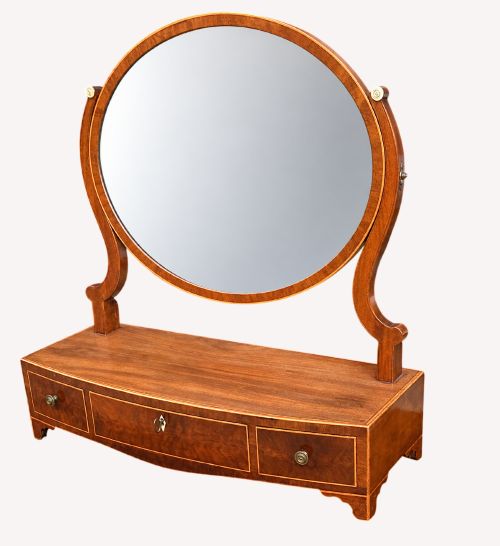
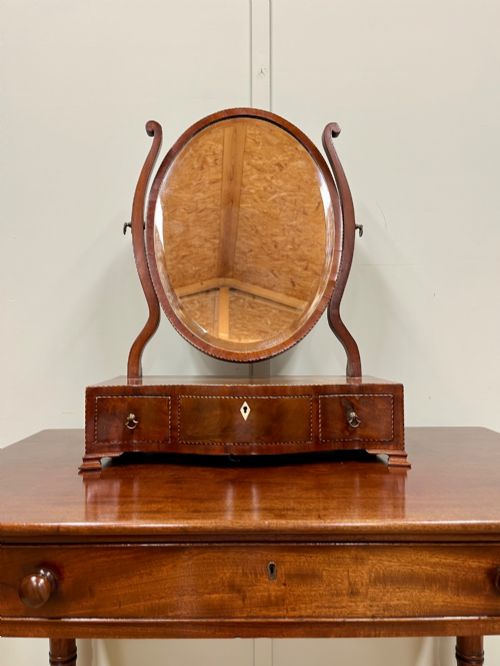
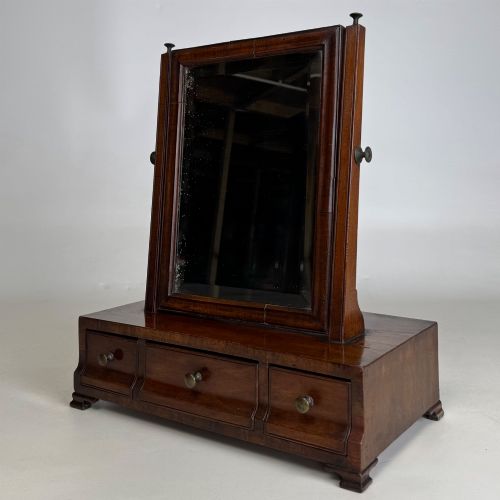
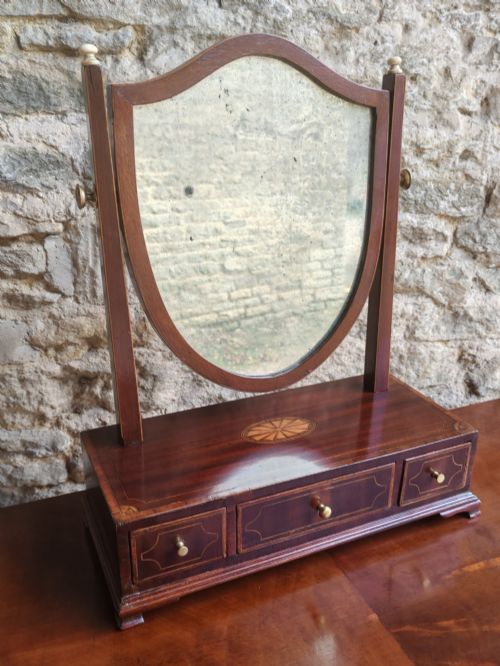
When you search for a georgian box base mirror, you encounter small table mirrors designed for eighteenth and nineteenth century dressing tables. These pieces combine an adjustable glass frame with a fitted box base containing small drawers.
The listings on this page span several decades, featuring forms described variously as toilet mirrors, dressing glasses, and dressing table mirrors. Walnut and mahogany dominate the construction, often enhanced by boxwood inlay or serpentine outlines.
You will find examples ranging from Queen Anne black lacquered models with miniature bureau bases to George III three-drawer serpentine versions. Most pieces date from the eighteenth and nineteenth centuries, capturing the evolution of domestic dressing furniture.
Materials and construction
Cabinetmakers constructed these frames using rich timbers such as mahogany, walnut, and harewood, frequently employing boxwood inlay to define the edges of the box base. The timber was selected for grain pattern and warmth, then polished to a subtle sheen.
The mirror plates are held within pivoting frames supported by upright arms, allowing the glass to tilt at the user's preferred angle. Brass fittings, including knobs and side screws, secure the mechanism while small dovetail joints construct the storage drawers below.
Georgian Box Base Mirror Retail Price Guide 2026
Typical asking prices for georgian box base mirror among the pieces listed under this phrase on Sellingantiques today, from the lower quarter to the upper quarter. They describe what is for sale here now, not the wider market.
Object types recorded in these listings include dressing tables, toilet mirrors, dressing glasses, and miniature bureau bases.
What separates the better examples
Quality in these mirrors lies in the sophistication of the timber selection and the refinement of the base proportions. Pieces featuring serpentine fronts, figured walnut, or intricate boxwood stringing demonstrate greater ambition from the cabinetmaker.
The integration of the box base also dictates the standard of the piece, with miniature bureau compartments or multiple drawers representing higher complexity. Original brass hardware and well-preserved glass plates further distinguish superior examples from simpler utilitarian versions.
John Franklin London
The Georgian Box Base Mirror Glossary
- Box base
- The compartmented plinth beneath the mirror frame that provides storage for small personal items and anchors the upright supports.
- Toilet mirror
- A contemporary term for a dressing table mirror used during the eighteenth century for grooming and applying makeup.
- Dressing glass
- An alternative period descriptor for a pivoting mirror mounted upon a table or chest base.
- Serpentine
- A curved outline featuring a convex centre flanked by concave sides, often seen on the drawer fronts of finer boxes.
- Boxwood inlay
- Contrasting pale wood inserted into recesses within darker timbers to create decorative geometric lines or borders.
Georgian Box Base Mirror: Frequently Asked Questions
Where were these mirrors placed?
These mirrors sat atop dressing tables, chests of drawers, or dedicated washstands within eighteenth and nineteenth century bedchambers. Their portable nature allowed them to be positioned wherever light was most favourable.
Because they were not fixed to the wall, users could easily move them around the room or pack them away when the table was needed for other purposes.
How do I distinguish George II from George III styles?
George II examples often utilise walnut timber, sometimes featuring plain or shaped plates with simpler upright supports. The lines tend to reflect earlier proportions before the neoclassical shifts.
George III pieces frequently showcase mahogany, intricate boxwood stringing, and serpentine or shield-shaped glass frames with multiple small drawers in the base.
What was the box base used for?
The small drawers within the box base held cosmetics, jewellery, pins, and letters. They provided secure, concealed storage for personal items used during daily grooming.
Some more complex bases included miniature bureau compartments with pigeonholes for writing implements, combining storage and function in a compact footprint.
Can the mirror glass be replaced?
Many surviving examples retain their original silvered glass, though some have received replacement plates over the centuries due to wear or breakage. Examining the backboards and the method of securing the glass helps determine its age relative to the frame.
Original glass often exhibits minor foxing and subtle imperfections that reflect the manufacturing techniques of the period.