



Antique Wooden Table Mirror
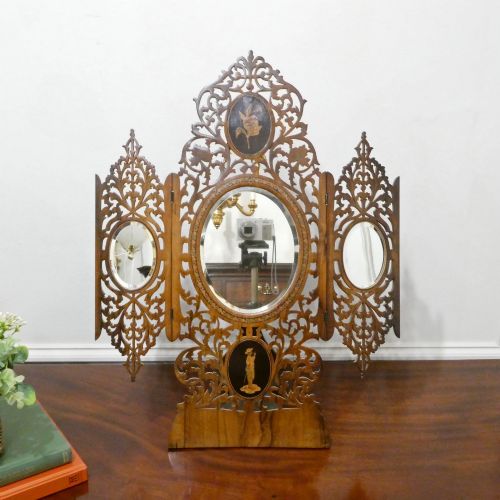
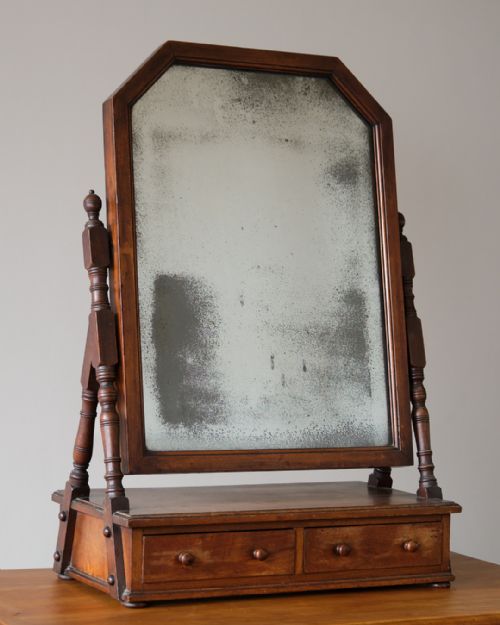
An antique wooden table mirror sits comfortably on a chest or dressing surface, offering a moveable glass framed in period timber for daily grooming.
Antique Wooden Table Mirror
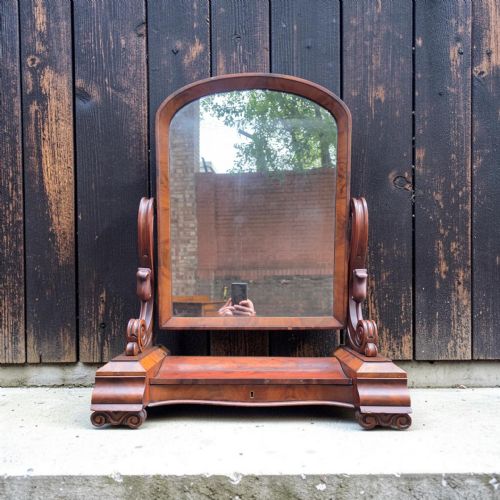
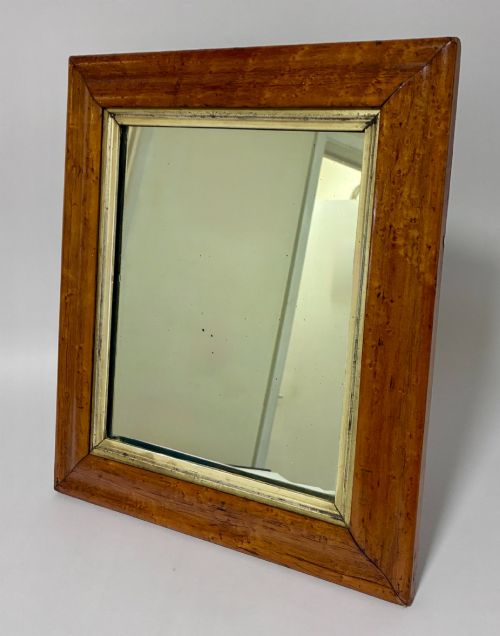
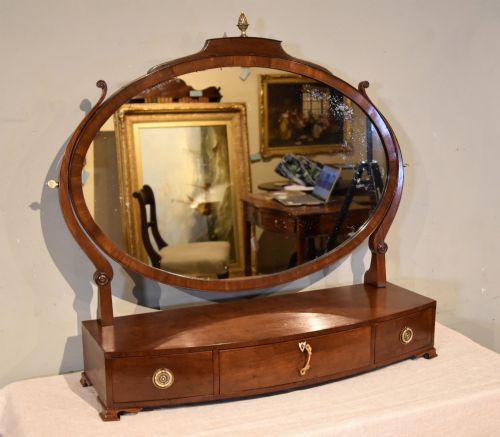
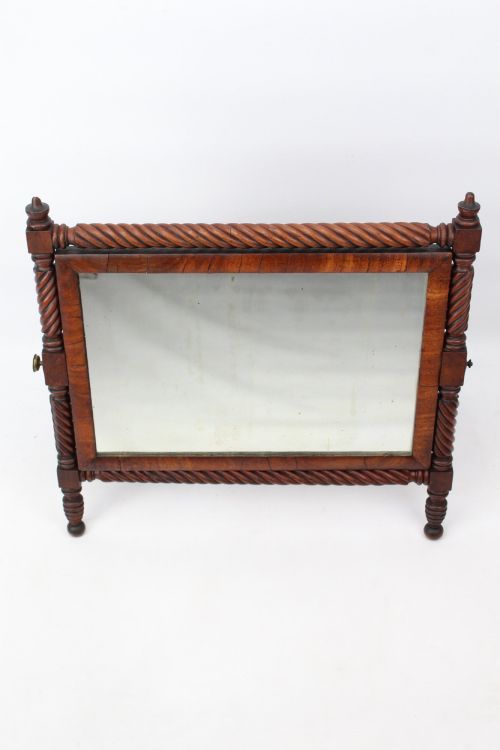
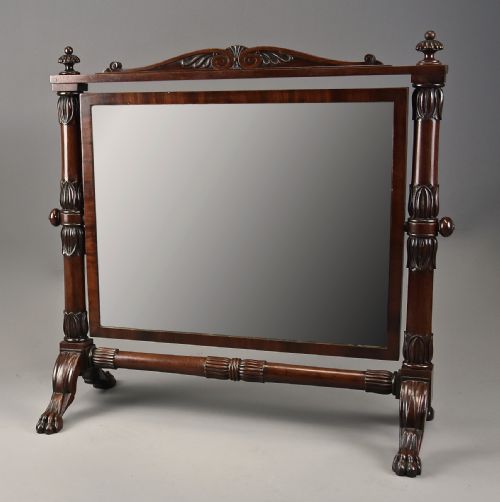
An antique wooden table mirror is a portable looking glass designed to sit upon a surface, appearing across periods from the eighteenth century to the twentieth century. These pieces function primarily as dressing, toilet, or shaving mirrors, allowing users to adjust their angle for personal use.
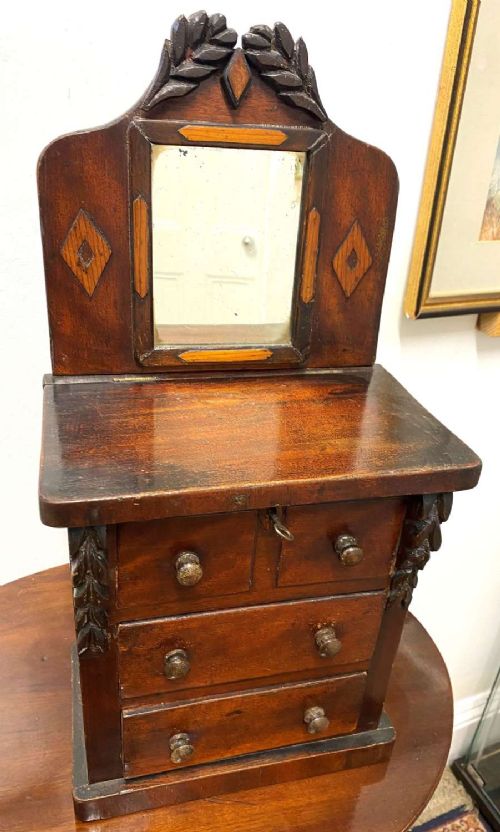
Mahogany, walnut, and oak form the predominant timbers for these mirrors, shaped into rectangular, serpentine, or arched frames supported by upright arms. The glass plate swings between vertical pillars or mounts onto an easel back, often incorporating small drawers in the base plinth for storage.
Georgian, Regency, and Victorian iterations dominate the selection, alongside Edwardian and later Arts and Crafts interpretations. Buyers frequently encounter mahogany toilet mirrors with box bases, as well as walnut and oak examples spanning the 18th century to the early 1900s.
How they were made
Cabinetmakers constructed these frames using dense hardwoods like mahogany, walnut, and oak, frequently employing pegged tenon joints and dovetailing for the small storage boxes beneath the glass. Timber veneers were applied to secondary woods on finer pieces, particularly during the walnut and mahogany periods.
Mirror glass was traditionally silvered and held within rebated frames, secured by thin wooden slips rather than modern adhesives. Brass pins, swing screws, and adjustable pivots allowed the glass frame to tilt smoothly between side uprights without sagging.
Antique Wooden Table Mirror Retail Price Guide 2026
Typical asking prices for wooden table mirror among the pieces listed under this phrase on Sellingantiques today, from the lower quarter to the upper quarter. They describe what is for sale here now, not the wider market.
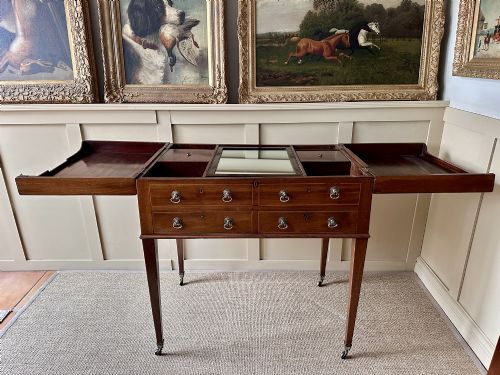
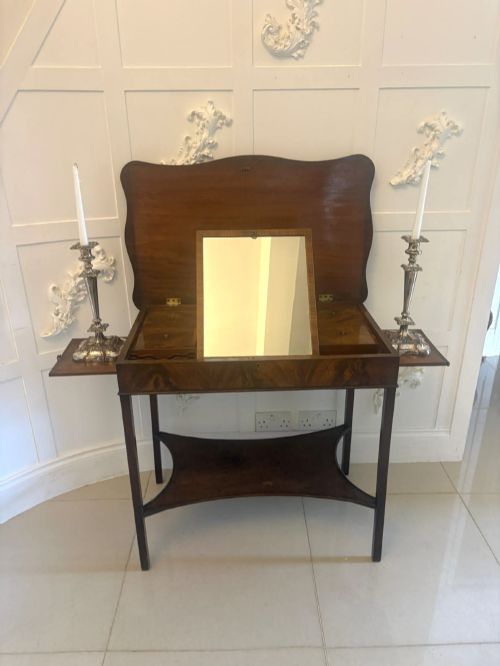
Form variations on this page range from simple swing toilet mirrors to dressing chests with triple mirror configurations and shaving stands.
What varies in quality
The choice of timber and veneer grain dictates much of the visual merit, with well-figured Cuban mahogany or burr walnut marking the higher end of production. Finer examples display meticulous dovetailing on any base drawers and hand-carved details on the horns and crossbars rather than cast metal shortcuts.
The retention of original mirror glass with its soft, oxidized reflection distinguishes superior survivals from later replacements. Weight, stability in the adjusting mechanism, and balanced proportions between the glass plate and its supporting stand separate standard utility pieces from exhibition grade work.
Heal & Sons·P & MA Nicholson
The Antique Wooden Table Mirror Glossary
- Toilet mirror
- A smaller dressing mirror designed to sit on a chest of drawers or dressing table. These often feature a box base fitted with small drawers.
- Cheval mirror
- A full-length dressing mirror supported on a freestanding frame with four legs. The glass swings entirely within its vertical standards.
- Serpentine front
- A curved furniture front shaped in a gentle 'S' contour, showing a convex centre flanked by concave wings. This profile appears on finer Georgian dressing mirror bases.
- Easel mirror
- A looking glass supported by a hinged prop at the rear, allowing it to stand upright on a table. These frequently date from the late nineteenth century onwards.
- Plinth
- The heavy base or box structure upon which the mirror frame uprights are mounted. It often houses one or more small trinket drawers.
Antique Wooden Table Mirror: Frequently Asked Questions
How do I date an antique wooden table mirror?
Dating relies on timber choice, construction methods, and the bevel or thickness of the glass plate. Earlier eighteenth-century pieces often utilise walnut or early mahogany with hand-beveled glass, while Victorian and Edwardian examples show heavier proportions or machine-sawn framing.
Hardware offers further clues, as original brass screw knobs, candle arms, and hand-cut screws differ distinctly from twentieth-century replacements. Examining the secondary woods inside any base drawers helps confirm the period of manufacture.
Are the mirror plates original?
Many antique mirrors retain their original glass, which can be identified by slight foxing, minor surface distortion, and thinness. Silvering degrades unevenly over centuries, creating small dark spots or a softer, less clinical reflection than modern float glass.
Replacement glass is common due to the fragile nature of old mirrors and does not preclude a piece from being useful. Inspecting the rebate behind the frame reveals whether the glass has been secured with old wooden slips or modern glazing points.
Where should I place a table mirror?
These pieces suit dressing chests, sideboards, or console tables where their height and proportions complement the surrounding furniture. Placing them near a natural light source maximises their reflective quality for practical use in a bedroom or hallway.
Ensure the surface is level and deep enough to support the base plinth safely, particularly for adjustable models with heavy swing frames. Avoid areas exposed to direct sunlight or damp conditions to protect the wooden frame and silvered glass.
What is the difference between a toilet mirror and a dressing mirror?
Toilet mirrors historically refer to smaller table-top looking glasses used for close grooming, often sitting atop a dedicated table or chest. They frequently include small box bases with drawers for holding cosmetics or jewellery.
Dressing mirrors encompass a broader category that can include larger table versions as well as full-length cheval stands. The terms are often used interchangeably in trade descriptions today.