

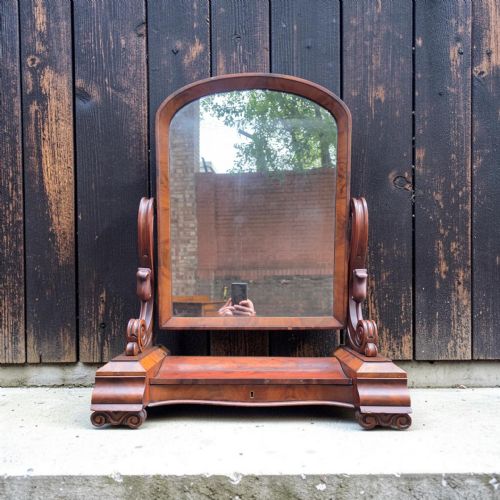
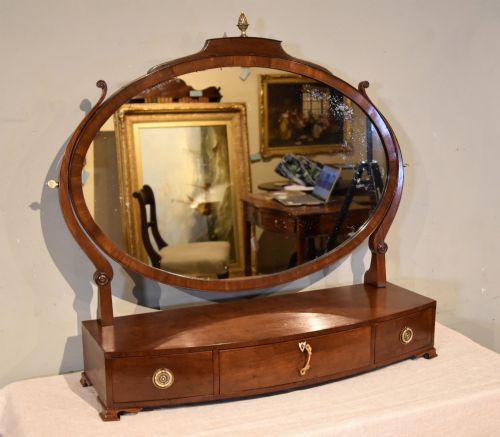
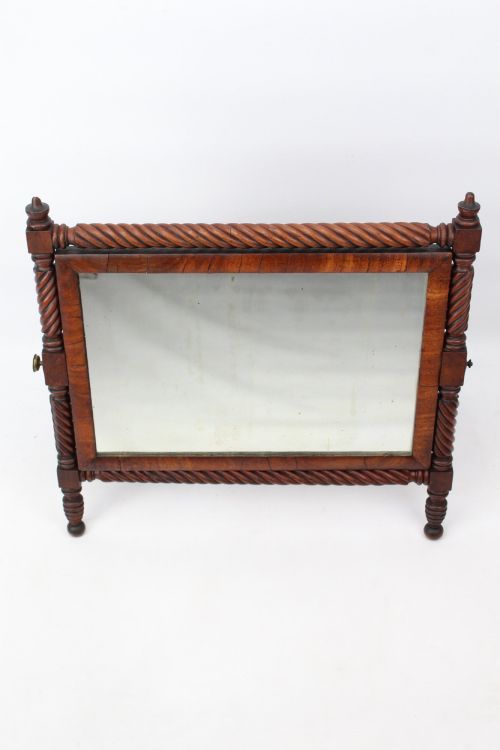
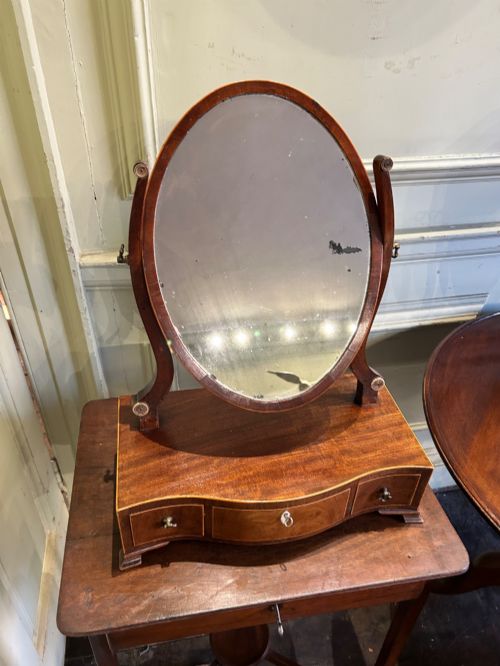
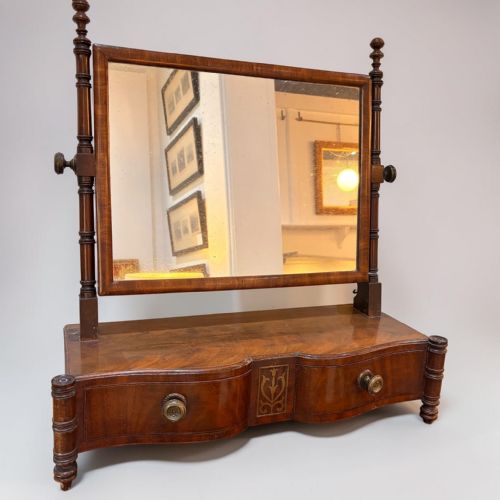
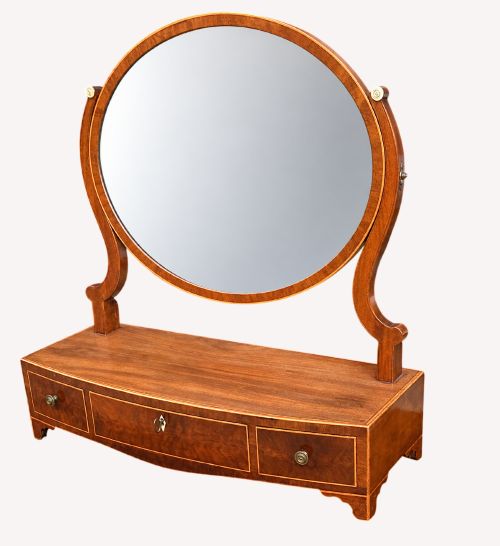
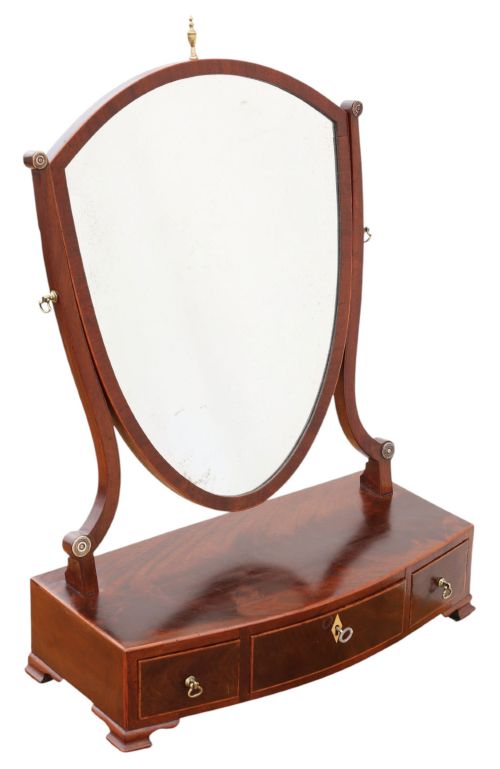
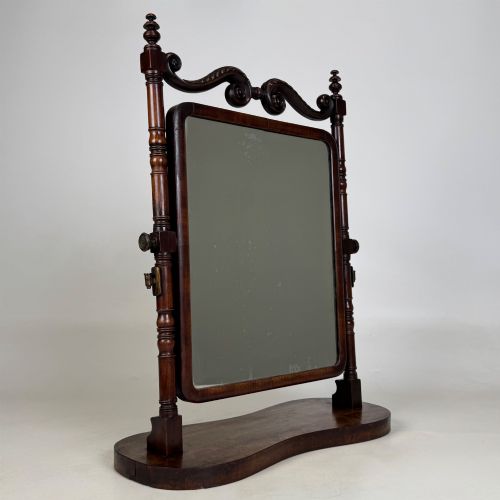
Georgian Mahogany Vanity Mirror
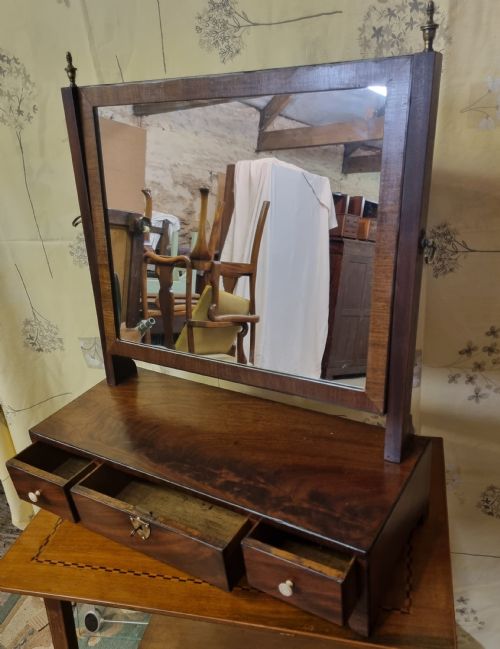
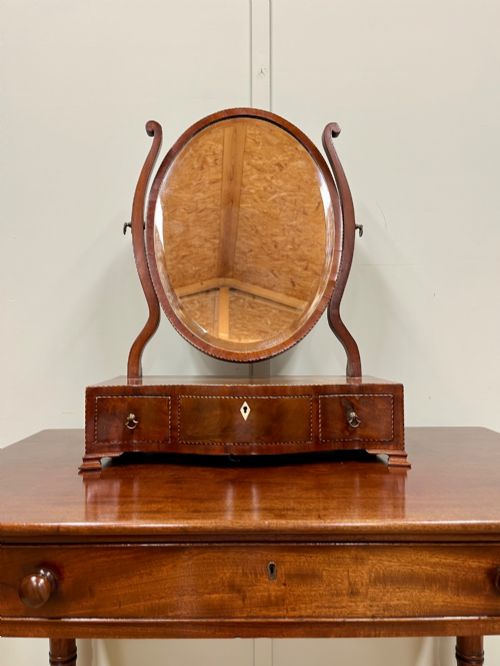
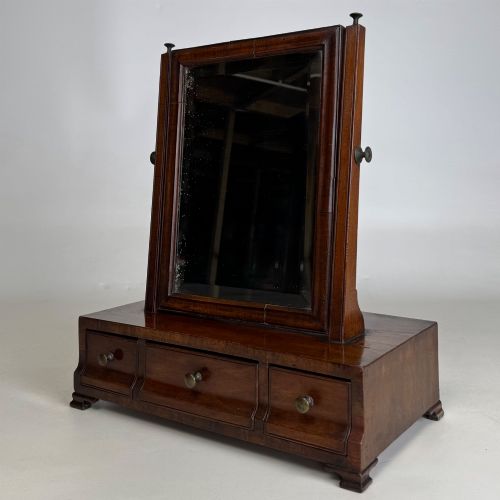
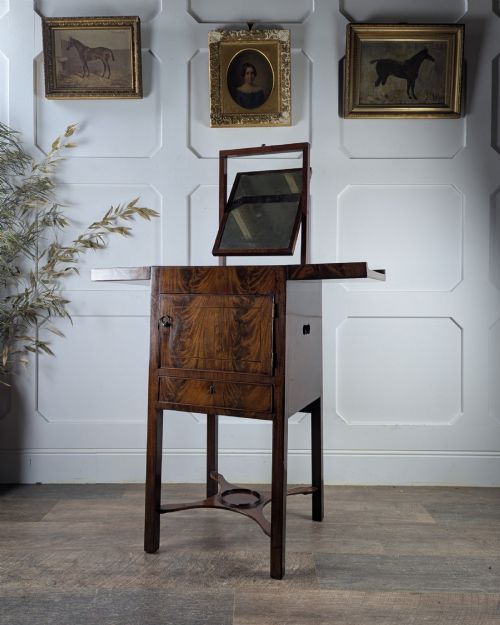
A georgian mahogany vanity mirror offers practical tabletop reflection with the quiet warmth of eighteenth-century cabinet-making.
Georgian Mahogany Vanity Mirror
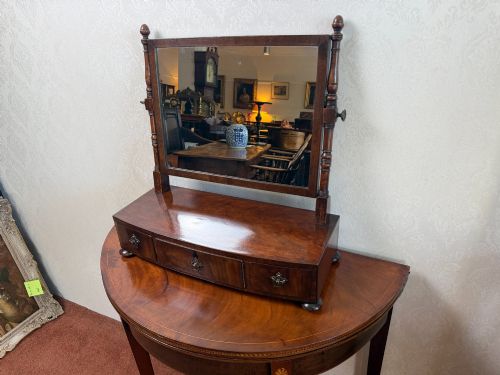
A georgian mahogany vanity mirror sits on a tabletop or dressing chest to provide a tilting glass surface for grooming and dressing. Most examples take the form of a swing glass mounted within upright arms above a small box base.
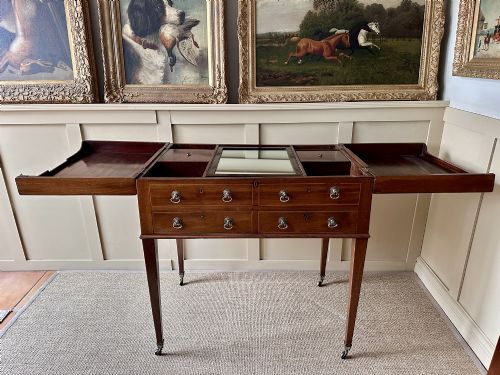
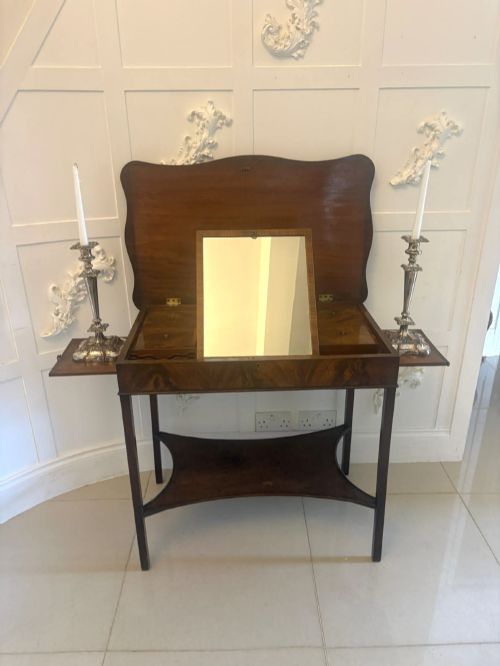
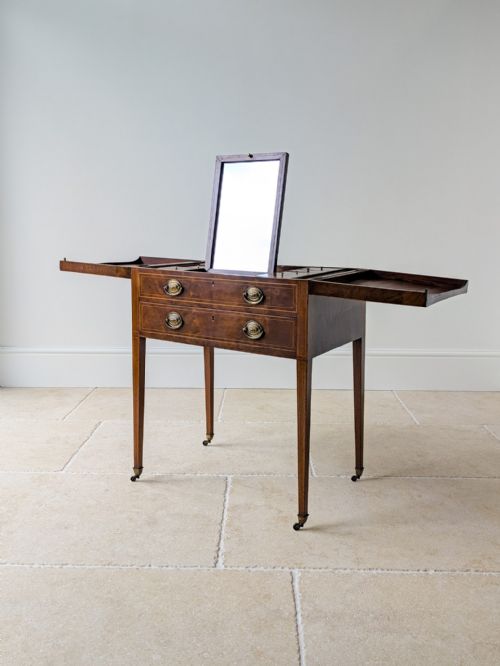
The primary forms recorded on this page include dressing mirrors, toilet mirrors, dressing table mirrors, and box mirrors. These pieces span the eighteenth and nineteenth centuries, featuring periods identified as Georgian and Early Georgian.
Buyers encounter serpentine fronts, ebony inlay, and swing-lock tilting mechanisms across the selection. The fundamental design pairs a rectangular or arched mirror plate with a fitted drawer base designed to hold small personal items.
How They Were Made
Cabinet-makers constructed these mirrors using solid mahogany timbers, often enhanced with contrasting details in ebony, bone, and brass fittings. The timber was selected for its rich grain and warmth, then hand-finished to a smooth surface.
The pivoting mirror glass rests between upright arms secured to the base by brass screw caps or swing-lock mechanisms. Drawer boxes incorporate traditional joinery to house small compartments beneath the plate.
Georgian Mahogany Vanity Mirror Retail Price Guide 2026
Typical asking prices for georgian mahogany vanity mirror among the pieces listed under this phrase on Sellingantiques today, from the lower quarter to the upper quarter. They describe what is for sale here now, not the wider market.
Makers hid tiny secret compartments inside the box bases for storing love letters.
What Varies in Quality
Quality rests in the precision of the cabinet work, the choice of figured mahogany veneers, and the sophistication of decorative elements like serpentine shaping. Finer pieces demonstrate careful attention to proportion and integration of inlay.
The presence of original brass hardware, clean glass plates, and intact internal box compartments separates superior examples from simpler utilitarian versions. Subtle details in the edge moulding and bracket feet define the tier of the piece.
The Georgian Mahogany Vanity Mirror Glossary
- Toilet mirror
- A smaller tabletop mirror designed for dressing and personal grooming, typically fitted with a drawer base.
- Serpentine front
- A curved furniture front featuring a convex centre flanked by concave sides, creating a gentle undulating line.
- Box mirror
- A dressing mirror whose base is constructed as a shallow lidded box or a drawer-fitted cabinet.
- Swing-lock
- A mechanical pivot arrangement that allows the glass frame to tilt to a desired angle and hold its position.
- Gilt wood
- Wood surfaces decorated with a thin layer of gold leaf or metallic gold paint.
Georgian Mahogany Vanity Mirror: Frequently Asked Questions
Where do I put a vanity mirror?
These mirrors sit comfortably on top of chests of drawers, dressing tables, or sideboards to provide a functional reflection at counter height. Their compact base allows them to occupy minimal surface space while remaining stable during daily use.
Placement depends on finding a spot with adequate natural light from a window or positioned near a lamp. Because the glass tilts, you can adjust the angle to suit different heights and rooms.
How do I use the drawers?
The small drawers built into the base of the mirror serve as storage for everyday items like jewellery, hairpins, and small cosmetics. Opening them requires a steady, level pull to ensure the side arms and pivots remain undisturbed.
Keeping the contents light prevents the small wooden runners from wearing down over time. These compartments were originally intended for personal trinkets rather than heavy storage.
Can I tilt the mirror safely?
The glass frame pivots between two upright posts secured by brass screw caps or pins on either side. Adjusting the angle involves loosening the side fixtures slightly, moving the glass to the preferred position, and tightening the hardware just enough to hold it.
Avoid forcing the glass past its natural stopping point to protect the wooden frame and the original pivot joints. Regular, gentle handling preserves the mechanism for everyday use.
How do I date these mirrors?
Dating relies on observing construction methods, timber choices, and hardware styles characteristic of the eighteenth and nineteenth centuries. Early Georgian examples often display heavier proportions and simpler lines, while serpentine fronts and inlay work reflect later design developments.
Comparing the drawer construction, backboards, and glass silvering helps distinguish eighteenth-century pieces from later nineteenth-century interpretations. Each detail offers clues to the workshop practices of its era.