
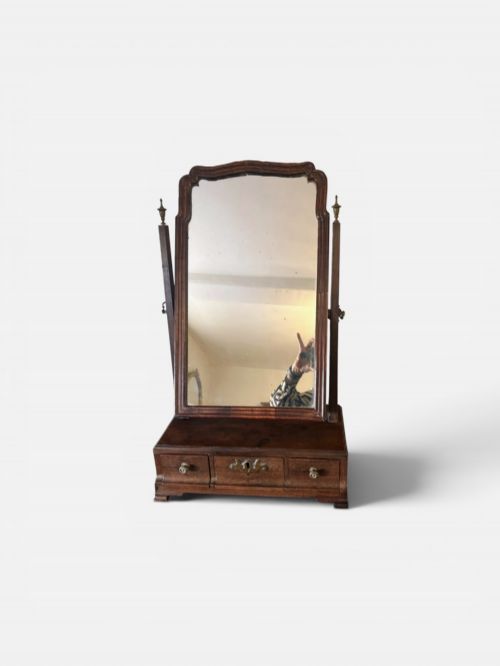
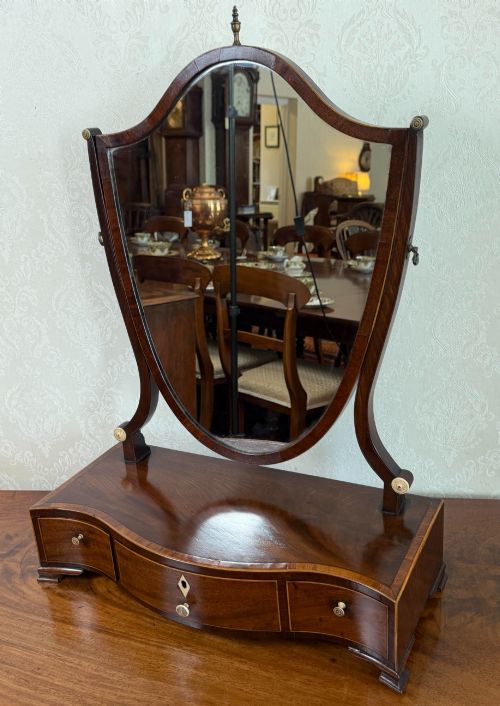
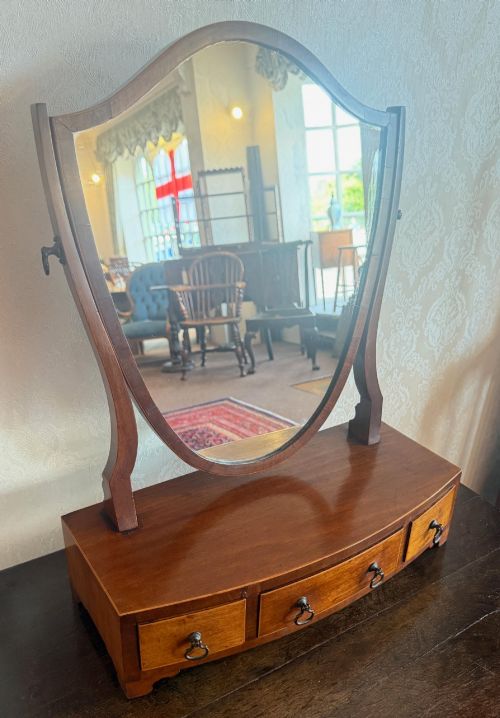
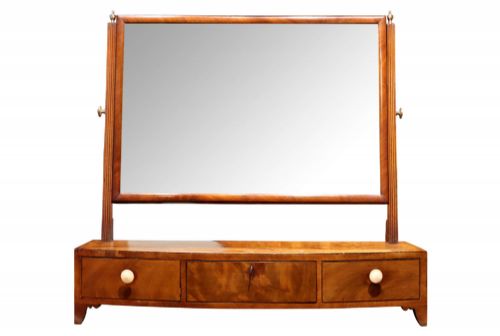
Mahogany Table Mirror Drawers
Mahogany table mirror drawers combine practical glass and compact storage, offering a focal point for any period bedroom or dressing space.
Mahogany Table Mirror Drawers
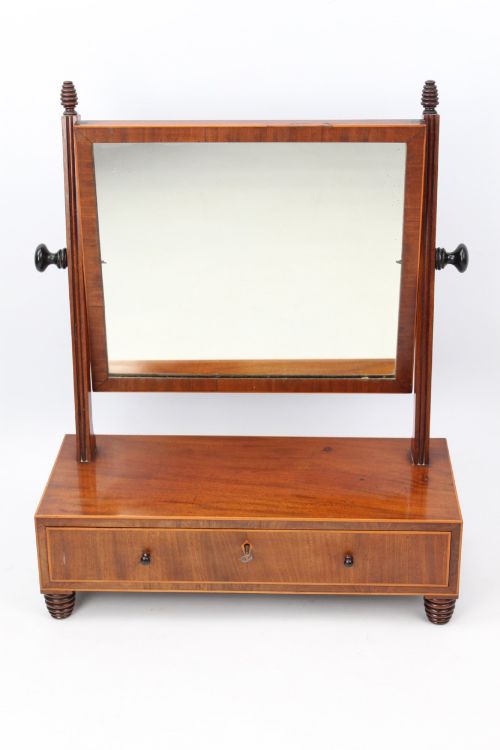
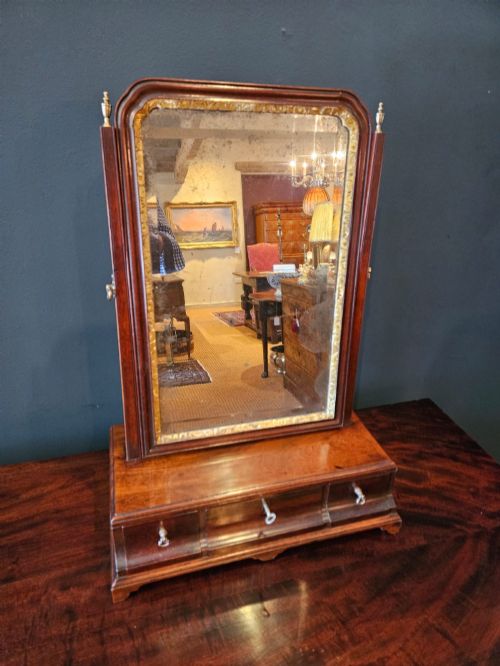
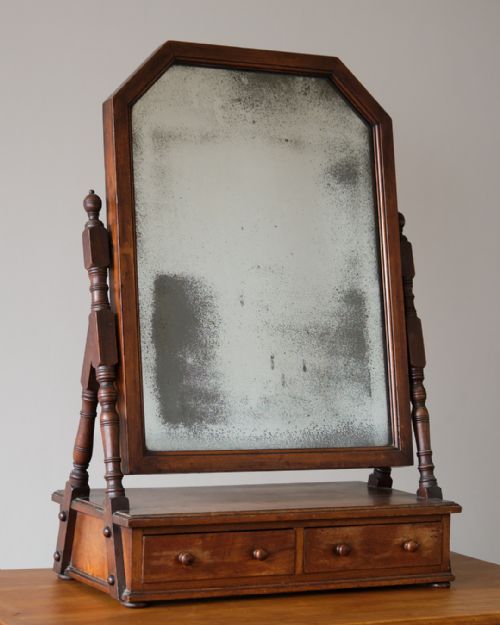
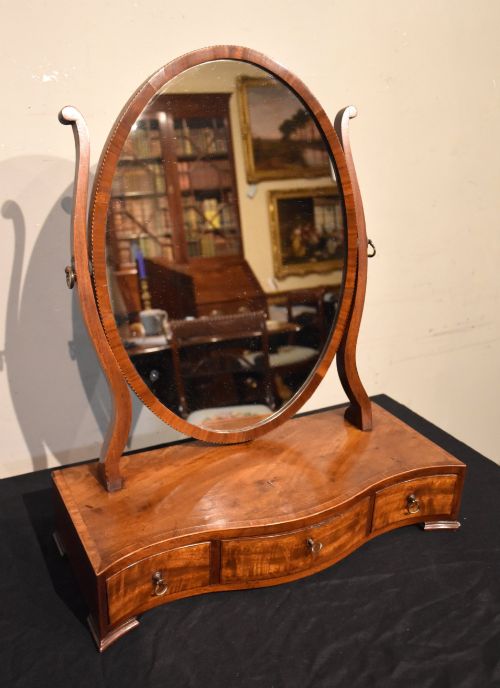
Mahogany table mirror drawers comprise a swing mirror mounted on a small base fitted with integrated storage compartments. These pieces span eighteenth-century Georgian origins through the Regency, Victorian, and Edwardian eras, reflecting changing domestic habits in grooming and toilette.
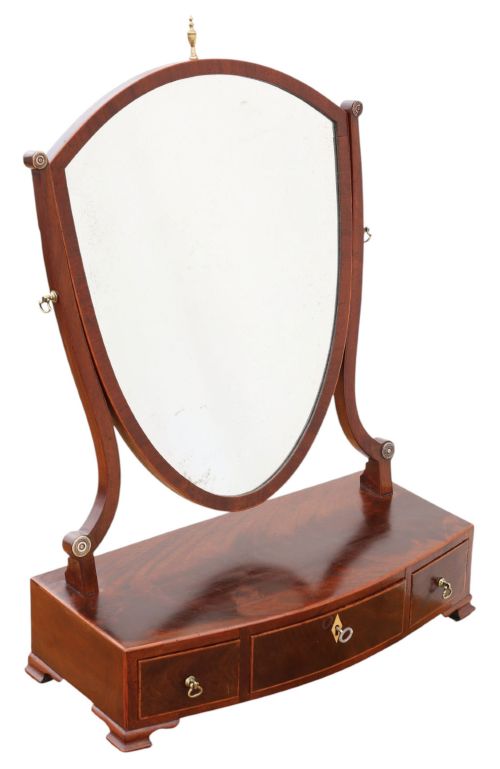
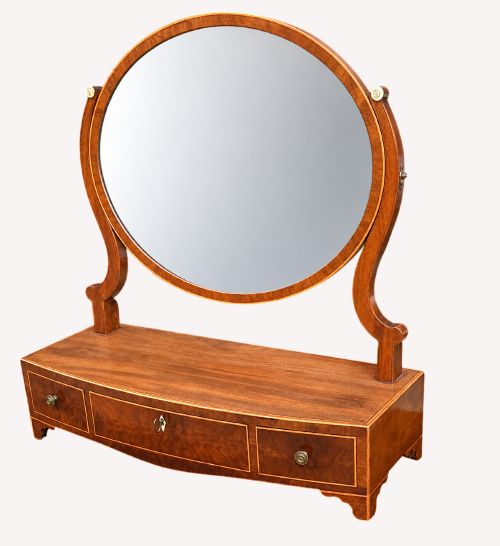
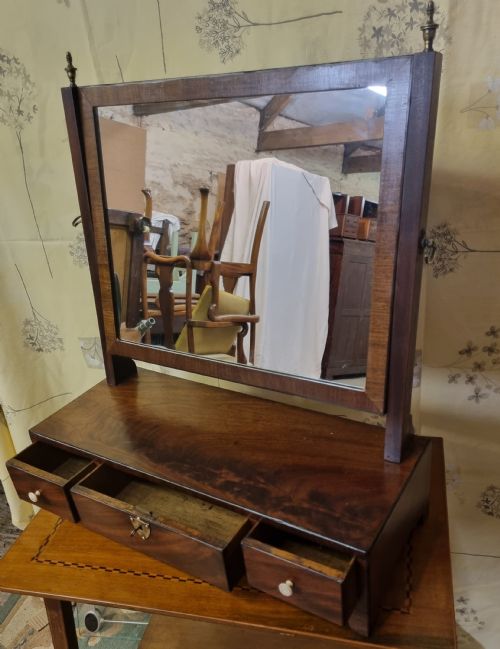
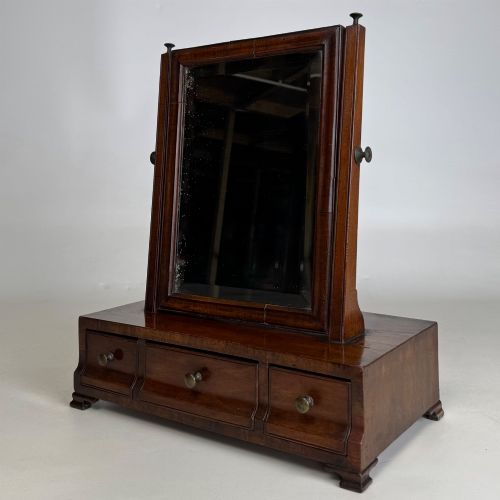
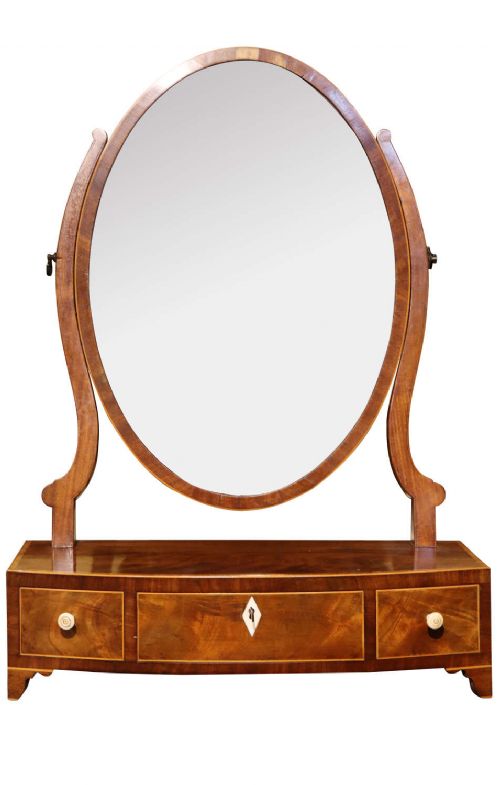
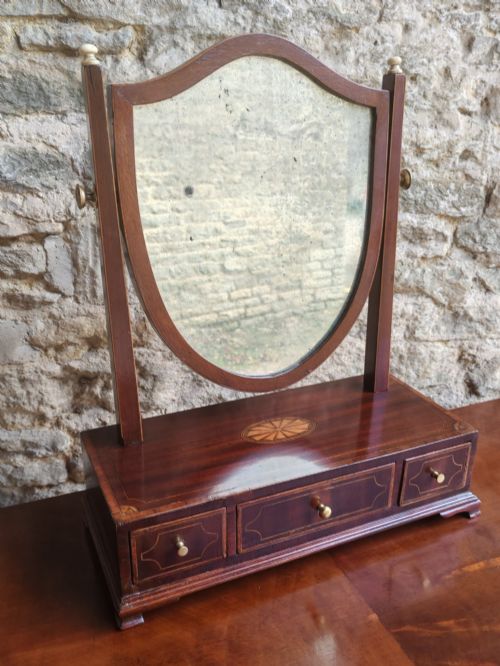
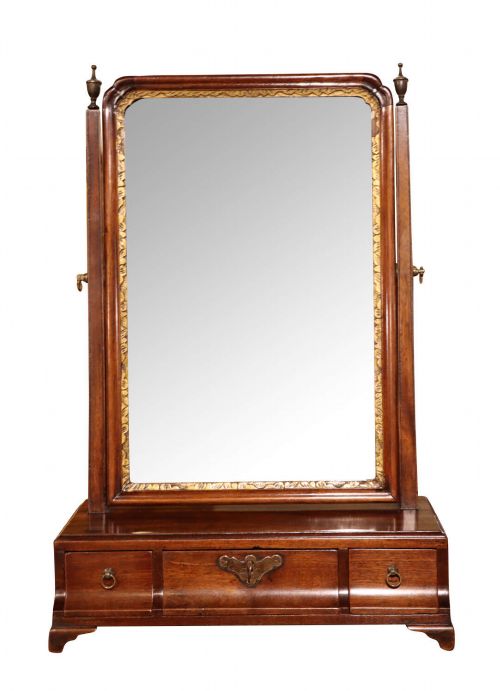
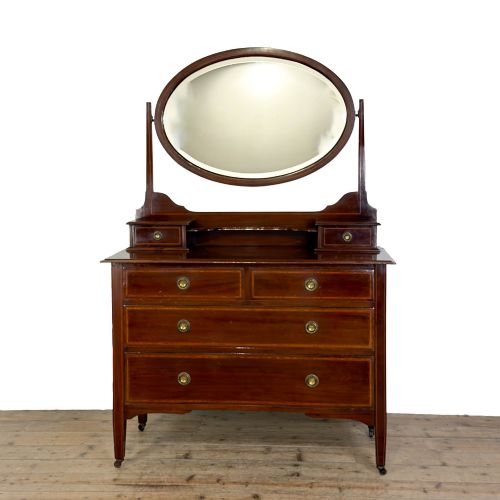
The primary forms on this page include shield, oval, and rectangular swing plates resting upon box bases containing one to three small compartments. Alongside dedicated dressing mirrors and toilet mirrors, the selection encompasses related variants such as shaving stands and dressing chests.
Most examples date from the Georgian and nineteenth-century periods, built to sit atop larger chests or dedicated dressing tables. Their proportion allows them to function as both utilitarian objects and decorative focal points within traditional interiors.
How They Were Made
Cabinet makers constructed these pieces principally from solid mahogany and mahogany veneers, occasionally incorporating secondary timbers like walnut, with boxwood stringing applied for linear detail. Glass provided the reflective surface, supported by brass swing pivots, finials, and swan-neck handles.
Construction techniques relied on precise dovetail joints for the miniature drawers and mortise and tenon joints for the upright frame supports. Surfaces received hand-applied finishes, sometimes augmented by parcel-gilding, crossbanding, or Dutch marquetry inlay depending on the period.
The listings span the 18th Century, 19th Century, Georgian, Regency, Victorian, and Edwardian periods, utilising materials like mahogany, brass, and glass.
What Varies in Quality
Quality rests heavily on the selection of timber grain, the crispness of crossbanding or stringing details, and the integrity of the original glass and brass hardware. Superior examples display finely figured mahogany veneers matched symmetrically across the drawer fronts and frame.
Structural refinement distinguishes finer pieces, evident in slim, well-proportioned uprights, neatly dovetailed drawer linings, and cleanly shaped bracket feet or serpentine profiles. The presence of original secondary woods and unblemished mirror plates elevates the standing of an individual piece.
Heal & Sons
The Mahogany Table Mirror Drawers Glossary
- Swing mirror
- A plate suspended on pivots between two upright posts, allowing the user to adjust the angle of reflection.
- Toilet mirror
- A compact dressing glass designed to sit on a table, popular from the eighteenth century onward for personal grooming.
- Crossbanding
- A border technique where narrow strips of veneer are laid across the grain of the primary surface to create a contrasting frame.
- Stringing
- Inlay of a contrasting wood cut into thin lines to outline panels, drawers, or tabletops.
- Bracket foot
- A simple corner foot shaped like a bracket, commonly found on the base of small chests and table mirrors during the Georgian period.
- Parcel-gilt
- Partially gilded with gold leaf, usually highlighting carved wooden details against a darker wood background.
Mahogany Table Mirror Drawers: Frequently Asked Questions
Where were mahogany table mirror drawers placed?
These mirrors sat atop matching dressing chests, sideboards, or dedicated tables within bedrooms and dressing rooms. Their elevated position brought the glass to a convenient height for standing or sitting during the morning toilette.
Because they were portable rather than fixed fixtures, owners could move them around the house to capture the best natural daylight near windows.
How do I date a mahogany table mirror?
Dating relies on observing structural characteristics, timber choice, and hardware styles across different eras. Georgian examples often feature serpentine drawer fronts and delicate bracket feet, while Regency pieces introduce bolder boxwood stringing and brass swan-neck handles.
Later Victorian and Edwardian iterations tend to show heavier proportions and distinct construction methods inside the small drawer boxes.
What were the small drawers used for?
The integrated drawers held small personal items such as rings, pins, cosmetics, and shaving accessories. This kept the dressing surface tidy while maintaining the mirror in a compact footprint.
In gentleman's shaving stands, these compartments accommodated razors, soaps, and specialised grooming tools alongside the adjustable mirror plate.
Are the mirror plates usually original?
Many surviving pieces retain their original mirror glass, though older plates frequently exhibit characteristic light foxing and silvering loss due to age. Replacements do occur when older glass has suffered terminal damage or breakage over centuries of use.
Examining the silver backing and the method of securing the glass into the frame helps determine whether the plate dates to the original period of manufacture.