





Georgian Toilet Glass
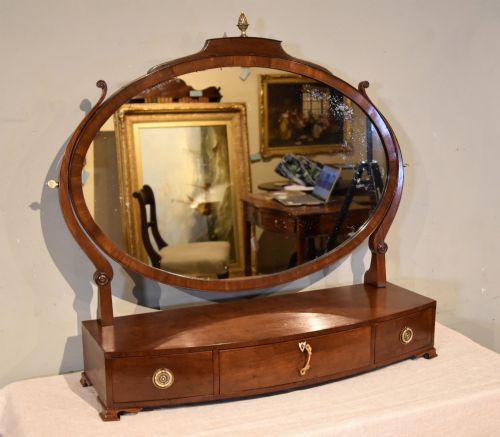
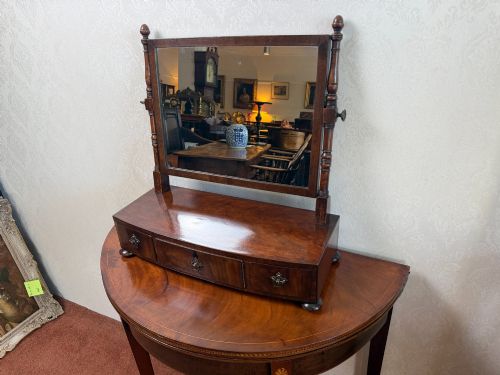
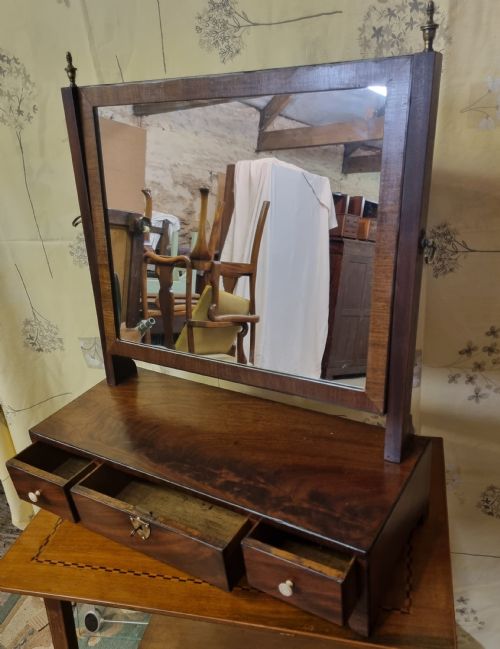
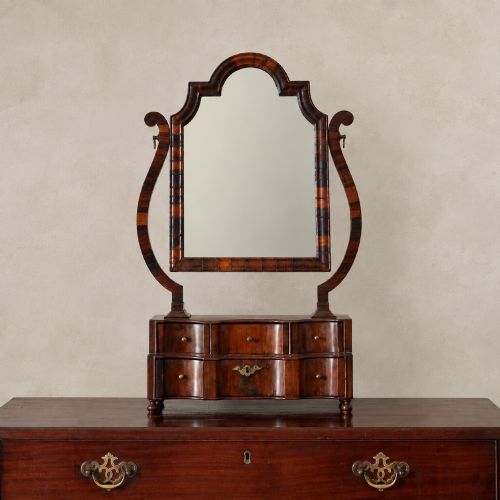
A georgian toilet glass sits on a dressing chest, offering a clear reflection while housing small drawers for everyday trinkets.
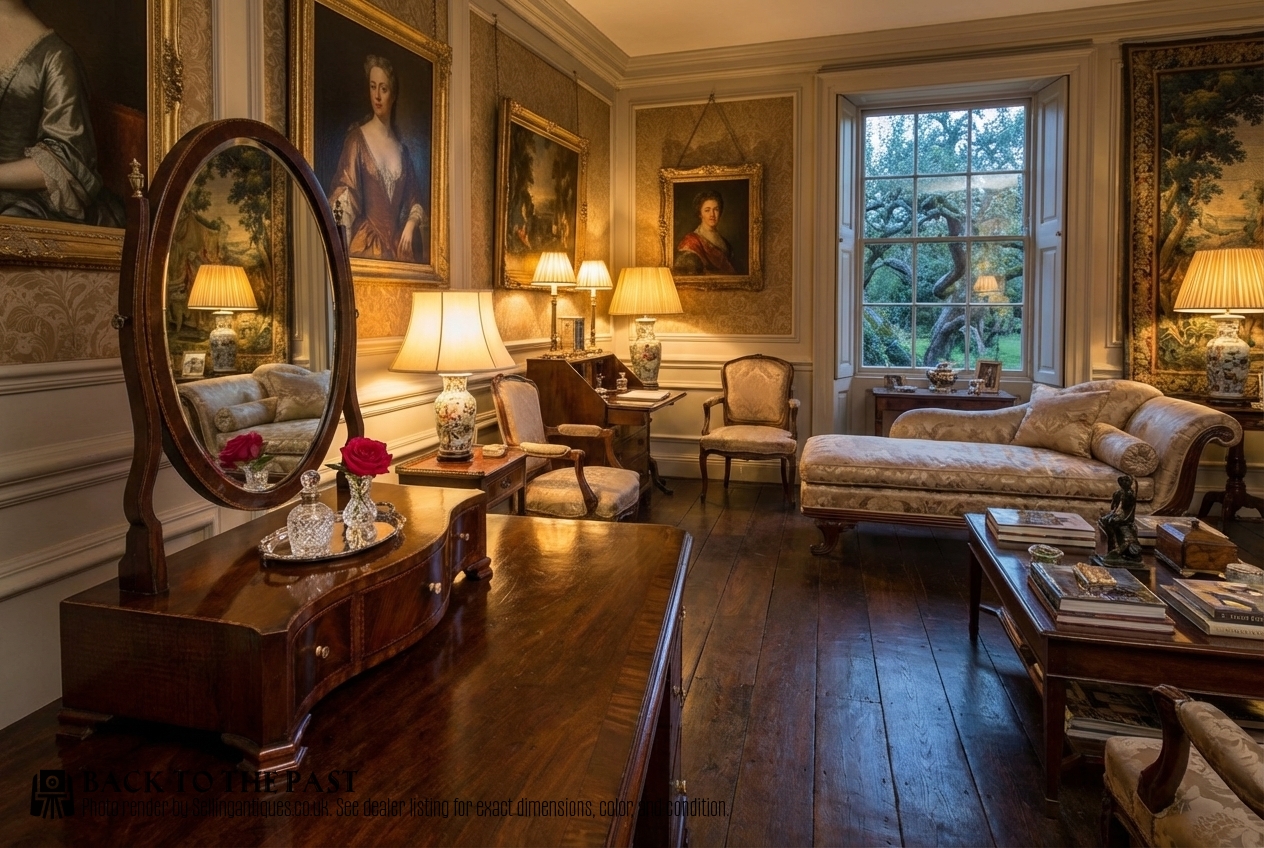
Georgian Toilet Glass
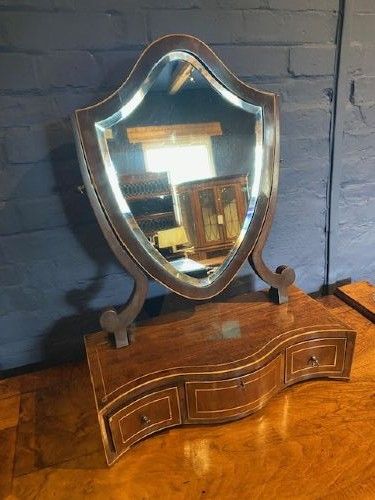
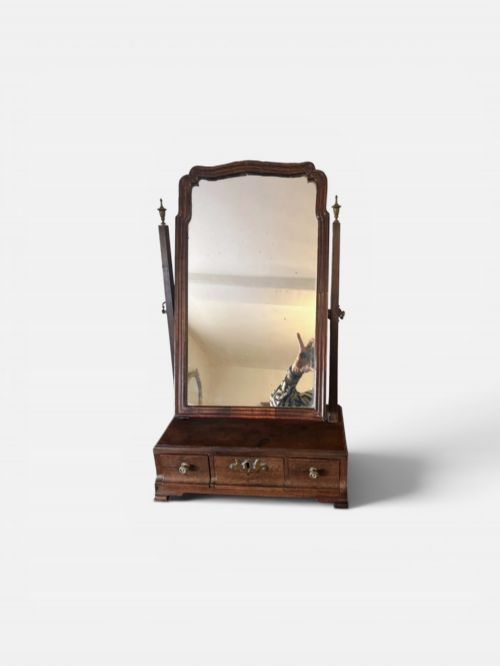
When searching for georgian toilet glass, buyers encounter table-top mirrors designed for personal grooming in bedrooms and dressing rooms. The pieces appearing here span the eighteenth and nineteenth centuries, taking the form of swing glasses mounted on uprights above small wooden bases.
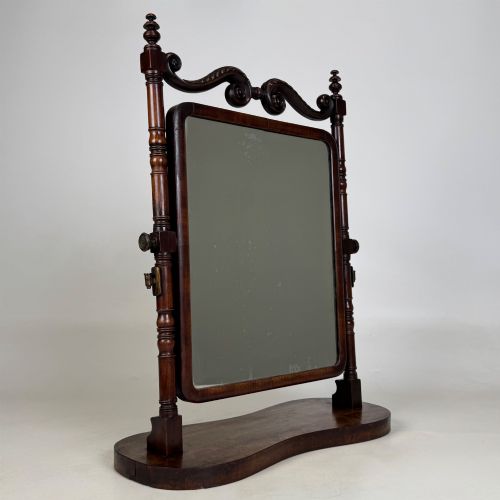
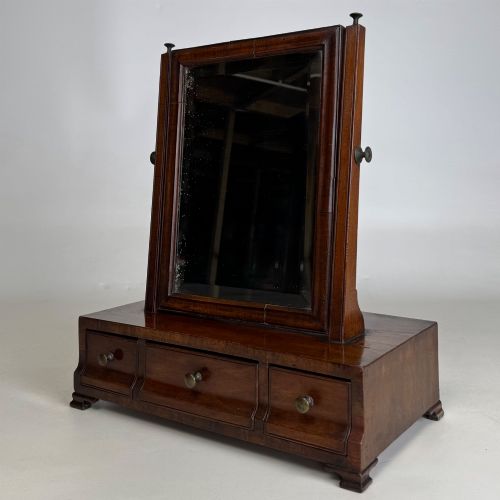
Mahogany frames dominate the selection, often accompanied by walnut, satinwood, and harewood examples from the same eras. Most pieces feature tilting mirror plates supported by simple horn-shaped arms or shaped brackets attached to box bases fitted with small drawers.
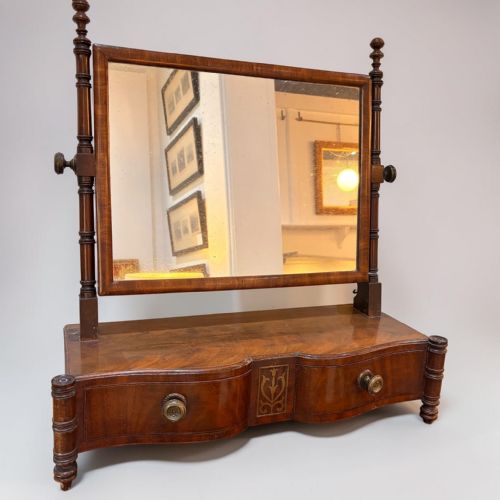
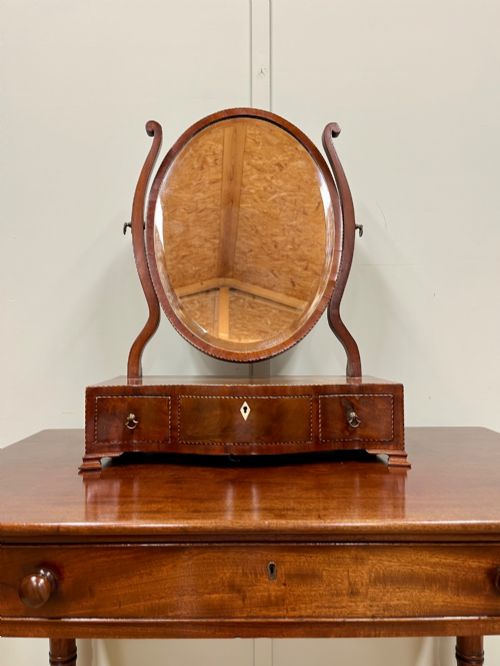
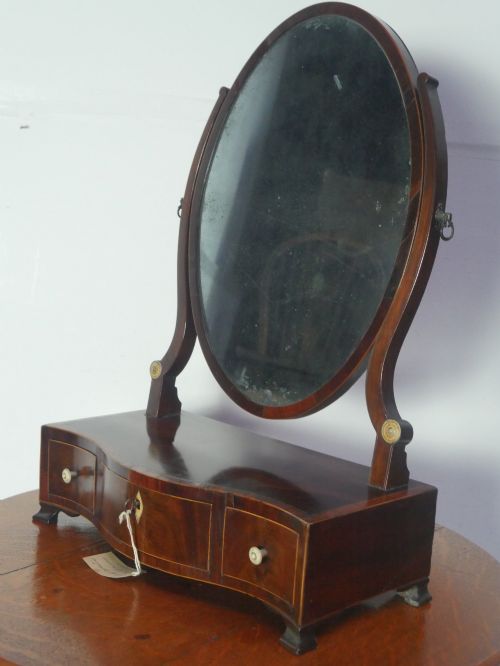
Makers produced these mirrors in rectangular, oval, and shield shapes, sometimes incorporating serpentine fronts or marquetry inlay. While many originate from English workshops, Scottish and Dutch variants also appear among the listed selection.
Materials and Construction
Cabinetmakers constructed these dressing glasses using dense cabinet timbers such as mahogany and walnut, frequently selecting figured veneers for the drawer fronts and bases. Crossbanding, boxwood inlay, and parcel-gilding provided subtle decorative contrast on finer examples.
The mirror plates themselves hang between upright posts using brass screw knobs or pins that allow the glass to tilt at various angles. Small bone or ivory escutcheons and drawer pulls often accent the woodwork on period pieces.
Georgian Toilet Glass Retail Price Guide 2026
Typical asking prices for georgian toilet glass among the pieces listed under this phrase on Sellingantiques today, from the lower quarter to the upper quarter. They describe what is for sale here now, not the wider market.
Listings feature eighteenth and nineteenth-century periods, utilising materials such as mahogany, walnut, brass, and satinwood.
Distinctions in Craft
Superior examples display crisp proportions, finely figured timber grains, and well-executed dovetail joints on the base drawers. The use of secondary woods and the precision of inlaid stringing or crossbanding indicate the level of care taken in the workshop.
The integration between the mirror frame and its supporting uprights reveals the maker's hand, with heavier or clumsy turned posts marking a lower grade of manufacture. Original mirror glass plates, though occasionally showing foxing, contribute to the integrity of the piece.
The Georgian Toilet Glass Glossary
- Swing mirror
- A mirror plate hung on pivots between two upright posts, allowing the glass to tilt back and forth. This arrangement forms the core structure of a toilet glass.
- Toilet glass
- A small mirror designed to stand upon a dressing table or chest of drawers. The base frequently contains one or more small compartments for storage.
- Serpentine front
- A furniture front curving outward in the centre and inward at the sides. This shape appears on the drawer bases of finer dressing mirrors.
- Crossbanding
- A narrow strip of veneer laid around the border of a panel with the grain running perpendicular to the centre. It creates a neat framing effect on drawer fronts.
Georgian Toilet Glass: Frequently Asked Questions
What is a georgian toilet glass used for?
These mirrors stood on tables or chests to assist with personal grooming, shaving, and arranging wigs or hair.
The small drawers beneath the glass served to hold jewellery, cosmetics, and small personal items.
How do I date a toilet glass?
Dating relies on timber choices, construction methods of the base drawers, and the overall profile of the mirror frame.
Eighteenth-century examples often feature walnut or early mahogany with fine dovetailing, while later nineteenth-century pieces display heavier turnings.
Are the mirror plates original?
Many period dressing mirrors retain their original glass plates, which may show light foxing or oxidation over the centuries.
Replacement plates appear frequently due to the fragile nature of old mirror glass.
Where were these mirrors placed?
They sat atop dedicated dressing tables, chests of drawers, or side tables in bedrooms and dressing rooms.
Their portable nature allowed owners to move them around rooms to catch the best morning light.